Graphite Anti friction Material
CN → US| HS Code | Tariff Rate | Origin | Destination | Doc |
|---|---|---|---|---|
| 6815190000 | 35.0% | CN | US | Official Doc |
| 6909195010 | 39.0% | CN | US | Official Doc |
| 3801105090 | 35.0% | CN | US | Official Doc |
| 3801105010 | 35.0% | CN | US | Official Doc |
| 6815110000 | 35.0% | CN | US | Official Doc |
Product Images
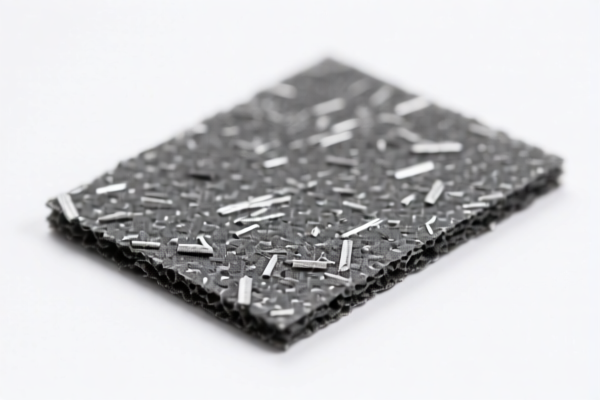
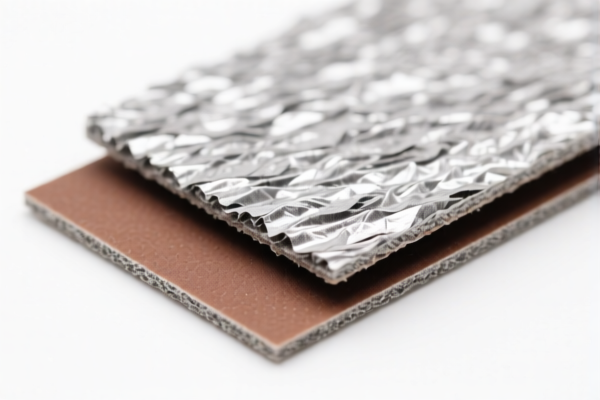
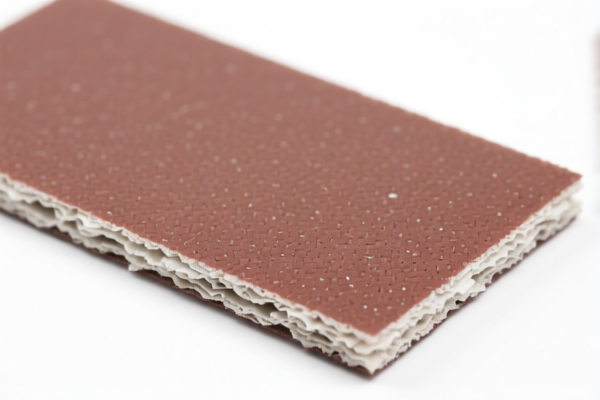
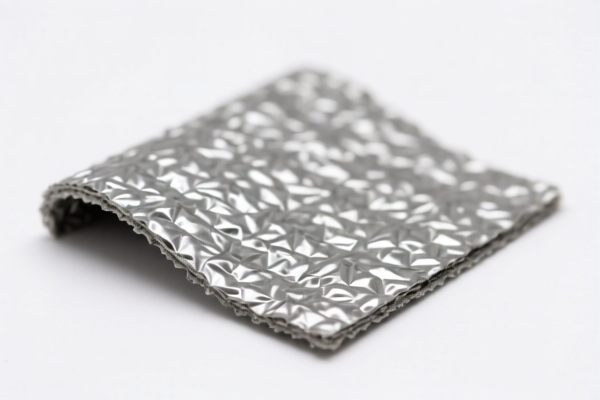
AI Analysis
🕯️ Graphite Anti-Friction Material (Self-Lubricating Graphite Composites)
🌐 HS Code Reference & Customs Clearance Guide | 2026 Latest Tariff Analysis | Professional-Level Customs Strategy
📌 1. Product Definition & Classification: Do You Really Understand "Graphite Anti-Friction Material"?
Graphite anti-friction materials are critical components in industrial machinery, pumps, valves, and electrical equipment. They are primarily categorized into two types based on their physical form and manufacturing process:
Graphite Impregnated Bakelite/Resin (Composite Blocks): Graphite powder mixed with phenolic resin and cured. These are often used for self-lubricating bearings, bushings, and seals. Pure Graphite / Carbon Graphite Blocks: High-purity graphite blocks, often pyrolytic or synthetic, used for high-temperature lubrication or electrical contacts.
⚠️ Key Distinction:
- If the material is "Graphite-based" but clearly defined as a "manufactured article" or "mechanical part" (like a seal or bearing), it typically falls under Chapter 68 (Articles of Stone or Similar Inorganic Materials).
- If the material is "Graphite-based" but defined as a "basic material" or "powder/paste" not yet formed into a specific mechanical part, it often falls under Chapter 38 (Miscellaneous Chemical Products) or Chapter 69 (Ceramic Products, if fused with other materials).
- Crucial Note: The summary provided in emphasizes "Graphite-based material" (石墨基材料) and "Non-electrical use carbon products". This distinction is vital for tariff determination.
📦 2. HS Code Classification Details (2026 Latest Tariff Authority Comparison)
| HS Code | Product Description | Application Scenario | Tariff Rate (Total) |
|---|---|---|---|
6815.19.00.00 |
Graphite-based corrosion-resistant materials, meeting graphite/carbon product material requirements, classified as non-electrical carbon products. | Industrial seals, gaskets, non-electrical graphite parts | 35.0% |
6909.19.50.10 |
Graphite-based materials, material attribute consistent with ceramics, classified as other categories. | Ceramic-graphite composites, high-temperature furnace parts | 39.0% |
3801.10.50.90 |
Graphite-based material, meeting artificial graphite core requirements, unindicated form classified as other categories. | Artificial graphite powder, paste, or unspecified forms | 35.0% |
3801.10.50.10 |
Graphite-based material corresponding to artificial graphite, other categories when form is not explicit. | Artificial graphite raw materials, unformed | 35.0% |
6815.11.00.00 |
Graphite-based explicitly identified as graphite products, meeting requirements for other non-electrical graphite or carbon products. | Standard graphite blocks, electrodes (non-electrical use), generic graphite parts | 35.0% |
🔍 Key Reminder:
-6815.11.00.00&6815.19.00.00: Best for finished mechanical parts (seals, bearings) that are clearly "graphite products" but not for electrical use.
-3801.10.50.xx: Best for raw materials, powders, or unformed graphite that meets "artificial graphite" criteria but lacks a specific mechanical form.
-6909.19.50.10: Use only if the material is chemically or physically treated to be ceramic-like (e.g., fused graphite-ceramic composites).
💰 3. 2026 Latest Tariff Rate Breakdown (Including Surcharges & Policy Add-ons)
✅ Applicable Country: United States (US)
✅ Country of Origin: China (CN)
✅ Effective Date: From November 10, 2025 (including subsequent imports)
🎯 1. 6815.11.00.00 & 6815.19.00.00 & 3801.10.50.xx —— Graphite-Based Materials & Products
| Item | Details |
|---|---|
| Base Tariff | 0.0% (ad valorem) |
| Section 301 Surcharge | +25.0% (Under USITC Footnote 9903.88.01) |
| Section 122 Surcharge | +10.0% (Against Chinese/HK products, effective from 2025-11-10) |
| Total Tariff Rate | 35.0% |
| Tax Calculation | CIF Value × 35% |
| De Minimis Exemption | ❌ Not Eligible (deny_de_minimis) |
| Legal Basis Path | IEEPA:9903.01.25 → IEEPA:9903.01.24 → USITC:6815.11.00.00 / 3801.10.50.xx → FOOTNOTE:9903.88.01 |
📌 Explanation:
- "Section 301 Surcharge 25%": Additional tariff under the "Section 301 Tariffs" from the US Trade Act;
- "Section 122 Surcharge 10%": Additional tariff under the "International Emergency Economic Powers Act" (IEEPA) for Chinese/HK products;
- Total 35%: Belongs to high tariff category, must be planned in advance!
🎯 2. 6909.19.50.10 —— Ceramic-Like Graphite Materials
| Item | Details |
|---|---|
| Base Tariff | 4.0% |
| Section 301 Surcharge | +25.0% |
| Section 122 Surcharge | +10.0% |
| Total Tariff Rate | 39.0% |
| Tax Calculation | CIF Value × 39% |
| De Minimis Exemption | ❌ Not Eligible (deny_de_minimis) |
| Legal Basis Path | IEEPA:9903.01.25 → IEEPA:9903.01.24 → USITC:6909.19.50.10 → FOOTNOTE:9903.88.01 |
📌 Note:
- This category has a higher base tariff (4%) compared to other graphite codes (0%).
- Use only if the material is explicitly ceramic-composite. Misclassification here can lead to higher costs.
🛠️ 4. Customs Clearance Practical Advice (Battle-Tested Pitfall Avoidance Guide)
✅ 1. Required Documentation Checklist (None of the following is optional)
| Document | Required | Description |
|---|---|---|
| ✅ Product Specification Sheet | ✔️ | Include composition (graphite %, resin/ceramic %), density, hardness, lubrication properties |
| ✅ Technical Data Sheet (TDS) | ✔️ | Detail chemical resistance, temperature limits, and self-lubricating mechanism |
| ✅ Product Photos (Including Labels) | ✔️ | Clear view of part shape, markings, and any certification labels |
| ✅ Third-Party Test Report | ✔️ | ASTM, ISO, or relevant standards for friction coefficient, wear rate, and chemical stability |
| ✅ Commercial Invoice | ✔️ | Must explicitly state "Graphite-Based Self-Lubricating Material/Part" and HS Code |
| ✅ Certificate of Origin (CO) | ✔️ | If non-Chinese origin, to claim preferential rates (though unlikely for graphite) |
| ✅ Packing List | ✔️ | Detail net/gross weight, packaging type, and quantity |
✅ 2. Declaration Strategy (Key Mantra)
🔥 "Material Form Matters! Define Shape, Define Code, Avoid Misclassification!"
| Scenario | Correct Declaration Method | Incorrect Practice |
|---|---|---|
| Finished Seals/Bearings (Defined part) | 6815.11.00.00 or 6815.19.00.00 |
Declare as "Raw Material" → Potential penalty |
| Graphite Powder/Paste (Unformed) | 3801.10.50.10 or 3801.10.50.90 |
Declare as "Finished Part" → Classification Error |
| Graphite-Ceramic Composite | 6909.19.50.10 |
Declare as "Graphite Product" → Higher Tax (39% vs 35%) |
| OEM Custom Parts | Provide Drawing + Spec Sheet | Generic Description "Graphite Part" → Delay |
✅ 3. Special Cases Handling
| Scenario | Handling Advice |
|---|---|
| OEM Custom Anti-Friction Blocks | Provide customer PO + 2D/3D drawings to prove "manufactured article" status under Chapter 68 |
| Mixed Shipment (Powder + Parts) | Separate Declaration! Do not mix 3801 (powder) with 6815 (parts). Different HS Codes, different risks |
| Graphite Used in Electrical Contacts | If for electrical use, it may fall under 8545 (Electrodes). Ensure declaration says "Non-Electrical Use" to stay in 6815 |
| High-Temperature Ceramic Graphite | If it contains >20% ceramic binder, consult customs for 6909. Otherwise, stick to 6815 |
🌍 5. Global Market Customs Comparison (2026 Latest)
| Country/Region | Recommended HS Code | Tariff | Certification Requirements | Notes |
|---|---|---|---|---|
| 🇺🇸 USA | 6815.11.00.00 / 3801.10.50.xx |
35% (China Origin) | None Specific | High tariff due to Section 301 + 122 |
| 🇨🇳 China | 6815.11.00.00 |
0% - 5% | N/A | Low tariff for domestic trade |
| 🇪🇺 EU | 6815.11.00.00 |
0% - 2.5% | REACH, RoHS | No additional surcharges |
| 🇦🇺 Australia | 6815.11.00.00 |
5% | N/A | No surcharges |
| 🇯🇵 Japan | 6815.11.00.00 |
0% - 3% | JIS, PSE (if electrical) | Low tariff, strict quality checks |
📌 Conclusion:
- The USA is the most challenging market for graphite anti-friction materials due to 35-39% tariffs;
- China, EU, Australia, and Japan have significantly lower or zero tariffs;
- Supply Chain Strategy: Consider sourcing graphite components from non-China origins (e.g., Vietnam, Thailand) to mitigate Section 122/301 surcharges, if feasible.
📌 6. Common Errors & Pitfall Avoidance (Lessons Learned the Hard Way)
❌ Error 1: Declaring "Graphite Bearing" as "Graphite Powder" (3801)
👉 Consequence: Customs may reject it as "unfit for declared use" or demand re-classification, leading to delays and fines.
❌ Error 2: Not specifying "Non-Electrical Use" for 6815 codes
👉 Consequence: If deemed electrical, it may be misclassified under 8545, causing confusion and potential double taxation.
❌ Error 3: Mixing "Raw Graphite" and "Finished Parts" in one shipment
👉 Consequence: Complex customs examination, possible seizure of non-compliant items, and extended clearance time.
❌ Error 4: Using "Carbon Product" instead of "Graphite-Based Material"
👉 Consequence: Ambiguity in classification. "Graphite" is a specific mineral/chemical form. Be precise.
✅ Correct Practice:
"Graphite-Based Self-Lubricating Seal, Phenolic Resin Impregnated, Non-Electrical Use, Model XYZ, ASTM D4669 Certified, HS 6815.19.00.00"
🎯 7. Conclusion: Precision in Classification, Savings in Cost!
🎯 Remember the Mantra:
🔹 "Raw Powder → 3801 (35%) | Finished Part → 6815 (35%) | Ceramic-Graphite → 6909 (39%)"
🔹 "US Tariff is High! Plan Ahead, Declare Precisely, Avoid Delays!"
🔹 "Non-Electrical is Key for 6815! If Electrical, Think 8545!"
📌 Tips:
- If your graphite anti-friction materials are originally from Vietnam, Thailand, or Malaysia, you may apply for Section 122/301 Exemptions or lower tariffs;
- Apply for an Advance Ruling (Pre-classification) with US Customs (CBP) to confirm the correct HS Code (
6815vs3801) before shipment.
📣 Immediate Action:
📞 Contact a Professional Customs Broker + Provide Product Specs + Request CBP Advance Ruling
🚀 Ensure your Graphite Anti-Friction Materials clear customs smoothly, minimize tariffs, and maximize profit!
✨ Professional Clearance Starts with Accurate Classification!
💼 Every Penny Saved is a Penny Earned!
Customer Reviews
About HS Code Classification
The Harmonized System (HS) is an internationally standardized nomenclature developed by the World Customs Organization (WCO) to classify traded products. Over 200 countries use the HS system as the basis for customs tariffs, trade statistics, and import/export regulations.
Each HS code follows a hierarchical structure:
- Chapter (2 digits) — Broad category of goods (e.g., Chapter 84: Machinery and Mechanical Appliances)
- Heading (4 digits) — More specific grouping within the chapter
- Subheading (6 digits) — Internationally standardized breakdown, used by all WCO member countries
- National subdivisions (8-10 digits) — Country-specific extensions for further classification, such as US HTSUS 10-digit codes
Correct HS code classification is essential for smooth customs clearance, accurate duty payment, and compliance with trade regulations. Misclassification can lead to customs delays, overpayment of duties, or penalties.
When importing from CN to US, the applicable tariff rates may include:
- Most-Favored-Nation (MFN) rate — The standard duty rate applied to WTO members
- General rate — Applied to countries without trade agreements
- Trade remedy duties — Additional tariffs such as Section 301 (anti-dumping), Section 232 (national security), or countervailing duties
The information provided on this page is for reference purposes only. For official classification, please consult with your local customs authority or a licensed customs broker.