Grid Notebook
CN → US| HS编码 | 关税税率 | 原产国 | 目的国 | 文档 |
|---|---|---|---|---|
| 4820102060 | 35.0% | CN | US | 官方文档 |
| 4820102040 | 35.0% | CN | US | 官方文档 |
商品图片
AI分析
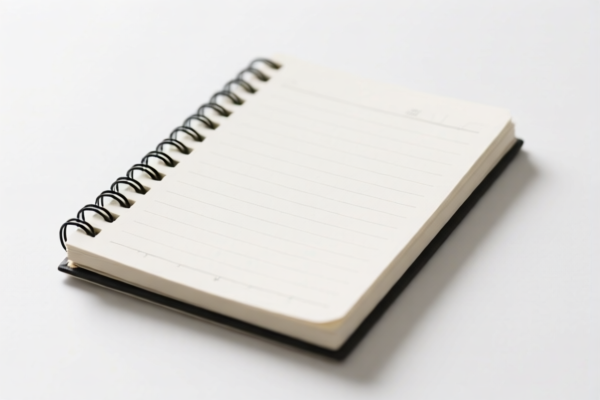
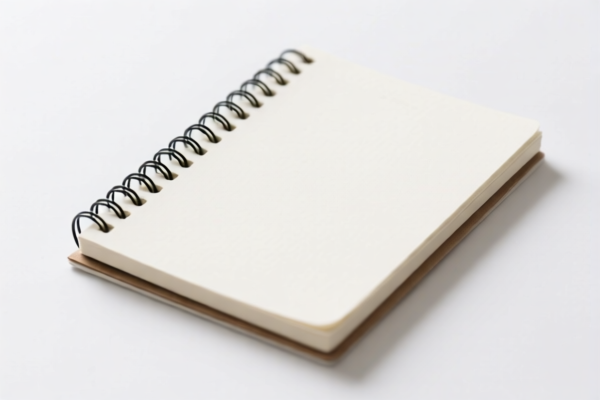
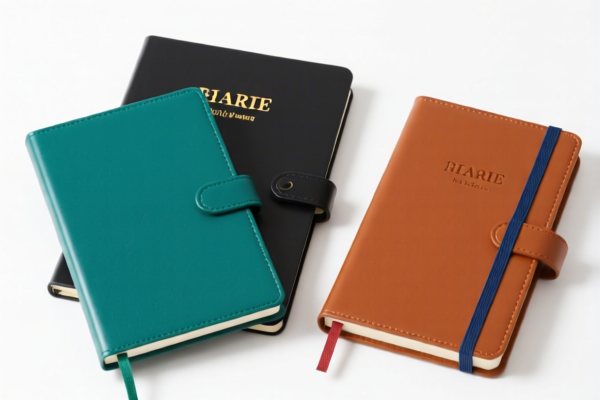
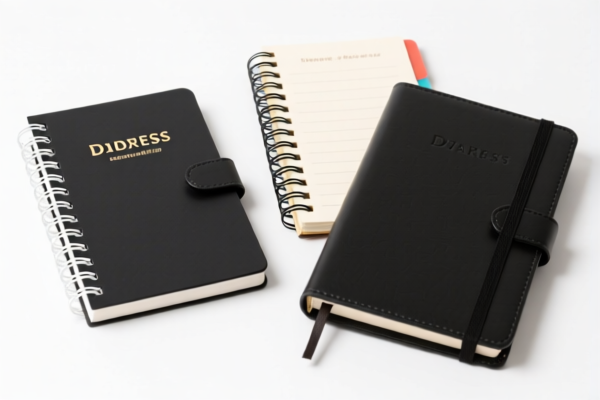
📓 Grid Notebook (Grid-ruled Notebooks & Stationery)
🌐 HS Code Reference & Customs Clearance Guide | 2026 Latest Tariff Analysis | Professional Clearance Strategy
📌 I. Product Definition & Classification: What Exactly is a "Grid Notebook"?
A Grid Notebook is a stationery item consisting of multiple sheets of paper, bound together, featuring a grid or graph paper pattern on the pages. In international trade, these items fall under Chapter 48 (Paper and paperboard; articles of paper pulp, of paper or paperboard).
Specifically, they are classified as: * Notebooks: Bound sets of paper for writing or sketching. * Similar Articles: Including memorandum pads, diaries, and address books, though "Grid Notebook" usually refers to unlined or grid-lined exercise/note-taking books.
⚠️ Key Distinction:
- If the item is loose-leaf or sold as manifold forms → It may fall under different subheadings (e.g., binders, manifold business forms).
- If it is bound (perfectly bound, spiral, stapled, or case-bound) with grid/graph paper → It falls under 4820.10.
- Crucial Size Factor: The US HTSUS (Harmonized Tariff Schedule of the United States) further distinguishes these codes based on physical dimensions.
📦 II. HS Code Classification Details (2026 Latest Tariff Authority)
Based on the provided data, Grid Notebooks are classified under Heading 4820. The specific 8-10 digit HTSUS codes depend on the size of the notebook.
| HS Code | Product Description | Applicability | Key Dimensional Constraint |
|---|---|---|---|
4820.10.20.60 |
Other Notebooks, Diaries, Address Books | General grid notebooks, memo pads, letter pads | Excludes specific size range defined in 40 |
4820.10.20.40 |
Notebooks with specific dimensions | Small-to-medium grid notebooks | Small Side: 152.4mm (6") – 381mm (15") Large Side: 222.5mm (8.75") – 381mm (15") |
🔍 Critical Clarification:
- Code4820.10.20.40is a specific subset of notebooks defined by strict dimensional ranges. If your Grid Notebook falls within these dimensions, this code applies.
- Code4820.10.20.60is a catch-all for other bound notebooks, diaries, and memorandum pads that do not meet the specific dimensional criteria of40.
- Both codes carry the same tax liability.
💰 III. 2026 Latest Tariff Rate Detailed Breakdown (US Imports from China)
✅ Applicable Country: United States (US)
✅ Country of Origin: China (CN)
✅ Effective Date: Current 2025/2026 Policy Period
🎯 1. HTSUS 4820.10.20.40 & 4820.10.20.60
| Item | Detail |
|---|---|
| Base Duty Rate | 0.0% (General Rate) |
| Section 301 Additional Duty | +25.0% |
| Total Tariff Rate | 25.0% |
| Tax Calculation Basis | CIF Value (Cost, Insurance, Freight) × 25% |
| De Minimis Exemption | ❌ Not Applicable for Section 301 goods under current enforcement |
| Legal Basis Path | HTSUS:4820.10.20 → Section 301 Footnote 9903.88.01 (Applicable to Paper Products from China) |
📌 Interpretation:
- The 0% base rate reflects the standard duty for paper products under US trade policy.
- The 25% additional duty is imposed under Section 301 of the Trade Act of 1974, targeting specific Chinese imports, including many paper goods and stationery items.
- Total Cost Impact: For every $1,000 USD of CIF value, expect $250 USD in duties. No base duty offset is available.
🛠️ IV. Customs Clearance Practical Advice (Real-World Pitfall Guide)
✅ 1. Documentation Checklist (Non-Negotiable)
| Document | Mandatory? | Reason |
|---|---|---|
| ✅ Commercial Invoice | ✔️ | Must clearly state "Grid Notebook" and describe material (paper) |
| ✅ Packing List | ✔️ | Must list quantity, weight, and package dimensions |
| ✅ Product Dimensions | ✔️ | Crucial: Exact length x width in mm/inches to determine if code 40 or 60 applies |
| ✅ Country of Origin Certificate | ✔️ | Must declare "Made in China" for Section 301 applicability |
| ✅ Material Declaration | ✔️ | Confirm paper content (e.g., "100% Wood Pulp Paper") |
✅ 2. Declaration Tips (Key Mantras)
🔥 "Size Determines Code, Duty Stays 25%!"
| Scenario | Correct Declaration | Wrong Practice |
|---|---|---|
| Notebook fits 6"x8.75" to 15"x15" | Use 4820.10.20.40 |
Misclassifying as 60 → No penalty, but incorrect data |
| Notebook is smaller than 6" or larger than 15" | Use 4820.10.20.60 |
Misclassifying as 40 → Risk of customs audit |
| Spiral-bound vs. Perfect-bound | Same HS Code (4820) |
Do not confuse with binders (4202 or 4820.90) |
| Loose-leaf Paper (unbound) | Different HS Code (4802) |
Never bind loose paper to a notebook category |
✅ 3. Special Cases Handling
| Situation | Handling Advice |
|---|---|
| Custom Printed Grid Notebooks | Still 4820. Provide print samples if requested to prove it's "stationery" and not "printed advertising material" |
| Set of Notebooks + Pen | If sold as a set, classify by the principal character (notebook). Do not split items |
| Diaries vs. Notebooks | If the book has dates/pre-printed calendars → Diary (4820.10). If blank/grid pages → Notebook (4820.10). Both have 25% tax |
| Memorandum Pads (Sticky Notes) | If "memo pads" are listed in the description, they fall under 4820.10.20.60 unless they meet the specific size of 40 |
🌍 V. Global Market Comparison (2026)
| Country/Region | Recommended HS Code | Duty Rate | Notes |
|---|---|---|---|
| 🇺🇸 United States | 4820.10.20.40 / .60 |
25.0% | High tariff due to Section 301 |
| 🇨🇳 China | 4820.10.20 |
0% - 5% | Low import duty for paper products |
| 🇪🇺 European Union | 4820.10.00 |
6.5% | Standard EU Common Customs Tariff |
| 🇬🇧 United Kingdom | 4820.10.00 |
6.5% | Post-Brexit Tariff Schedule |
| 🇨🇦 Canada | 4820.10.00 |
5.0% | General Rate of Duty |
📌 Conclusion:
- The 25% US duty is a significant cost driver.
- If exporting to the US, ensure accurate dimension reporting to avoid misclassification penalties, even though the tax rate is identical for both codes.
📌 VI. Common Mistakes & Pitfalls (Lessons Learned)
❌ Mistake 1: Ignoring Dimensional Constraints
👉 Consequence: Customs may flag the entry for "Incorrect Classification" even if the tax is the same. Inaccurate data can lead to delays or audits.
❌ Mistake 2: Confusing "Notebooks" with "Binders"
👉 Consequence: Binders (4202 or 4820.90) have different duties. Misdeclaration leads to underpayment or overpayment issues.
❌ Mistake 3: Omitting "Made in China" on Invoice
👉 Consequence: If origin is not declared, CBP may assume higher duty rates or reject the entry for non-compliance. Must declare origin.
❌ Mistake 4: Using Generic Descriptions like "Paper Goods"
👉 Consequence: CBP will reclassify, likely to the same code but with a delay and potential fines for inaccurate invoicing.
✅ Correct Approach:
"Grid Notebook, Bound, Paper, 100 Sheets, 6" x 8.75", Made in China"
🎯 VII. Conclusion: Precision in Paper Products
🎯 Remember the Rules:
🔹 "Dimensions Matter for Code Choice, But 25% is the Price."
🔹 "Section 301 Applies to Most Paper Stationery from China."
🔹 "Bindings Don't Change the Tax, Only the Code Number."
📌 Pro Tip:
If your notebooks are not made in China (e.g., Vietnam, India, Malaysia), they may be exempt from the 25% Section 301 duty.
🚀 Strategy: Consider supply chain diversification to avoid the 25% tariff if volume is high.
📣 Immediate Action Required:
📞 Verify Dimensions of all notebook SKUs.
📄 Update Invoices to include "Country of Origin: China".
📊 Calculate Landed Cost including the 25% duty.
✨ Professional Clearance Starts with Accurate Classification!
💼 Every Sheet Counts – Don't Let a 25% Duty Slip Through the Cracks!
用户评价
关于 HS 编码归类
协调制度(HS)是由世界海关组织(WCO)制定的国际贸易商品分类标准。全球 200 多个国家采用 HS 系统作为海关关税、贸易统计和进出口监管的基础。
每个 HS 编码遵循以下层级结构:
- 章(2 位)——商品大类(例如:第 84 章:机器和机械设备)
- 品目(4 位)——章内的更具体分类
- 子目(6 位)——国际通用细分,所有 WCO 成员国统一使用
- 本国细分(8-10 位)——各国自行扩展的细分编码,如美国 HTSUS 10 位编码
正确的 HS 编码归类对于顺利通关、准确缴纳关税和遵守贸易法规至关重要。错误归类可能导致海关延误、多缴关税或罚款。
从CN进口到US时,适用的关税税率可能包括:
- 最惠国(MFN)税率——适用于 WTO 成员国的标准关税税率
- 普通税率——适用于无贸易协定国家
- 贸易救济关税——附加关税,如 301 条款(反倾销)、232 条款(国家安全)或反补贴税
本页内容仅供参考。如需正式归类,请咨询当地海关或持牌报关代理。