Grid Notebook
CN → US| HS Code | Tariff Rate | Origin | Destination | Doc |
|---|---|---|---|---|
| 4820102060 | 35.0% | CN | US | Official Doc |
| 4820102040 | 35.0% | CN | US | Official Doc |
Product Images


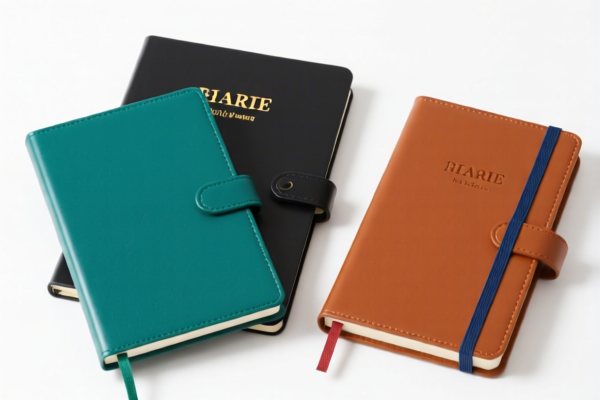
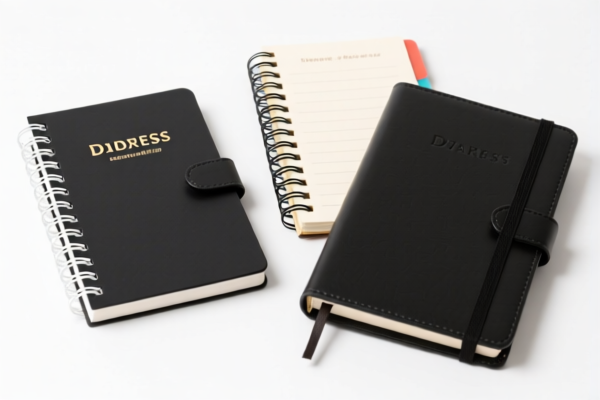
AI Analysis
📓 Grid Notebook (Grid-ruled Notebooks & Stationery)
🌐 HS Code Reference & Customs Clearance Guide | 2026 Latest Tariff Analysis | Professional Clearance Strategy
📌 I. Product Definition & Classification: What Exactly is a "Grid Notebook"?
A Grid Notebook is a stationery item consisting of multiple sheets of paper, bound together, featuring a grid or graph paper pattern on the pages. In international trade, these items fall under Chapter 48 (Paper and paperboard; articles of paper pulp, of paper or paperboard).
Specifically, they are classified as: * Notebooks: Bound sets of paper for writing or sketching. * Similar Articles: Including memorandum pads, diaries, and address books, though "Grid Notebook" usually refers to unlined or grid-lined exercise/note-taking books.
⚠️ Key Distinction:
- If the item is loose-leaf or sold as manifold forms → It may fall under different subheadings (e.g., binders, manifold business forms).
- If it is bound (perfectly bound, spiral, stapled, or case-bound) with grid/graph paper → It falls under 4820.10.
- Crucial Size Factor: The US HTSUS (Harmonized Tariff Schedule of the United States) further distinguishes these codes based on physical dimensions.
📦 II. HS Code Classification Details (2026 Latest Tariff Authority)
Based on the provided data, Grid Notebooks are classified under Heading 4820. The specific 8-10 digit HTSUS codes depend on the size of the notebook.
| HS Code | Product Description | Applicability | Key Dimensional Constraint |
|---|---|---|---|
4820.10.20.60 |
Other Notebooks, Diaries, Address Books | General grid notebooks, memo pads, letter pads | Excludes specific size range defined in 40 |
4820.10.20.40 |
Notebooks with specific dimensions | Small-to-medium grid notebooks | Small Side: 152.4mm (6") – 381mm (15") Large Side: 222.5mm (8.75") – 381mm (15") |
🔍 Critical Clarification:
- Code4820.10.20.40is a specific subset of notebooks defined by strict dimensional ranges. If your Grid Notebook falls within these dimensions, this code applies.
- Code4820.10.20.60is a catch-all for other bound notebooks, diaries, and memorandum pads that do not meet the specific dimensional criteria of40.
- Both codes carry the same tax liability.
💰 III. 2026 Latest Tariff Rate Detailed Breakdown (US Imports from China)
✅ Applicable Country: United States (US)
✅ Country of Origin: China (CN)
✅ Effective Date: Current 2025/2026 Policy Period
🎯 1. HTSUS 4820.10.20.40 & 4820.10.20.60
| Item | Detail |
|---|---|
| Base Duty Rate | 0.0% (General Rate) |
| Section 301 Additional Duty | +25.0% |
| Total Tariff Rate | 25.0% |
| Tax Calculation Basis | CIF Value (Cost, Insurance, Freight) × 25% |
| De Minimis Exemption | ❌ Not Applicable for Section 301 goods under current enforcement |
| Legal Basis Path | HTSUS:4820.10.20 → Section 301 Footnote 9903.88.01 (Applicable to Paper Products from China) |
📌 Interpretation:
- The 0% base rate reflects the standard duty for paper products under US trade policy.
- The 25% additional duty is imposed under Section 301 of the Trade Act of 1974, targeting specific Chinese imports, including many paper goods and stationery items.
- Total Cost Impact: For every $1,000 USD of CIF value, expect $250 USD in duties. No base duty offset is available.
🛠️ IV. Customs Clearance Practical Advice (Real-World Pitfall Guide)
✅ 1. Documentation Checklist (Non-Negotiable)
| Document | Mandatory? | Reason |
|---|---|---|
| ✅ Commercial Invoice | ✔️ | Must clearly state "Grid Notebook" and describe material (paper) |
| ✅ Packing List | ✔️ | Must list quantity, weight, and package dimensions |
| ✅ Product Dimensions | ✔️ | Crucial: Exact length x width in mm/inches to determine if code 40 or 60 applies |
| ✅ Country of Origin Certificate | ✔️ | Must declare "Made in China" for Section 301 applicability |
| ✅ Material Declaration | ✔️ | Confirm paper content (e.g., "100% Wood Pulp Paper") |
✅ 2. Declaration Tips (Key Mantras)
🔥 "Size Determines Code, Duty Stays 25%!"
| Scenario | Correct Declaration | Wrong Practice |
|---|---|---|
| Notebook fits 6"x8.75" to 15"x15" | Use 4820.10.20.40 |
Misclassifying as 60 → No penalty, but incorrect data |
| Notebook is smaller than 6" or larger than 15" | Use 4820.10.20.60 |
Misclassifying as 40 → Risk of customs audit |
| Spiral-bound vs. Perfect-bound | Same HS Code (4820) |
Do not confuse with binders (4202 or 4820.90) |
| Loose-leaf Paper (unbound) | Different HS Code (4802) |
Never bind loose paper to a notebook category |
✅ 3. Special Cases Handling
| Situation | Handling Advice |
|---|---|
| Custom Printed Grid Notebooks | Still 4820. Provide print samples if requested to prove it's "stationery" and not "printed advertising material" |
| Set of Notebooks + Pen | If sold as a set, classify by the principal character (notebook). Do not split items |
| Diaries vs. Notebooks | If the book has dates/pre-printed calendars → Diary (4820.10). If blank/grid pages → Notebook (4820.10). Both have 25% tax |
| Memorandum Pads (Sticky Notes) | If "memo pads" are listed in the description, they fall under 4820.10.20.60 unless they meet the specific size of 40 |
🌍 V. Global Market Comparison (2026)
| Country/Region | Recommended HS Code | Duty Rate | Notes |
|---|---|---|---|
| 🇺🇸 United States | 4820.10.20.40 / .60 |
25.0% | High tariff due to Section 301 |
| 🇨🇳 China | 4820.10.20 |
0% - 5% | Low import duty for paper products |
| 🇪🇺 European Union | 4820.10.00 |
6.5% | Standard EU Common Customs Tariff |
| 🇬🇧 United Kingdom | 4820.10.00 |
6.5% | Post-Brexit Tariff Schedule |
| 🇨🇦 Canada | 4820.10.00 |
5.0% | General Rate of Duty |
📌 Conclusion:
- The 25% US duty is a significant cost driver.
- If exporting to the US, ensure accurate dimension reporting to avoid misclassification penalties, even though the tax rate is identical for both codes.
📌 VI. Common Mistakes & Pitfalls (Lessons Learned)
❌ Mistake 1: Ignoring Dimensional Constraints
👉 Consequence: Customs may flag the entry for "Incorrect Classification" even if the tax is the same. Inaccurate data can lead to delays or audits.
❌ Mistake 2: Confusing "Notebooks" with "Binders"
👉 Consequence: Binders (4202 or 4820.90) have different duties. Misdeclaration leads to underpayment or overpayment issues.
❌ Mistake 3: Omitting "Made in China" on Invoice
👉 Consequence: If origin is not declared, CBP may assume higher duty rates or reject the entry for non-compliance. Must declare origin.
❌ Mistake 4: Using Generic Descriptions like "Paper Goods"
👉 Consequence: CBP will reclassify, likely to the same code but with a delay and potential fines for inaccurate invoicing.
✅ Correct Approach:
"Grid Notebook, Bound, Paper, 100 Sheets, 6" x 8.75", Made in China"
🎯 VII. Conclusion: Precision in Paper Products
🎯 Remember the Rules:
🔹 "Dimensions Matter for Code Choice, But 25% is the Price."
🔹 "Section 301 Applies to Most Paper Stationery from China."
🔹 "Bindings Don't Change the Tax, Only the Code Number."
📌 Pro Tip:
If your notebooks are not made in China (e.g., Vietnam, India, Malaysia), they may be exempt from the 25% Section 301 duty.
🚀 Strategy: Consider supply chain diversification to avoid the 25% tariff if volume is high.
📣 Immediate Action Required:
📞 Verify Dimensions of all notebook SKUs.
📄 Update Invoices to include "Country of Origin: China".
📊 Calculate Landed Cost including the 25% duty.
✨ Professional Clearance Starts with Accurate Classification!
💼 Every Sheet Counts – Don't Let a 25% Duty Slip Through the Cracks!
Customer Reviews
About HS Code Classification
The Harmonized System (HS) is an internationally standardized nomenclature developed by the World Customs Organization (WCO) to classify traded products. Over 200 countries use the HS system as the basis for customs tariffs, trade statistics, and import/export regulations.
Each HS code follows a hierarchical structure:
- Chapter (2 digits) — Broad category of goods (e.g., Chapter 84: Machinery and Mechanical Appliances)
- Heading (4 digits) — More specific grouping within the chapter
- Subheading (6 digits) — Internationally standardized breakdown, used by all WCO member countries
- National subdivisions (8-10 digits) — Country-specific extensions for further classification, such as US HTSUS 10-digit codes
Correct HS code classification is essential for smooth customs clearance, accurate duty payment, and compliance with trade regulations. Misclassification can lead to customs delays, overpayment of duties, or penalties.
When importing from CN to US, the applicable tariff rates may include:
- Most-Favored-Nation (MFN) rate — The standard duty rate applied to WTO members
- General rate — Applied to countries without trade agreements
- Trade remedy duties — Additional tariffs such as Section 301 (anti-dumping), Section 232 (national security), or countervailing duties
The information provided on this page is for reference purposes only. For official classification, please consult with your local customs authority or a licensed customs broker.