Grinding, Sharpening, Polishing, or Lapping Machine
CN → US| HS编码 | 关税税率 | 原产国 | 目的国 | 文档 |
|---|---|---|---|---|
| 8460390050 | 39.4% | CN | US | 官方文档 |
| 8479820080 | 35.0% | CN | US | 官方文档 |
| 8460290150 | 39.4% | CN | US | 官方文档 |
| 8460120080 | 39.4% | CN | US | 官方文档 |
商品图片
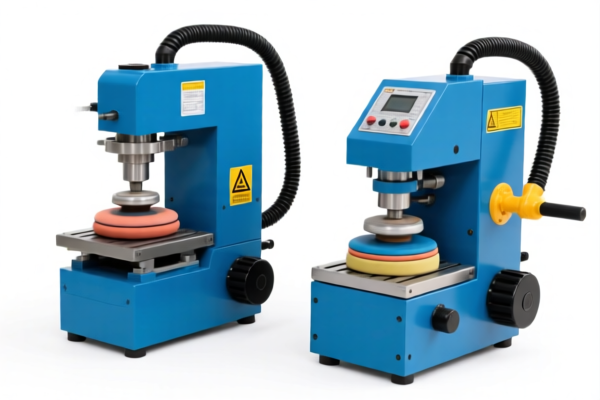
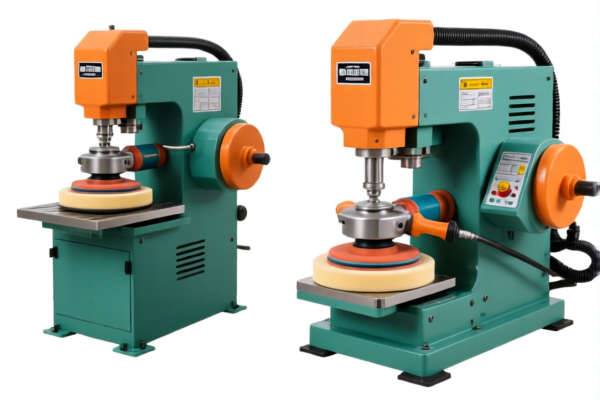
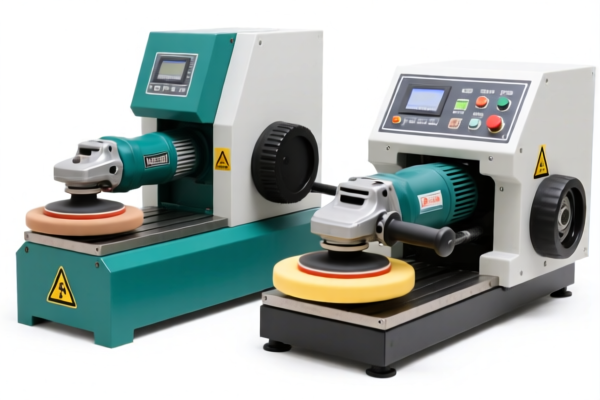
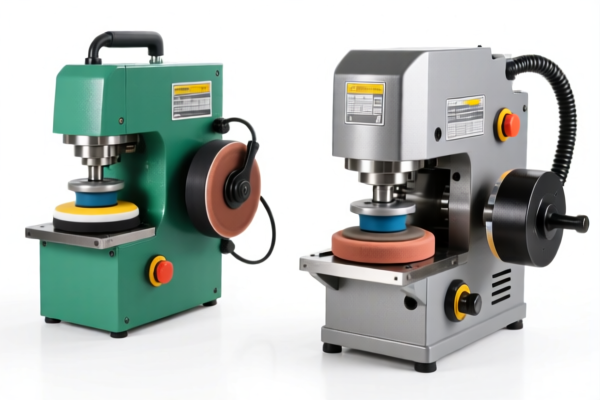
AI分析
⚙️ Grinding, Sharpening, Polishing, or Lapping Machine
🌐 HS Code Reference & Customs Clearance Guide | 2026 Latest Tariff Analysis | Precision Metal Processing Strategy
📌 I. Product Definition & Classification: What Exactly Are You Importing?
These machines are industrial workhorses designed for the precision finishing of metal surfaces. Whether it’s removing burrs, achieving mirror-like finishes, or sharpening tools, the classification depends heavily on the specific mechanical action and functional scope defined in the Harmonized System.
Key Distinction: * Grinding/Sharpening/Polishing/Lapping (Chapter 84.60): Machines specifically designed for these operations. This is the "Home" category for most metal finishing equipment. * General Purpose Machinery with Grinding Functions (Chapter 84.79): A "catch-all" category for machines that have grinding capabilities but don’t fit the specific definitions of Chapter 84.60, or are complex assemblies where grinding is just one function.
⚠️ Critical Classification Point:
- If the machine’s primary function is grinding, sharpening, polishing, or lapping of metals → It likely falls under 8460.xx.xx.xx.
- If the machine is a complex assembly (e.g., a robot arm with a grinder attachment, or a multi-station machine) where grinding is not the sole defining feature → It may fall under 8479.82.00.80.
📦 II. HS Code Classification Details (2026 Latest Tariff Authority对照)
| HS Code | Product Description | Application Scenario | Tax Rate (CN→US) |
|---|---|---|---|
8460.39.00.50 |
Other grinding machines (not cylindrical surface grinding) | General metal grinding, precision finishing, not covered by 8460.2x or 8460.1x. | 39.4% |
8479.82.00.80 |
Other machines and mechanical appliances having individual functions (with grinding capability) | Complex machinery, automated lines, or machines where grinding is a secondary/sub-function. | 35.0% |
8460.29.01.50 |
Cylindrical surface grinding machines | Specific for grinding cylindrical outer surfaces (shafts, pins, bearings). | 39.4% |
8460.12.00.80 |
Surface grinding machines (excluding cylindrical) | Flat surface grinding, bench grinders, large flat-bed grinders. | 39.4% |
🔍 Key Insight:
- 8460 codes generally carry a 39.4% total tax rate.
- 8479.82.00.80 carries a slightly lower 35.0% total tax rate, but is only applicable if the machine does not fit the strict definition of 8460. Misclassification here can lead to severe penalties.
💰 III. 2026 Latest Tariff Rate Breakdown (Including Surtaxes & Policy Add-ons)
✅ Applicable Country: United States (US)
✅ Country of Origin: China (CN)
✅ Effective Date: November 10, 2025 (and subsequent imports)
🎯 1. 8460.39.00.50 | 8460.29.01.50 | 8460.12.00.80 —— General Metal Grinding/Finishing Machines
| Item | Detail |
|---|---|
| Base Duty Rate | 4.4% (Ad Valorem) |
| Section 301 Surtax | +25.0% (Under US Trade Act Section 301) |
| 122 Clause Surtax | +10.0% (Specific trade measure surcharge) |
| Total Tax Rate | 39.4% |
| Tax Calculation | CIF Value × 39.4% |
| De Minimis Eligibility | ❌ No (Denied under current trade policy) |
| Legal Basis Path | USITC:8460.xx.xx.xx → 301 Footnote → 122 Clause |
📌 Explanation:
- These HS codes are classified as "Machine Tools for Working Metal by Grinding."
- The 4.4% base rate is standard under the Harmonized Tariff Schedule (HTS).
- The 25% is the standard Section 301 tariff on Chinese machinery.
- The 10% is an additional layer often applied to specific industrial machinery categories.
- Total: 39.4%. This is a high-cost entry, so accurate classification is vital.
🎯 2. 8479.82.00.80 —— Other Machines with Grinding Functions (Catch-All)
| Item | Detail |
|---|---|
| Base Duty Rate | 0.0% (Many general purpose machines have 0% base duty) |
| Section 301 Surtax | +25.0% (Under US Trade Act Section 301) |
| 122 Clause Surtax | +10.0% (Specific trade measure surcharge) |
| Total Tax Rate | 35.0% |
| Tax Calculation | CIF Value × 35.0% |
| De Minimis Eligibility | ❌ No |
| Legal Basis Path | USITC:8479.82.00.80 → 301 Footnote → 122 Clause |
📌 Explanation:
- This code is for machinery that doesn’t fit neatly into 8460.
- The base rate is 0%, but the 35% total tax is still very significant due to the 35% combined surtax.
- Savings: Potential 4.4% savings compared to 8460 codes, but only if the machine truly qualifies as "other machinery."
🛠️ IV. Customs Clearance Practical Advice (Actionable Pitfall Guide)
✅ 1. Documentation Checklist (Must-Have)
| Document | Required | Notes |
|---|---|---|
| ✅ Technical Data Sheet | ✔️ | Must clearly state: Grinding type (surface, cylindrical, etc.), max workpiece size, motor power. |
| ✅ Functional Diagram | ✔️ | Show how the grinding wheel interacts with the workpiece. Prove it’s a dedicated grinding machine (for 8460) or a general machine (for 8479). |
| ✅ Product Photos | ✔️ | Clear images of the machine, control panel, and grinding head. Include model nameplate. |
| ✅ Commercial Invoice | ✔️ | Describe as "Grinding Machine for Metal Finishing" or "Surface Grinding Machine." Avoid vague terms like "Industrial Equipment." |
| ✅ Packing List | ✔️ | List all accessories (coolant tanks, guards, tools). Do not split packing list to mislead. |
✅ 2. Classification Strategy (The Golden Rules)
🔥 “Function First, Form Second. If it grinds metal specifically, think 8460. If it’s a complex assembly, think 8479.”
| Scenario | Recommended HS Code | Risk of Misclassification |
|---|---|---|
| Dedicated Surface Grinder | 8460.12.00.80 |
Low if specs match. High if it’s a multi-function CNC mill with grinder attachment. |
| Cylindrical Grinder | 8460.29.01.50 |
Low if it’s purely for shafts/bearings. |
| General Purpose Polishing/Lapping Machine | 8460.39.00.50 |
High if it’s part of a larger automated line. |
| Robotic Arm with Grinder Head | 8479.82.00.80 |
Correct. The primary function is robotic manipulation, not grinding. |
| Bench Top Sharpener | 8460.12.00.80 or 8460.39.00.50 |
Depends on size and industrial use. |
⚠️ Warning:
- Do NOT classify a simple bench grinder as8479to save 4.4%. Customs may reclassify it to8460and charge the higher rate + penalties.
- Do NOT classify a complex CNC center with a grinding spindle as8460if grinding is not its primary purpose. It may be classified as8457or8479, but this requires strong technical justification.
✅ 3. Special Cases & Mitigation
| Case | Handling Advice |
|---|---|
| OEM Custom Grinders | Provide customer-specific engineering drawings. Proves the machine is not a standard commodity but a custom tool, supporting the specific 8460 subheading. |
| Machine Imported with Accessories | Declare the main machine and accessories together. Do not split the grinder head into a separate HS code if it’s integral. |
| Used vs. New | Both are subject to the same tariffs. However, used machinery may face additional inspection for safety/compliance. |
| Hybrid Machines (e.g., Grind + Polish + Deburr) | If the primary purpose is grinding, use 8460. If it’s a multi-station finishing line, consult a customs broker for 8479 potential. |
🌍 V. Global Market Comparison (2026 Latest)
| Country/Region | Recommended HS Code | Total Tax (CN Origin) | Certification | Notes |
|---|---|---|---|---|
| 🇺🇸 USA | 8460.xx or 8479.82 |
39.4% or 35.0% | CE/UL (optional), but Section 301 + 122 apply | Highest cost. 122 clause is key. |
| 🇨🇳 China | 8460.xx or 8479.82 |
0.0% - 5% | CCC (if applicable) | Low duty, no surtaxes. |
| 🇪🇺 EU | 8460.xx or 8479.82 |
0.0% - 4% | CE Mark | No Section 301 equivalent. |
| 🇮🇳 India | 8460.xx |
~7.5% | BIS | Higher base duty but no surtaxes. |
| 🇻🇳 Vietnam | 8460.xx |
0.0% (if local content) | No surtaxes | Potential supply chain shift. |
📌 Conclusion:
- The USA is the most expensive market for these machines due to the 35-39.4% total duty.
- EU and China offer significantly lower duty burdens.
- Supply Chain Strategy: If volume is high, consider final assembly in a third country (e.g., Vietnam, Mexico) to avoid US surtaxes, if rules of origin are met.
📌 VI. Common Errors & Pitfalls (Blood Lessons)
❌ Error 1: Classifying a CNC Milling Machine with a Grinding Spindle as 8460.
👉 Result: Customs reclassifies as 8457 (Milling Machine) or 8479. If reclassified to 8457, tax might be 301+122 on a different base. If correctly 8479, you paid 39.4% instead of 35.0%. Audit Risk.
❌ Error 2: Describing the machine vaguely as "Industrial Machine" in the invoice.
👉 Result: Customs assigns the highest default tariff or flags for manual examination. Delay + Demurrage Costs.
❌ Error 3: Assuming De Minimis applies for small bench grinders.
👉 Result: Denied. All machinery from China is subject to full duty and surtaxes, regardless of size.
❌ Error 4: Ignoring the 122 Clause.
👉 Result: Even if you get 301 exemption (rare), you still pay 10%. Ensure your tariff calculation includes Base + 301 + 122.
✅ Correct Approach:
"CNC Surface Grinding Machine, Model XYZ, Max Workpiece 1000x500mm, 3-Phase, 50Hz, for Metal Finishing."
🎯 VII. Conclusion: Precision Classification for Cost Efficiency
🎯 Remember the Rules:
🔹 "Dedicated Grinder? → 8460 (39.4%). Complex Assembly? → 8479 (35.0%)."
🔹 "No De Minimis. No Exemptions. Just Pay."
🔹 "122 Clause is Always On. Don't Forget the 10%."
📌 Pro Tip:
If you are importing high-value grinding equipment, consider Advance Rulings from CBP to confirm the correct HS Code (
8460vs.8479) before shipment. A 4.4% difference on a $100,000 machine is $4,400. On $1,000,000, it’s $44,000.
📣 Immediate Action:
📞 Contact a Licensed Customs Broker + Provide Technical Specs + Request Advance Ruling
🚀 Ensure Smooth Clearance, Avoid Audits, Maximize Profit Margins!
✨ Professional Classification Starts with Precision.
💼 Every Percentage Point Counts in International Trade.
用户评价
关于 HS 编码归类
协调制度(HS)是由世界海关组织(WCO)制定的国际贸易商品分类标准。全球 200 多个国家采用 HS 系统作为海关关税、贸易统计和进出口监管的基础。
每个 HS 编码遵循以下层级结构:
- 章(2 位)——商品大类(例如:第 84 章:机器和机械设备)
- 品目(4 位)——章内的更具体分类
- 子目(6 位)——国际通用细分,所有 WCO 成员国统一使用
- 本国细分(8-10 位)——各国自行扩展的细分编码,如美国 HTSUS 10 位编码
正确的 HS 编码归类对于顺利通关、准确缴纳关税和遵守贸易法规至关重要。错误归类可能导致海关延误、多缴关税或罚款。
从CN进口到US时,适用的关税税率可能包括:
- 最惠国(MFN)税率——适用于 WTO 成员国的标准关税税率
- 普通税率——适用于无贸易协定国家
- 贸易救济关税——附加关税,如 301 条款(反倾销)、232 条款(国家安全)或反补贴税
本页内容仅供参考。如需正式归类,请咨询当地海关或持牌报关代理。