Grinding, Sharpening, Polishing, or Lapping Machine
CN → US| HS Code | Tariff Rate | Origin | Destination | Doc |
|---|---|---|---|---|
| 8460390050 | 39.4% | CN | US | Official Doc |
| 8479820080 | 35.0% | CN | US | Official Doc |
| 8460290150 | 39.4% | CN | US | Official Doc |
| 8460120080 | 39.4% | CN | US | Official Doc |
Product Images
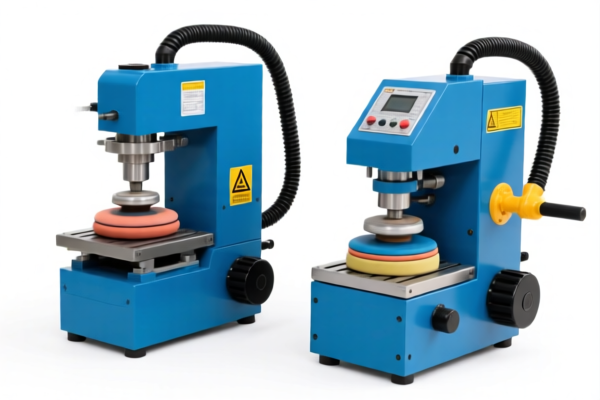
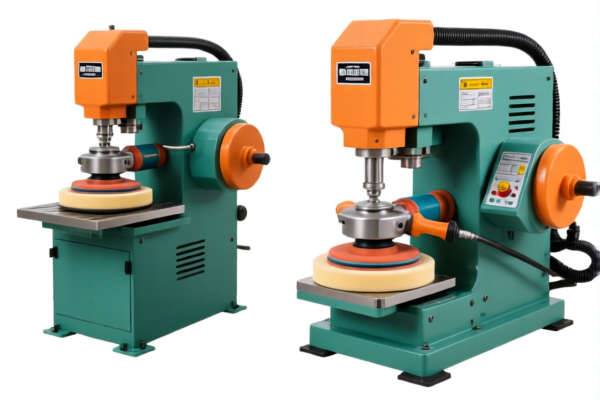
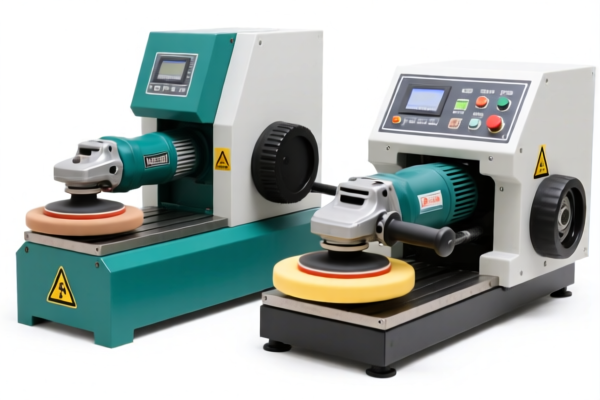
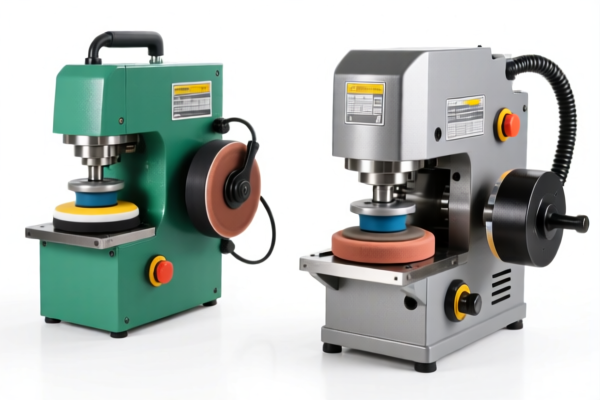
AI Analysis
⚙️ Grinding, Sharpening, Polishing, or Lapping Machine
🌐 HS Code Reference & Customs Clearance Guide | 2026 Latest Tariff Analysis | Precision Metal Processing Strategy
📌 I. Product Definition & Classification: What Exactly Are You Importing?
These machines are industrial workhorses designed for the precision finishing of metal surfaces. Whether it’s removing burrs, achieving mirror-like finishes, or sharpening tools, the classification depends heavily on the specific mechanical action and functional scope defined in the Harmonized System.
Key Distinction: * Grinding/Sharpening/Polishing/Lapping (Chapter 84.60): Machines specifically designed for these operations. This is the "Home" category for most metal finishing equipment. * General Purpose Machinery with Grinding Functions (Chapter 84.79): A "catch-all" category for machines that have grinding capabilities but don’t fit the specific definitions of Chapter 84.60, or are complex assemblies where grinding is just one function.
⚠️ Critical Classification Point:
- If the machine’s primary function is grinding, sharpening, polishing, or lapping of metals → It likely falls under 8460.xx.xx.xx.
- If the machine is a complex assembly (e.g., a robot arm with a grinder attachment, or a multi-station machine) where grinding is not the sole defining feature → It may fall under 8479.82.00.80.
📦 II. HS Code Classification Details (2026 Latest Tariff Authority对照)
| HS Code | Product Description | Application Scenario | Tax Rate (CN→US) |
|---|---|---|---|
8460.39.00.50 |
Other grinding machines (not cylindrical surface grinding) | General metal grinding, precision finishing, not covered by 8460.2x or 8460.1x. | 39.4% |
8479.82.00.80 |
Other machines and mechanical appliances having individual functions (with grinding capability) | Complex machinery, automated lines, or machines where grinding is a secondary/sub-function. | 35.0% |
8460.29.01.50 |
Cylindrical surface grinding machines | Specific for grinding cylindrical outer surfaces (shafts, pins, bearings). | 39.4% |
8460.12.00.80 |
Surface grinding machines (excluding cylindrical) | Flat surface grinding, bench grinders, large flat-bed grinders. | 39.4% |
🔍 Key Insight:
- 8460 codes generally carry a 39.4% total tax rate.
- 8479.82.00.80 carries a slightly lower 35.0% total tax rate, but is only applicable if the machine does not fit the strict definition of 8460. Misclassification here can lead to severe penalties.
💰 III. 2026 Latest Tariff Rate Breakdown (Including Surtaxes & Policy Add-ons)
✅ Applicable Country: United States (US)
✅ Country of Origin: China (CN)
✅ Effective Date: November 10, 2025 (and subsequent imports)
🎯 1. 8460.39.00.50 | 8460.29.01.50 | 8460.12.00.80 —— General Metal Grinding/Finishing Machines
| Item | Detail |
|---|---|
| Base Duty Rate | 4.4% (Ad Valorem) |
| Section 301 Surtax | +25.0% (Under US Trade Act Section 301) |
| 122 Clause Surtax | +10.0% (Specific trade measure surcharge) |
| Total Tax Rate | 39.4% |
| Tax Calculation | CIF Value × 39.4% |
| De Minimis Eligibility | ❌ No (Denied under current trade policy) |
| Legal Basis Path | USITC:8460.xx.xx.xx → 301 Footnote → 122 Clause |
📌 Explanation:
- These HS codes are classified as "Machine Tools for Working Metal by Grinding."
- The 4.4% base rate is standard under the Harmonized Tariff Schedule (HTS).
- The 25% is the standard Section 301 tariff on Chinese machinery.
- The 10% is an additional layer often applied to specific industrial machinery categories.
- Total: 39.4%. This is a high-cost entry, so accurate classification is vital.
🎯 2. 8479.82.00.80 —— Other Machines with Grinding Functions (Catch-All)
| Item | Detail |
|---|---|
| Base Duty Rate | 0.0% (Many general purpose machines have 0% base duty) |
| Section 301 Surtax | +25.0% (Under US Trade Act Section 301) |
| 122 Clause Surtax | +10.0% (Specific trade measure surcharge) |
| Total Tax Rate | 35.0% |
| Tax Calculation | CIF Value × 35.0% |
| De Minimis Eligibility | ❌ No |
| Legal Basis Path | USITC:8479.82.00.80 → 301 Footnote → 122 Clause |
📌 Explanation:
- This code is for machinery that doesn’t fit neatly into 8460.
- The base rate is 0%, but the 35% total tax is still very significant due to the 35% combined surtax.
- Savings: Potential 4.4% savings compared to 8460 codes, but only if the machine truly qualifies as "other machinery."
🛠️ IV. Customs Clearance Practical Advice (Actionable Pitfall Guide)
✅ 1. Documentation Checklist (Must-Have)
| Document | Required | Notes |
|---|---|---|
| ✅ Technical Data Sheet | ✔️ | Must clearly state: Grinding type (surface, cylindrical, etc.), max workpiece size, motor power. |
| ✅ Functional Diagram | ✔️ | Show how the grinding wheel interacts with the workpiece. Prove it’s a dedicated grinding machine (for 8460) or a general machine (for 8479). |
| ✅ Product Photos | ✔️ | Clear images of the machine, control panel, and grinding head. Include model nameplate. |
| ✅ Commercial Invoice | ✔️ | Describe as "Grinding Machine for Metal Finishing" or "Surface Grinding Machine." Avoid vague terms like "Industrial Equipment." |
| ✅ Packing List | ✔️ | List all accessories (coolant tanks, guards, tools). Do not split packing list to mislead. |
✅ 2. Classification Strategy (The Golden Rules)
🔥 “Function First, Form Second. If it grinds metal specifically, think 8460. If it’s a complex assembly, think 8479.”
| Scenario | Recommended HS Code | Risk of Misclassification |
|---|---|---|
| Dedicated Surface Grinder | 8460.12.00.80 |
Low if specs match. High if it’s a multi-function CNC mill with grinder attachment. |
| Cylindrical Grinder | 8460.29.01.50 |
Low if it’s purely for shafts/bearings. |
| General Purpose Polishing/Lapping Machine | 8460.39.00.50 |
High if it’s part of a larger automated line. |
| Robotic Arm with Grinder Head | 8479.82.00.80 |
Correct. The primary function is robotic manipulation, not grinding. |
| Bench Top Sharpener | 8460.12.00.80 or 8460.39.00.50 |
Depends on size and industrial use. |
⚠️ Warning:
- Do NOT classify a simple bench grinder as8479to save 4.4%. Customs may reclassify it to8460and charge the higher rate + penalties.
- Do NOT classify a complex CNC center with a grinding spindle as8460if grinding is not its primary purpose. It may be classified as8457or8479, but this requires strong technical justification.
✅ 3. Special Cases & Mitigation
| Case | Handling Advice |
|---|---|
| OEM Custom Grinders | Provide customer-specific engineering drawings. Proves the machine is not a standard commodity but a custom tool, supporting the specific 8460 subheading. |
| Machine Imported with Accessories | Declare the main machine and accessories together. Do not split the grinder head into a separate HS code if it’s integral. |
| Used vs. New | Both are subject to the same tariffs. However, used machinery may face additional inspection for safety/compliance. |
| Hybrid Machines (e.g., Grind + Polish + Deburr) | If the primary purpose is grinding, use 8460. If it’s a multi-station finishing line, consult a customs broker for 8479 potential. |
🌍 V. Global Market Comparison (2026 Latest)
| Country/Region | Recommended HS Code | Total Tax (CN Origin) | Certification | Notes |
|---|---|---|---|---|
| 🇺🇸 USA | 8460.xx or 8479.82 |
39.4% or 35.0% | CE/UL (optional), but Section 301 + 122 apply | Highest cost. 122 clause is key. |
| 🇨🇳 China | 8460.xx or 8479.82 |
0.0% - 5% | CCC (if applicable) | Low duty, no surtaxes. |
| 🇪🇺 EU | 8460.xx or 8479.82 |
0.0% - 4% | CE Mark | No Section 301 equivalent. |
| 🇮🇳 India | 8460.xx |
~7.5% | BIS | Higher base duty but no surtaxes. |
| 🇻🇳 Vietnam | 8460.xx |
0.0% (if local content) | No surtaxes | Potential supply chain shift. |
📌 Conclusion:
- The USA is the most expensive market for these machines due to the 35-39.4% total duty.
- EU and China offer significantly lower duty burdens.
- Supply Chain Strategy: If volume is high, consider final assembly in a third country (e.g., Vietnam, Mexico) to avoid US surtaxes, if rules of origin are met.
📌 VI. Common Errors & Pitfalls (Blood Lessons)
❌ Error 1: Classifying a CNC Milling Machine with a Grinding Spindle as 8460.
👉 Result: Customs reclassifies as 8457 (Milling Machine) or 8479. If reclassified to 8457, tax might be 301+122 on a different base. If correctly 8479, you paid 39.4% instead of 35.0%. Audit Risk.
❌ Error 2: Describing the machine vaguely as "Industrial Machine" in the invoice.
👉 Result: Customs assigns the highest default tariff or flags for manual examination. Delay + Demurrage Costs.
❌ Error 3: Assuming De Minimis applies for small bench grinders.
👉 Result: Denied. All machinery from China is subject to full duty and surtaxes, regardless of size.
❌ Error 4: Ignoring the 122 Clause.
👉 Result: Even if you get 301 exemption (rare), you still pay 10%. Ensure your tariff calculation includes Base + 301 + 122.
✅ Correct Approach:
"CNC Surface Grinding Machine, Model XYZ, Max Workpiece 1000x500mm, 3-Phase, 50Hz, for Metal Finishing."
🎯 VII. Conclusion: Precision Classification for Cost Efficiency
🎯 Remember the Rules:
🔹 "Dedicated Grinder? → 8460 (39.4%). Complex Assembly? → 8479 (35.0%)."
🔹 "No De Minimis. No Exemptions. Just Pay."
🔹 "122 Clause is Always On. Don't Forget the 10%."
📌 Pro Tip:
If you are importing high-value grinding equipment, consider Advance Rulings from CBP to confirm the correct HS Code (
8460vs.8479) before shipment. A 4.4% difference on a $100,000 machine is $4,400. On $1,000,000, it’s $44,000.
📣 Immediate Action:
📞 Contact a Licensed Customs Broker + Provide Technical Specs + Request Advance Ruling
🚀 Ensure Smooth Clearance, Avoid Audits, Maximize Profit Margins!
✨ Professional Classification Starts with Precision.
💼 Every Percentage Point Counts in International Trade.
Customer Reviews
About HS Code Classification
The Harmonized System (HS) is an internationally standardized nomenclature developed by the World Customs Organization (WCO) to classify traded products. Over 200 countries use the HS system as the basis for customs tariffs, trade statistics, and import/export regulations.
Each HS code follows a hierarchical structure:
- Chapter (2 digits) — Broad category of goods (e.g., Chapter 84: Machinery and Mechanical Appliances)
- Heading (4 digits) — More specific grouping within the chapter
- Subheading (6 digits) — Internationally standardized breakdown, used by all WCO member countries
- National subdivisions (8-10 digits) — Country-specific extensions for further classification, such as US HTSUS 10-digit codes
Correct HS code classification is essential for smooth customs clearance, accurate duty payment, and compliance with trade regulations. Misclassification can lead to customs delays, overpayment of duties, or penalties.
When importing from CN to US, the applicable tariff rates may include:
- Most-Favored-Nation (MFN) rate — The standard duty rate applied to WTO members
- General rate — Applied to countries without trade agreements
- Trade remedy duties — Additional tariffs such as Section 301 (anti-dumping), Section 232 (national security), or countervailing duties
The information provided on this page is for reference purposes only. For official classification, please consult with your local customs authority or a licensed customs broker.