Guitar Accessories: Bridge
CN → US| HS编码 | 关税税率 | 原产国 | 目的国 | 文档 |
|---|---|---|---|---|
| 7326908688 | 87.9% | CN | US | 官方文档 |
| 7326190080 | 87.9% | CN | US | 官方文档 |
| 9209928000 | 22.1% | CN | US | 官方文档 |
| 9209300000 | 17.5% | CN | US | 官方文档 |
商品图片
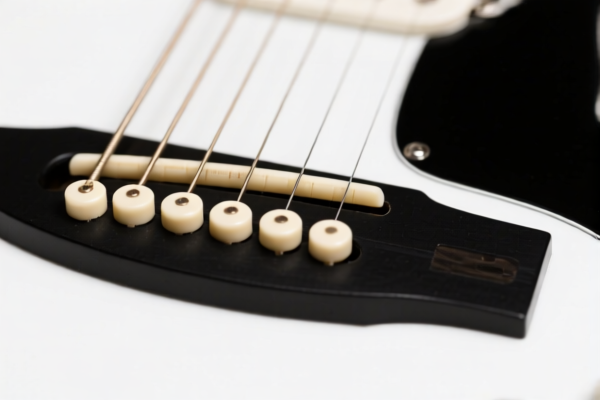
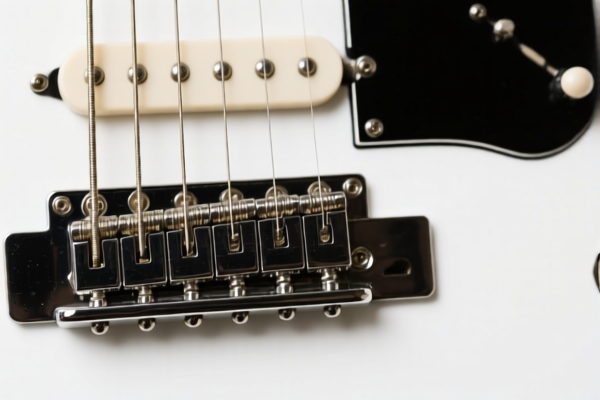
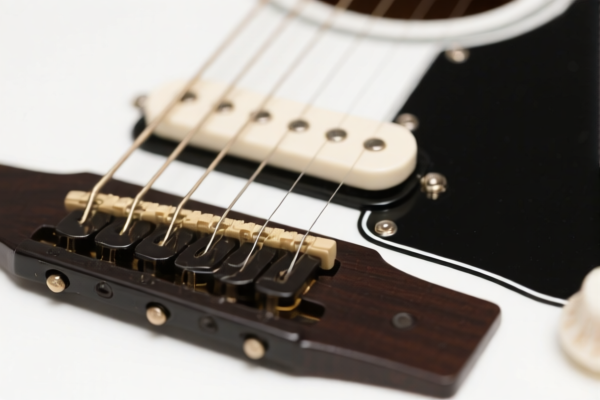
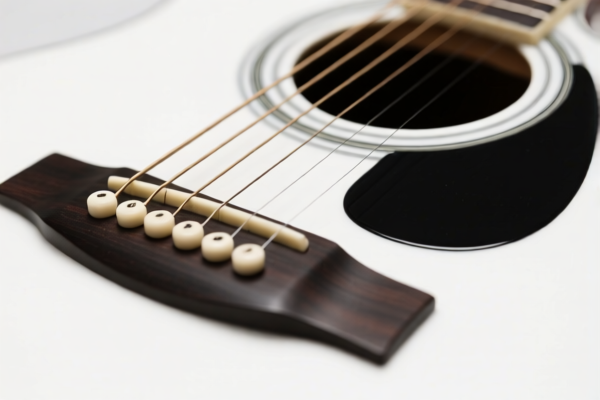
AI分析
🎸 Guitar Accessories: Bridge (Guitar Bridges)
🌐 HS Code Reference & Clearance Guide | 2026 Latest Tariff Analysis | Professional Customs Strategy
📌 1. Product Definition: What Exactly is a "Guitar Bridge"?
A guitar bridge is a critical component that transfers string vibration to the body of the instrument. In international trade, it is not a single standardized item but varies significantly by material, function, and final assembly stage. The classification depends heavily on whether it is:
- Instrument-Specific Parts (Chapter 92): Designed specifically for musical instruments (e.g., a fixed steel bridge for a Stratocaster, a tailpiece for a Gibson Les Paul).
- General Metal Hardware (Chapter 73): Generic metal components, fasteners, or brackets that are not exclusively identifiable as instrument parts.
⚠️ Key Distinction:
- If the bridge is clearly identifiable as a part for a musical instrument (e.g., shaped specifically for string anchoring and saddle placement) → It belongs to Chapter 92.
- If it is a generic metal part (e.g., a plain steel bracket, unshaped metal plate) that could serve other mechanical purposes → It may be misclassified under Chapter 73, leading to severe penalties.
📦 2. HS Code Classification Matrix (Based on Provided Data)
| HS Code | Product Description | Source Summary | Tax Rate (US/China) |
|---|---|---|---|
7326.90.86.88 |
Other articles of iron or steel (Generic Metal Parts) | Material inferred as metal; classified under "other" items for components/parts. Falls into the catch-all category for non-specific metal parts. | 87.9% (Base 2.9% + 25% + Section 232 50%) |
7326.19.00.80 |
Other articles of iron or steel (General Metal Hardware) | Inferred as steel/metal components; falls under "other" categories for steel articles. Similar to above, treated as general hardware. | 87.9% (Base 2.9% + 25% + Section 232 50%) |
9209.92.80.00 |
Parts and accessories for instruments (General Instrument Parts) | Specifically identified as instrument parts. Fits the definition of parts/accessories for instruments under Chapter 92. Material is typically metal or wood. | 22.1% (Base 4.6% + 7.5% + Section 301 10%) |
9209.30.00.00 |
Parts and accessories for instruments (String Instrument Parts) | Identified as parts/accessories for string instruments (guitars). Fits the specific subheading for string instrument parts. | 17.5% (Base 0.0% + 7.5% + Section 301 10%) |
🔍 Critical Note:
- Misclassification Risk: Classifying a guitar bridge as7326.xxxx(generic steel) instead of9209.xxxx(instrument part) results in a tax rate of 87.9% instead of 17.5-22.1%. This is a 70%+ tax difference!
- Evidence Required: To justify Chapter 92, you must prove the item is exclusively or primarily used for musical instruments.
💰 3. 2026 Tariff Rate Breakdown (Detailed Analysis)
✅ Applicable Country: United States (US)
✅ Origin: China (CN)
✅ Effective Date: Post-November 2025
🎯 1. BEST CASE: 9209.30.00.00 (String Instrument Parts)
| Item | Detail |
|---|---|
| Base Tariff | 0.0% |
| Section 301 Tariff | +10% (Specific to 122 provisions for certain goods) |
| Other Surcharges | +7.5% (Additional duties under recent trade actions) |
| Total Effective Rate | 17.5% |
| Legal Path | 9209.30.00.00 → Section 301 10% → Additional 7.5% |
📌 Why this is the best:
- Lowest Tax: Only 17.5%.
- Justification: Bridges are essential, specialized parts of string instruments (guitars). Customs recognizes them as "parts of instruments" under HTS 9209.30.
🎯 2. ALTERNATIVE CASE: 9209.92.80.00 (Other Instrument Parts)
| Item | Detail |
|---|---|
| Base Tariff | 4.6% |
| Section 301 Tariff | +10% |
| Other Surcharges | +7.5% |
| Total Effective Rate | 22.1% |
| Legal Path | 9209.92.80.00 → Section 301 10% → Additional 7.5% |
📌 Why this might apply:
- If the bridge is considered a "general instrument part" rather than specifically a "string instrument part" (e.g., for electric guitars where the distinction might be debated in some older rulings, though 9209.30 is more specific), this rate applies.
- Still vastly superior to Chapter 73.
🎯 3. WRONG CASE: 7326.90.86.88 / 7326.19.00.80 (Generic Steel Parts)
| Item | Detail |
|---|---|
| Base Tariff | 2.9% |
| Section 232 Tariff (Steel/Aluminum) | +50% (122 Provision: Steel/Aluminum/Copper products) |
| Section 301 Tariff | +25% |
| Total Effective Rate | 87.9% |
| Legal Path | 7326.xxxx → Section 232 50% → Section 301 25% |
⚠️ DANGER ZONE:
- Section 232 Tariff (50%): This is applied to steel and aluminum products due to national security concerns. If Customs determines your guitar bridge is a "steel article" not specifically exempted as an instrument part, this 50% surcharge kicks in.
- Result: Your tax bill 5x higher than necessary.
- Common Mistake: Declaring as "Metal Parts" or "Hardware" without specifying "Guitar Parts."
🛠️ 4. Customs Clearance Practical Advice (Avoiding Pitfalls)
✅ 1. Documentation Checklist (Non-Negotiable)
| Document | Requirement | Purpose |
|---|---|---|
| Product Photos | Clear images of the bridge, including mounting points, string slots, and any branding. | Prove it is a guitar bridge, not a generic bracket. |
| Technical Drawing | Diagram showing dimensions and attachment points for guitar strings. | Demonstrate specific use for musical instruments. |
| Commercial Invoice | Description must include: "Guitar Bridge, Model XYZ, Made of Steel/Brass, for Guitar String Anchoring." | Never use vague terms like "Metal Parts" or "Hardware." |
| Material Certificate | Specify material (e.g., Stainless Steel, Brass, Aluminum). | Helps Customs apply correct Section 232 vs. Chapter 92 logic. |
| HS Code Declaration | Explicitly state HTS 9209.30.00.00. | Aligns declaration with legal classification. |
✅ 2. Declaration Strategy (Key Phrases)
🔥 “Be Specific: Guitar Bridge, Not Metal Part!”
| Scenario | Correct Declaration | Incorrect Declaration |
|---|---|---|
| Standard Guitar Bridge | "Guitar Bridge Assembly, for Electric Acoustic Guitar, Steel, Model ABC" |
"Metal Parts of Instruments" or "Steel Hardware" |
| Bridge with Saddles | "Guitar Bridge and Saddles Set for String Instruments" |
"Metal Components" |
| Raw Bridge Material | "Precision-machined Guitar Bridge, unfinished, for assembly into guitars" |
"Steel Sheets/Plates" |
📌 Tip:
- Use the word "Guitar" or "String Instrument" in the first line of the description.
- Avoid terms like "Bracket," "Holder," or "Fastener" unless accompanied by "for Guitar."
✅ 3. Special Circumstances
| Situation | Recommendation |
|---|---|
| OEM Custom Bridges | Provide design files showing guitar-specific geometry. |
| Bridges with Electronic Components | If active (e.g., piezo pickups in the bridge), may require Chapter 85 classification. Consult expert. |
| Mixed Shipments | If shipping with other guitar parts, declare each item separately with correct HS codes. Do not group all as "Metal Parts." |
| Precedent Rulings | Check for previous US Customs Rulings (NY N292158, etc.) that classify guitar parts under 9209. Use these as leverage. |
🌍 5. Global Market Comparison (2026)
| Region | Recommended HS Code | Tariff Rate | Notes |
|---|---|---|---|
| 🇺🇸 USA | 9209.30.00.00 |
17.5% | Must prove "instrument part" status to avoid 87.9% steel tariff. |
| 🇨🇳 China | 9209.92.00.00 |
~5-10% | Lower duties, but verify local HS alignment. |
| 🇪🇺 EU | 9209.92.00 |
0-4% | Generally low tariffs for instrument parts. No Section 232 equivalent. |
| 🇬🇧 UK | 9209.92.00 |
0% | Post-Brexit, many instrument parts have 0% duty. |
| 🇨🇦 Canada | 9209.92.00 |
0% | USMCA/CUSMA may offer further benefits if manufactured in North America. |
📌 Conclusion:
- USA is the highest-risk market due to Section 232 steel tariffs.
- Correct classification is critical: A $100 bridge taxed at 17.5% = $17.50 duty. At 87.9% = $87.90 duty.
- Always use Chapter 92 for guitar bridges unless proven otherwise.
📌 6. Common Errors & Pitfalls (Lessons Learned)
❌ Error 1: Declaring as "Metal Parts of Musical Instruments" under Chapter 73.
👉 Consequence: 87.9% tariff. Customs applies Section 232 steel tariff.
👉 Fix: Use HTS 9209.30.00.00.
❌ Error 2: Using generic terms like "Hardware" or "Fittings."
👉 Consequence: Customs reclassifies as steel article. Delay + penalties.
👉 Fix: Always specify "Guitar Bridge."
❌ Error 3: Not providing photos or technical specs.
👉 Consequence: Customs assumes worst case (generic steel).
👉 Fix: Attach photos showing string slots and guitar-specific shape.
❌ Error 4: Assuming all metal parts are instruments parts.
👉 Consequence: Some generic brackets may be classified under Chapter 73.
👉 Fix: Ensure the item is specifically designed for guitars (e.g., has string saddles, specific mounting holes).
✅ Correct Declaration Example:
"Guitar Bridge, Model X1, Stainless Steel, for Electric Guitar, Includes Saddles, HTS 9209.30.00.00"
🎯 7. Conclusion: Smart Classification, Smart Savings!
🎯 Key Takeaway:
🔹 "Guitar Bridge = Instrument Part = Chapter 92. Metal Part = Chapter 73 = Disaster!"
🔹 Save 70% in taxes by classifying correctly.
📌 Pro Tip:
If you are unsure, apply for a Customs Ruling (CBP Ruling) before shipping. It provides legal certainty and protects you from retrospective audits.
📣 Immediate Action:
📞 Contact your customs broker and provide:
1. Photos of the bridge.
2. Technical drawings.
3. Clear declaration: "Guitar Bridge for String Instruments."
🚀 Avoid the 87.9% steel trap. Pay only 17.5%.
✨ Accurate classification saves thousands. Don't leave money on the table!
💼 Every bridge counts. Make sure it counts correctly.
用户评价
关于 HS 编码归类
协调制度(HS)是由世界海关组织(WCO)制定的国际贸易商品分类标准。全球 200 多个国家采用 HS 系统作为海关关税、贸易统计和进出口监管的基础。
每个 HS 编码遵循以下层级结构:
- 章(2 位)——商品大类(例如:第 84 章:机器和机械设备)
- 品目(4 位)——章内的更具体分类
- 子目(6 位)——国际通用细分,所有 WCO 成员国统一使用
- 本国细分(8-10 位)——各国自行扩展的细分编码,如美国 HTSUS 10 位编码
正确的 HS 编码归类对于顺利通关、准确缴纳关税和遵守贸易法规至关重要。错误归类可能导致海关延误、多缴关税或罚款。
从CN进口到US时,适用的关税税率可能包括:
- 最惠国(MFN)税率——适用于 WTO 成员国的标准关税税率
- 普通税率——适用于无贸易协定国家
- 贸易救济关税——附加关税,如 301 条款(反倾销)、232 条款(国家安全)或反补贴税
本页内容仅供参考。如需正式归类,请咨询当地海关或持牌报关代理。