Guitar Accessories: Bridge
CN → US| HS Code | Tariff Rate | Origin | Destination | Doc |
|---|---|---|---|---|
| 7326908688 | 87.9% | CN | US | Official Doc |
| 7326190080 | 87.9% | CN | US | Official Doc |
| 9209928000 | 22.1% | CN | US | Official Doc |
| 9209300000 | 17.5% | CN | US | Official Doc |
Product Images
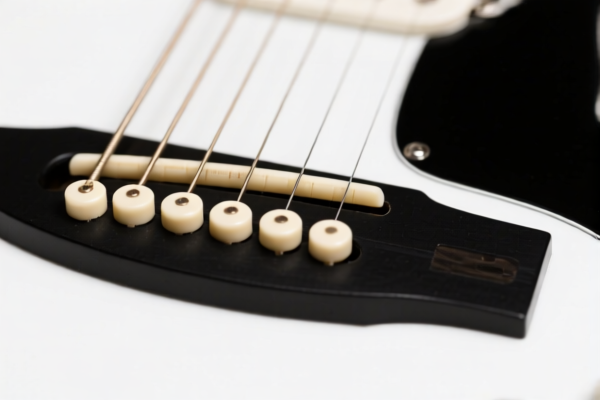
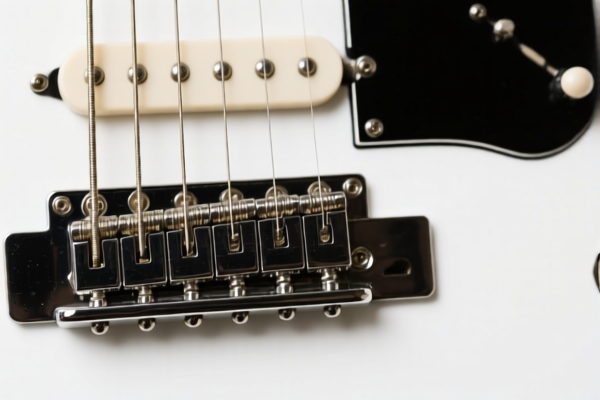
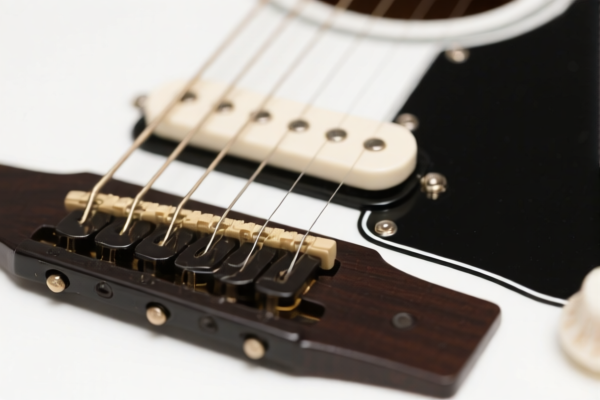

AI Analysis
🎸 Guitar Accessories: Bridge (Guitar Bridges)
🌐 HS Code Reference & Clearance Guide | 2026 Latest Tariff Analysis | Professional Customs Strategy
📌 1. Product Definition: What Exactly is a "Guitar Bridge"?
A guitar bridge is a critical component that transfers string vibration to the body of the instrument. In international trade, it is not a single standardized item but varies significantly by material, function, and final assembly stage. The classification depends heavily on whether it is:
- Instrument-Specific Parts (Chapter 92): Designed specifically for musical instruments (e.g., a fixed steel bridge for a Stratocaster, a tailpiece for a Gibson Les Paul).
- General Metal Hardware (Chapter 73): Generic metal components, fasteners, or brackets that are not exclusively identifiable as instrument parts.
⚠️ Key Distinction:
- If the bridge is clearly identifiable as a part for a musical instrument (e.g., shaped specifically for string anchoring and saddle placement) → It belongs to Chapter 92.
- If it is a generic metal part (e.g., a plain steel bracket, unshaped metal plate) that could serve other mechanical purposes → It may be misclassified under Chapter 73, leading to severe penalties.
📦 2. HS Code Classification Matrix (Based on Provided Data)
| HS Code | Product Description | Source Summary | Tax Rate (US/China) |
|---|---|---|---|
7326.90.86.88 |
Other articles of iron or steel (Generic Metal Parts) | Material inferred as metal; classified under "other" items for components/parts. Falls into the catch-all category for non-specific metal parts. | 87.9% (Base 2.9% + 25% + Section 232 50%) |
7326.19.00.80 |
Other articles of iron or steel (General Metal Hardware) | Inferred as steel/metal components; falls under "other" categories for steel articles. Similar to above, treated as general hardware. | 87.9% (Base 2.9% + 25% + Section 232 50%) |
9209.92.80.00 |
Parts and accessories for instruments (General Instrument Parts) | Specifically identified as instrument parts. Fits the definition of parts/accessories for instruments under Chapter 92. Material is typically metal or wood. | 22.1% (Base 4.6% + 7.5% + Section 301 10%) |
9209.30.00.00 |
Parts and accessories for instruments (String Instrument Parts) | Identified as parts/accessories for string instruments (guitars). Fits the specific subheading for string instrument parts. | 17.5% (Base 0.0% + 7.5% + Section 301 10%) |
🔍 Critical Note:
- Misclassification Risk: Classifying a guitar bridge as7326.xxxx(generic steel) instead of9209.xxxx(instrument part) results in a tax rate of 87.9% instead of 17.5-22.1%. This is a 70%+ tax difference!
- Evidence Required: To justify Chapter 92, you must prove the item is exclusively or primarily used for musical instruments.
💰 3. 2026 Tariff Rate Breakdown (Detailed Analysis)
✅ Applicable Country: United States (US)
✅ Origin: China (CN)
✅ Effective Date: Post-November 2025
🎯 1. BEST CASE: 9209.30.00.00 (String Instrument Parts)
| Item | Detail |
|---|---|
| Base Tariff | 0.0% |
| Section 301 Tariff | +10% (Specific to 122 provisions for certain goods) |
| Other Surcharges | +7.5% (Additional duties under recent trade actions) |
| Total Effective Rate | 17.5% |
| Legal Path | 9209.30.00.00 → Section 301 10% → Additional 7.5% |
📌 Why this is the best:
- Lowest Tax: Only 17.5%.
- Justification: Bridges are essential, specialized parts of string instruments (guitars). Customs recognizes them as "parts of instruments" under HTS 9209.30.
🎯 2. ALTERNATIVE CASE: 9209.92.80.00 (Other Instrument Parts)
| Item | Detail |
|---|---|
| Base Tariff | 4.6% |
| Section 301 Tariff | +10% |
| Other Surcharges | +7.5% |
| Total Effective Rate | 22.1% |
| Legal Path | 9209.92.80.00 → Section 301 10% → Additional 7.5% |
📌 Why this might apply:
- If the bridge is considered a "general instrument part" rather than specifically a "string instrument part" (e.g., for electric guitars where the distinction might be debated in some older rulings, though 9209.30 is more specific), this rate applies.
- Still vastly superior to Chapter 73.
🎯 3. WRONG CASE: 7326.90.86.88 / 7326.19.00.80 (Generic Steel Parts)
| Item | Detail |
|---|---|
| Base Tariff | 2.9% |
| Section 232 Tariff (Steel/Aluminum) | +50% (122 Provision: Steel/Aluminum/Copper products) |
| Section 301 Tariff | +25% |
| Total Effective Rate | 87.9% |
| Legal Path | 7326.xxxx → Section 232 50% → Section 301 25% |
⚠️ DANGER ZONE:
- Section 232 Tariff (50%): This is applied to steel and aluminum products due to national security concerns. If Customs determines your guitar bridge is a "steel article" not specifically exempted as an instrument part, this 50% surcharge kicks in.
- Result: Your tax bill 5x higher than necessary.
- Common Mistake: Declaring as "Metal Parts" or "Hardware" without specifying "Guitar Parts."
🛠️ 4. Customs Clearance Practical Advice (Avoiding Pitfalls)
✅ 1. Documentation Checklist (Non-Negotiable)
| Document | Requirement | Purpose |
|---|---|---|
| Product Photos | Clear images of the bridge, including mounting points, string slots, and any branding. | Prove it is a guitar bridge, not a generic bracket. |
| Technical Drawing | Diagram showing dimensions and attachment points for guitar strings. | Demonstrate specific use for musical instruments. |
| Commercial Invoice | Description must include: "Guitar Bridge, Model XYZ, Made of Steel/Brass, for Guitar String Anchoring." | Never use vague terms like "Metal Parts" or "Hardware." |
| Material Certificate | Specify material (e.g., Stainless Steel, Brass, Aluminum). | Helps Customs apply correct Section 232 vs. Chapter 92 logic. |
| HS Code Declaration | Explicitly state HTS 9209.30.00.00. | Aligns declaration with legal classification. |
✅ 2. Declaration Strategy (Key Phrases)
🔥 “Be Specific: Guitar Bridge, Not Metal Part!”
| Scenario | Correct Declaration | Incorrect Declaration |
|---|---|---|
| Standard Guitar Bridge | "Guitar Bridge Assembly, for Electric Acoustic Guitar, Steel, Model ABC" |
"Metal Parts of Instruments" or "Steel Hardware" |
| Bridge with Saddles | "Guitar Bridge and Saddles Set for String Instruments" |
"Metal Components" |
| Raw Bridge Material | "Precision-machined Guitar Bridge, unfinished, for assembly into guitars" |
"Steel Sheets/Plates" |
📌 Tip:
- Use the word "Guitar" or "String Instrument" in the first line of the description.
- Avoid terms like "Bracket," "Holder," or "Fastener" unless accompanied by "for Guitar."
✅ 3. Special Circumstances
| Situation | Recommendation |
|---|---|
| OEM Custom Bridges | Provide design files showing guitar-specific geometry. |
| Bridges with Electronic Components | If active (e.g., piezo pickups in the bridge), may require Chapter 85 classification. Consult expert. |
| Mixed Shipments | If shipping with other guitar parts, declare each item separately with correct HS codes. Do not group all as "Metal Parts." |
| Precedent Rulings | Check for previous US Customs Rulings (NY N292158, etc.) that classify guitar parts under 9209. Use these as leverage. |
🌍 5. Global Market Comparison (2026)
| Region | Recommended HS Code | Tariff Rate | Notes |
|---|---|---|---|
| 🇺🇸 USA | 9209.30.00.00 |
17.5% | Must prove "instrument part" status to avoid 87.9% steel tariff. |
| 🇨🇳 China | 9209.92.00.00 |
~5-10% | Lower duties, but verify local HS alignment. |
| 🇪🇺 EU | 9209.92.00 |
0-4% | Generally low tariffs for instrument parts. No Section 232 equivalent. |
| 🇬🇧 UK | 9209.92.00 |
0% | Post-Brexit, many instrument parts have 0% duty. |
| 🇨🇦 Canada | 9209.92.00 |
0% | USMCA/CUSMA may offer further benefits if manufactured in North America. |
📌 Conclusion:
- USA is the highest-risk market due to Section 232 steel tariffs.
- Correct classification is critical: A $100 bridge taxed at 17.5% = $17.50 duty. At 87.9% = $87.90 duty.
- Always use Chapter 92 for guitar bridges unless proven otherwise.
📌 6. Common Errors & Pitfalls (Lessons Learned)
❌ Error 1: Declaring as "Metal Parts of Musical Instruments" under Chapter 73.
👉 Consequence: 87.9% tariff. Customs applies Section 232 steel tariff.
👉 Fix: Use HTS 9209.30.00.00.
❌ Error 2: Using generic terms like "Hardware" or "Fittings."
👉 Consequence: Customs reclassifies as steel article. Delay + penalties.
👉 Fix: Always specify "Guitar Bridge."
❌ Error 3: Not providing photos or technical specs.
👉 Consequence: Customs assumes worst case (generic steel).
👉 Fix: Attach photos showing string slots and guitar-specific shape.
❌ Error 4: Assuming all metal parts are instruments parts.
👉 Consequence: Some generic brackets may be classified under Chapter 73.
👉 Fix: Ensure the item is specifically designed for guitars (e.g., has string saddles, specific mounting holes).
✅ Correct Declaration Example:
"Guitar Bridge, Model X1, Stainless Steel, for Electric Guitar, Includes Saddles, HTS 9209.30.00.00"
🎯 7. Conclusion: Smart Classification, Smart Savings!
🎯 Key Takeaway:
🔹 "Guitar Bridge = Instrument Part = Chapter 92. Metal Part = Chapter 73 = Disaster!"
🔹 Save 70% in taxes by classifying correctly.
📌 Pro Tip:
If you are unsure, apply for a Customs Ruling (CBP Ruling) before shipping. It provides legal certainty and protects you from retrospective audits.
📣 Immediate Action:
📞 Contact your customs broker and provide:
1. Photos of the bridge.
2. Technical drawings.
3. Clear declaration: "Guitar Bridge for String Instruments."
🚀 Avoid the 87.9% steel trap. Pay only 17.5%.
✨ Accurate classification saves thousands. Don't leave money on the table!
💼 Every bridge counts. Make sure it counts correctly.
Customer Reviews
About HS Code Classification
The Harmonized System (HS) is an internationally standardized nomenclature developed by the World Customs Organization (WCO) to classify traded products. Over 200 countries use the HS system as the basis for customs tariffs, trade statistics, and import/export regulations.
Each HS code follows a hierarchical structure:
- Chapter (2 digits) — Broad category of goods (e.g., Chapter 84: Machinery and Mechanical Appliances)
- Heading (4 digits) — More specific grouping within the chapter
- Subheading (6 digits) — Internationally standardized breakdown, used by all WCO member countries
- National subdivisions (8-10 digits) — Country-specific extensions for further classification, such as US HTSUS 10-digit codes
Correct HS code classification is essential for smooth customs clearance, accurate duty payment, and compliance with trade regulations. Misclassification can lead to customs delays, overpayment of duties, or penalties.
When importing from CN to US, the applicable tariff rates may include:
- Most-Favored-Nation (MFN) rate — The standard duty rate applied to WTO members
- General rate — Applied to countries without trade agreements
- Trade remedy duties — Additional tariffs such as Section 301 (anti-dumping), Section 232 (national security), or countervailing duties
The information provided on this page is for reference purposes only. For official classification, please consult with your local customs authority or a licensed customs broker.