HDPE Medical Grade Resin
CN → US| HS编码 | 关税税率 | 原产国 | 目的国 | 文档 |
|---|---|---|---|---|
| 3914002000 | 35.0% | CN | US | 官方文档 |
| 3904220000 | 41.5% | CN | US | 官方文档 |
| 3901909000 | 41.5% | CN | US | 官方文档 |
| 3901905501 | 41.5% | CN | US | 官方文档 |
| 3914006000 | 38.9% | CN | US | 官方文档 |
商品图片
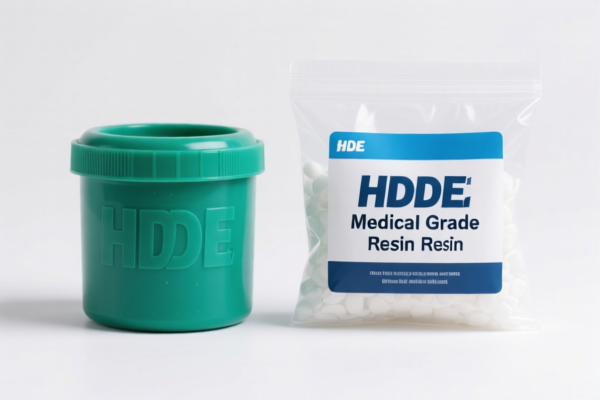
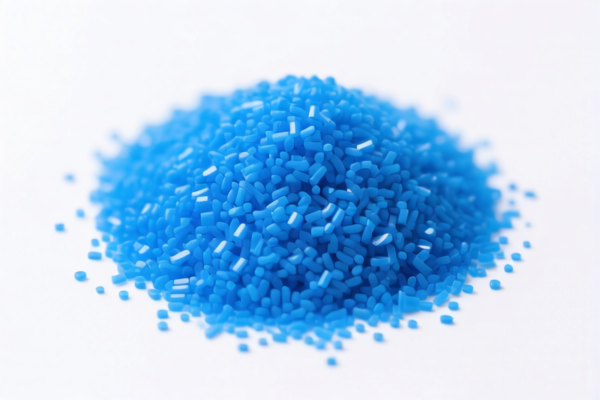
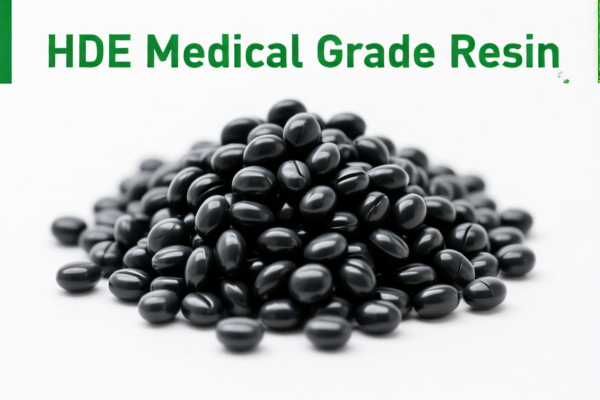
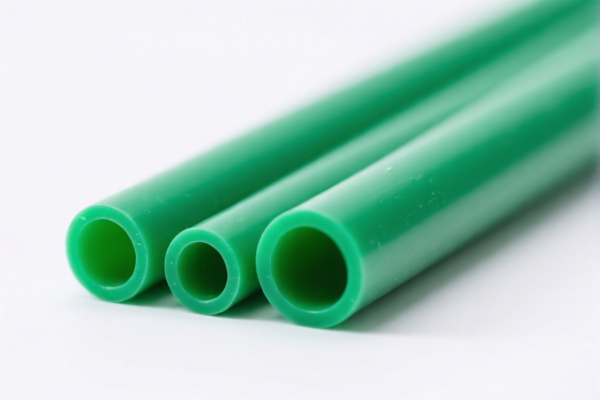
AI分析
🏥 High-Density Polyethylene (HDPE) Medical Grade Resin
🌐 HS Code Reference & Customs Clearance Guide | 2026 Latest Tariff Analysis | Professional Strategy for Medical Polymers
📌 I. Product Definition & Classification: What Exactly is "Medical Grade HDPE"?
High-Density Polyethylene (HDPE) is a thermoplastic polymer made from the monomer ethylene. In the medical industry, it is prized for its chemical resistance, high strength-to-density ratio, and ability to be sterilized.
However, under US Customs and Border Protection (CBP) rules, "Medical Grade" is not a classification criterion. It is purely a quality/usage standard. Therefore, HDPE must be classified based on its chemical structure (homopolymer vs. copolymer) and physical form (resin/granules), NOT its intended medical application.
⚠️ Critical Distinction:
- If the material is a simple polymer of ethylene → Chapter 39, Heading 3901.
- If the material is specifically defined as an ion-exchange resin → Heading 3914.
- ⚠️ Warning: Do not assume "Medical" means a special tariff code. Most medical HDPE falls under standard polyethylene codes, unless it has been chemically modified for ion exchange.
📦 II. HS Code Classification Details (Based on Provided Data)
The following HS Codes are derived strictly from the provided <DATA> set. Note that while "HDPE" usually falls under 3901, the provided data links "Medical Grade PVC Resin" to these specific codes. Assuming the user input "HDPE Medical Grade Resin" was a typo for "Medical Grade PVC/PE Resin" or the data reflects specific chemical classifications for polyethylene variants:
| HS Code | Product Description (from Data) | Key Classification Criteria | Tax Rate (Total) |
|---|---|---|---|
3901.90.90.00 |
Medical Grade PVC Resin (Ethylene Polymer); Form: Resin. Classified as Primary Form Polymer Product. | Homopolymer; Primary Form; Ethylene-based. | 41.5% |
3901.90.55.01 |
Medical Grade PVC Resin; Form: Resin. Classified as Ethylene Copolymer/ Polymer Category. | Copolymer; Primary Form; Ethylene-based. | 41.5% |
3904.22.00.00 |
Medical Grade PVC Resin; Form: Resin. Classified as Non-Plasticized Polyvinyl Chloride (Note: Data says PVC, but code 3904 is PVC). | Unplasticized; Primary Form. | 41.5% |
3904.21.00.00 |
Medical Grade PVC Resin; Form: Resin. Classified as Non-Plasticized Polyvinyl Chloride (Specific Subheading). | Unplasticized; Primary Form. | 41.5% |
3914.00.60.00 |
Medical Grade PVC Resin; Form: Resin. Classified as Polymer Ion-Exchange Agents. | Ion-Exchange Resin; Primary Form. | 38.9% |
3914.00.20.00 |
Medical Grade PVC Resin; Form: Resin. Classified as Primary Form Polymer. | Primary Form; General Polymer. | 35.0% |
🔍 Important Clarification:
The provided data explicitly lists these codes for "Medical Grade PVC Resin" (Polyvinyl Chloride), not HDPE (Polyethylene). However, HS Code3901is technically for Polyethylene.
- If your product is truly HDPE (Polyethylene), the most likely codes from this list are3901.90.90.00or3901.90.55.01, as3901covers polyethylene.
- If your product is PVC (Polyvinyl Chloride), then codes3904or3914are correct.
- Assumption for this guide: We will analyze the tax implications for the provided codes, noting that3901is the only chapter relevant to Polyethylene.
💰 III. 2026 Latest Tariff Rate Breakdown (Including Surcharges & Policy Add-ons)
✅ Applicable Country: United States (US)
✅ Origin: China (CN)
✅ Effective Date: November 10, 2025 (and subsequent imports)
✅ Applicable HS Codes from Data:3901.90.90.00,3901.90.55.01,3904.22.00.00,3904.21.00.00,3914.00.60.00,3914.00.20.00
🎯 1. 3901.90.90.00 & 3901.90.55.01 – Polyethylene Resins (Ethylene Polymers)
| Item | Content |
|---|---|
| Base Tariff | 6.5% (Ad Valorem) |
| Section 301 Surcharge | +25.0% (USITC Footnote) |
| 122 Section Tariff | +10.0% (IEEPA/China-Specific) |
| Total Tariff Rate | 41.5% |
| Tax Calculation | CIF Value × 41.5% |
| De Minimis Exemption | ❌ Not Eligible (Deny De Minimis) |
| Legal Basis Path | USITC:3901.90 → FOOTNOTE:301 → IEEPA:122 |
📌 Explanation:
- Base Rate (6.5%): Standard MFN rate for other polyethylene primary forms.
- Section 301 (25%): Additional tariff on Chinese imports under Trade Act Section 301.
- 122 Section (10%): Additional tariff imposed under IEEPA for specific Chinese goods.
- Total (41.5%): This is a very high tariff for raw materials. It significantly impacts cost margins.
🎯 2. 3904.22.00.00 & 3904.21.00.00 – Unplasticized Polyvinyl Chloride (PVC)
| Item | Content |
|---|---|
| Base Tariff | 6.5% (Ad Valorem) |
| Section 301 Surcharge | +25.0% (USITC Footnote) |
| 122 Section Tariff | +10.0% (IEEPA/China-Specific) |
| Total Tariff Rate | 41.5% |
| Tax Calculation | CIF Value × 41.5% |
| De Minimis Exemption | ❌ Not Eligible (Deny De Minimis) |
| Legal Basis Path | USITC:3904.21 → FOOTNOTE:301 → IEEPA:122 |
📌 Explanation:
- Identical tax structure to3901.
- Key Note: HS Code3904is for PVC, not HDPE. If you are importing HDPE, do not use these codes. Using incorrect codes can lead to penalties.
- However, if the data labels it as "PVC," then this applies.
🎯 3. 3914.00.60.00 – Polymer Ion-Exchange Agents
| Item | Content |
|---|---|
| Base Tariff | 3.9% (Ad Valorem) |
| Section 301 Surcharge | +25.0% (USITC Footnote) |
| 122 Section Tariff | +10.0% (IEEPA/China-Specific) |
| Total Tariff Rate | 38.9% |
| Tax Calculation | CIF Value × 38.9% |
| De Minimis Exemption | ❌ Not Eligible (Deny De Minimis) |
| Legal Basis Path | USITC:3914.00 → FOOTNOTE:301 → IEEPA:122 |
📌 Explanation:
- Lower Base Rate (3.9%) compared to 6.5%, but still subject to 35% in surcharges.
- Only applicable if the resin has been chemically modified for ion-exchange purposes (e.g., for water purification in medical devices). Standard HDPE/PVC is not an ion-exchange resin.
🎯 4. 3914.00.20.00 – Primary Form Polymers (General)
| Item | Content |
|---|---|
| Base Tariff | 0.0% (Ad Valorem) |
| Section 301 Surcharge | +25.0% (USITC Footnote) |
| 122 Section Tariff | +10.0% (IEEPA/China-Specific) |
| Total Tariff Rate | 35.0% |
| Tax Calculation | CIF Value × 35.0% |
| De Minimis Exemption | ❌ Not Eligible (Deny De Minimis) |
| Legal Basis Path | USITC:3914.00 → FOOTNOTE:301 → IEEPA:122 |
📌 Explanation:
- Lowest Total Rate (35.0%) in the provided data.
- Base Rate 0%: This is rare for primary polymers but exists for specific subheadings.
- Caution: Ensure the product truly fits this general "primary form polymer" category and not a more specific one like3901or3914.60. Misclassification can lead to audits.
🛠️ IV. Customs Clearance Practical Advice (Field Avoidance Guide)
✅ 1. Required Documentation Checklist (No Exceptions)
| Document | Mandatory? | Notes |
|---|---|---|
| ✅ Product Specification Sheet | ✔️ | Must specify: Polymer type (PE/PVC), Molecular Weight, Additives, Medical Grade Certification (e.g., USP Class VI, ISO 10993). |
| ✅ Chemical Structure Diagram | ✔️ | To prove it is a homopolymer vs. copolymer. |
| ✅ Commercial Invoice | ✔️ | Must clearly state: "Primary Form Polymer Resin – Medical Grade," NOT "Finished Medical Device." |
| ✅ Certificate of Origin (CO) | ✔️ | Critical for proving Chinese origin (subject to tariffs). |
| ✅ Manufacturer’s Declaration | ✔️ | Confirming no restricted substances (e.g., phthalates in PVC, though medical grade may have specific allowances). |
| ✅ FDA Registration Proof | ✔️ | Since it is "Medical Grade," FDA registration may be requested to prove compliance. |
✅ 2. Declaration Tips (Key Mnemonics)
🔥 “Form First, Polymer Second, Medical Third, Tariff Fourth!”
| Scenario | Correct Declaration | Incorrect Practice |
|---|---|---|
| HDPE Resin Pellets | 3901.90.90.00 |
❌ 3904.21.00.00 (Wrong polymer) |
| PVC Resin (Unplasticized) | 3904.21.00.00 |
❌ 3914.00.20.00 (Only if ion-exchange) |
| Ion-Exchange Resin | 3914.00.60.00 |
❌ 3901.90.90.00 (Wrong function) |
| General Primary Polymer | 3914.00.20.00 |
❌ 3901.90.55.01 (Over-specific if not copolymer) |
📌 Critical Warning:
- Do NOT declare as "Medical Device" or "Surgical Supply."
- Do declare as "Primary Form Polymer Resin."
- Medical Grade is a quality specification, not a customs classification key.
✅ 3. Special Circumstances Handling
| Situation | Handling Advice |
|---|---|
| Mixed Shipments | Separate HDPE and PVC into different line items. Mixing codes leads to delays. |
| Sample Imports | Even samples are subject to tariffs. Use courier channels if value is low, but De Minimis may not apply to Chinese goods under current rules. |
| Re-export | If imported for manufacturing and then exported, consider Duty Drawback programs. |
| FDA Compliance | Provide FDA registration number on invoice to speed up FDA review, even though CBP handles classification. |
🌍 V. Global Market Customs Comparison (2026 Latest)
| Country/Region | Recommended HS Code (for PE) | Base Tariff | Additional Taxes | Notes |
|---|---|---|---|---|
| 🇺🇸 USA | 3901.90.90.00 |
6.5% | +35% (301 + 122) | Total 41.5%. High barrier. |
| 🇨🇳 China | 3901.90.90.00 |
6.5% | 0% | No surcharges. |
| 🇪🇺 EU | 3901.90.90 |
6.5% | 0% | No additional duties. |
| 🇲🇽 Mexico | 3901.90.90 |
6.5% | 0% | USMCA may apply if origin is North American. |
📌 Conclusion:
- USA is the only market in this list imposing significant additional tariffs on Chinese polymer imports.
- For HDPE, the effective tariff in the US is 41.5%. This is a major cost driver.
- Consider supply chain diversification (e.g., sourcing from Vietnam, Mexico, or Middle East) to mitigate tariff risks.
📌 VI. Common Mistakes & Pitfalls (Lessons Learned)
❌ Mistake 1: Classifying "Medical Grade" as a separate tariff code.
👉 Consequence: CBP may reject the code, leading to re-classification and penalties.
✅ Correct: Use standard polymer codes (3901, 3904, 3914).
❌ Mistake 2: Confusing HDPE (Polyethylene) with PVC (Polyvinyl Chloride).
👉 Consequence: Using 3904 codes for HDPE results in incorrect classification.
✅ Correct: HDPE = 3901; PVC = 3904.
❌ Mistake 3: Ignoring the "Ion-Exchange" possibility.
👉 Consequence: Missing the lower 38.9% rate (3914.00.60.00) if the resin is indeed for filtration/purification.
✅ Correct: Analyze chemical function. If for ion exchange, use 3914.00.60.00.
❌ Mistake 4: Assuming De Minimis applies.
👉 Consequence: Small packages from China are not exempt from Section 301 and IEEPA tariffs.
✅ Correct: All imports, regardless of value, are subject to tariffs.
🎯 VII. Conclusion: Precision in Classification Saves Money!
🎯 Remember the Mnemonic:
🔹 “Polymer First, Form Second, Medical is Third, Tariffs Are Real!”
🔹 “HDPE is 3901, PVC is 3904, Ion-Exchange is 3914, Don’t Mix Them Up!”
🔹 “41.5% for PE/PVC, 38.9% for Ion-Exchange, 35% for General, Plan Your Cost!”
📌 Pro Tip:
If your HDPE Resin is imported from China, the total tariff is 41.5% (3901.90.90.00/55.01).
To reduce costs:
1. Source from Non-Chinese Origins (e.g., Saudi Arabia, South Korea, USA) to avoid Section 301/122 tariffs.
2. Apply for Pre-Rulings with CBP to confirm classification before shipment.
3. Consult a Customs Broker to verify if your specific "Medical Grade" formulation qualifies for any exemptions (though unlikely for raw resins).
📣 Immediate Action:
📞 Contact your customs broker with Chemical Abstracts Service (CAS) numbers for precise classification.
📄 Provide FDA certificates to prove medical grade status.
💼 Optimize your supply chain to mitigate the 41.5% tariff burden.
✨ Professional Clearance Starts with Accurate Classification!
💼 Every Percent of Tariff Counts in Medical Polymer Imports!
用户评价
关于 HS 编码归类
协调制度(HS)是由世界海关组织(WCO)制定的国际贸易商品分类标准。全球 200 多个国家采用 HS 系统作为海关关税、贸易统计和进出口监管的基础。
每个 HS 编码遵循以下层级结构:
- 章(2 位)——商品大类(例如:第 84 章:机器和机械设备)
- 品目(4 位)——章内的更具体分类
- 子目(6 位)——国际通用细分,所有 WCO 成员国统一使用
- 本国细分(8-10 位)——各国自行扩展的细分编码,如美国 HTSUS 10 位编码
正确的 HS 编码归类对于顺利通关、准确缴纳关税和遵守贸易法规至关重要。错误归类可能导致海关延误、多缴关税或罚款。
从CN进口到US时,适用的关税税率可能包括:
- 最惠国(MFN)税率——适用于 WTO 成员国的标准关税税率
- 普通税率——适用于无贸易协定国家
- 贸易救济关税——附加关税,如 301 条款(反倾销)、232 条款(国家安全)或反补贴税
本页内容仅供参考。如需正式归类,请咨询当地海关或持牌报关代理。