HDPE Medical Grade Resin
CN → US| HS Code | Tariff Rate | Origin | Destination | Doc |
|---|---|---|---|---|
| 3914002000 | 35.0% | CN | US | Official Doc |
| 3904220000 | 41.5% | CN | US | Official Doc |
| 3901909000 | 41.5% | CN | US | Official Doc |
| 3901905501 | 41.5% | CN | US | Official Doc |
| 3914006000 | 38.9% | CN | US | Official Doc |
Product Images
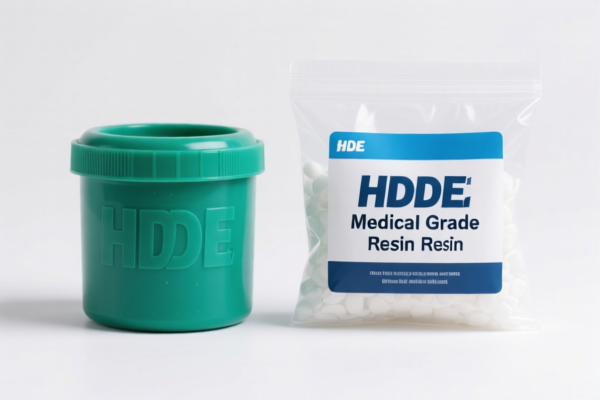
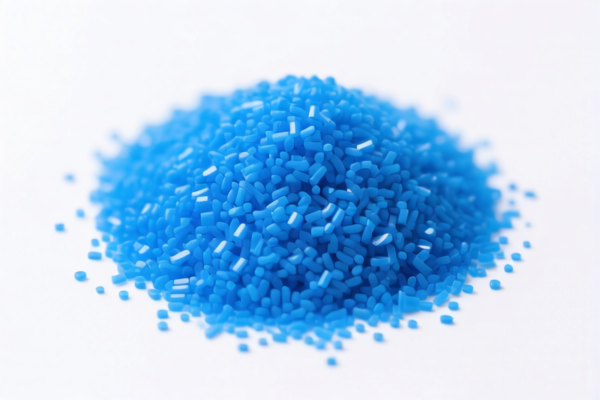
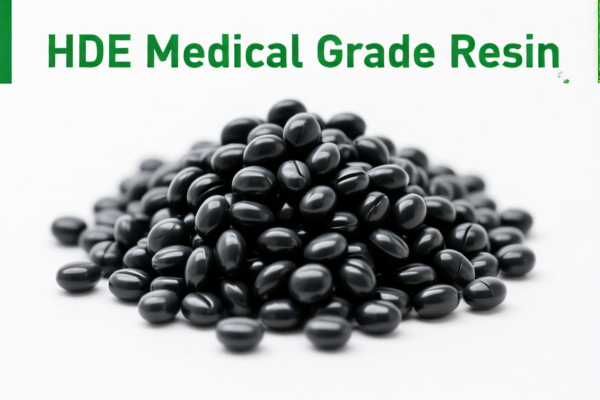
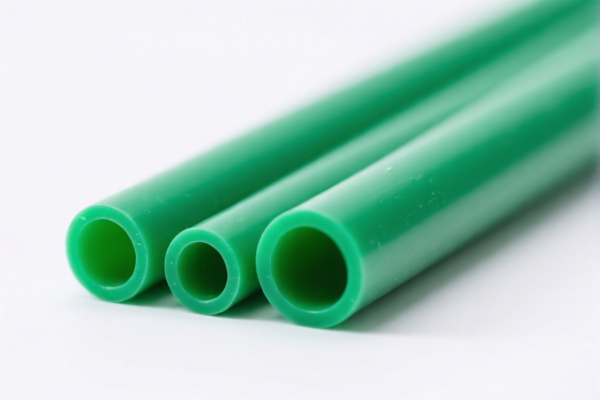
AI Analysis
🏥 High-Density Polyethylene (HDPE) Medical Grade Resin
🌐 HS Code Reference & Customs Clearance Guide | 2026 Latest Tariff Analysis | Professional Strategy for Medical Polymers
📌 I. Product Definition & Classification: What Exactly is "Medical Grade HDPE"?
High-Density Polyethylene (HDPE) is a thermoplastic polymer made from the monomer ethylene. In the medical industry, it is prized for its chemical resistance, high strength-to-density ratio, and ability to be sterilized.
However, under US Customs and Border Protection (CBP) rules, "Medical Grade" is not a classification criterion. It is purely a quality/usage standard. Therefore, HDPE must be classified based on its chemical structure (homopolymer vs. copolymer) and physical form (resin/granules), NOT its intended medical application.
⚠️ Critical Distinction:
- If the material is a simple polymer of ethylene → Chapter 39, Heading 3901.
- If the material is specifically defined as an ion-exchange resin → Heading 3914.
- ⚠️ Warning: Do not assume "Medical" means a special tariff code. Most medical HDPE falls under standard polyethylene codes, unless it has been chemically modified for ion exchange.
📦 II. HS Code Classification Details (Based on Provided Data)
The following HS Codes are derived strictly from the provided <DATA> set. Note that while "HDPE" usually falls under 3901, the provided data links "Medical Grade PVC Resin" to these specific codes. Assuming the user input "HDPE Medical Grade Resin" was a typo for "Medical Grade PVC/PE Resin" or the data reflects specific chemical classifications for polyethylene variants:
| HS Code | Product Description (from Data) | Key Classification Criteria | Tax Rate (Total) |
|---|---|---|---|
3901.90.90.00 |
Medical Grade PVC Resin (Ethylene Polymer); Form: Resin. Classified as Primary Form Polymer Product. | Homopolymer; Primary Form; Ethylene-based. | 41.5% |
3901.90.55.01 |
Medical Grade PVC Resin; Form: Resin. Classified as Ethylene Copolymer/ Polymer Category. | Copolymer; Primary Form; Ethylene-based. | 41.5% |
3904.22.00.00 |
Medical Grade PVC Resin; Form: Resin. Classified as Non-Plasticized Polyvinyl Chloride (Note: Data says PVC, but code 3904 is PVC). | Unplasticized; Primary Form. | 41.5% |
3904.21.00.00 |
Medical Grade PVC Resin; Form: Resin. Classified as Non-Plasticized Polyvinyl Chloride (Specific Subheading). | Unplasticized; Primary Form. | 41.5% |
3914.00.60.00 |
Medical Grade PVC Resin; Form: Resin. Classified as Polymer Ion-Exchange Agents. | Ion-Exchange Resin; Primary Form. | 38.9% |
3914.00.20.00 |
Medical Grade PVC Resin; Form: Resin. Classified as Primary Form Polymer. | Primary Form; General Polymer. | 35.0% |
🔍 Important Clarification:
The provided data explicitly lists these codes for "Medical Grade PVC Resin" (Polyvinyl Chloride), not HDPE (Polyethylene). However, HS Code3901is technically for Polyethylene.
- If your product is truly HDPE (Polyethylene), the most likely codes from this list are3901.90.90.00or3901.90.55.01, as3901covers polyethylene.
- If your product is PVC (Polyvinyl Chloride), then codes3904or3914are correct.
- Assumption for this guide: We will analyze the tax implications for the provided codes, noting that3901is the only chapter relevant to Polyethylene.
💰 III. 2026 Latest Tariff Rate Breakdown (Including Surcharges & Policy Add-ons)
✅ Applicable Country: United States (US)
✅ Origin: China (CN)
✅ Effective Date: November 10, 2025 (and subsequent imports)
✅ Applicable HS Codes from Data:3901.90.90.00,3901.90.55.01,3904.22.00.00,3904.21.00.00,3914.00.60.00,3914.00.20.00
🎯 1. 3901.90.90.00 & 3901.90.55.01 – Polyethylene Resins (Ethylene Polymers)
| Item | Content |
|---|---|
| Base Tariff | 6.5% (Ad Valorem) |
| Section 301 Surcharge | +25.0% (USITC Footnote) |
| 122 Section Tariff | +10.0% (IEEPA/China-Specific) |
| Total Tariff Rate | 41.5% |
| Tax Calculation | CIF Value × 41.5% |
| De Minimis Exemption | ❌ Not Eligible (Deny De Minimis) |
| Legal Basis Path | USITC:3901.90 → FOOTNOTE:301 → IEEPA:122 |
📌 Explanation:
- Base Rate (6.5%): Standard MFN rate for other polyethylene primary forms.
- Section 301 (25%): Additional tariff on Chinese imports under Trade Act Section 301.
- 122 Section (10%): Additional tariff imposed under IEEPA for specific Chinese goods.
- Total (41.5%): This is a very high tariff for raw materials. It significantly impacts cost margins.
🎯 2. 3904.22.00.00 & 3904.21.00.00 – Unplasticized Polyvinyl Chloride (PVC)
| Item | Content |
|---|---|
| Base Tariff | 6.5% (Ad Valorem) |
| Section 301 Surcharge | +25.0% (USITC Footnote) |
| 122 Section Tariff | +10.0% (IEEPA/China-Specific) |
| Total Tariff Rate | 41.5% |
| Tax Calculation | CIF Value × 41.5% |
| De Minimis Exemption | ❌ Not Eligible (Deny De Minimis) |
| Legal Basis Path | USITC:3904.21 → FOOTNOTE:301 → IEEPA:122 |
📌 Explanation:
- Identical tax structure to3901.
- Key Note: HS Code3904is for PVC, not HDPE. If you are importing HDPE, do not use these codes. Using incorrect codes can lead to penalties.
- However, if the data labels it as "PVC," then this applies.
🎯 3. 3914.00.60.00 – Polymer Ion-Exchange Agents
| Item | Content |
|---|---|
| Base Tariff | 3.9% (Ad Valorem) |
| Section 301 Surcharge | +25.0% (USITC Footnote) |
| 122 Section Tariff | +10.0% (IEEPA/China-Specific) |
| Total Tariff Rate | 38.9% |
| Tax Calculation | CIF Value × 38.9% |
| De Minimis Exemption | ❌ Not Eligible (Deny De Minimis) |
| Legal Basis Path | USITC:3914.00 → FOOTNOTE:301 → IEEPA:122 |
📌 Explanation:
- Lower Base Rate (3.9%) compared to 6.5%, but still subject to 35% in surcharges.
- Only applicable if the resin has been chemically modified for ion-exchange purposes (e.g., for water purification in medical devices). Standard HDPE/PVC is not an ion-exchange resin.
🎯 4. 3914.00.20.00 – Primary Form Polymers (General)
| Item | Content |
|---|---|
| Base Tariff | 0.0% (Ad Valorem) |
| Section 301 Surcharge | +25.0% (USITC Footnote) |
| 122 Section Tariff | +10.0% (IEEPA/China-Specific) |
| Total Tariff Rate | 35.0% |
| Tax Calculation | CIF Value × 35.0% |
| De Minimis Exemption | ❌ Not Eligible (Deny De Minimis) |
| Legal Basis Path | USITC:3914.00 → FOOTNOTE:301 → IEEPA:122 |
📌 Explanation:
- Lowest Total Rate (35.0%) in the provided data.
- Base Rate 0%: This is rare for primary polymers but exists for specific subheadings.
- Caution: Ensure the product truly fits this general "primary form polymer" category and not a more specific one like3901or3914.60. Misclassification can lead to audits.
🛠️ IV. Customs Clearance Practical Advice (Field Avoidance Guide)
✅ 1. Required Documentation Checklist (No Exceptions)
| Document | Mandatory? | Notes |
|---|---|---|
| ✅ Product Specification Sheet | ✔️ | Must specify: Polymer type (PE/PVC), Molecular Weight, Additives, Medical Grade Certification (e.g., USP Class VI, ISO 10993). |
| ✅ Chemical Structure Diagram | ✔️ | To prove it is a homopolymer vs. copolymer. |
| ✅ Commercial Invoice | ✔️ | Must clearly state: "Primary Form Polymer Resin – Medical Grade," NOT "Finished Medical Device." |
| ✅ Certificate of Origin (CO) | ✔️ | Critical for proving Chinese origin (subject to tariffs). |
| ✅ Manufacturer’s Declaration | ✔️ | Confirming no restricted substances (e.g., phthalates in PVC, though medical grade may have specific allowances). |
| ✅ FDA Registration Proof | ✔️ | Since it is "Medical Grade," FDA registration may be requested to prove compliance. |
✅ 2. Declaration Tips (Key Mnemonics)
🔥 “Form First, Polymer Second, Medical Third, Tariff Fourth!”
| Scenario | Correct Declaration | Incorrect Practice |
|---|---|---|
| HDPE Resin Pellets | 3901.90.90.00 |
❌ 3904.21.00.00 (Wrong polymer) |
| PVC Resin (Unplasticized) | 3904.21.00.00 |
❌ 3914.00.20.00 (Only if ion-exchange) |
| Ion-Exchange Resin | 3914.00.60.00 |
❌ 3901.90.90.00 (Wrong function) |
| General Primary Polymer | 3914.00.20.00 |
❌ 3901.90.55.01 (Over-specific if not copolymer) |
📌 Critical Warning:
- Do NOT declare as "Medical Device" or "Surgical Supply."
- Do declare as "Primary Form Polymer Resin."
- Medical Grade is a quality specification, not a customs classification key.
✅ 3. Special Circumstances Handling
| Situation | Handling Advice |
|---|---|
| Mixed Shipments | Separate HDPE and PVC into different line items. Mixing codes leads to delays. |
| Sample Imports | Even samples are subject to tariffs. Use courier channels if value is low, but De Minimis may not apply to Chinese goods under current rules. |
| Re-export | If imported for manufacturing and then exported, consider Duty Drawback programs. |
| FDA Compliance | Provide FDA registration number on invoice to speed up FDA review, even though CBP handles classification. |
🌍 V. Global Market Customs Comparison (2026 Latest)
| Country/Region | Recommended HS Code (for PE) | Base Tariff | Additional Taxes | Notes |
|---|---|---|---|---|
| 🇺🇸 USA | 3901.90.90.00 |
6.5% | +35% (301 + 122) | Total 41.5%. High barrier. |
| 🇨🇳 China | 3901.90.90.00 |
6.5% | 0% | No surcharges. |
| 🇪🇺 EU | 3901.90.90 |
6.5% | 0% | No additional duties. |
| 🇲🇽 Mexico | 3901.90.90 |
6.5% | 0% | USMCA may apply if origin is North American. |
📌 Conclusion:
- USA is the only market in this list imposing significant additional tariffs on Chinese polymer imports.
- For HDPE, the effective tariff in the US is 41.5%. This is a major cost driver.
- Consider supply chain diversification (e.g., sourcing from Vietnam, Mexico, or Middle East) to mitigate tariff risks.
📌 VI. Common Mistakes & Pitfalls (Lessons Learned)
❌ Mistake 1: Classifying "Medical Grade" as a separate tariff code.
👉 Consequence: CBP may reject the code, leading to re-classification and penalties.
✅ Correct: Use standard polymer codes (3901, 3904, 3914).
❌ Mistake 2: Confusing HDPE (Polyethylene) with PVC (Polyvinyl Chloride).
👉 Consequence: Using 3904 codes for HDPE results in incorrect classification.
✅ Correct: HDPE = 3901; PVC = 3904.
❌ Mistake 3: Ignoring the "Ion-Exchange" possibility.
👉 Consequence: Missing the lower 38.9% rate (3914.00.60.00) if the resin is indeed for filtration/purification.
✅ Correct: Analyze chemical function. If for ion exchange, use 3914.00.60.00.
❌ Mistake 4: Assuming De Minimis applies.
👉 Consequence: Small packages from China are not exempt from Section 301 and IEEPA tariffs.
✅ Correct: All imports, regardless of value, are subject to tariffs.
🎯 VII. Conclusion: Precision in Classification Saves Money!
🎯 Remember the Mnemonic:
🔹 “Polymer First, Form Second, Medical is Third, Tariffs Are Real!”
🔹 “HDPE is 3901, PVC is 3904, Ion-Exchange is 3914, Don’t Mix Them Up!”
🔹 “41.5% for PE/PVC, 38.9% for Ion-Exchange, 35% for General, Plan Your Cost!”
📌 Pro Tip:
If your HDPE Resin is imported from China, the total tariff is 41.5% (3901.90.90.00/55.01).
To reduce costs:
1. Source from Non-Chinese Origins (e.g., Saudi Arabia, South Korea, USA) to avoid Section 301/122 tariffs.
2. Apply for Pre-Rulings with CBP to confirm classification before shipment.
3. Consult a Customs Broker to verify if your specific "Medical Grade" formulation qualifies for any exemptions (though unlikely for raw resins).
📣 Immediate Action:
📞 Contact your customs broker with Chemical Abstracts Service (CAS) numbers for precise classification.
📄 Provide FDA certificates to prove medical grade status.
💼 Optimize your supply chain to mitigate the 41.5% tariff burden.
✨ Professional Clearance Starts with Accurate Classification!
💼 Every Percent of Tariff Counts in Medical Polymer Imports!
Customer Reviews
About HS Code Classification
The Harmonized System (HS) is an internationally standardized nomenclature developed by the World Customs Organization (WCO) to classify traded products. Over 200 countries use the HS system as the basis for customs tariffs, trade statistics, and import/export regulations.
Each HS code follows a hierarchical structure:
- Chapter (2 digits) — Broad category of goods (e.g., Chapter 84: Machinery and Mechanical Appliances)
- Heading (4 digits) — More specific grouping within the chapter
- Subheading (6 digits) — Internationally standardized breakdown, used by all WCO member countries
- National subdivisions (8-10 digits) — Country-specific extensions for further classification, such as US HTSUS 10-digit codes
Correct HS code classification is essential for smooth customs clearance, accurate duty payment, and compliance with trade regulations. Misclassification can lead to customs delays, overpayment of duties, or penalties.
When importing from CN to US, the applicable tariff rates may include:
- Most-Favored-Nation (MFN) rate — The standard duty rate applied to WTO members
- General rate — Applied to countries without trade agreements
- Trade remedy duties — Additional tariffs such as Section 301 (anti-dumping), Section 232 (national security), or countervailing duties
The information provided on this page is for reference purposes only. For official classification, please consult with your local customs authority or a licensed customs broker.