Hairless Horse Leather Side Cut
CN → US| HS编码 | 关税税率 | 原产国 | 目的国 | 文档 |
|---|---|---|---|---|
| 4106910000 | 38.3% | CN | US | 官方文档 |
| 4106920000 | 38.3% | CN | US | 官方文档 |
| 4101901040 | 17.5% | CN | US | 官方文档 |
| 4101907000 | 20.8% | CN | US | 官方文档 |
| 4107917090 | 15.0% | CN | US | 官方文档 |
商品图片
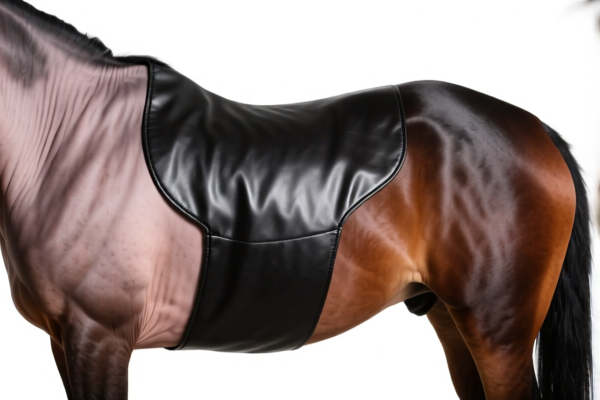
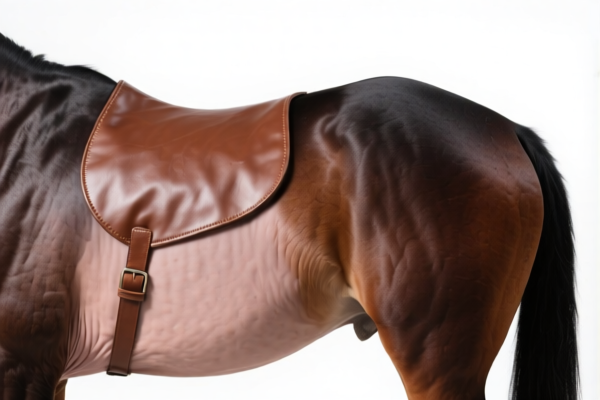
AI分析
🐎 Hairless Horse Leather Side Cut: HS Code Classification & Customs Clearance Guide (2026)
🌐 HS Code Reference & Customs Clearance Guide | 2026 Latest Tariff Analysis | Professional-Level Strategy
📌 Part I: Product Definition & Classification: Do You Really Understand "Hairless Horse Leather"?
"Hairless Horse Leather Side Cut" refers to semi-tanned or untreated leather sides derived from horses, specifically processed to remove hair (de-haired). In international trade, the classification depends heavily on the processing stage (untreated vs. semi-tanned) and specific body part/shape. Misclassification can lead to significant duty discrepancies, especially under US trade policies (Section 301 & IEEPA).
⚠️ Key Distinction:
- Untreated/Raw Skins (Not tanned, merely preserved): Generally fall under Chapter 41.01.
- Semi-Tanned/Processed Skins (Hair removed, basic tanning applied): Generally fall under Chapter 41.06 or 41.07.
- "Side Cut" vs. "Whole Side": Shape and completeness can influence subheading selection, but the primary driver is the state of tanning.
📦 Part II: HS Code Classification Details (2026 Latest Tariff Authority Comparison)
| HS Code | Product Description | Processing State | Tax Rate Summary |
|---|---|---|---|
4106.91.00.00 |
Hairless Horse Leather Side Cut | Semi-tanned or not further tanned, hairless | 38.3% |
4106.92.00.00 |
Hairless Horse Leather Side Cut | Untreated/Side, hairless condition | 38.3% |
4101.90.10.40 |
Hairless Horse Leather Side Cut | Other parts, inferred as primary/raw material form | 17.5% |
4101.90.70.00 |
Hairless Horse Leather Side Cut | Untanned/Not further processed, raw skin attribute | 20.8% |
4107.91.70.90 |
Hairless Horse Leather Side Cut | Non-specific use, other category | 15.0% |
🔍 Critical Note:
- The difference between 15.0% and 38.3% is massive.
- Chapter 41.01 is typically for raw skins. If the "hairless" process involves tanning (even semi-tanning), it moves to 41.06/41.07.
- 41.01.90.10.40 is a special case for "other parts" inferred as primary material, offering a lower tax base but requires strict proof of "raw" status.
💰 Part III: 2026 Latest Tariff Rate Details (Including Additional Duties & Policy Surcharges)
✅ Applicable Country: United States (US)
✅ Origin: China (CN)
✅ Effective Date: Post-November 2025 (Includes subsequent imports)
🎯 1. 4106.91.00.00 & 4106.92.00.00 —— Semi-Tanned/Processed Hairless Horse Leather
| Item | Content |
|---|---|
| Basic Duty | 3.3% (ad valorem) |
| Section 301 Additional Duty | +25.0% (Under USITC Footnote 9903.88.01) |
| IEEPA Additional Duty | +10% (Targeting China/HK products, from Nov 10, 2025) |
| Total Duty Rate | 38.3% |
| Tax Calculation | CIF Value × 38.3% |
| De Minimis Eligibility | ❌ Not Eligible (deny_de_minimis) |
| Legal Basis Path | IEEPA:9903.01.25 → USITC:4106.91.00.00/4106.92.00.00 → FOOTNOTE:9903.88.01 |
📌 Explanation:
- The 25% Section 301 duty applies to processed leather goods from China.
- The 10% IEEPA duty is an additional layer for Chinese-origin goods.
- Total 38.3% is a high duty rate. This applies to skins that have undergone any tanning or hair-removal processing beyond basic preservation.
🎯 2. 4101.90.10.40 —— "Other Parts" Inferred as Primary Raw Material
| Item | Content |
|---|---|
| Basic Duty | 0.0% |
| Section 301 Additional Duty | +7.5% |
| IEEPA Additional Duty | +10% |
| Total Duty Rate | 17.5% |
| Tax Calculation | CIF Value × 17.5% |
| De Minimis Eligibility | ❌ Not Eligible (deny_de_minimis) |
| Legal Basis Path | IEEPA:9903.01.25 → USITC:4101.90.10.40 → FOOTNOTE:9903.01.24 |
📌 Explanation:
- This is a low-duty strategy but carries high compliance risk.
- It requires proving the item is "not further processed" and fits the "other parts" category.
- If customs determines the hair removal constitutes "processing," they may reclassify to 41.06 (38.3%).
🎯 3. 4101.90.70.00 —— Untanned, Not Further Processed Raw Skin
| Item | Content |
|---|---|
| Basic Duty | 3.3% |
| Section 301 Additional Duty | +7.5% |
| IEEPA Additional Duty | +10% |
| Total Duty Rate | 20.8% |
| Tax Calculation | CIF Value × 20.8% |
| De Minimis Eligibility | ❌ Not Eligible (deny_de_minimis) |
| Legal Basis Path | IEEPA:9903.01.25 → USITC:4101.90.70.00 → FOOTNOTE:9903.01.24 |
📌 Explanation:
- Applicable if the skin is raw (untanned) and hair removal is considered minimal or part of raw preservation.
- 20.8% is significantly lower than 38.3%, but requires strong evidence of "raw" status.
🎯 4. 4107.91.70.90 —— Other Tanned Leather, Non-Specific Use
| Item | Content |
|---|---|
| Basic Duty | 5.0% |
| Section 301 Additional Duty | 0.0% |
| IEEPA Additional Duty | +10% |
| Total Duty Rate | 15.0% |
| Tax Calculation | CIF Value × 15.0% |
| De Minimis Eligibility | ❌ Not Eligible (deny_de_minimis) |
| Legal Basis Path | IEEPA:9903.01.25 → USITC:4107.91.70.90 |
📌 Explanation:
- This is the lowest duty rate (15.0%).
- It applies to tanned leather that doesn't fit specific subheadings (like "whole hides").
- Risk: Must prove the product is "tanned" (not raw) and "non-specific use." If classified as "side cut" under 41.06, the rate jumps to 38.3%.
🛠️ Part IV: Customs Clearance Practical Advice (Real-World Pitfall Avoidance)
✅ 1. Documentation Checklist (Non-negotiable)
| Document | Required | Description |
|---|---|---|
| ✅ Product Spec Sheet | ✔️ | Details processing method: "De-haired but untanned" vs. "Semi-tanned." |
| ✅ Processing Certificate | ✔️ | Critical for distinguishing between 41.01 (Raw) and 41.06/41.07 (Processed). |
| ✅ Photos (Including Label) | ✔️ | Show texture, hair removal status, and side cut shape. |
| ✅ Commercial Invoice | ✔️ | Must specify "Hairless Horse Leather Side Cut" and processing state. |
| ✅ Certificate of Origin (CO) | ✔️ | Essential for applying US origin rules and IEEPA applicability. |
| ✅ Packing List | ✔️ | Clarifies if items are "sides" or "cuts" to support HS classification. |
✅ 2. Declaration Strategy (Key Mnemonic)
🔥 "Raw is Low, Tanned is High, Proof is Key, 38% vs 15%!"
| Scenario | Correct Declaration | Wrong Practice |
|---|---|---|
| Raw, De-haired, No Tanning | 4101.90.70.00 (20.8%) |
Misdeclare as Tanned → 38.3% |
| Semi-Tanned (Hair Removed) | 4106.91.00.00 (38.3%) |
Misdeclare as Raw → Penalty + Back Taxes |
| Tanned, Non-Specific Use | 4107.91.70.90 (15.0%) |
Misdeclare as "Side" under 41.06 → 38.3% |
| Other Parts, Inferred Raw | 4101.90.10.40 (17.5%) |
Overly aggressive; high audit risk |
✅ 3. Special Cases Handling
| Situation | Handling Advice |
|---|---|
| OEM Custom Horse Leather | Provide client order + design specs to prove "non-standard" use, potentially supporting 4107.91.70.90. |
| "Side Cut" vs. "Whole Side" | If the cut is incomplete, it may still fall under 41.06 if tanned. Clarify with customs broker. |
| Leather for Military/Medical | If for specialized use, provide end-use certificate. May not lower duty, but helps avoid misclassification penalties. |
| Transshipment via Third Country | Warning: US IEEPA duties apply to Chinese-origin goods regardless of transshipment. Do not attempt to evade origin rules. |
🌍 Part V: Global Market Clearance Comparison (2026 Latest)
| Country/Region | Recommended HS Code | Duty Rate | Certification Requirements | Notes |
|---|---|---|---|---|
| 🇺🇸 USA | 4106.91.00.00 / 4107.91.70.90 |
15% - 38.3% (China Origin) | None specific for leather | High duty due to Section 301 & IEEPA. |
| 🇨🇳 China | 4106.91.00.00 / 4107.91.70.90 |
5% - 10% (Import) | None | Lower duty if importing into China. |
| 🇪🇺 EU | 41.06 / 41.07 |
0% - 6% (Depending on Tanning) | REACH Compliance | No Section 301 equivalent. |
| 🇦🇺 Australia | 41.06 / 41.07 |
5% | None | Moderate duty. |
| 🇯🇵 Japan | 41.06 / 41.07 |
0% - 5% | None | Favorable for processed leather. |
📌 Conclusion:
- The US is the most expensive market for Chinese-origin horse leather due to 38.3% potential duty.
- EU, Japan, and Australia offer much lower duties, making them more attractive for final assembly or consumption.
- Strategy: Consider shifting final processing or value-addition to non-China locations if targeting the US, but beware of USMCA/FTAA rules of origin.
📌 Part VI: Common Errors & Pitfall Avoidance (Lessons Learned)
❌ Error 1: Declaring "Semi-Tanned" leather as "Raw" (4101) to save taxes.
👉 Consequence: Customs inspection reveals tanning agents/chemicals → Reclassification to 41.06 (38.3%) + Penalties.
❌ Error 2: Using vague terms like "Leather Pieces" without specifying "Hairless" or "Tanned."
👉 Consequence: Customs assigns default higher duty or holds shipment for clarification → Delay.
❌ Error 3: Assuming "Side Cut" automatically means lower duty.
👉 Consequence: Duty is based on processing state, not just shape. A tanned cut is still 38.3%.
✅ Correct Practice:
"Hairless Horse Leather Side Cut, Semi-Tanned, Non-Specific Use, Model XYZ, Origin: China"
🎯 Part VII: Conclusion: Professional Declaration Saves Money!
🎯 Remember the Mnemonic:
🔹 "Raw is Low (20%), Tanned is High (38%), Non-Specific Use is Best (15%)."
🔹 "HS Code decides tax, 23% difference is huge, misdeclare and pay!"
📌 Tips:
- If your horse leather is originating from Vietnam, Mexico, or Thailand, you may avoid IEEPA Section 301 duties, reducing the total to Basic + Local Import Duty.
- Apply for Advance Rulings if possible to lock in the 15.0% rate under 4107.91.70.90 or 20.8% under 4101.90.70.00.
📣 Immediate Action:
📞 Contact a professional customs broker + Provide processing details + Apply for HS Code Advance Ruling
🚀 Ensure your horse leather clears smoothly, legally, and profitably!
✨ Professional clearance starts with precise classification!
💼 Every cent of tax is worth calculating precisely!
用户评价
关于 HS 编码归类
协调制度(HS)是由世界海关组织(WCO)制定的国际贸易商品分类标准。全球 200 多个国家采用 HS 系统作为海关关税、贸易统计和进出口监管的基础。
每个 HS 编码遵循以下层级结构:
- 章(2 位)——商品大类(例如:第 84 章:机器和机械设备)
- 品目(4 位)——章内的更具体分类
- 子目(6 位)——国际通用细分,所有 WCO 成员国统一使用
- 本国细分(8-10 位)——各国自行扩展的细分编码,如美国 HTSUS 10 位编码
正确的 HS 编码归类对于顺利通关、准确缴纳关税和遵守贸易法规至关重要。错误归类可能导致海关延误、多缴关税或罚款。
从CN进口到US时,适用的关税税率可能包括:
- 最惠国(MFN)税率——适用于 WTO 成员国的标准关税税率
- 普通税率——适用于无贸易协定国家
- 贸易救济关税——附加关税,如 301 条款(反倾销)、232 条款(国家安全)或反补贴税
本页内容仅供参考。如需正式归类,请咨询当地海关或持牌报关代理。