Hairless Horse Leather Side Cut
CN → US| HS Code | Tariff Rate | Origin | Destination | Doc |
|---|---|---|---|---|
| 4106910000 | 38.3% | CN | US | Official Doc |
| 4106920000 | 38.3% | CN | US | Official Doc |
| 4101901040 | 17.5% | CN | US | Official Doc |
| 4101907000 | 20.8% | CN | US | Official Doc |
| 4107917090 | 15.0% | CN | US | Official Doc |
Product Images
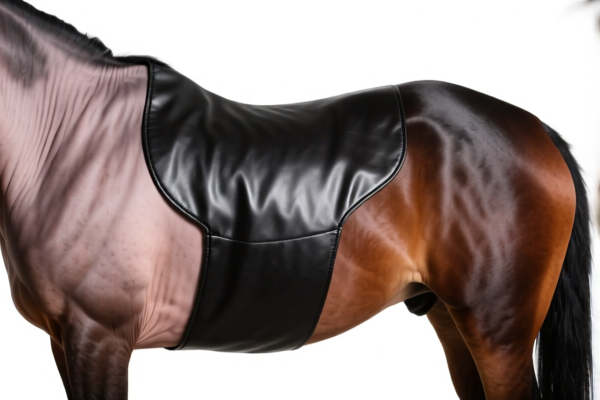
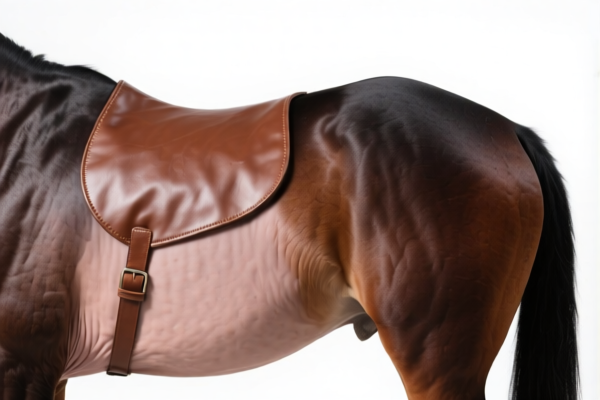
AI Analysis
🐎 Hairless Horse Leather Side Cut: HS Code Classification & Customs Clearance Guide (2026)
🌐 HS Code Reference & Customs Clearance Guide | 2026 Latest Tariff Analysis | Professional-Level Strategy
📌 Part I: Product Definition & Classification: Do You Really Understand "Hairless Horse Leather"?
"Hairless Horse Leather Side Cut" refers to semi-tanned or untreated leather sides derived from horses, specifically processed to remove hair (de-haired). In international trade, the classification depends heavily on the processing stage (untreated vs. semi-tanned) and specific body part/shape. Misclassification can lead to significant duty discrepancies, especially under US trade policies (Section 301 & IEEPA).
⚠️ Key Distinction:
- Untreated/Raw Skins (Not tanned, merely preserved): Generally fall under Chapter 41.01.
- Semi-Tanned/Processed Skins (Hair removed, basic tanning applied): Generally fall under Chapter 41.06 or 41.07.
- "Side Cut" vs. "Whole Side": Shape and completeness can influence subheading selection, but the primary driver is the state of tanning.
📦 Part II: HS Code Classification Details (2026 Latest Tariff Authority Comparison)
| HS Code | Product Description | Processing State | Tax Rate Summary |
|---|---|---|---|
4106.91.00.00 |
Hairless Horse Leather Side Cut | Semi-tanned or not further tanned, hairless | 38.3% |
4106.92.00.00 |
Hairless Horse Leather Side Cut | Untreated/Side, hairless condition | 38.3% |
4101.90.10.40 |
Hairless Horse Leather Side Cut | Other parts, inferred as primary/raw material form | 17.5% |
4101.90.70.00 |
Hairless Horse Leather Side Cut | Untanned/Not further processed, raw skin attribute | 20.8% |
4107.91.70.90 |
Hairless Horse Leather Side Cut | Non-specific use, other category | 15.0% |
🔍 Critical Note:
- The difference between 15.0% and 38.3% is massive.
- Chapter 41.01 is typically for raw skins. If the "hairless" process involves tanning (even semi-tanning), it moves to 41.06/41.07.
- 41.01.90.10.40 is a special case for "other parts" inferred as primary material, offering a lower tax base but requires strict proof of "raw" status.
💰 Part III: 2026 Latest Tariff Rate Details (Including Additional Duties & Policy Surcharges)
✅ Applicable Country: United States (US)
✅ Origin: China (CN)
✅ Effective Date: Post-November 2025 (Includes subsequent imports)
🎯 1. 4106.91.00.00 & 4106.92.00.00 —— Semi-Tanned/Processed Hairless Horse Leather
| Item | Content |
|---|---|
| Basic Duty | 3.3% (ad valorem) |
| Section 301 Additional Duty | +25.0% (Under USITC Footnote 9903.88.01) |
| IEEPA Additional Duty | +10% (Targeting China/HK products, from Nov 10, 2025) |
| Total Duty Rate | 38.3% |
| Tax Calculation | CIF Value × 38.3% |
| De Minimis Eligibility | ❌ Not Eligible (deny_de_minimis) |
| Legal Basis Path | IEEPA:9903.01.25 → USITC:4106.91.00.00/4106.92.00.00 → FOOTNOTE:9903.88.01 |
📌 Explanation:
- The 25% Section 301 duty applies to processed leather goods from China.
- The 10% IEEPA duty is an additional layer for Chinese-origin goods.
- Total 38.3% is a high duty rate. This applies to skins that have undergone any tanning or hair-removal processing beyond basic preservation.
🎯 2. 4101.90.10.40 —— "Other Parts" Inferred as Primary Raw Material
| Item | Content |
|---|---|
| Basic Duty | 0.0% |
| Section 301 Additional Duty | +7.5% |
| IEEPA Additional Duty | +10% |
| Total Duty Rate | 17.5% |
| Tax Calculation | CIF Value × 17.5% |
| De Minimis Eligibility | ❌ Not Eligible (deny_de_minimis) |
| Legal Basis Path | IEEPA:9903.01.25 → USITC:4101.90.10.40 → FOOTNOTE:9903.01.24 |
📌 Explanation:
- This is a low-duty strategy but carries high compliance risk.
- It requires proving the item is "not further processed" and fits the "other parts" category.
- If customs determines the hair removal constitutes "processing," they may reclassify to 41.06 (38.3%).
🎯 3. 4101.90.70.00 —— Untanned, Not Further Processed Raw Skin
| Item | Content |
|---|---|
| Basic Duty | 3.3% |
| Section 301 Additional Duty | +7.5% |
| IEEPA Additional Duty | +10% |
| Total Duty Rate | 20.8% |
| Tax Calculation | CIF Value × 20.8% |
| De Minimis Eligibility | ❌ Not Eligible (deny_de_minimis) |
| Legal Basis Path | IEEPA:9903.01.25 → USITC:4101.90.70.00 → FOOTNOTE:9903.01.24 |
📌 Explanation:
- Applicable if the skin is raw (untanned) and hair removal is considered minimal or part of raw preservation.
- 20.8% is significantly lower than 38.3%, but requires strong evidence of "raw" status.
🎯 4. 4107.91.70.90 —— Other Tanned Leather, Non-Specific Use
| Item | Content |
|---|---|
| Basic Duty | 5.0% |
| Section 301 Additional Duty | 0.0% |
| IEEPA Additional Duty | +10% |
| Total Duty Rate | 15.0% |
| Tax Calculation | CIF Value × 15.0% |
| De Minimis Eligibility | ❌ Not Eligible (deny_de_minimis) |
| Legal Basis Path | IEEPA:9903.01.25 → USITC:4107.91.70.90 |
📌 Explanation:
- This is the lowest duty rate (15.0%).
- It applies to tanned leather that doesn't fit specific subheadings (like "whole hides").
- Risk: Must prove the product is "tanned" (not raw) and "non-specific use." If classified as "side cut" under 41.06, the rate jumps to 38.3%.
🛠️ Part IV: Customs Clearance Practical Advice (Real-World Pitfall Avoidance)
✅ 1. Documentation Checklist (Non-negotiable)
| Document | Required | Description |
|---|---|---|
| ✅ Product Spec Sheet | ✔️ | Details processing method: "De-haired but untanned" vs. "Semi-tanned." |
| ✅ Processing Certificate | ✔️ | Critical for distinguishing between 41.01 (Raw) and 41.06/41.07 (Processed). |
| ✅ Photos (Including Label) | ✔️ | Show texture, hair removal status, and side cut shape. |
| ✅ Commercial Invoice | ✔️ | Must specify "Hairless Horse Leather Side Cut" and processing state. |
| ✅ Certificate of Origin (CO) | ✔️ | Essential for applying US origin rules and IEEPA applicability. |
| ✅ Packing List | ✔️ | Clarifies if items are "sides" or "cuts" to support HS classification. |
✅ 2. Declaration Strategy (Key Mnemonic)
🔥 "Raw is Low, Tanned is High, Proof is Key, 38% vs 15%!"
| Scenario | Correct Declaration | Wrong Practice |
|---|---|---|
| Raw, De-haired, No Tanning | 4101.90.70.00 (20.8%) |
Misdeclare as Tanned → 38.3% |
| Semi-Tanned (Hair Removed) | 4106.91.00.00 (38.3%) |
Misdeclare as Raw → Penalty + Back Taxes |
| Tanned, Non-Specific Use | 4107.91.70.90 (15.0%) |
Misdeclare as "Side" under 41.06 → 38.3% |
| Other Parts, Inferred Raw | 4101.90.10.40 (17.5%) |
Overly aggressive; high audit risk |
✅ 3. Special Cases Handling
| Situation | Handling Advice |
|---|---|
| OEM Custom Horse Leather | Provide client order + design specs to prove "non-standard" use, potentially supporting 4107.91.70.90. |
| "Side Cut" vs. "Whole Side" | If the cut is incomplete, it may still fall under 41.06 if tanned. Clarify with customs broker. |
| Leather for Military/Medical | If for specialized use, provide end-use certificate. May not lower duty, but helps avoid misclassification penalties. |
| Transshipment via Third Country | Warning: US IEEPA duties apply to Chinese-origin goods regardless of transshipment. Do not attempt to evade origin rules. |
🌍 Part V: Global Market Clearance Comparison (2026 Latest)
| Country/Region | Recommended HS Code | Duty Rate | Certification Requirements | Notes |
|---|---|---|---|---|
| 🇺🇸 USA | 4106.91.00.00 / 4107.91.70.90 |
15% - 38.3% (China Origin) | None specific for leather | High duty due to Section 301 & IEEPA. |
| 🇨🇳 China | 4106.91.00.00 / 4107.91.70.90 |
5% - 10% (Import) | None | Lower duty if importing into China. |
| 🇪🇺 EU | 41.06 / 41.07 |
0% - 6% (Depending on Tanning) | REACH Compliance | No Section 301 equivalent. |
| 🇦🇺 Australia | 41.06 / 41.07 |
5% | None | Moderate duty. |
| 🇯🇵 Japan | 41.06 / 41.07 |
0% - 5% | None | Favorable for processed leather. |
📌 Conclusion:
- The US is the most expensive market for Chinese-origin horse leather due to 38.3% potential duty.
- EU, Japan, and Australia offer much lower duties, making them more attractive for final assembly or consumption.
- Strategy: Consider shifting final processing or value-addition to non-China locations if targeting the US, but beware of USMCA/FTAA rules of origin.
📌 Part VI: Common Errors & Pitfall Avoidance (Lessons Learned)
❌ Error 1: Declaring "Semi-Tanned" leather as "Raw" (4101) to save taxes.
👉 Consequence: Customs inspection reveals tanning agents/chemicals → Reclassification to 41.06 (38.3%) + Penalties.
❌ Error 2: Using vague terms like "Leather Pieces" without specifying "Hairless" or "Tanned."
👉 Consequence: Customs assigns default higher duty or holds shipment for clarification → Delay.
❌ Error 3: Assuming "Side Cut" automatically means lower duty.
👉 Consequence: Duty is based on processing state, not just shape. A tanned cut is still 38.3%.
✅ Correct Practice:
"Hairless Horse Leather Side Cut, Semi-Tanned, Non-Specific Use, Model XYZ, Origin: China"
🎯 Part VII: Conclusion: Professional Declaration Saves Money!
🎯 Remember the Mnemonic:
🔹 "Raw is Low (20%), Tanned is High (38%), Non-Specific Use is Best (15%)."
🔹 "HS Code decides tax, 23% difference is huge, misdeclare and pay!"
📌 Tips:
- If your horse leather is originating from Vietnam, Mexico, or Thailand, you may avoid IEEPA Section 301 duties, reducing the total to Basic + Local Import Duty.
- Apply for Advance Rulings if possible to lock in the 15.0% rate under 4107.91.70.90 or 20.8% under 4101.90.70.00.
📣 Immediate Action:
📞 Contact a professional customs broker + Provide processing details + Apply for HS Code Advance Ruling
🚀 Ensure your horse leather clears smoothly, legally, and profitably!
✨ Professional clearance starts with precise classification!
💼 Every cent of tax is worth calculating precisely!
Customer Reviews
About HS Code Classification
The Harmonized System (HS) is an internationally standardized nomenclature developed by the World Customs Organization (WCO) to classify traded products. Over 200 countries use the HS system as the basis for customs tariffs, trade statistics, and import/export regulations.
Each HS code follows a hierarchical structure:
- Chapter (2 digits) — Broad category of goods (e.g., Chapter 84: Machinery and Mechanical Appliances)
- Heading (4 digits) — More specific grouping within the chapter
- Subheading (6 digits) — Internationally standardized breakdown, used by all WCO member countries
- National subdivisions (8-10 digits) — Country-specific extensions for further classification, such as US HTSUS 10-digit codes
Correct HS code classification is essential for smooth customs clearance, accurate duty payment, and compliance with trade regulations. Misclassification can lead to customs delays, overpayment of duties, or penalties.
When importing from CN to US, the applicable tariff rates may include:
- Most-Favored-Nation (MFN) rate — The standard duty rate applied to WTO members
- General rate — Applied to countries without trade agreements
- Trade remedy duties — Additional tariffs such as Section 301 (anti-dumping), Section 232 (national security), or countervailing duties
The information provided on this page is for reference purposes only. For official classification, please consult with your local customs authority or a licensed customs broker.