Handle Nut
CN → US| HS编码 | 关税税率 | 原产国 | 目的国 | 文档 |
|---|---|---|---|---|
| 7616109030 | 41.0% | CN | US | 官方文档 |
| 7616107030 | 40.5% | CN | US | 官方文档 |
| 7318160060 | 67.5% | CN | US | 官方文档 |
| 7415338050 | 88.0% | CN | US | 官方文档 |
| 7415338010 | 88.0% | CN | US | 官方文档 |
| 7318160085 | 67.5% | CN | US | 官方文档 |
商品图片
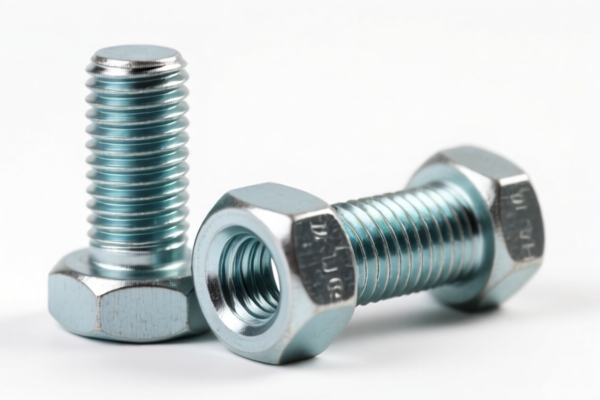
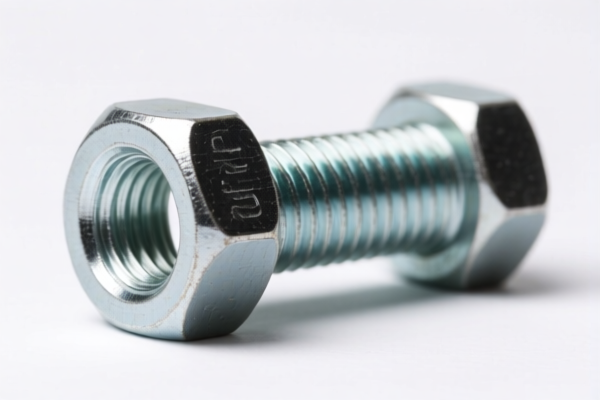
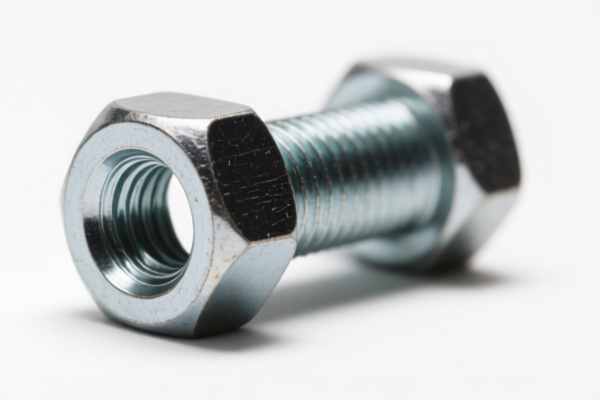
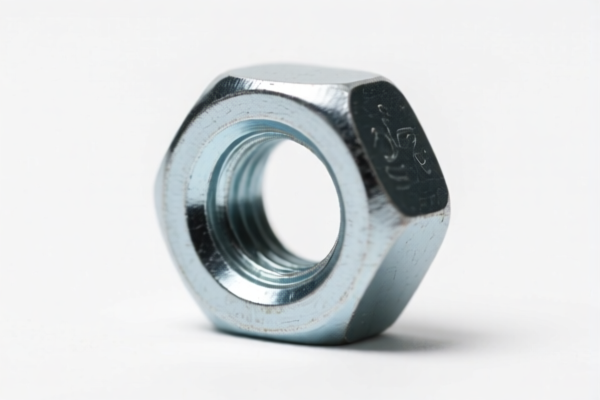
AI分析
🔩 Handle Nut (Knurled Thumb Nut) – Ultimate HS Code Classification & US Tariff Guide (2026)
🌐 HS Code Reference & Customs Clearance Guide | 2026 Latest Tariff Analysis | Professional Clearance Strategy
📌 I. Product Definition & Classification: Do You Really Know What a "Handle Nut" Is?
A Handle Nut (also known as a Knurled Thumb Nut, T-Handle Nut, or Wing Nut) is a specialized fastener designed for manual tightening and loosening without tools. It features a protruding handle or knurled grip for ease of use.
In international trade, the classification depends strictly on MATERIAL and FORM:
- Aluminum Handle Nuts: Lightweight, corrosion-resistant, often used in electronics enclosures or aerospace.
- Steel/Iron Handle Nuts: High strength, standard industrial hardware.
- Copper Handle Nuts: Conductive, anti-sparking, used in electrical or hazardous environments.
⚠️ Critical Classification Rule:
- If made of Aluminum → Chapter 76
- If made of Iron/Steel → Chapter 73
- If made of Copper → Chapter 74
- Do not mix materials! Misclassification leads to massive duty spikes.
📦 II. HS Code Classification Details (2026 Latest Tariff Authority)
Based on the provided data, here are the precise HS Codes and their corresponding duty structures for US imports from China.
| HS Code | Material Description | Applicable Scenario | Key Classification Note |
|---|---|---|---|
7616.10.90.30 |
Aluminum Handle Nut, nut-type fastener form | Aluminum knurled nuts, generic aluminum fasteners | ✅ Aluminum Fasteners |
7616.10.70.30 |
Aluminum Handle Nut, threaded fastener classification | Aluminum threaded items, specific aluminum fastener sub-category | ✅ Aluminum Fasteners |
7318.16.00.60 |
Iron/Steel Handle Nut, nut form with handle attachment | Standard steel industrial nuts with handles | ✅ Steel Fasteners |
7318.16.00.85 |
Iron/Steel Handle Nut, inferred material from threaded form | Generic steel nuts, standard hardware | ✅ Steel Fasteners |
7415.33.80.50 |
Copper Handle Nut, threaded item classification | Electrical copper nuts, non-sparking hardware | ✅ Copper Fasteners |
7415.33.80.10 |
Copper/Metal Handle Nut, form & material match | Specific copper alloy nuts, conductive hardware | ✅ Copper Fasteners |
🔍 Key Insight:
- Aluminum items enjoy the lowest base duty (5.5%-6.0%).
- Steel items have 0% base duty but face different surcharges.
- Copper items have a 3.0% base duty but carry the highest total effective tariff due to cumulative surcharges.
💰 III. 2026 Latest Tariff Rate Breakdown (Including Surcharges & Policy Add-ons)
✅ Applicable Country: United States (US)
✅ Country of Origin: China (CN)
✅ Effective Date: Current regulations apply (including Section 301 and Section 122 measures)
🎯 1. 7616.10.90.30 & 7616.10.70.30 —— Aluminum Handle Nuts
These are the most cost-effective options for US import due to lower base rates.
| Item | Detail |
|---|---|
| Base Duty Rate | 6.0% (7616.10.90.30) / 5.5% (7616.10.70.30) |
| Section 301 Surcharge (Add-on Tariff) | +25.0% |
| Section 122 Surcharge | +10.0% |
| Total Effective Tariff | 41.0% (Code .90.30) / 40.5% (Code .70.30) |
| Calculation Basis | CIF Value × Total Rate |
| De Minimis Exemption | ❌ Not Eligible |
| Legal Pathway | USITC:7616.10.70.30 → Section301:25% → Section122:10% |
📌 Explanation:
- Aluminum hardware is subject to the standard 25% Section 301 tariff.
- An additional 10% Section 122 tariff is applied.
- Total burden: ~40.5-41.0%. This is high, but lower than steel or copper.
🎯 2. 7318.16.00.60 & 7318.16.00.85 —— Iron/Steel Handle Nuts
Steel nuts have a 0% base duty, but the surcharges are structured differently, leading to a high total effective rate.
| Item | Detail |
|---|---|
| Base Duty Rate | 0.0% |
| Section 301 Surcharge (Add-on Tariff) | +7.5% |
| Section 122 Surcharge | +10.0% |
| Steel/Aluminum/Copper Specific Surcharge | +50.0% |
| Total Effective Tariff | 67.5% |
| Calculation Basis | CIF Value × 67.5% |
| De Minimis Exemption | ❌ Not Eligible |
| Legal Pathway | USITC:7318.16.00.60 → Steel/Al/Cu Surcharge:50% → Section122:10% → Section301:7.5% |
📌 Warning:
- Although the base rate is 0%, the 50% specific surcharge for steel products dominates the calculation.
- Plus 10% (Sec 122) and 7.5% (Sec 301) = Total 67.5%.
- This is the second-highest tax burden.
🎯 3. 7415.33.80.50 & 7415.33.80.10 —— Copper Handle Nuts
Copper nuts face the highest total tariff due to the combination of base duty and heavy surcharges.
| Item | Detail |
|---|---|
| Base Duty Rate | 3.0% |
| Section 301 Surcharge (Add-on Tariff) | +25.0% |
| Section 122 Surcharge | +10.0% |
| Steel/Aluminum/Copper Specific Surcharge | +50.0% |
| Total Effective Tariff | 88.0% |
| Calculation Basis | CIF Value × 88.0% |
| De Minimis Exemption | ❌ Not Eligible |
| Legal Pathway | USITC:7415.33.80.50 → Steel/Al/Cu Surcharge:50% → Section301:25% → Section122:10% |
📌 Critical Alert:
- 88.0% is extremely high.
- Copper is grouped with steel/aluminum in the 50% specific surcharge bucket.
- On top of 25% (Sec 301) and 10% (Sec 122), the total reaches 88%.
- Cost Implication: For every $1,000 of goods, you pay $880 in duties.
🛠️ IV. Customs Clearance Practical Advice (Avoiding Pitfalls)
✅ 1. Documentation Checklist (Mandatory)
| Document | Required? | Purpose |
|---|---|---|
| ✅ Product Spec Sheet | ✔️ | Must specify Material (Al, Steel, Cu), Thread Size, and Handle Type. |
| ✅ Commercial Invoice | ✔️ | Clearly state "Aluminum/Steel/Copper Handle Nut". Do NOT use vague terms like "Hardware". |
| ✅ Packing List | ✔️ | Weight and quantity must match invoice. |
| ✅ Origin Certificate | ✔️ | If not China-origin, may reduce tariffs. For China-origin, no reduction applies. |
| ✅ Material Test Report | ✔️ | Recommended for high-value shipments to prove material composition (e.g., ASTM B221 for Al). |
✅ 2. Declaration Best Practices (Golden Rules)
🔥 "Material First, Form Second, Name Specific!"
| Scenario | Correct Declaration | Incorrect Declaration | Risk |
|---|---|---|---|
| Aluminum | "Aluminum Knurled Handle Nut, ASTM B221" | "Metal Nut" or "Hardware" | Misclassification → 67.5% or 88% |
| Steel | "Steel Hex Handle Nut, Grade 8" | "Stainless Steel Nut" (if not SS) | Material error → Penalty |
| Copper | "Copper Alloy Thumb Nut" | "Brass Nut" (if not brass) | Material error → 88% |
| General | Include HS Code in description | Leave HS Code blank | Customs delay |
📌 Tip:
- Aluminum is the cheapest to import from a tariff perspective (~40.5%).
- Steel is the second cheapest (67.5%) despite 0% base duty.
- Copper is the most expensive (88.0%).
✅ 3. Special Cases & Mitigation Strategies
| Situation | Recommendation |
|---|---|
| Mixed Material Pack | Declare separately! Do not mix Al, Steel, and Cu in one line item. |
| OEM Custom Handles | Provide design drawings to prove "Handle" form, not just a standard nut. |
| High-Value Copper Nuts | Consider if the application truly requires Copper. If not, switch to Aluminum to save ~47.5% in duties. |
| Section 301 Exclusions | Check if the specific HS code has an exclusion list (rare for these sub-codes). |
🌍 V. Global Market Comparison (2026)
| Country/Region | Recommended HS Code | Tariff (China Origin) | Certification | Note |
|---|---|---|---|---|
| 🇺🇸 USA | 7616.10.70.30 (Al) |
40.5% | None | Highest duty due to Sec 301+122+Specific |
| 🇨🇳 China | 7616.10.70.30 |
6.0% | CCC (if applicable) | Domestic standard duty |
| 🇪🇺 EU | 7616.90 (Al) |
0-4% | CE (if electrical) | No Section 301/122 |
| 🇬🇧 UK | 7616.90 (Al) |
0-4% | UKCA | Post-Brexit rules |
| 🇯🇵 Japan | 7616.90 (Al) |
3.0-5% | PSE (if electrical) | No extra surcharges |
📌 Conclusion:
- USA is the most expensive market due to aggressive trade policies (Section 301, 122, and specific material surcharges).
- Aluminum is the most tariff-efficient material for US import.
- Copper should be avoided for US import if possible due to 88% duty.
📌 VI. Common Errors & Pitfalls (Lessons Learned)
❌ Error 1: Declaring "Aluminum Nut" but importing Steel.
👉 Consequence: 67.5% vs 40.5% → 27% penalty + fraud investigation.
❌ Error 2: Using "Hardware" as description.
👉 Consequence: Customs assigns highest possible rate (88%) due to ambiguity.
❌ Error 3: Ignoring the 50% Specific Surcharge for Steel/Copper.
👉 Consequence: Unexpected cost increase. Steel is not 7.5%+10%=17.5%. It is 67.5%.
❌ Error 4: Assuming "De Minimis" (Section 321) applies.
👉 Consequence: Denied. Fasteners of these HS codes are excluded from $800 de minimis exemption for Chinese goods.
✅ Correct Approach:
"Aluminum Handle Nut, Knurled Grip, M6 Thread, ASTM B221, HS: 7616.10.70.30"
🎯 VII. Conclusion: Smart Classification, Lower Costs!
🎯 Key Takeaways:
🔹 Aluminum = ~40.5% (Best Option)
🔹 Steel = 67.5% (Moderate Option)
🔹 Copper = 88.0% (Avoid if possible)
🔹 No De Minimis Exemption for these items from China.
📌 Pro Tip:
If your product can be made of Aluminum without compromising strength, switch to Aluminum HS Code 7616.10.70.30 to save ~27-47.5% in duties compared to Steel or Copper.
📣 Action Item:
📞 Verify material composition with supplier.
📝 Prepare detailed spec sheets.
🚀 Apply for Advance Ruling if unsure about material classification.
✨ Precision in Classification, Profit in Your Pocket!
💼 Every percentage point of duty is a percentage point of your margin!
用户评价
关于 HS 编码归类
协调制度(HS)是由世界海关组织(WCO)制定的国际贸易商品分类标准。全球 200 多个国家采用 HS 系统作为海关关税、贸易统计和进出口监管的基础。
每个 HS 编码遵循以下层级结构:
- 章(2 位)——商品大类(例如:第 84 章:机器和机械设备)
- 品目(4 位)——章内的更具体分类
- 子目(6 位)——国际通用细分,所有 WCO 成员国统一使用
- 本国细分(8-10 位)——各国自行扩展的细分编码,如美国 HTSUS 10 位编码
正确的 HS 编码归类对于顺利通关、准确缴纳关税和遵守贸易法规至关重要。错误归类可能导致海关延误、多缴关税或罚款。
从CN进口到US时,适用的关税税率可能包括:
- 最惠国(MFN)税率——适用于 WTO 成员国的标准关税税率
- 普通税率——适用于无贸易协定国家
- 贸易救济关税——附加关税,如 301 条款(反倾销)、232 条款(国家安全)或反补贴税
本页内容仅供参考。如需正式归类,请咨询当地海关或持牌报关代理。