Handle Nut
CN → US| HS Code | Tariff Rate | Origin | Destination | Doc |
|---|---|---|---|---|
| 7616109030 | 41.0% | CN | US | Official Doc |
| 7616107030 | 40.5% | CN | US | Official Doc |
| 7318160060 | 67.5% | CN | US | Official Doc |
| 7415338050 | 88.0% | CN | US | Official Doc |
| 7415338010 | 88.0% | CN | US | Official Doc |
| 7318160085 | 67.5% | CN | US | Official Doc |
Product Images
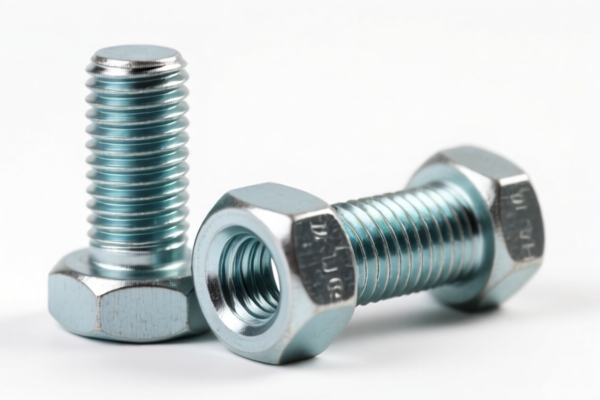
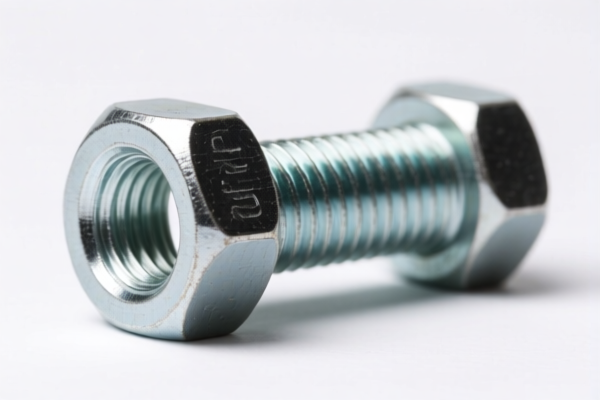
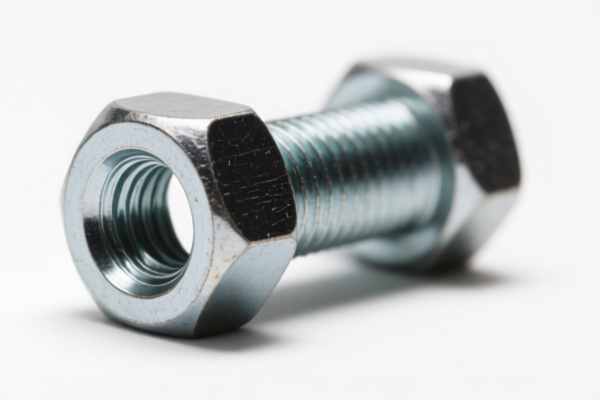
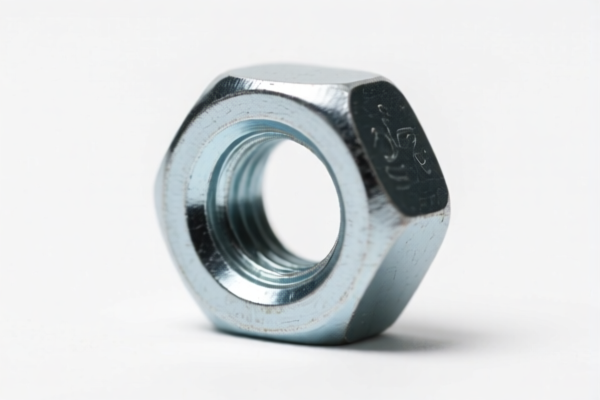
AI Analysis
🔩 Handle Nut (Knurled Thumb Nut) – Ultimate HS Code Classification & US Tariff Guide (2026)
🌐 HS Code Reference & Customs Clearance Guide | 2026 Latest Tariff Analysis | Professional Clearance Strategy
📌 I. Product Definition & Classification: Do You Really Know What a "Handle Nut" Is?
A Handle Nut (also known as a Knurled Thumb Nut, T-Handle Nut, or Wing Nut) is a specialized fastener designed for manual tightening and loosening without tools. It features a protruding handle or knurled grip for ease of use.
In international trade, the classification depends strictly on MATERIAL and FORM:
- Aluminum Handle Nuts: Lightweight, corrosion-resistant, often used in electronics enclosures or aerospace.
- Steel/Iron Handle Nuts: High strength, standard industrial hardware.
- Copper Handle Nuts: Conductive, anti-sparking, used in electrical or hazardous environments.
⚠️ Critical Classification Rule:
- If made of Aluminum → Chapter 76
- If made of Iron/Steel → Chapter 73
- If made of Copper → Chapter 74
- Do not mix materials! Misclassification leads to massive duty spikes.
📦 II. HS Code Classification Details (2026 Latest Tariff Authority)
Based on the provided data, here are the precise HS Codes and their corresponding duty structures for US imports from China.
| HS Code | Material Description | Applicable Scenario | Key Classification Note |
|---|---|---|---|
7616.10.90.30 |
Aluminum Handle Nut, nut-type fastener form | Aluminum knurled nuts, generic aluminum fasteners | ✅ Aluminum Fasteners |
7616.10.70.30 |
Aluminum Handle Nut, threaded fastener classification | Aluminum threaded items, specific aluminum fastener sub-category | ✅ Aluminum Fasteners |
7318.16.00.60 |
Iron/Steel Handle Nut, nut form with handle attachment | Standard steel industrial nuts with handles | ✅ Steel Fasteners |
7318.16.00.85 |
Iron/Steel Handle Nut, inferred material from threaded form | Generic steel nuts, standard hardware | ✅ Steel Fasteners |
7415.33.80.50 |
Copper Handle Nut, threaded item classification | Electrical copper nuts, non-sparking hardware | ✅ Copper Fasteners |
7415.33.80.10 |
Copper/Metal Handle Nut, form & material match | Specific copper alloy nuts, conductive hardware | ✅ Copper Fasteners |
🔍 Key Insight:
- Aluminum items enjoy the lowest base duty (5.5%-6.0%).
- Steel items have 0% base duty but face different surcharges.
- Copper items have a 3.0% base duty but carry the highest total effective tariff due to cumulative surcharges.
💰 III. 2026 Latest Tariff Rate Breakdown (Including Surcharges & Policy Add-ons)
✅ Applicable Country: United States (US)
✅ Country of Origin: China (CN)
✅ Effective Date: Current regulations apply (including Section 301 and Section 122 measures)
🎯 1. 7616.10.90.30 & 7616.10.70.30 —— Aluminum Handle Nuts
These are the most cost-effective options for US import due to lower base rates.
| Item | Detail |
|---|---|
| Base Duty Rate | 6.0% (7616.10.90.30) / 5.5% (7616.10.70.30) |
| Section 301 Surcharge (Add-on Tariff) | +25.0% |
| Section 122 Surcharge | +10.0% |
| Total Effective Tariff | 41.0% (Code .90.30) / 40.5% (Code .70.30) |
| Calculation Basis | CIF Value × Total Rate |
| De Minimis Exemption | ❌ Not Eligible |
| Legal Pathway | USITC:7616.10.70.30 → Section301:25% → Section122:10% |
📌 Explanation:
- Aluminum hardware is subject to the standard 25% Section 301 tariff.
- An additional 10% Section 122 tariff is applied.
- Total burden: ~40.5-41.0%. This is high, but lower than steel or copper.
🎯 2. 7318.16.00.60 & 7318.16.00.85 —— Iron/Steel Handle Nuts
Steel nuts have a 0% base duty, but the surcharges are structured differently, leading to a high total effective rate.
| Item | Detail |
|---|---|
| Base Duty Rate | 0.0% |
| Section 301 Surcharge (Add-on Tariff) | +7.5% |
| Section 122 Surcharge | +10.0% |
| Steel/Aluminum/Copper Specific Surcharge | +50.0% |
| Total Effective Tariff | 67.5% |
| Calculation Basis | CIF Value × 67.5% |
| De Minimis Exemption | ❌ Not Eligible |
| Legal Pathway | USITC:7318.16.00.60 → Steel/Al/Cu Surcharge:50% → Section122:10% → Section301:7.5% |
📌 Warning:
- Although the base rate is 0%, the 50% specific surcharge for steel products dominates the calculation.
- Plus 10% (Sec 122) and 7.5% (Sec 301) = Total 67.5%.
- This is the second-highest tax burden.
🎯 3. 7415.33.80.50 & 7415.33.80.10 —— Copper Handle Nuts
Copper nuts face the highest total tariff due to the combination of base duty and heavy surcharges.
| Item | Detail |
|---|---|
| Base Duty Rate | 3.0% |
| Section 301 Surcharge (Add-on Tariff) | +25.0% |
| Section 122 Surcharge | +10.0% |
| Steel/Aluminum/Copper Specific Surcharge | +50.0% |
| Total Effective Tariff | 88.0% |
| Calculation Basis | CIF Value × 88.0% |
| De Minimis Exemption | ❌ Not Eligible |
| Legal Pathway | USITC:7415.33.80.50 → Steel/Al/Cu Surcharge:50% → Section301:25% → Section122:10% |
📌 Critical Alert:
- 88.0% is extremely high.
- Copper is grouped with steel/aluminum in the 50% specific surcharge bucket.
- On top of 25% (Sec 301) and 10% (Sec 122), the total reaches 88%.
- Cost Implication: For every $1,000 of goods, you pay $880 in duties.
🛠️ IV. Customs Clearance Practical Advice (Avoiding Pitfalls)
✅ 1. Documentation Checklist (Mandatory)
| Document | Required? | Purpose |
|---|---|---|
| ✅ Product Spec Sheet | ✔️ | Must specify Material (Al, Steel, Cu), Thread Size, and Handle Type. |
| ✅ Commercial Invoice | ✔️ | Clearly state "Aluminum/Steel/Copper Handle Nut". Do NOT use vague terms like "Hardware". |
| ✅ Packing List | ✔️ | Weight and quantity must match invoice. |
| ✅ Origin Certificate | ✔️ | If not China-origin, may reduce tariffs. For China-origin, no reduction applies. |
| ✅ Material Test Report | ✔️ | Recommended for high-value shipments to prove material composition (e.g., ASTM B221 for Al). |
✅ 2. Declaration Best Practices (Golden Rules)
🔥 "Material First, Form Second, Name Specific!"
| Scenario | Correct Declaration | Incorrect Declaration | Risk |
|---|---|---|---|
| Aluminum | "Aluminum Knurled Handle Nut, ASTM B221" | "Metal Nut" or "Hardware" | Misclassification → 67.5% or 88% |
| Steel | "Steel Hex Handle Nut, Grade 8" | "Stainless Steel Nut" (if not SS) | Material error → Penalty |
| Copper | "Copper Alloy Thumb Nut" | "Brass Nut" (if not brass) | Material error → 88% |
| General | Include HS Code in description | Leave HS Code blank | Customs delay |
📌 Tip:
- Aluminum is the cheapest to import from a tariff perspective (~40.5%).
- Steel is the second cheapest (67.5%) despite 0% base duty.
- Copper is the most expensive (88.0%).
✅ 3. Special Cases & Mitigation Strategies
| Situation | Recommendation |
|---|---|
| Mixed Material Pack | Declare separately! Do not mix Al, Steel, and Cu in one line item. |
| OEM Custom Handles | Provide design drawings to prove "Handle" form, not just a standard nut. |
| High-Value Copper Nuts | Consider if the application truly requires Copper. If not, switch to Aluminum to save ~47.5% in duties. |
| Section 301 Exclusions | Check if the specific HS code has an exclusion list (rare for these sub-codes). |
🌍 V. Global Market Comparison (2026)
| Country/Region | Recommended HS Code | Tariff (China Origin) | Certification | Note |
|---|---|---|---|---|
| 🇺🇸 USA | 7616.10.70.30 (Al) |
40.5% | None | Highest duty due to Sec 301+122+Specific |
| 🇨🇳 China | 7616.10.70.30 |
6.0% | CCC (if applicable) | Domestic standard duty |
| 🇪🇺 EU | 7616.90 (Al) |
0-4% | CE (if electrical) | No Section 301/122 |
| 🇬🇧 UK | 7616.90 (Al) |
0-4% | UKCA | Post-Brexit rules |
| 🇯🇵 Japan | 7616.90 (Al) |
3.0-5% | PSE (if electrical) | No extra surcharges |
📌 Conclusion:
- USA is the most expensive market due to aggressive trade policies (Section 301, 122, and specific material surcharges).
- Aluminum is the most tariff-efficient material for US import.
- Copper should be avoided for US import if possible due to 88% duty.
📌 VI. Common Errors & Pitfalls (Lessons Learned)
❌ Error 1: Declaring "Aluminum Nut" but importing Steel.
👉 Consequence: 67.5% vs 40.5% → 27% penalty + fraud investigation.
❌ Error 2: Using "Hardware" as description.
👉 Consequence: Customs assigns highest possible rate (88%) due to ambiguity.
❌ Error 3: Ignoring the 50% Specific Surcharge for Steel/Copper.
👉 Consequence: Unexpected cost increase. Steel is not 7.5%+10%=17.5%. It is 67.5%.
❌ Error 4: Assuming "De Minimis" (Section 321) applies.
👉 Consequence: Denied. Fasteners of these HS codes are excluded from $800 de minimis exemption for Chinese goods.
✅ Correct Approach:
"Aluminum Handle Nut, Knurled Grip, M6 Thread, ASTM B221, HS: 7616.10.70.30"
🎯 VII. Conclusion: Smart Classification, Lower Costs!
🎯 Key Takeaways:
🔹 Aluminum = ~40.5% (Best Option)
🔹 Steel = 67.5% (Moderate Option)
🔹 Copper = 88.0% (Avoid if possible)
🔹 No De Minimis Exemption for these items from China.
📌 Pro Tip:
If your product can be made of Aluminum without compromising strength, switch to Aluminum HS Code 7616.10.70.30 to save ~27-47.5% in duties compared to Steel or Copper.
📣 Action Item:
📞 Verify material composition with supplier.
📝 Prepare detailed spec sheets.
🚀 Apply for Advance Ruling if unsure about material classification.
✨ Precision in Classification, Profit in Your Pocket!
💼 Every percentage point of duty is a percentage point of your margin!
Customer Reviews
About HS Code Classification
The Harmonized System (HS) is an internationally standardized nomenclature developed by the World Customs Organization (WCO) to classify traded products. Over 200 countries use the HS system as the basis for customs tariffs, trade statistics, and import/export regulations.
Each HS code follows a hierarchical structure:
- Chapter (2 digits) — Broad category of goods (e.g., Chapter 84: Machinery and Mechanical Appliances)
- Heading (4 digits) — More specific grouping within the chapter
- Subheading (6 digits) — Internationally standardized breakdown, used by all WCO member countries
- National subdivisions (8-10 digits) — Country-specific extensions for further classification, such as US HTSUS 10-digit codes
Correct HS code classification is essential for smooth customs clearance, accurate duty payment, and compliance with trade regulations. Misclassification can lead to customs delays, overpayment of duties, or penalties.
When importing from CN to US, the applicable tariff rates may include:
- Most-Favored-Nation (MFN) rate — The standard duty rate applied to WTO members
- General rate — Applied to countries without trade agreements
- Trade remedy duties — Additional tariffs such as Section 301 (anti-dumping), Section 232 (national security), or countervailing duties
The information provided on this page is for reference purposes only. For official classification, please consult with your local customs authority or a licensed customs broker.