Handmade Printing Paper
CN → US| HS编码 | 关税税率 | 原产国 | 目的国 | 文档 |
|---|---|---|---|---|
| 4802551000 | 35.0% | CN | US | 官方文档 |
| 4802100000 | 12.0% | CN | US | 官方文档 |
| 4811592000 | 35.0% | CN | US | 官方文档 |
| 4811901000 | 35.0% | CN | US | 官方文档 |
| 4820104000 | 35.0% | CN | US | 官方文档 |
商品图片

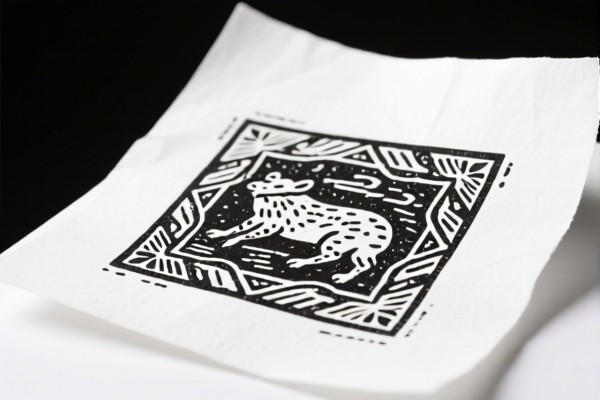
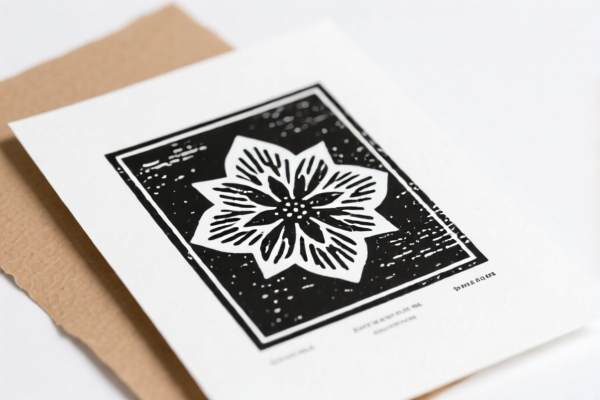
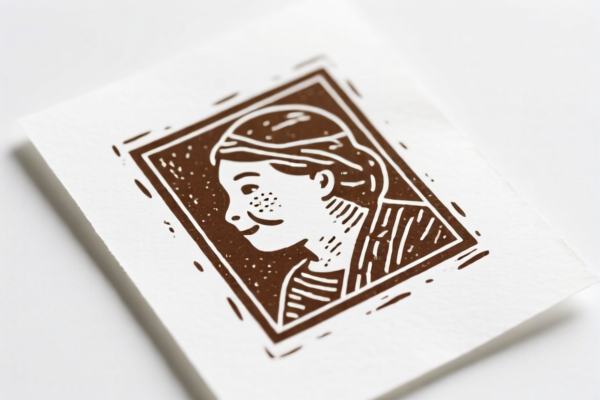
AI分析
🖨️ Handmade Printing Paper (Handmade Paper)
🌐 HS Code Reference & Customs Clearance Guide | 2026 Latest Tariff Analysis | Professional Clearance Strategy 📌 I. Product Definition & Classification: Do You Truly Understand "Handmade Paper"?
Handmade Printing Paper refers to paper produced by traditional manual methods (using a mold and deckle) or specific mechanical processes that mimic handcrafted textures. In international trade, it is distinguished from mass-produced industrial paper by its texture, irregular edges, and lack of machine formation lines.
Key Classification Criteria: * Manufacturing Process: Must be explicitly "Handmade" (手工制造). * Physical Form: Typically sold in sheets or rolls. * Processing: Can be coated, printed, or uncoated, but the core identity remains "handmade." * Usage: High-end stationery, calligraphy, art prints, luxury bookbinding, or decorative packaging.
⚠️ Critical Distinction: * If the paper is machine-made but marketed as "handmade style," it cannot use the "Handmade" HS codes. It must be classified under general paper headings (e.g., 4802) and will likely incur 25% tariffs. * "Handmade" is a technical term in the Harmonized System (HS), not just a marketing description. You must provide proof of production method.
📦 II. HS Code Classification Details (2026 Latest Tariff Authoritative Comparison)
Based on the provided data, here are the relevant HS Codes for paper-related goods, with a specific focus on Handmade items.
| HS Code | Product Description | Applicable Scenario | Handmade? | Tax Rate (Total) |
|---|---|---|---|---|
4811.90.10.00 |
Handmade paper (Coated, impregnated, covered, surface-colored, etc.) in strips/rolls >15cm or sheets >36x15cm | Luxury stationery, artistic papers, coated handmade sheets | ✅ Yes | 0.0% |
4820.90.00.00 |
Other stationery articles (registers, notebooks, diaries, etc.) of paper/board | Completed notebooks, diaries, binders made from handmade paper? | ❌ N/A (Finished good) | 25.0% |
4820.10.40.00 |
Registers, account books, notebooks, diaries... of paper/board | Finished stationery items (notebooks, logbooks) | ❌ N/A (Finished good) | 25.0% |
4811.59.20.00 |
Coated/impregnated paper with plastics (Printing paper) | Industrial printing paper, plastic-coated sheets | ❌ No (Standard) | 25.0% |
4802.10.00.00 |
Uncoated paper/board for writing/printing (non-mechanical fiber <10%) | General writing paper, cover paper | ❌ No (Standard) | 0.0% |
4802.55.10.00 |
Writing and cover paper (40-150 g/m²) in rolls | Standard office writing paper, cover stock | ❌ No (Standard) | 25.0% |
🔍 Key Insight: * The only HS Code in the data that explicitly grants a 0.0% tax rate for handmade paper is
4811.90.10.00. * However, this code applies specifically to processed handmade paper (coated, printed, etc.) in specific sizes. * If the item is a finished stationery product (like a handmade notebook), it falls under4820.90.00.00or4820.10.40.00, which incur 25.0% tax. * Crucial Strategy: Classify the raw/sheet material as4811.90.10.00if possible to save taxes, rather than classifying it as a finished notebook (4820).
💰 III. 2026 Latest Tariff Rate Details (Including Surtaxes & Policy Add-ons)
✅ Applicable Country: USA (US)
✅ Origin: China (CN)
✅ Effective Time: 2025/2026 Import Cycle
🎯 1. 4811.90.10.00 — Handmade Paper (The 0% Opportunity)
| Item | Content |
|---|---|
| Base Tariff | 0% |
| Section 301 Surcharge | 0.0% (Excluded!) |
| IEEPA Surcharge | 0.0% |
| Total Tariff | 0.0% |
| Tax Calculation | CIF Value × 0% = $0 |
| De Minimis Exemption | ✅ Eligible (If value < $800) |
| Legal Basis Path | HS:4811.90.10.00 → Footnote: No 301 surcharge for handmade paper |
📌 Explanation: * Handmade paper is often considered a luxury or niche artisanal good, and many customs authorities (including the US under specific trade provisions) have excluded it from high Section 301 tariffs. * Verify: Ensure the declaration explicitly states "Handmade" and provides manufacturing details. Misdeclaration leads to severe penalties.
🎯 2. 4820.90.00.00 / 4820.10.40.00 — Stationery Articles (The 25% Trap)
| Item | Content |
|---|---|
| Base Tariff | 0% |
| Section 301 Surcharge | +25.0% |
| IEEPA Surcharge | 0.0% (Assumed based on data "Total 25%") |
| Total Tariff | 25.0% |
| Tax Calculation | CIF Value × 25% |
| De Minimis Exemption | ❌ Not Eligible (Typically excluded if value > $800, but 301 tax applies regardless) |
| Legal Basis Path | HS:4820.xxxx → USITC Footnote: 301 List 3/4 |
📌 Warning: * If you import handmade notebooks (finished products), you will pay 25% tax. * If you import handmade paper sheets, you may pay 0% if classified as
4811.90.10.00. * Strategy: Import raw handmade paper (4811) and have the buyer assemble notebooks domestically if possible, or ensure the final product is not classified as "stationery" but as "art materials."
🎯 3. Other Paper Codes (Non-Handmade)
| HS Code | Total Tax | Reason |
|---|---|---|
4811.59.20.00 |
25.0% | Plastic-coated printing paper (Industrial, not handmade) |
4802.55.10.00 |
25.0% | Standard writing/cover paper (Machine-made) |
4802.10.00.00 |
0.0% | Uncoated non-mechanical paper (May be 0%, but not handmade) |
🛠️ IV. Customs Clearance Practical Advice (Real-World Pitfall Guide)
✅ 1. Required Documentation Checklist (Must-Have)
| Document | Mandatory? | Description |
|---|---|---|
| ✅ Certificate of Origin | ✔️ | Must state "Handmade" production method. |
| ✅ Product Description | ✔️ | Explicitly state: "Handmade Paper, Uncoated/Coated, [Weight] g/m², [Size]." |
| ✅ Manufacturing Process Statement | ✔️ | Detailed letter explaining the manual formation process (deckle, mold, air drying). |
| ✅ Photos of Production | ✔️ | Images showing handmade process, irregular edges, texture close-ups. |
| ✅ Commercial Invoice | ✔️ | HS Code 4811.90.10.00 clearly stated. |
| ✅ Packing List | ✔️ | Weight and dimensions of rolls/sheets. |
✅ 2. Declaration Tips (Key Mantra)
🔥 “Declare ‘Handmade’ Clearly, Provide Proof, Avoid ‘Stationery’ Label for Sheets!”
| Situation | Correct Declaration | Incorrect Practice |
|---|---|---|
| Handmade Paper Sheets | 4811.90.10.00 - Handmade Paper |
Declare as "Notebook Paper" → 25% |
| Handmade Notebooks | 4820.10.40.00 - Notebooks |
Try to declare as "Paper Sheets" → Risk of Rejection |
| Artistic Handmade Paper | 4811.90.10.00 |
Declare as "Printing Paper" → 25% |
| Machine-Made "Handmade Style" | 4802.55.10.00 or 4811.59.20.00 |
Declare as "Handmade" → Fraud Penalty |
✅ 3. Special Cases Handling
| Situation | Handling Advice |
|---|---|
| Mixed Shipment | Separate handmade paper (4811.90.10.00) from machine-made paper (4802) in different HS codes to avoid confusion. |
| Customs Audit | Be prepared to show a video or detailed photos of the handmade process. Customs officers may inspect for "handmade" characteristics (deckle edges, fiber distribution). |
| Value Declaration | Handmade paper often has higher unit value. Ensure CIF value accurately reflects quality to avoid under-valuation flags. |
| Destination: USA | Strictly verify if 4811.90.10.00 is exempt from Section 301 in the current year. Trade policies can change. |
🌍 V. Global Market Customs Comparison (2026 Latest)
| Country/Region | Recommended HS Code | Tariff (China Origin) | Certification Required | Notes |
|---|---|---|---|---|
| 🇺🇸 USA | 4811.90.10.00 |
0.0% | None | Critical: Must prove "Handmade." Misclassification = 25% tax. |
| 🇪🇺 EU | 4811.90.00 |
~6.5% | CE (if coated) | Handmade paper may have different VAT rates but standard customs duty applies. |
| 🇨🇳 China | 4811.90.10.00 |
5% | None | Import duty may apply if exported back in. |
| 🇯🇵 Japan | 4811.90.00 |
5-8% | FSC (if sustainable) | Quality standards for texture are strict. |
📌 Conclusion: * USA is the most lucrative market for handmade paper if correctly classified as
4811.90.10.00(0% tax). * EU and Japan apply standard import duties (~5-8%) regardless of "handmade" status, so the tax advantage is less significant but still present vs. industrial waste.
📌 VI. Common Errors & Pitfall Guide (Lessons from Blood and Tears)
❌ Error 1: Calling machine-made paper "Handmade" to get 0% tax. 👉 Consequence: Customs inspection reveals uniform fiber distribution and straight edges → 25% tax + fine + blacklist.
❌ Error 2: Declaring handmade notebooks as "Paper Sheets" (4811) to avoid 25%.
👉 Consequence: Customs sees binding, covers, and page counts → Rejection + 25% tax + storage fees.
❌ Error 3: Using vague terms like "Special Paper" without specifying "Handmade."
👉 Consequence: Customs defaults to standard paper code (4802 or 4811.59) → 25% tax.
❌ Error 4: Ignoring Section 301 updates. 👉 Consequence: Policy changes may remove the exemption for handmade paper. Always check current USITC lists.
✅ Correct Practice:
"Handmade Cotton Paper, Uncoated, 120gsm, Deckle Edges, Artistic Grade, HS Code: 4811.90.10.00, Origin: China"
🎯 VII. Conclusion: Professional Declaration, Save Costs, Ensure Compliance!
🎯 Remember the Mantra:
🔹 "Handmade is Gold, but Prove It! If you don't prove, 25% Hits You." 🔹 "Sheets = 4811 (0%), Notebooks = 4820 (25%). Separate Them!" 🔹 "HS Code Saves Money, Wrong Code Costs Thousands."
📌 Pro Tip:
If your handmade paper is used for luxury packaging or art, consider applying for an Advance Ruling from US Customs and Border Protection (CBP) to lock in the 0% tariff status for
4811.90.10.00.
📣 Act Now:
📞 Contact professional customs brokers + Provide product photos + Apply for HS Code Advance Ruling 🚀 Let your handmade paper pass through customs smoothly, efficiently, and profitably!
✨ Professional Customs Clearance Starts with Accurate Classification! 💼 Every cent saved is pure profit!
用户评价
关于 HS 编码归类
协调制度(HS)是由世界海关组织(WCO)制定的国际贸易商品分类标准。全球 200 多个国家采用 HS 系统作为海关关税、贸易统计和进出口监管的基础。
每个 HS 编码遵循以下层级结构:
- 章(2 位)——商品大类(例如:第 84 章:机器和机械设备)
- 品目(4 位)——章内的更具体分类
- 子目(6 位)——国际通用细分,所有 WCO 成员国统一使用
- 本国细分(8-10 位)——各国自行扩展的细分编码,如美国 HTSUS 10 位编码
正确的 HS 编码归类对于顺利通关、准确缴纳关税和遵守贸易法规至关重要。错误归类可能导致海关延误、多缴关税或罚款。
从CN进口到US时,适用的关税税率可能包括:
- 最惠国(MFN)税率——适用于 WTO 成员国的标准关税税率
- 普通税率——适用于无贸易协定国家
- 贸易救济关税——附加关税,如 301 条款(反倾销)、232 条款(国家安全)或反补贴税
本页内容仅供参考。如需正式归类,请咨询当地海关或持牌报关代理。