Handmade Printing Paper
CN → US| HS Code | Tariff Rate | Origin | Destination | Doc |
|---|---|---|---|---|
| 4802551000 | 35.0% | CN | US | Official Doc |
| 4802100000 | 12.0% | CN | US | Official Doc |
| 4811592000 | 35.0% | CN | US | Official Doc |
| 4811901000 | 35.0% | CN | US | Official Doc |
| 4820104000 | 35.0% | CN | US | Official Doc |
Product Images

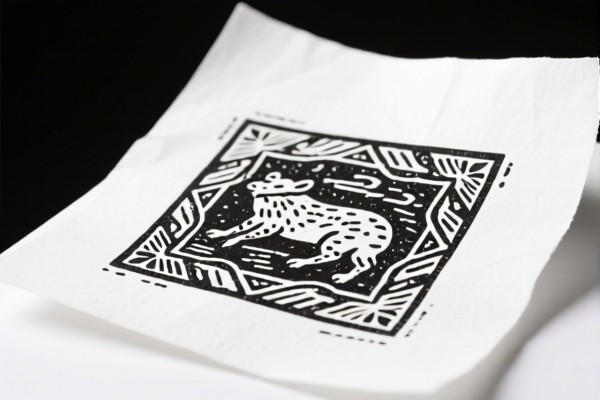
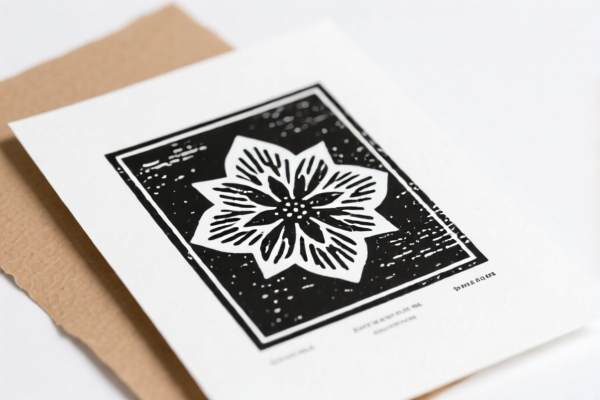
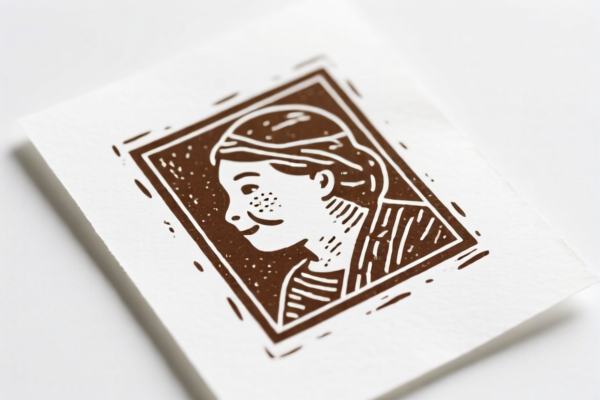
AI Analysis
🖨️ Handmade Printing Paper (Handmade Paper)
🌐 HS Code Reference & Customs Clearance Guide | 2026 Latest Tariff Analysis | Professional Clearance Strategy 📌 I. Product Definition & Classification: Do You Truly Understand "Handmade Paper"?
Handmade Printing Paper refers to paper produced by traditional manual methods (using a mold and deckle) or specific mechanical processes that mimic handcrafted textures. In international trade, it is distinguished from mass-produced industrial paper by its texture, irregular edges, and lack of machine formation lines.
Key Classification Criteria: * Manufacturing Process: Must be explicitly "Handmade" (手工制造). * Physical Form: Typically sold in sheets or rolls. * Processing: Can be coated, printed, or uncoated, but the core identity remains "handmade." * Usage: High-end stationery, calligraphy, art prints, luxury bookbinding, or decorative packaging.
⚠️ Critical Distinction: * If the paper is machine-made but marketed as "handmade style," it cannot use the "Handmade" HS codes. It must be classified under general paper headings (e.g., 4802) and will likely incur 25% tariffs. * "Handmade" is a technical term in the Harmonized System (HS), not just a marketing description. You must provide proof of production method.
📦 II. HS Code Classification Details (2026 Latest Tariff Authoritative Comparison)
Based on the provided data, here are the relevant HS Codes for paper-related goods, with a specific focus on Handmade items.
| HS Code | Product Description | Applicable Scenario | Handmade? | Tax Rate (Total) |
|---|---|---|---|---|
4811.90.10.00 |
Handmade paper (Coated, impregnated, covered, surface-colored, etc.) in strips/rolls >15cm or sheets >36x15cm | Luxury stationery, artistic papers, coated handmade sheets | ✅ Yes | 0.0% |
4820.90.00.00 |
Other stationery articles (registers, notebooks, diaries, etc.) of paper/board | Completed notebooks, diaries, binders made from handmade paper? | ❌ N/A (Finished good) | 25.0% |
4820.10.40.00 |
Registers, account books, notebooks, diaries... of paper/board | Finished stationery items (notebooks, logbooks) | ❌ N/A (Finished good) | 25.0% |
4811.59.20.00 |
Coated/impregnated paper with plastics (Printing paper) | Industrial printing paper, plastic-coated sheets | ❌ No (Standard) | 25.0% |
4802.10.00.00 |
Uncoated paper/board for writing/printing (non-mechanical fiber <10%) | General writing paper, cover paper | ❌ No (Standard) | 0.0% |
4802.55.10.00 |
Writing and cover paper (40-150 g/m²) in rolls | Standard office writing paper, cover stock | ❌ No (Standard) | 25.0% |
🔍 Key Insight: * The only HS Code in the data that explicitly grants a 0.0% tax rate for handmade paper is
4811.90.10.00. * However, this code applies specifically to processed handmade paper (coated, printed, etc.) in specific sizes. * If the item is a finished stationery product (like a handmade notebook), it falls under4820.90.00.00or4820.10.40.00, which incur 25.0% tax. * Crucial Strategy: Classify the raw/sheet material as4811.90.10.00if possible to save taxes, rather than classifying it as a finished notebook (4820).
💰 III. 2026 Latest Tariff Rate Details (Including Surtaxes & Policy Add-ons)
✅ Applicable Country: USA (US)
✅ Origin: China (CN)
✅ Effective Time: 2025/2026 Import Cycle
🎯 1. 4811.90.10.00 — Handmade Paper (The 0% Opportunity)
| Item | Content |
|---|---|
| Base Tariff | 0% |
| Section 301 Surcharge | 0.0% (Excluded!) |
| IEEPA Surcharge | 0.0% |
| Total Tariff | 0.0% |
| Tax Calculation | CIF Value × 0% = $0 |
| De Minimis Exemption | ✅ Eligible (If value < $800) |
| Legal Basis Path | HS:4811.90.10.00 → Footnote: No 301 surcharge for handmade paper |
📌 Explanation: * Handmade paper is often considered a luxury or niche artisanal good, and many customs authorities (including the US under specific trade provisions) have excluded it from high Section 301 tariffs. * Verify: Ensure the declaration explicitly states "Handmade" and provides manufacturing details. Misdeclaration leads to severe penalties.
🎯 2. 4820.90.00.00 / 4820.10.40.00 — Stationery Articles (The 25% Trap)
| Item | Content |
|---|---|
| Base Tariff | 0% |
| Section 301 Surcharge | +25.0% |
| IEEPA Surcharge | 0.0% (Assumed based on data "Total 25%") |
| Total Tariff | 25.0% |
| Tax Calculation | CIF Value × 25% |
| De Minimis Exemption | ❌ Not Eligible (Typically excluded if value > $800, but 301 tax applies regardless) |
| Legal Basis Path | HS:4820.xxxx → USITC Footnote: 301 List 3/4 |
📌 Warning: * If you import handmade notebooks (finished products), you will pay 25% tax. * If you import handmade paper sheets, you may pay 0% if classified as
4811.90.10.00. * Strategy: Import raw handmade paper (4811) and have the buyer assemble notebooks domestically if possible, or ensure the final product is not classified as "stationery" but as "art materials."
🎯 3. Other Paper Codes (Non-Handmade)
| HS Code | Total Tax | Reason |
|---|---|---|
4811.59.20.00 |
25.0% | Plastic-coated printing paper (Industrial, not handmade) |
4802.55.10.00 |
25.0% | Standard writing/cover paper (Machine-made) |
4802.10.00.00 |
0.0% | Uncoated non-mechanical paper (May be 0%, but not handmade) |
🛠️ IV. Customs Clearance Practical Advice (Real-World Pitfall Guide)
✅ 1. Required Documentation Checklist (Must-Have)
| Document | Mandatory? | Description |
|---|---|---|
| ✅ Certificate of Origin | ✔️ | Must state "Handmade" production method. |
| ✅ Product Description | ✔️ | Explicitly state: "Handmade Paper, Uncoated/Coated, [Weight] g/m², [Size]." |
| ✅ Manufacturing Process Statement | ✔️ | Detailed letter explaining the manual formation process (deckle, mold, air drying). |
| ✅ Photos of Production | ✔️ | Images showing handmade process, irregular edges, texture close-ups. |
| ✅ Commercial Invoice | ✔️ | HS Code 4811.90.10.00 clearly stated. |
| ✅ Packing List | ✔️ | Weight and dimensions of rolls/sheets. |
✅ 2. Declaration Tips (Key Mantra)
🔥 “Declare ‘Handmade’ Clearly, Provide Proof, Avoid ‘Stationery’ Label for Sheets!”
| Situation | Correct Declaration | Incorrect Practice |
|---|---|---|
| Handmade Paper Sheets | 4811.90.10.00 - Handmade Paper |
Declare as "Notebook Paper" → 25% |
| Handmade Notebooks | 4820.10.40.00 - Notebooks |
Try to declare as "Paper Sheets" → Risk of Rejection |
| Artistic Handmade Paper | 4811.90.10.00 |
Declare as "Printing Paper" → 25% |
| Machine-Made "Handmade Style" | 4802.55.10.00 or 4811.59.20.00 |
Declare as "Handmade" → Fraud Penalty |
✅ 3. Special Cases Handling
| Situation | Handling Advice |
|---|---|
| Mixed Shipment | Separate handmade paper (4811.90.10.00) from machine-made paper (4802) in different HS codes to avoid confusion. |
| Customs Audit | Be prepared to show a video or detailed photos of the handmade process. Customs officers may inspect for "handmade" characteristics (deckle edges, fiber distribution). |
| Value Declaration | Handmade paper often has higher unit value. Ensure CIF value accurately reflects quality to avoid under-valuation flags. |
| Destination: USA | Strictly verify if 4811.90.10.00 is exempt from Section 301 in the current year. Trade policies can change. |
🌍 V. Global Market Customs Comparison (2026 Latest)
| Country/Region | Recommended HS Code | Tariff (China Origin) | Certification Required | Notes |
|---|---|---|---|---|
| 🇺🇸 USA | 4811.90.10.00 |
0.0% | None | Critical: Must prove "Handmade." Misclassification = 25% tax. |
| 🇪🇺 EU | 4811.90.00 |
~6.5% | CE (if coated) | Handmade paper may have different VAT rates but standard customs duty applies. |
| 🇨🇳 China | 4811.90.10.00 |
5% | None | Import duty may apply if exported back in. |
| 🇯🇵 Japan | 4811.90.00 |
5-8% | FSC (if sustainable) | Quality standards for texture are strict. |
📌 Conclusion: * USA is the most lucrative market for handmade paper if correctly classified as
4811.90.10.00(0% tax). * EU and Japan apply standard import duties (~5-8%) regardless of "handmade" status, so the tax advantage is less significant but still present vs. industrial waste.
📌 VI. Common Errors & Pitfall Guide (Lessons from Blood and Tears)
❌ Error 1: Calling machine-made paper "Handmade" to get 0% tax. 👉 Consequence: Customs inspection reveals uniform fiber distribution and straight edges → 25% tax + fine + blacklist.
❌ Error 2: Declaring handmade notebooks as "Paper Sheets" (4811) to avoid 25%.
👉 Consequence: Customs sees binding, covers, and page counts → Rejection + 25% tax + storage fees.
❌ Error 3: Using vague terms like "Special Paper" without specifying "Handmade."
👉 Consequence: Customs defaults to standard paper code (4802 or 4811.59) → 25% tax.
❌ Error 4: Ignoring Section 301 updates. 👉 Consequence: Policy changes may remove the exemption for handmade paper. Always check current USITC lists.
✅ Correct Practice:
"Handmade Cotton Paper, Uncoated, 120gsm, Deckle Edges, Artistic Grade, HS Code: 4811.90.10.00, Origin: China"
🎯 VII. Conclusion: Professional Declaration, Save Costs, Ensure Compliance!
🎯 Remember the Mantra:
🔹 "Handmade is Gold, but Prove It! If you don't prove, 25% Hits You." 🔹 "Sheets = 4811 (0%), Notebooks = 4820 (25%). Separate Them!" 🔹 "HS Code Saves Money, Wrong Code Costs Thousands."
📌 Pro Tip:
If your handmade paper is used for luxury packaging or art, consider applying for an Advance Ruling from US Customs and Border Protection (CBP) to lock in the 0% tariff status for
4811.90.10.00.
📣 Act Now:
📞 Contact professional customs brokers + Provide product photos + Apply for HS Code Advance Ruling 🚀 Let your handmade paper pass through customs smoothly, efficiently, and profitably!
✨ Professional Customs Clearance Starts with Accurate Classification! 💼 Every cent saved is pure profit!
Customer Reviews
About HS Code Classification
The Harmonized System (HS) is an internationally standardized nomenclature developed by the World Customs Organization (WCO) to classify traded products. Over 200 countries use the HS system as the basis for customs tariffs, trade statistics, and import/export regulations.
Each HS code follows a hierarchical structure:
- Chapter (2 digits) — Broad category of goods (e.g., Chapter 84: Machinery and Mechanical Appliances)
- Heading (4 digits) — More specific grouping within the chapter
- Subheading (6 digits) — Internationally standardized breakdown, used by all WCO member countries
- National subdivisions (8-10 digits) — Country-specific extensions for further classification, such as US HTSUS 10-digit codes
Correct HS code classification is essential for smooth customs clearance, accurate duty payment, and compliance with trade regulations. Misclassification can lead to customs delays, overpayment of duties, or penalties.
When importing from CN to US, the applicable tariff rates may include:
- Most-Favored-Nation (MFN) rate — The standard duty rate applied to WTO members
- General rate — Applied to countries without trade agreements
- Trade remedy duties — Additional tariffs such as Section 301 (anti-dumping), Section 232 (national security), or countervailing duties
The information provided on this page is for reference purposes only. For official classification, please consult with your local customs authority or a licensed customs broker.