Hardcover Meeting Notebook
CN → US| HS编码 | 关税税率 | 原产国 | 目的国 | 文档 |
|---|---|---|---|---|
| 4820102010 | 35.0% | CN | US | 官方文档 |
| 4820102060 | 35.0% | CN | US | 官方文档 |
商品图片
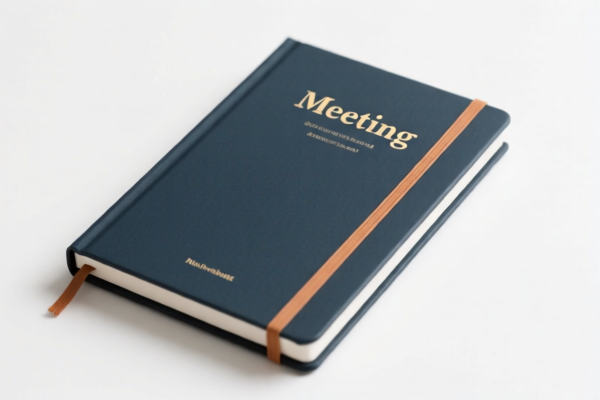
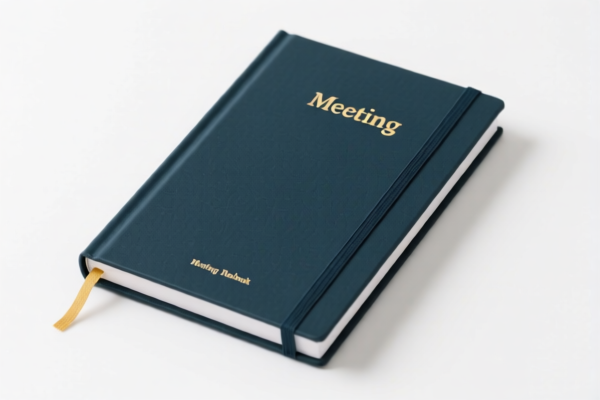
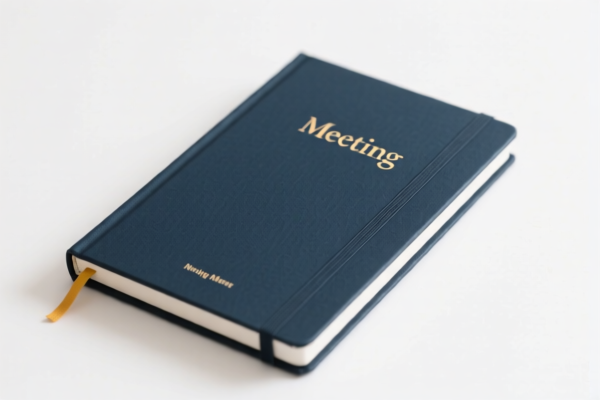
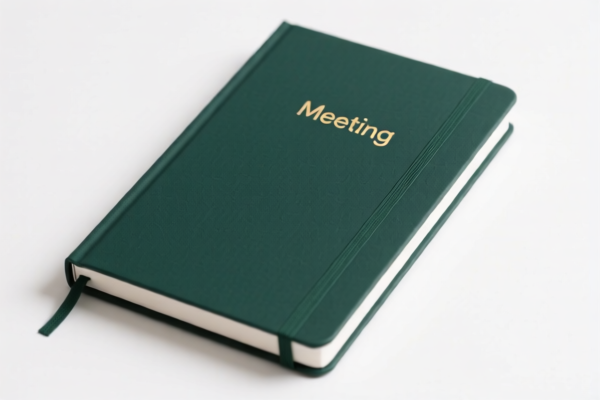
AI分析
📓 Hardcover Meeting Notebook: Precision HS Code Classification & US Customs Clearance Guide
🌐 HS Code Reference & Customs Clearance Strategy | 2026 Latest Tariff Analysis | Professional Compliance Guide
📌 Part I: Product Definition & Classification: Do You Really Know What a "Meeting Notebook" Is?
In international trade, a "Hardcover Meeting Notebook" is not merely a writing tool; it is a specific category of stationery articles of paper or paperboard. It falls under Chapter 48 of the Harmonized System.
Key distinctions in classification: * "Diaries" vs. "Notebooks": * Diaries/Address Books: Typically contain pre-printed dates, calendars, or specific organizational structures for scheduling and contact management. * Meeting Notebooks: Usually consist of blank or ruled pages bound together, primarily for taking notes. * Critical Distinction: If the notebook is bound (glued, stitched, or case-bound) and does not have a pre-printed calendar structure, it falls under "Notebooks". If it has a structured agenda or date grid, it may be classified as a "Diary".
⚠️ Key Classification Point:
- If the product is a bound notebook (blank/ruled pages, hardcover binding) → It falls under 4820.10.20 (Diaries, notebooks and address books, bound; memorandum pads, letter pads and similar articles).
- If the product is a diary (pre-printed with dates/calendars) → It also falls under 4820.10.20, but specific sub-headings may differ based on whether it is a "Diary" or a "Notebook".
📦 Part II: Detailed HS Code Breakdown (2026 Latest Tariff Authority)
Based on the provided data, the product "Hardcover Meeting Notebook" is classified under HS Code 4820.10.20. There are two specific sub-codes depending on the exact nature of the item:
| HS Code | Product Description | Application Scenario | Key Differentiator |
|---|---|---|---|
4820.10.20.10 |
Diaries, notebooks and address books, bound; memorandum pads, letter pads and similar articles: Diaries and address books | Bound diaries, address books, or structured journals with pre-printed calendars/agendas. | Contains dates/calendars. |
4820.10.20.60 |
Diaries, notebooks and address books, bound; memorandum pads, letter pads and similar articles: Other | Plain blank or ruled meeting notebooks, hardcover notebooks without pre-printed calendars. | No pre-printed dates; general note-taking. |
🔍 Important Reminder:
- Both codes fall under the broader heading 4820.10.20 (Registers, account books, notebooks, etc.).
- The term "Bound" is crucial. Loose-leaf notebooks or unbound paper pads do not fall here.
- "Hardcover" confirms it is a bound article, not a simple pad.
💰 Part III: 2026 Latest Tariff Rate Details (Including Surtaxes & Policy Add-ons)
✅ Applicable Country: United States (US)
✅ Origin: China (CN)
✅ Effective Date: 2025 onwards (including subsequent imports)
🎯 1. HS Code 4820.10.20.10 —— Diaries and Address Books (Bound)
| Item | Details |
|---|---|
| Basic Tariff Rate | 0.0% (ad valorem) |
| Additional Surcharge | +25.0% (USITC Footnote 9903.88.01 / Section 301) |
| Total Tax Rate | 25.0% |
| Tax Calculation | CIF Value × 25% |
| De Minimis Exemption | ❌ Not Applicable (Section 301 goods are generally not eligible for de minimis exemption from the surcharge) |
| Legal Basis Path | USITC:4820.10.20.10 → FOOTNOTE:9903.88.01 → Section 301: 25% |
📌 Explanation:
- The basic tariff is 0%, meaning the base import duty is free.
- However, due to the Section 301 trade remedy, an additional 25% tariff is imposed on goods of Chinese origin classified under this HS code.
- Total effective duty: 25%.
🎯 2. HS Code 4820.10.20.60 —— Other Notebooks & Memorandum Pads (Bound)
| Item | Details |
|---|---|
| Basic Tariff Rate | 0.0% (ad valorem) |
| Additional Surcharge | +25.0% (USITC Footnote 9903.88.01 / Section 301) |
| Total Tax Rate | 25.0% |
| Tax Calculation | CIF Value × 25% |
| De Minimis Exemption | ❌ Not Applicable |
| Legal Basis Path | USITC:4820.10.20.60 → FOOTNOTE:9903.88.01 → Section 301: 25% |
📌 Note:
- Same tax treatment as4820.10.20.10.
- Whether it is a diary or a plain notebook, as long as it is bound and of paper/paperboard, the 25% surcharge applies.
🛠️ Part IV: Customs Clearance Practical Advice (Pitfall Avoidance Guide)
✅ 1. Required Documentation Checklist
| Document | Required? | Purpose |
|---|---|---|
| ✅ Commercial Invoice | ✔️ | Must clearly state "Hardcover Meeting Notebook" and HS Code 4820.10.20.10 or 4820.10.20.60. |
| ✅ Packing List | ✔️ | Detail quantity, weight, and packaging type. |
| ✅ Product Description | ✔️ | Specify: "Bound," "Hardcover," "Blank/Ruled," "Not a Diary (if using 60)." |
| ✅ Origin Certificate | ✔️ | If claiming exemption (not applicable here for China), but required for general customs compliance. |
| ✅ Photos | ✔️ | Show binding type, cover material, and interior page format (to prove it's not a diary). |
✅ 2. Declaration Tips (Key Mnemonics)
🔥 "Bound is Key, Diary vs. Notebook, 25% Surtax, No De Minimis!"
| Scenario | Correct Declaration | Error to Avoid |
|---|---|---|
| Plain Blank Hardcover Notebook | 4820.10.20.60 |
Misdeclare as loose-leaf → Wrong Code |
| Notebook with Pre-printed Dates | 4820.10.20.10 |
Misdeclare as "Notebook" → Potential Audit |
| Unbound Memo Pad | Not in this list (likely 4820.10.90) |
Do not use 4820.10.20 for unbound items |
| Gift with Value < $800 | Still subject to 25% if from China | Assume de minimis applies → Risk of Penalty |
📌 Critical Warning:
- De Minimis ($800): For shipments from China, the 25% Section 301 surcharge typically still applies even under de minimis, depending on current CBP enforcement. Always consult your customs broker.
- Binding Type: If the notebook is loose-leaf (ring-bound), it may fall under4820.10.30.00(Binders, folders, file covers, etc.). This has a different tariff structure. Ensure your product is case-bound or perfect-bound to fit4820.10.20.
🌍 Part V: Global Market Clearance Comparison (2026)
| Country/Region | Recommended HS Code | Tariff Rate | Certification | Notes |
|---|---|---|---|---|
| 🇺🇸 USA | 4820.10.20.10 / .60 |
25% (China Origin) | None typically | High duty due to Section 301 |
| 🇨🇳 China | 4820.10.20.10 / .60 |
5-10% | CCC (if applicable) | Base duty + VAT |
| 🇪🇺 EU | 4820.10.20.10 / .60 |
0% | CE (if文具 includes safety) | No surcharge |
| 🇬🇧 UK | 4820.10.20.10 / .60 |
0% | UKCA (if applicable) | Post-Brexit alignment |
| 🇨🇦 Canada | 4820.10.20.10 / .60 |
0% | None | CUSMA benefits if Canadian |
📌 Conclusion:
- The US market is the most challenging for Chinese-manufactured stationery due to the 25% surcharge.
- Consider third-country sourcing (e.g., Vietnam, India) to avoid the 25% if targeting the US market.
📌 Part VI: Common Mistakes & Pitfalls (Lessons Learned)
❌ Mistake 1: Declaring a bound diary as a notebook (or vice versa)
👉 Consequence: Misclassification, potential fines, or delays in customs inspection.
👉 Fix: Check for pre-printed dates. If yes → 4820.10.20.10. If no → 4820.10.20.60.
❌ Mistake 2: Ignoring the Binding Type
👉 Consequence: If it’s loose-leaf/ring-bound, it may fall under Binders (4820.10.30), which has a different duty rate.
👉 Fix: Confirm the binding method. Hardcovers are usually perfect-bound or case-bound.
❌ Mistake 3: Assuming De Minimis exempts the Section 301 Surcharge
👉 Consequence: Undervaluation, penalties, or seizure.
👉 Fix: Verify current CBP guidance on de minimis for Section 301 goods. Assume 25% applies.
🎯 Part VII: Conclusion: Precision Classification, Cost Control, and Efficiency
🎯 Key Takeaways:
🔹 "Bound is Bound": Whether diary or notebook, if it’s bound paper stationery, it’s
4820.10.20.
🔹 "25% is the Reality": For China-origin goods, the 25% surcharge is unavoidable under current Section 301 rules.
🔹 "Be Specific": Clearly distinguish between Diary (pre-printed dates) and Notebook (blank/ruled) to ensure accurate documentation.
📌 Pro Tip:
If your Hardcover Meeting Notebook is loose-leaf (e.g., ring-bound with refillable pages), consider reclassifying to 4820.10.30.00 (Binders, Folders, File Covers), which may have different tariff implications. Consult a customs broker for this edge case.
📣 Immediate Action:
📞 Contact a Licensed Customs Broker + Provide Product Photos + Apply for HS Code Pre-Ruling
🚀 Ensure Accurate Declaration, Avoid Penalties, and Optimize Your Supply Chain!
✨ Professional Clearance, Starting with Precise Classification!
💼 Every Penny of Duty Counts!
用户评价
关于 HS 编码归类
协调制度(HS)是由世界海关组织(WCO)制定的国际贸易商品分类标准。全球 200 多个国家采用 HS 系统作为海关关税、贸易统计和进出口监管的基础。
每个 HS 编码遵循以下层级结构:
- 章(2 位)——商品大类(例如:第 84 章:机器和机械设备)
- 品目(4 位)——章内的更具体分类
- 子目(6 位)——国际通用细分,所有 WCO 成员国统一使用
- 本国细分(8-10 位)——各国自行扩展的细分编码,如美国 HTSUS 10 位编码
正确的 HS 编码归类对于顺利通关、准确缴纳关税和遵守贸易法规至关重要。错误归类可能导致海关延误、多缴关税或罚款。
从CN进口到US时,适用的关税税率可能包括:
- 最惠国(MFN)税率——适用于 WTO 成员国的标准关税税率
- 普通税率——适用于无贸易协定国家
- 贸易救济关税——附加关税,如 301 条款(反倾销)、232 条款(国家安全)或反补贴税
本页内容仅供参考。如需正式归类,请咨询当地海关或持牌报关代理。