Hardcover Meeting Notebook
CN → US| HS Code | Tariff Rate | Origin | Destination | Doc |
|---|---|---|---|---|
| 4820102010 | 35.0% | CN | US | Official Doc |
| 4820102060 | 35.0% | CN | US | Official Doc |
Product Images
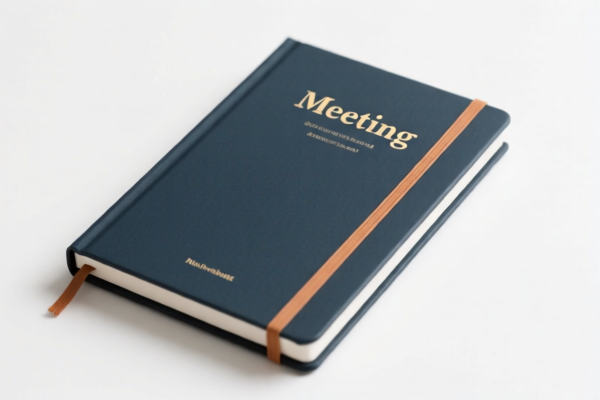
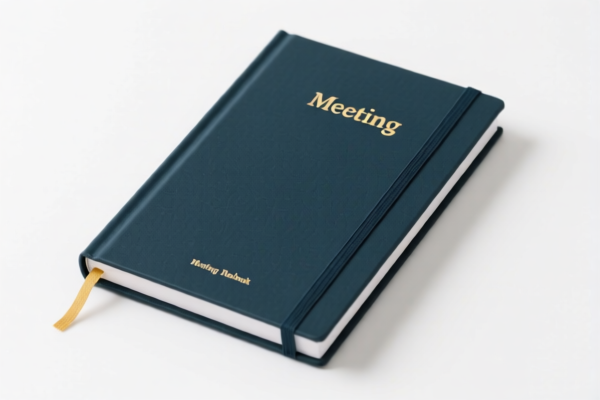
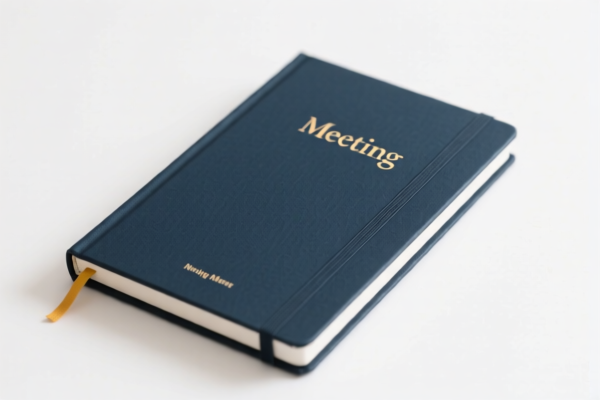
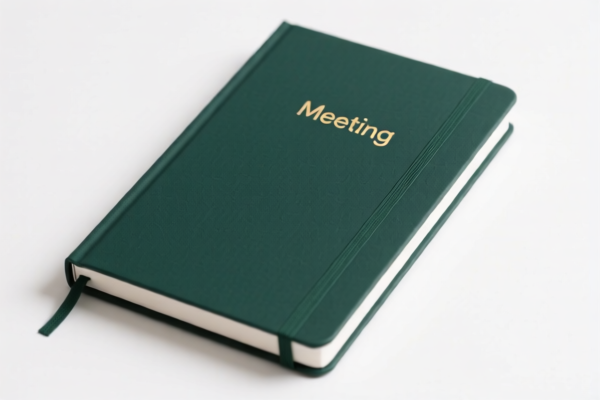
AI Analysis
📓 Hardcover Meeting Notebook: Precision HS Code Classification & US Customs Clearance Guide
🌐 HS Code Reference & Customs Clearance Strategy | 2026 Latest Tariff Analysis | Professional Compliance Guide
📌 Part I: Product Definition & Classification: Do You Really Know What a "Meeting Notebook" Is?
In international trade, a "Hardcover Meeting Notebook" is not merely a writing tool; it is a specific category of stationery articles of paper or paperboard. It falls under Chapter 48 of the Harmonized System.
Key distinctions in classification: * "Diaries" vs. "Notebooks": * Diaries/Address Books: Typically contain pre-printed dates, calendars, or specific organizational structures for scheduling and contact management. * Meeting Notebooks: Usually consist of blank or ruled pages bound together, primarily for taking notes. * Critical Distinction: If the notebook is bound (glued, stitched, or case-bound) and does not have a pre-printed calendar structure, it falls under "Notebooks". If it has a structured agenda or date grid, it may be classified as a "Diary".
⚠️ Key Classification Point:
- If the product is a bound notebook (blank/ruled pages, hardcover binding) → It falls under 4820.10.20 (Diaries, notebooks and address books, bound; memorandum pads, letter pads and similar articles).
- If the product is a diary (pre-printed with dates/calendars) → It also falls under 4820.10.20, but specific sub-headings may differ based on whether it is a "Diary" or a "Notebook".
📦 Part II: Detailed HS Code Breakdown (2026 Latest Tariff Authority)
Based on the provided data, the product "Hardcover Meeting Notebook" is classified under HS Code 4820.10.20. There are two specific sub-codes depending on the exact nature of the item:
| HS Code | Product Description | Application Scenario | Key Differentiator |
|---|---|---|---|
4820.10.20.10 |
Diaries, notebooks and address books, bound; memorandum pads, letter pads and similar articles: Diaries and address books | Bound diaries, address books, or structured journals with pre-printed calendars/agendas. | Contains dates/calendars. |
4820.10.20.60 |
Diaries, notebooks and address books, bound; memorandum pads, letter pads and similar articles: Other | Plain blank or ruled meeting notebooks, hardcover notebooks without pre-printed calendars. | No pre-printed dates; general note-taking. |
🔍 Important Reminder:
- Both codes fall under the broader heading 4820.10.20 (Registers, account books, notebooks, etc.).
- The term "Bound" is crucial. Loose-leaf notebooks or unbound paper pads do not fall here.
- "Hardcover" confirms it is a bound article, not a simple pad.
💰 Part III: 2026 Latest Tariff Rate Details (Including Surtaxes & Policy Add-ons)
✅ Applicable Country: United States (US)
✅ Origin: China (CN)
✅ Effective Date: 2025 onwards (including subsequent imports)
🎯 1. HS Code 4820.10.20.10 —— Diaries and Address Books (Bound)
| Item | Details |
|---|---|
| Basic Tariff Rate | 0.0% (ad valorem) |
| Additional Surcharge | +25.0% (USITC Footnote 9903.88.01 / Section 301) |
| Total Tax Rate | 25.0% |
| Tax Calculation | CIF Value × 25% |
| De Minimis Exemption | ❌ Not Applicable (Section 301 goods are generally not eligible for de minimis exemption from the surcharge) |
| Legal Basis Path | USITC:4820.10.20.10 → FOOTNOTE:9903.88.01 → Section 301: 25% |
📌 Explanation:
- The basic tariff is 0%, meaning the base import duty is free.
- However, due to the Section 301 trade remedy, an additional 25% tariff is imposed on goods of Chinese origin classified under this HS code.
- Total effective duty: 25%.
🎯 2. HS Code 4820.10.20.60 —— Other Notebooks & Memorandum Pads (Bound)
| Item | Details |
|---|---|
| Basic Tariff Rate | 0.0% (ad valorem) |
| Additional Surcharge | +25.0% (USITC Footnote 9903.88.01 / Section 301) |
| Total Tax Rate | 25.0% |
| Tax Calculation | CIF Value × 25% |
| De Minimis Exemption | ❌ Not Applicable |
| Legal Basis Path | USITC:4820.10.20.60 → FOOTNOTE:9903.88.01 → Section 301: 25% |
📌 Note:
- Same tax treatment as4820.10.20.10.
- Whether it is a diary or a plain notebook, as long as it is bound and of paper/paperboard, the 25% surcharge applies.
🛠️ Part IV: Customs Clearance Practical Advice (Pitfall Avoidance Guide)
✅ 1. Required Documentation Checklist
| Document | Required? | Purpose |
|---|---|---|
| ✅ Commercial Invoice | ✔️ | Must clearly state "Hardcover Meeting Notebook" and HS Code 4820.10.20.10 or 4820.10.20.60. |
| ✅ Packing List | ✔️ | Detail quantity, weight, and packaging type. |
| ✅ Product Description | ✔️ | Specify: "Bound," "Hardcover," "Blank/Ruled," "Not a Diary (if using 60)." |
| ✅ Origin Certificate | ✔️ | If claiming exemption (not applicable here for China), but required for general customs compliance. |
| ✅ Photos | ✔️ | Show binding type, cover material, and interior page format (to prove it's not a diary). |
✅ 2. Declaration Tips (Key Mnemonics)
🔥 "Bound is Key, Diary vs. Notebook, 25% Surtax, No De Minimis!"
| Scenario | Correct Declaration | Error to Avoid |
|---|---|---|
| Plain Blank Hardcover Notebook | 4820.10.20.60 |
Misdeclare as loose-leaf → Wrong Code |
| Notebook with Pre-printed Dates | 4820.10.20.10 |
Misdeclare as "Notebook" → Potential Audit |
| Unbound Memo Pad | Not in this list (likely 4820.10.90) |
Do not use 4820.10.20 for unbound items |
| Gift with Value < $800 | Still subject to 25% if from China | Assume de minimis applies → Risk of Penalty |
📌 Critical Warning:
- De Minimis ($800): For shipments from China, the 25% Section 301 surcharge typically still applies even under de minimis, depending on current CBP enforcement. Always consult your customs broker.
- Binding Type: If the notebook is loose-leaf (ring-bound), it may fall under4820.10.30.00(Binders, folders, file covers, etc.). This has a different tariff structure. Ensure your product is case-bound or perfect-bound to fit4820.10.20.
🌍 Part V: Global Market Clearance Comparison (2026)
| Country/Region | Recommended HS Code | Tariff Rate | Certification | Notes |
|---|---|---|---|---|
| 🇺🇸 USA | 4820.10.20.10 / .60 |
25% (China Origin) | None typically | High duty due to Section 301 |
| 🇨🇳 China | 4820.10.20.10 / .60 |
5-10% | CCC (if applicable) | Base duty + VAT |
| 🇪🇺 EU | 4820.10.20.10 / .60 |
0% | CE (if文具 includes safety) | No surcharge |
| 🇬🇧 UK | 4820.10.20.10 / .60 |
0% | UKCA (if applicable) | Post-Brexit alignment |
| 🇨🇦 Canada | 4820.10.20.10 / .60 |
0% | None | CUSMA benefits if Canadian |
📌 Conclusion:
- The US market is the most challenging for Chinese-manufactured stationery due to the 25% surcharge.
- Consider third-country sourcing (e.g., Vietnam, India) to avoid the 25% if targeting the US market.
📌 Part VI: Common Mistakes & Pitfalls (Lessons Learned)
❌ Mistake 1: Declaring a bound diary as a notebook (or vice versa)
👉 Consequence: Misclassification, potential fines, or delays in customs inspection.
👉 Fix: Check for pre-printed dates. If yes → 4820.10.20.10. If no → 4820.10.20.60.
❌ Mistake 2: Ignoring the Binding Type
👉 Consequence: If it’s loose-leaf/ring-bound, it may fall under Binders (4820.10.30), which has a different duty rate.
👉 Fix: Confirm the binding method. Hardcovers are usually perfect-bound or case-bound.
❌ Mistake 3: Assuming De Minimis exempts the Section 301 Surcharge
👉 Consequence: Undervaluation, penalties, or seizure.
👉 Fix: Verify current CBP guidance on de minimis for Section 301 goods. Assume 25% applies.
🎯 Part VII: Conclusion: Precision Classification, Cost Control, and Efficiency
🎯 Key Takeaways:
🔹 "Bound is Bound": Whether diary or notebook, if it’s bound paper stationery, it’s
4820.10.20.
🔹 "25% is the Reality": For China-origin goods, the 25% surcharge is unavoidable under current Section 301 rules.
🔹 "Be Specific": Clearly distinguish between Diary (pre-printed dates) and Notebook (blank/ruled) to ensure accurate documentation.
📌 Pro Tip:
If your Hardcover Meeting Notebook is loose-leaf (e.g., ring-bound with refillable pages), consider reclassifying to 4820.10.30.00 (Binders, Folders, File Covers), which may have different tariff implications. Consult a customs broker for this edge case.
📣 Immediate Action:
📞 Contact a Licensed Customs Broker + Provide Product Photos + Apply for HS Code Pre-Ruling
🚀 Ensure Accurate Declaration, Avoid Penalties, and Optimize Your Supply Chain!
✨ Professional Clearance, Starting with Precise Classification!
💼 Every Penny of Duty Counts!
Customer Reviews
About HS Code Classification
The Harmonized System (HS) is an internationally standardized nomenclature developed by the World Customs Organization (WCO) to classify traded products. Over 200 countries use the HS system as the basis for customs tariffs, trade statistics, and import/export regulations.
Each HS code follows a hierarchical structure:
- Chapter (2 digits) — Broad category of goods (e.g., Chapter 84: Machinery and Mechanical Appliances)
- Heading (4 digits) — More specific grouping within the chapter
- Subheading (6 digits) — Internationally standardized breakdown, used by all WCO member countries
- National subdivisions (8-10 digits) — Country-specific extensions for further classification, such as US HTSUS 10-digit codes
Correct HS code classification is essential for smooth customs clearance, accurate duty payment, and compliance with trade regulations. Misclassification can lead to customs delays, overpayment of duties, or penalties.
When importing from CN to US, the applicable tariff rates may include:
- Most-Favored-Nation (MFN) rate — The standard duty rate applied to WTO members
- General rate — Applied to countries without trade agreements
- Trade remedy duties — Additional tariffs such as Section 301 (anti-dumping), Section 232 (national security), or countervailing duties
The information provided on this page is for reference purposes only. For official classification, please consult with your local customs authority or a licensed customs broker.