Harvester and Thresher
CN → US| HS编码 | 关税税率 | 原产国 | 目的国 | 文档 |
|---|---|---|---|---|
| 8433510010 | 35.0% | CN | US | 官方文档 |
| 8433510010 | 35.0% | CN | US | 官方文档 |
| 8433510010 | 35.0% | CN | US | 官方文档 |
| 8433510010 | 35.0% | CN | US | 官方文档 |
| 8433510010 | 35.0% | CN | US | 官方文档 |
商品图片
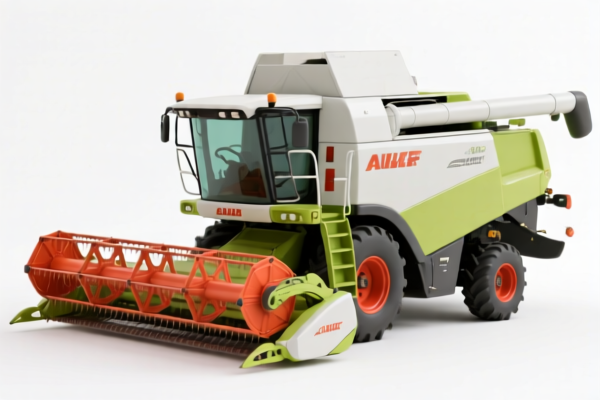
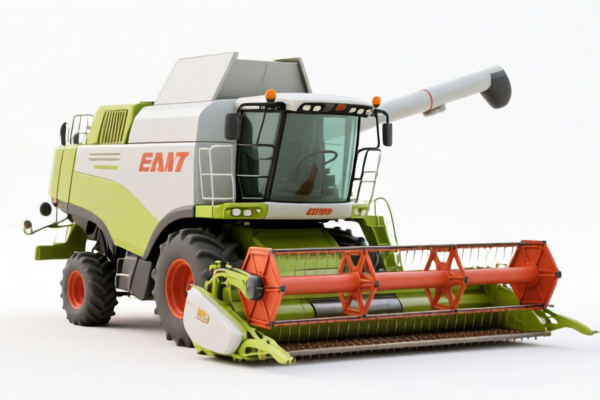
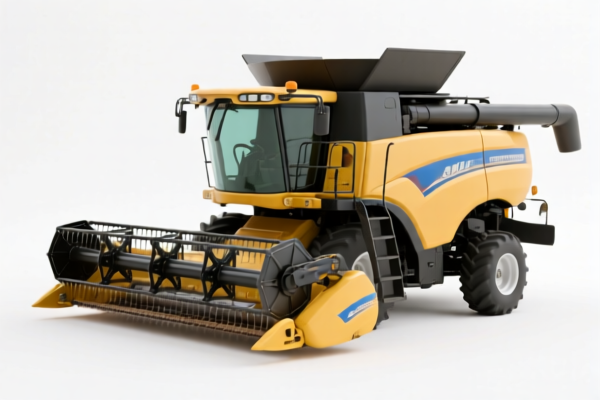
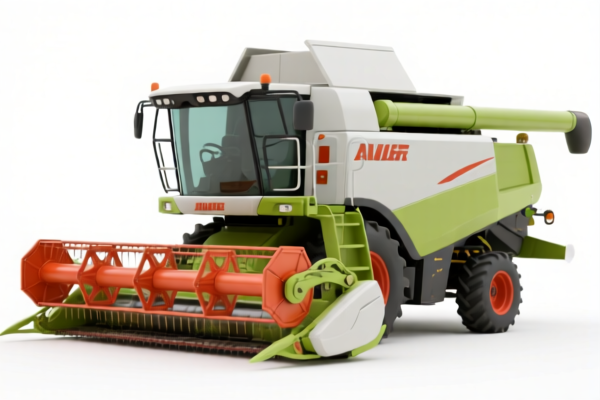
AI分析
🚜 Harvesters & Threshers (Agricultural Machinery)
🌐 HS Code Reference & Customs Clearance Guide | 2026 Latest Tariff Analysis | Professional Clearance Strategy
📌 I. Product Definition & Classification: Do You Know Your "Harvester"?
In international trade, "Harvesting or Threshing Machinery" is a broad category that primarily covers equipment used for cutting, gathering, threshing, cleaning, and grading agricultural produce. The classification depends heavily on whether the machine is self-propelled or not, and its specific function (e.g., combine harvester vs. other harvesters).
Key Distinction: * Combine Harvester-Threshers (Self-propelled): These are large, complex machines that perform reaping, threshing, and winnowing in a single pass. They fall under specific sub-headings. * Other Harvesting/Threshing Machinery: This includes straw balers, grass mowers, and other non-combine harvesters, as well as machinery for cleaning/sorting eggs or fruit.
⚠️ Critical Classification Point:
- If the machine is a self-propelled combine harvester, it is classified under 8433.51.00.10.
- If it is any other type of harvesting or threshing machinery (including non-self-propelled combines, balers, or mowers), it is classified under 8433.51.00.90.
- Note: Machinery for cleaning/sorting eggs, fruit, etc., is also under Heading 8433 but has different sub-headings not listed in the provided data; we focus strictly on the harvesting/threshing aspect provided.
📦 II. HS Code Classification Details (2026 Latest Tariff Authority Alignment)
Based on the provided data, there are two specific HS Codes for harvesting and threshing machinery. Here is the detailed breakdown:
| HS Code | Product Description | Applicable Scenario | Propulsion Type |
|---|---|---|---|
8433.51.00.10 |
Combine Harvester-Threshers: Self-propelled | Large-scale agricultural combines used for grain harvesting (wheat, corn, rice, etc.). These are complex, self-moving machines. | ✅ Self-propelled |
8433.51.00.90 |
Combine Harvester-Threshers: Other Includes: Other harvesting machinery; threshing machinery |
This "catch-all" includes: 1. Non-self-propelled combine harvesters. 2. Other harvesting machinery (e.g., balers, mowers, potato harvesters). 3. Threshing machines not classified as combines. |
❌ Not Self-propelled OR Other types |
🔍 Important Reminder:
- Heading 8437 (Machinery for cleaning, sorting, or grading eggs, fruit, etc.) is explicitly excluded from this specific sub-heading description in the prompt, although it shares the main heading 8433.
- The term "Other" in8433.51.00.90is broad. It covers any harvesting/threshing machine that is not a self-propelled combine harvester.
- Do not confuse "Combine Harvester" with general "Harvesting Machinery." Self-propulsion is the key differentiator for8433.51.00.10.
💰 III. 2026 Latest Tariff Rate Details (Including Additional Duties)
✅ Applicable Country: United States (US)
✅ Origin: China (CN)
✅ Effective Date: As per current trade policies (25% additional duty applies)
🎯 1. 8433.51.00.10 —— Self-propelled Combine Harvester-Threshers
| Item | Content |
|---|---|
| Base Tariff Rate | 0.0% (Ad valorem) |
| Additional Tariff (Section 301) | +25.0% |
| Total Tariff Rate | 25.0% |
| Tax Calculation | CIF Value × 25% |
| Legal Basis Path | USITC:8433.51.00.10 → Section 301: 25% Additional Duty |
📌 Explanation:
- The base MFN (Most Favored Nation) rate for agricultural machinery is often 0%.
- However, due to Section 301 tariffs, products from China are subject to an additional 25% duty.
- Total Cost Impact: For every $100,000 CIF value, you pay $25,000 in additional duties on top of shipping and insurance.
- No De Minimis Exemption: This duty applies to all commercial shipments, regardless of value.
🎯 2. 8433.51.00.90 —— Other Harvesting/Threshing Machinery
| Item | Content |
|---|---|
| Base Tariff Rate | 0.0% (Ad valorem) |
| Additional Tariff (Section 301) | +25.0% |
| Total Tariff Rate | 25.0% |
| Tax Calculation | CIF Value × 25% |
| Legal Basis Path | USITC:8433.51.00.90 → Section 301: 25% Additional Duty |
📌 Note:
- Despite being a "broad" category, the tariff rate is identical to self-propelled combines for Chinese-origin goods.
- This includes:
- Horse-drawn or tractor-pulled combines.
- Straw balers, hay mowers, fodder balers.
- Other specialized harvesting equipment not falling under 8433.51.00.10.
- Total Cost Impact: Same as above — 25% of CIF value.
🛠️ IV. Customs Clearance Practical Advice (Real-World Pitfall Avoidance)
✅ 1. Required Documentation Checklist (All Mandatory)
| Document | Required | Purpose |
|---|---|---|
| ✅ Commercial Invoice | ✔️ | Must clearly state: "Harvesting/Threshing Machinery," HS Code, Value, Origin. |
| ✅ Packing List | ✔️ | Detail all parts, accessories, and tools shipped with the machine. |
| ✅ Product Specifications | ✔️ | Crucial: Must specify propulsion type (Self-propelled vs. Other). This is the key to correct HS Code classification. |
| ✅ Engine Power & Capacity | ✔️ | Required for customs valuation and verification. |
| ✅ Origin Certificate | ✔️ | To prove country of origin (China) for tariff calculation. |
| ✅ CE/ISO Certificates | ✔️ | While not always mandatory for US entry, they support product safety and quality claims. |
| ✅ FCC Certification | ✔️ | If the machine has electronic control systems or communication devices, FCC compliance may be required. |
✅ 2. Declaration Tips (Key Mnemonics)
🔥 "Propulsion Defines Code, 25% Tax Stays!"
| Scenario | Correct Declaration | Wrong Practice |
|---|---|---|
| Self-propelled Combine | 8433.51.00.10 "Self-propelled Combine Harvester-Thresher" |
Misdeclare as "Other" → Risk of classification audit. |
| Tractor-Attached Harvester | 8433.51.00.90 "Harvesting Machinery (Non-Self-Propelled)" |
Misdeclare as Self-propelled → Higher scrutiny. |
| Straw Baler / Hay Mower | 8433.51.00.90 "Straw Baler / Grass Mower" |
Confuse with 8433.2x (Mowers) or 8433.3x (Balers) if specific sub-headings exist, but per provided data, they fall under "Other harvesting machinery" in 8433.51.00.90. |
| Parts & Accessories | Classified under 8433.90 (Parts) | Declaring parts as complete machines → Fraud Risk. |
📌 Critical Note on Parts:
The provided data includes "parts thereof."
- Complete Machines:8433.51.00.10/8433.51.00.90
- Parts: Should be classified under 8433.90.00.00 (Parts of harvesting machinery).
- Tariff for Parts: Typically 0% base + 25% additional = 25%.
- Never declare a loose blade or conveyor belt as a "Self-propelled Harvester."
✅ 3. Special Situation Handling
| Situation | Handling Advice |
|---|---|
| OEM Custom Harvester | Provide detailed design specs. Clearly state if it’s self-propelled. |
| Used Machinery | Provide proof of age (e.g., year of manufacture). Some countries have restrictions on used agricultural equipment. |
| Mixed Shipment | If shipping a combine + parts, declare them separately. Do not lump parts into the machine’s value without clarification. |
| Non-China Origin | If the harvester is made in Vietnam, Germany, or the US, the 25% Section 301 tariff does NOT apply. Base tariff may still apply (often 0%). |
🌍 V. Global Main Market Clearance Comparison (2026 Latest)
| Country/Region | Recommended HS Code | Tariff (China Origin) | Certification Requirements | Notes |
|---|---|---|---|---|
| 🇺🇸 USA | 8433.51.00.10 / 90 |
25% (Base 0% + 25% Sec 301) | FCC (if electronic) | High tariff due to trade tensions. |
| 🇨🇳 China | 8433.51.00.10 / 90 |
0% - 5% (Depends on specific HTS) | CCC (if applicable) | Import duties often lower or zero for agricultural machinery. |
| 🇪🇺 EU | 8433.51.00 |
0% (Most agricultural machinery) | CE Mark | No additional duties for Chinese agricultural machinery in most cases. |
| 🇦🇺 Australia | 8433.51.00 |
5% | RCM (if electronic) | Lower tariff than US. |
| 🇯🇵 Japan | 8433.51.00 |
0% | PSE (if electronic) | FTA benefits may apply. |
📌 Conclusion:
- The USA is the most challenging market due to the 25% additional tariff.
- EU, Japan, and Australia offer more favorable tariff environments for agricultural machinery.
- Always verify the origin of components. If significant assembly occurs in a non-China country, a Certificate of Origin change may reduce duties.
📌 VI. Common Errors & Pitfall Guide (Lessons Learned)
❌ Error 1: Misclassifying Parts as Complete Machines
👉 Consequence: Overpayment of duties or audit flags. Parts are typically 8433.90.
❌ Error 2: Ignoring Propulsion Type
👉 Consequence: Declaring a tractor-pulled harvester as 8433.51.00.10 (Self-propelled) is a misclassification. It must be 8433.51.00.90.
❌ Error 3: Confusing Harvesters with Sorting Machines
👉 Consequence: Sorting machines for eggs/fruit are under 8437, not 8433.51. Misclassification leads to compliance issues.
❌ Error 4: Omitting FCC Compliance for Electronic Controls
👉 Consequence: Modern harvesters have GPS, sensors, and digital displays. Without FCC certification, the shipment may be detained at US customs.
✅ Correct Practice:
"Self-propelled Combine Harvester, 2026 Model, Engine Power 200HP, GPS-equipped, FCC Certified, Origin China"
🎯 VII. Conclusion: Precision in Classification Saves Money!
🎯 Remember the Mnemonics:
🔹 "Self-Propelled = .10, Other = .90, Both Pay 25%!"
🔹 "Parts go to 8433.90, Don't Hide Them!"
🔹 "Check FCC for Electronics, Avoid Detention!"
📌 Pro Tip:
If you are importing from China, budget for the 25% additional duty. Consider:
1. Advance Ruling: Request a binding ruling from US Customs to confirm HS Code.
2. Supply Chain Diversification: If tariffs are too high, consider sourcing or assembling in countries with favorable trade agreements (e.g., Vietnam, Mexico) to potentially avoid Section 301 duties.
3. Parts Separation: Declare parts separately if they have a different tariff treatment or value structure.
📣 Immediate Action:
📞 Contact a licensed customs broker.
📄 Prepare detailed specs highlighting propulsion type.
🔍 Verify FCC/CE compliance for all electronic components.🚀 Clear Classification, Smooth Clearance, Maximize Profit!
✨ Professional Customs Clearance Starts with Accurate Classification!
💼 Every Percent of Tariff Matters!
用户评价
关于 HS 编码归类
协调制度(HS)是由世界海关组织(WCO)制定的国际贸易商品分类标准。全球 200 多个国家采用 HS 系统作为海关关税、贸易统计和进出口监管的基础。
每个 HS 编码遵循以下层级结构:
- 章(2 位)——商品大类(例如:第 84 章:机器和机械设备)
- 品目(4 位)——章内的更具体分类
- 子目(6 位)——国际通用细分,所有 WCO 成员国统一使用
- 本国细分(8-10 位)——各国自行扩展的细分编码,如美国 HTSUS 10 位编码
正确的 HS 编码归类对于顺利通关、准确缴纳关税和遵守贸易法规至关重要。错误归类可能导致海关延误、多缴关税或罚款。
从CN进口到US时,适用的关税税率可能包括:
- 最惠国(MFN)税率——适用于 WTO 成员国的标准关税税率
- 普通税率——适用于无贸易协定国家
- 贸易救济关税——附加关税,如 301 条款(反倾销)、232 条款(国家安全)或反补贴税
本页内容仅供参考。如需正式归类,请咨询当地海关或持牌报关代理。