Harvester and Thresher
CN → US| HS Code | Tariff Rate | Origin | Destination | Doc |
|---|---|---|---|---|
| 8433510010 | 35.0% | CN | US | Official Doc |
| 8433510010 | 35.0% | CN | US | Official Doc |
| 8433510010 | 35.0% | CN | US | Official Doc |
| 8433510010 | 35.0% | CN | US | Official Doc |
| 8433510010 | 35.0% | CN | US | Official Doc |
Product Images
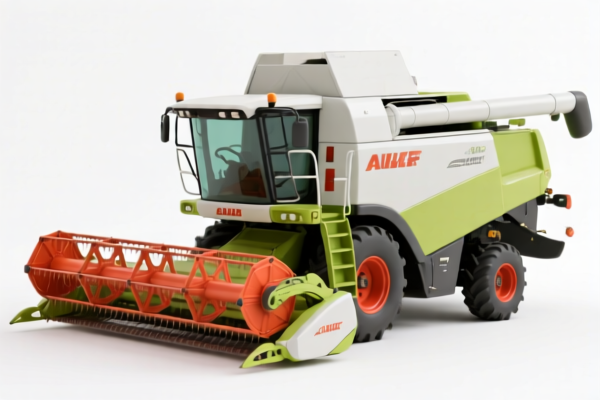
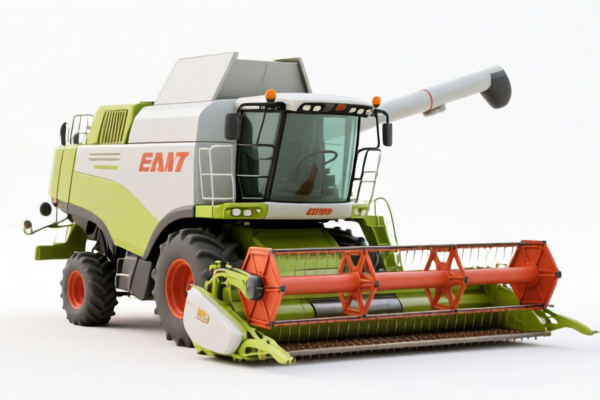
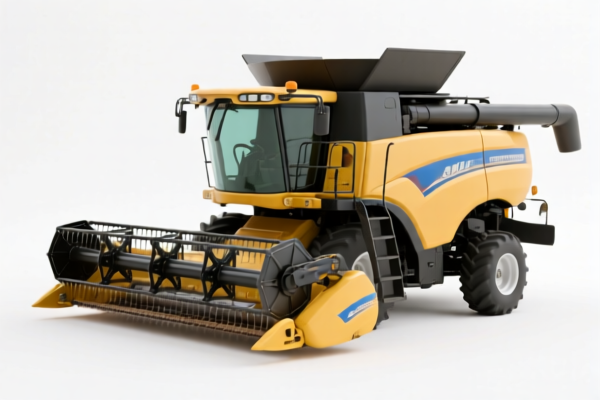
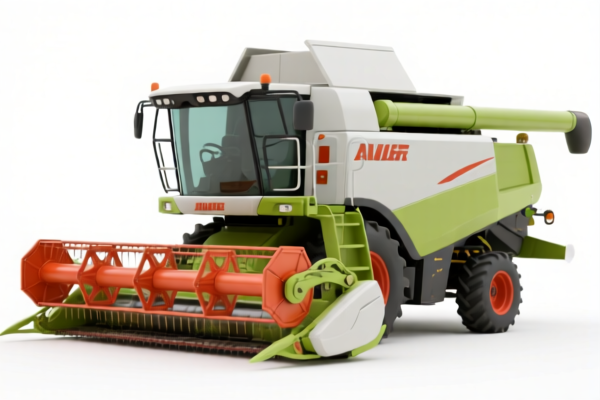
AI Analysis
🚜 Harvesters & Threshers (Agricultural Machinery)
🌐 HS Code Reference & Customs Clearance Guide | 2026 Latest Tariff Analysis | Professional Clearance Strategy
📌 I. Product Definition & Classification: Do You Know Your "Harvester"?
In international trade, "Harvesting or Threshing Machinery" is a broad category that primarily covers equipment used for cutting, gathering, threshing, cleaning, and grading agricultural produce. The classification depends heavily on whether the machine is self-propelled or not, and its specific function (e.g., combine harvester vs. other harvesters).
Key Distinction: * Combine Harvester-Threshers (Self-propelled): These are large, complex machines that perform reaping, threshing, and winnowing in a single pass. They fall under specific sub-headings. * Other Harvesting/Threshing Machinery: This includes straw balers, grass mowers, and other non-combine harvesters, as well as machinery for cleaning/sorting eggs or fruit.
⚠️ Critical Classification Point:
- If the machine is a self-propelled combine harvester, it is classified under 8433.51.00.10.
- If it is any other type of harvesting or threshing machinery (including non-self-propelled combines, balers, or mowers), it is classified under 8433.51.00.90.
- Note: Machinery for cleaning/sorting eggs, fruit, etc., is also under Heading 8433 but has different sub-headings not listed in the provided data; we focus strictly on the harvesting/threshing aspect provided.
📦 II. HS Code Classification Details (2026 Latest Tariff Authority Alignment)
Based on the provided data, there are two specific HS Codes for harvesting and threshing machinery. Here is the detailed breakdown:
| HS Code | Product Description | Applicable Scenario | Propulsion Type |
|---|---|---|---|
8433.51.00.10 |
Combine Harvester-Threshers: Self-propelled | Large-scale agricultural combines used for grain harvesting (wheat, corn, rice, etc.). These are complex, self-moving machines. | ✅ Self-propelled |
8433.51.00.90 |
Combine Harvester-Threshers: Other Includes: Other harvesting machinery; threshing machinery |
This "catch-all" includes: 1. Non-self-propelled combine harvesters. 2. Other harvesting machinery (e.g., balers, mowers, potato harvesters). 3. Threshing machines not classified as combines. |
❌ Not Self-propelled OR Other types |
🔍 Important Reminder:
- Heading 8437 (Machinery for cleaning, sorting, or grading eggs, fruit, etc.) is explicitly excluded from this specific sub-heading description in the prompt, although it shares the main heading 8433.
- The term "Other" in8433.51.00.90is broad. It covers any harvesting/threshing machine that is not a self-propelled combine harvester.
- Do not confuse "Combine Harvester" with general "Harvesting Machinery." Self-propulsion is the key differentiator for8433.51.00.10.
💰 III. 2026 Latest Tariff Rate Details (Including Additional Duties)
✅ Applicable Country: United States (US)
✅ Origin: China (CN)
✅ Effective Date: As per current trade policies (25% additional duty applies)
🎯 1. 8433.51.00.10 —— Self-propelled Combine Harvester-Threshers
| Item | Content |
|---|---|
| Base Tariff Rate | 0.0% (Ad valorem) |
| Additional Tariff (Section 301) | +25.0% |
| Total Tariff Rate | 25.0% |
| Tax Calculation | CIF Value × 25% |
| Legal Basis Path | USITC:8433.51.00.10 → Section 301: 25% Additional Duty |
📌 Explanation:
- The base MFN (Most Favored Nation) rate for agricultural machinery is often 0%.
- However, due to Section 301 tariffs, products from China are subject to an additional 25% duty.
- Total Cost Impact: For every $100,000 CIF value, you pay $25,000 in additional duties on top of shipping and insurance.
- No De Minimis Exemption: This duty applies to all commercial shipments, regardless of value.
🎯 2. 8433.51.00.90 —— Other Harvesting/Threshing Machinery
| Item | Content |
|---|---|
| Base Tariff Rate | 0.0% (Ad valorem) |
| Additional Tariff (Section 301) | +25.0% |
| Total Tariff Rate | 25.0% |
| Tax Calculation | CIF Value × 25% |
| Legal Basis Path | USITC:8433.51.00.90 → Section 301: 25% Additional Duty |
📌 Note:
- Despite being a "broad" category, the tariff rate is identical to self-propelled combines for Chinese-origin goods.
- This includes:
- Horse-drawn or tractor-pulled combines.
- Straw balers, hay mowers, fodder balers.
- Other specialized harvesting equipment not falling under 8433.51.00.10.
- Total Cost Impact: Same as above — 25% of CIF value.
🛠️ IV. Customs Clearance Practical Advice (Real-World Pitfall Avoidance)
✅ 1. Required Documentation Checklist (All Mandatory)
| Document | Required | Purpose |
|---|---|---|
| ✅ Commercial Invoice | ✔️ | Must clearly state: "Harvesting/Threshing Machinery," HS Code, Value, Origin. |
| ✅ Packing List | ✔️ | Detail all parts, accessories, and tools shipped with the machine. |
| ✅ Product Specifications | ✔️ | Crucial: Must specify propulsion type (Self-propelled vs. Other). This is the key to correct HS Code classification. |
| ✅ Engine Power & Capacity | ✔️ | Required for customs valuation and verification. |
| ✅ Origin Certificate | ✔️ | To prove country of origin (China) for tariff calculation. |
| ✅ CE/ISO Certificates | ✔️ | While not always mandatory for US entry, they support product safety and quality claims. |
| ✅ FCC Certification | ✔️ | If the machine has electronic control systems or communication devices, FCC compliance may be required. |
✅ 2. Declaration Tips (Key Mnemonics)
🔥 "Propulsion Defines Code, 25% Tax Stays!"
| Scenario | Correct Declaration | Wrong Practice |
|---|---|---|
| Self-propelled Combine | 8433.51.00.10 "Self-propelled Combine Harvester-Thresher" |
Misdeclare as "Other" → Risk of classification audit. |
| Tractor-Attached Harvester | 8433.51.00.90 "Harvesting Machinery (Non-Self-Propelled)" |
Misdeclare as Self-propelled → Higher scrutiny. |
| Straw Baler / Hay Mower | 8433.51.00.90 "Straw Baler / Grass Mower" |
Confuse with 8433.2x (Mowers) or 8433.3x (Balers) if specific sub-headings exist, but per provided data, they fall under "Other harvesting machinery" in 8433.51.00.90. |
| Parts & Accessories | Classified under 8433.90 (Parts) | Declaring parts as complete machines → Fraud Risk. |
📌 Critical Note on Parts:
The provided data includes "parts thereof."
- Complete Machines:8433.51.00.10/8433.51.00.90
- Parts: Should be classified under 8433.90.00.00 (Parts of harvesting machinery).
- Tariff for Parts: Typically 0% base + 25% additional = 25%.
- Never declare a loose blade or conveyor belt as a "Self-propelled Harvester."
✅ 3. Special Situation Handling
| Situation | Handling Advice |
|---|---|
| OEM Custom Harvester | Provide detailed design specs. Clearly state if it’s self-propelled. |
| Used Machinery | Provide proof of age (e.g., year of manufacture). Some countries have restrictions on used agricultural equipment. |
| Mixed Shipment | If shipping a combine + parts, declare them separately. Do not lump parts into the machine’s value without clarification. |
| Non-China Origin | If the harvester is made in Vietnam, Germany, or the US, the 25% Section 301 tariff does NOT apply. Base tariff may still apply (often 0%). |
🌍 V. Global Main Market Clearance Comparison (2026 Latest)
| Country/Region | Recommended HS Code | Tariff (China Origin) | Certification Requirements | Notes |
|---|---|---|---|---|
| 🇺🇸 USA | 8433.51.00.10 / 90 |
25% (Base 0% + 25% Sec 301) | FCC (if electronic) | High tariff due to trade tensions. |
| 🇨🇳 China | 8433.51.00.10 / 90 |
0% - 5% (Depends on specific HTS) | CCC (if applicable) | Import duties often lower or zero for agricultural machinery. |
| 🇪🇺 EU | 8433.51.00 |
0% (Most agricultural machinery) | CE Mark | No additional duties for Chinese agricultural machinery in most cases. |
| 🇦🇺 Australia | 8433.51.00 |
5% | RCM (if electronic) | Lower tariff than US. |
| 🇯🇵 Japan | 8433.51.00 |
0% | PSE (if electronic) | FTA benefits may apply. |
📌 Conclusion:
- The USA is the most challenging market due to the 25% additional tariff.
- EU, Japan, and Australia offer more favorable tariff environments for agricultural machinery.
- Always verify the origin of components. If significant assembly occurs in a non-China country, a Certificate of Origin change may reduce duties.
📌 VI. Common Errors & Pitfall Guide (Lessons Learned)
❌ Error 1: Misclassifying Parts as Complete Machines
👉 Consequence: Overpayment of duties or audit flags. Parts are typically 8433.90.
❌ Error 2: Ignoring Propulsion Type
👉 Consequence: Declaring a tractor-pulled harvester as 8433.51.00.10 (Self-propelled) is a misclassification. It must be 8433.51.00.90.
❌ Error 3: Confusing Harvesters with Sorting Machines
👉 Consequence: Sorting machines for eggs/fruit are under 8437, not 8433.51. Misclassification leads to compliance issues.
❌ Error 4: Omitting FCC Compliance for Electronic Controls
👉 Consequence: Modern harvesters have GPS, sensors, and digital displays. Without FCC certification, the shipment may be detained at US customs.
✅ Correct Practice:
"Self-propelled Combine Harvester, 2026 Model, Engine Power 200HP, GPS-equipped, FCC Certified, Origin China"
🎯 VII. Conclusion: Precision in Classification Saves Money!
🎯 Remember the Mnemonics:
🔹 "Self-Propelled = .10, Other = .90, Both Pay 25%!"
🔹 "Parts go to 8433.90, Don't Hide Them!"
🔹 "Check FCC for Electronics, Avoid Detention!"
📌 Pro Tip:
If you are importing from China, budget for the 25% additional duty. Consider:
1. Advance Ruling: Request a binding ruling from US Customs to confirm HS Code.
2. Supply Chain Diversification: If tariffs are too high, consider sourcing or assembling in countries with favorable trade agreements (e.g., Vietnam, Mexico) to potentially avoid Section 301 duties.
3. Parts Separation: Declare parts separately if they have a different tariff treatment or value structure.
📣 Immediate Action:
📞 Contact a licensed customs broker.
📄 Prepare detailed specs highlighting propulsion type.
🔍 Verify FCC/CE compliance for all electronic components.🚀 Clear Classification, Smooth Clearance, Maximize Profit!
✨ Professional Customs Clearance Starts with Accurate Classification!
💼 Every Percent of Tariff Matters!
Customer Reviews
About HS Code Classification
The Harmonized System (HS) is an internationally standardized nomenclature developed by the World Customs Organization (WCO) to classify traded products. Over 200 countries use the HS system as the basis for customs tariffs, trade statistics, and import/export regulations.
Each HS code follows a hierarchical structure:
- Chapter (2 digits) — Broad category of goods (e.g., Chapter 84: Machinery and Mechanical Appliances)
- Heading (4 digits) — More specific grouping within the chapter
- Subheading (6 digits) — Internationally standardized breakdown, used by all WCO member countries
- National subdivisions (8-10 digits) — Country-specific extensions for further classification, such as US HTSUS 10-digit codes
Correct HS code classification is essential for smooth customs clearance, accurate duty payment, and compliance with trade regulations. Misclassification can lead to customs delays, overpayment of duties, or penalties.
When importing from CN to US, the applicable tariff rates may include:
- Most-Favored-Nation (MFN) rate — The standard duty rate applied to WTO members
- General rate — Applied to countries without trade agreements
- Trade remedy duties — Additional tariffs such as Section 301 (anti-dumping), Section 232 (national security), or countervailing duties
The information provided on this page is for reference purposes only. For official classification, please consult with your local customs authority or a licensed customs broker.