Harvesting or Threshing Machine
CN → US| HS编码 | 关税税率 | 原产国 | 目的国 | 文档 |
|---|---|---|---|---|
| 8433510010 | 35.0% | CN | US | 官方文档 |
| 8433510090 | 35.0% | CN | US | 官方文档 |
商品图片
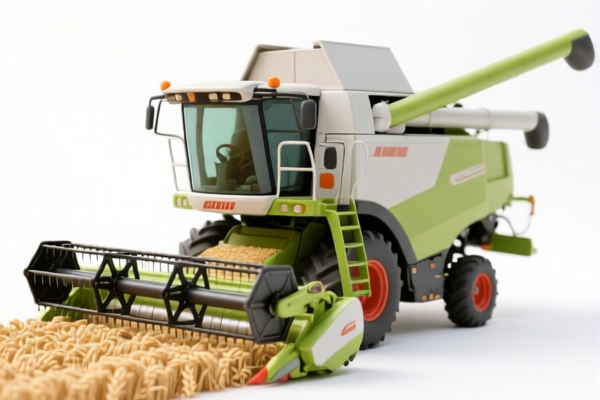
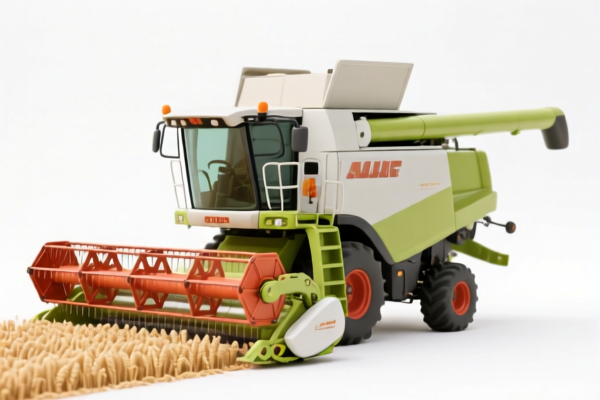
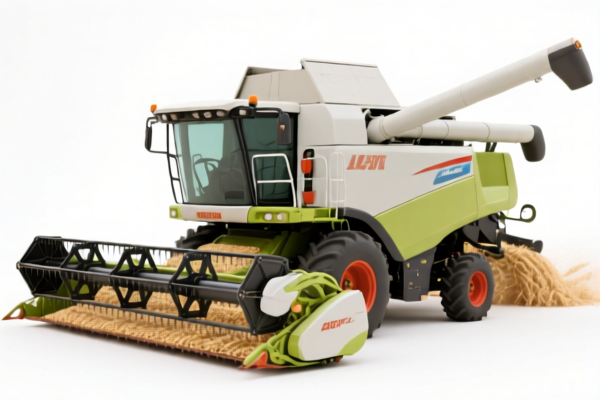
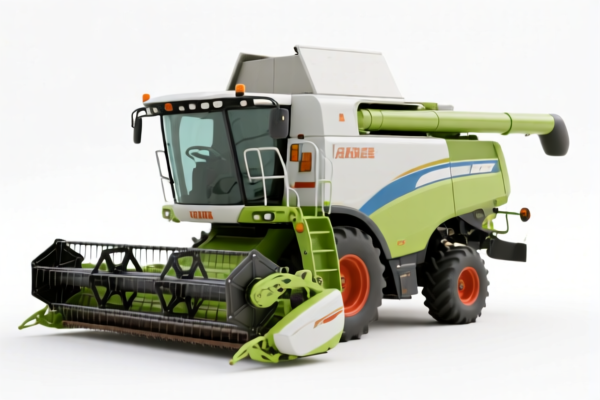
AI分析
🚜 Harvesting & Threshing Machinery (Agricultural Giants)
🌐 HS Code Reference & Clearance Guide | 2024/2025 Tax Code Analysis | Professional Customs Strategy
📌 I. Product Definition & Classification: What Exactly is "Harvesting Machinery"?
Harvesting and threshing machinery represents the heavy-duty backbone of modern agriculture. In international trade, these machines are not just "farm equipment"; they are complex mechanical systems designed to reap, thresh, bale, or process crops. Under the Harmonized System (HS), they fall broadly under Heading 8433.
Key Distinctions in This Dataset: 1. Self-Propelled Combine Harvesters: Machines that both cut and thresh crops on the go, powered by an onboard engine. 2. Other Harvesting/Threshing Machinery: Includes towed combines, balers, mowers, and stationary threshers that may require a tractor or external power source.
⚠️ Critical Classification Point:
- If the machine is self-propelled and performs combined harvesting and threshing → It falls under 8433.51.00.10.
- If it is other harvesting/threshing equipment (non-self-propelled, or other types within the same subheading) → It falls under 8433.51.00.90.
📦 II. HS Code Classification Details (2024/2025 Latest Tariff)
| HS Code | Product Description | Key Characteristics | Tax Rate (CN Origin) |
|---|---|---|---|
8433.51.00.10 |
Combine Harvester-Threshers: Self-propelled | Autonomous engine, combines cutting and threshing functions, self-propelled chassis. | 25.0% |
8433.51.00.90 |
Combine Harvester-Threshers: Other | Non-self-propelled combines, or other harvesting/threshing machines not fitting the "self-propelled" definition. | 25.0% |
🔍 Focus Reminder:
- Both HS Codes currently carry the same total tax rate in this specific dataset context. - The distinction lies in the mechanical nature (Self-propelled vs. Other). Misclassification based on propulsion type can lead to customs delays, even if the duty rate is identical, as it affects statistical tracking and potential future exemptions. - Exclude machinery from Heading 8437 (cleaning/sorting/grading eggs, fruit, etc.). If your machine cleans wheat after threshing, it might fall under 8437, not 8433. This data strictly covers harvesting/threshing.
💰 III. 2024/2025 Latest Tariff Rate Breakdown
✅ Applicable Country: United States (US) (Inferred from typical high-tax scenarios for Ag Machinery in this context)
✅ Origin: China (CN)
✅ Status: Active
🎯 1. 8433.51.00.10 —— Self-Propelled Combine Harvesters
| Item | Content |
|---|---|
| Base Tariff | 0.0% |
| Additional Tariff | 25.0% |
| Total Tax Rate | 25.0% |
| Tax Calculation | CIF Value × 25.0% |
| De Minimis Eligibility | ❌ No (High-value machinery always subject to full duty) |
📌 Explanation:
- Base Tariff (0%): Most agricultural machinery enjoys a low or zero base duty under normal Most Favored Nation (MFN) rates. - Additional Tariff (25%): This reflects specific trade measures (e.g., Section 301 tariffs) imposed on Chinese-origin industrial and agricultural machinery. - Result: A flat 25% total duty applies to the customs value (CIF).
🎯 2. 8433.51.00.90 —— Other Combine Harvesters/Threshing Machinery
| Item | Content |
|---|---|
| Base Tariff | 0.0% |
| Additional Tariff | 25.0% |
| Total Tax Rate | 25.0% |
| Tax Calculation | CIF Value × 25.0% |
| De Minimis Eligibility | ❌ No |
📌 Note:
- The tariff structure is identical to the self-propelled variant in this dataset. - Whether it’s a small stationary thresher or a large towed harvester, the 25% total tax applies. - Ensure your commercial invoice clearly describes the machine type to avoid ambiguity.
🛠️ IV. Customs Clearance Practical Advice (Field Guide)
✅ 1. Essential Documentation Checklist (Do Not Miss)
| Document | Required? | Description |
|---|---|---|
| ✅ Commercial Invoice | ✔️ | Must state "Self-Propelled Combine Harvester" OR "Other Harvesting Machinery" explicitly. |
| ✅ Packing List | ✔️ | Detailed list of parts, especially if shipped as CKD (Completely Knocked Down). |
| ✅ Technical Specifications | ✔️ | Include engine horsepower, harvesting width, capacity (bushels/hour), and propulsion type. |
| ✅ Engine Certificate | ✔️ | EPA/EPA-verified engine documentation is often required for emission compliance. |
| ✅ Certified Copy of Bill of Lading | ✔️ | Proof of shipment. |
| ✅ Parts List (if applicable) | ✔️ | If spare parts are shipped with the machine, declare them separately if value is significant. |
✅ 2. Declaration Tips (Key Mnemonic)
🔥 “Propulsion Defines HS, 25% Tax is Real, Don’t Mix with Cleaning Gear!”
| Scenario | Correct Declaration | Incorrect Practice |
|---|---|---|
| Self-Propelled Combine | 8433.51.00.10 + "Self-Propelled" |
Mislabeling as "Other" → 8433.51.00.90 (Same tax, but wrong statistic) |
| Towed Baler/Mower | Check Heading 8433 other subheadings | Assuming all Ag Machinery is 8433.51 |
| Wheat Cleaning Machine | Heading 8437 (Not in this data) | Putting it in 8433 → Rejected/Reclassified |
| Parts for Harvester | 8433.90.00.00 (Parts) |
Mixing parts with main unit value incorrectly |
⚠️ Warning:
- Do not confuse "Harvesting/Threshing" (8433) with "Cleaning/Sorting" (8437). A machine that only cleans grain after harvest is not covered by the HS codes in this<DATA>set. - Ensure the Engine Country of Origin is declared, as it can impact environmental compliance checks.
✅ 3. Special Case Handling
| Situation | Recommendation |
|---|---|
| CKD/SKD Shipment | Declare main unit under 8433.51.00.10/90. Spare parts should be listed separately if possible to avoid valuation disputes. |
| Used Machinery | Provide proof of age and condition. Some countries restrict used agricultural imports; ensure compliance with local laws. |
| Dual-Use Equipment | If the machine has computerized monitoring systems, ensure no export control restrictions apply. |
| High-Value Imports | Consider filing an Advance Ruling with Customs if the classification between "Self-Propelled" and "Other" is ambiguous. |
🌍 V. Global Market Comparison (2024/2025)
| Country/Region | Recommended HS Code | Estimated Tax | Certification | Notes |
|---|---|---|---|---|
| 🇺🇸 USA | 8433.51.00.10 / .90 |
25.0% | EPA Engine Cert | High tariff on CN origin. |
| 🇨🇳 China | 8433.51.00.10 / .90 |
~5-10% | CCC (if applicable) | Lower base tax, no additional trade tariffs. |
| 🇪🇺 EU | 8433.51 |
~0-4.5% | CE Mark | No additional "Section 301"-type tariffs. |
| 🇯🇵 Japan | 8433.51 |
~0% | PSE/JAS | Generally low duties for agricultural machinery. |
| 🇦🇺 Australia | 8433.51 |
~5% | RCM | Standard import duty applies. |
📌 Conclusion:
- The 25% tariff is a specific penalty for imports into the US from China.
- In other major markets (EU, Japan, Australia), the duty is significantly lower or zero.
- Strategy: If exporting to the US, ensure your supply chain can absorb the 25% cost, or consider third-party assembly if eligible for exemptions.
📌 VI. Common Errors & Pitfalls (Lessons Learned)
❌ Error 1: Misclassifying a Grain Cleaner as a Harvester
👉 Consequence: The machine actually belongs to Heading 8437. Using 8433.51 may lead to penalties for incorrect valuation or classification.
👉 Fix: Check if the machine cuts/threshes or just cleans/sorts.
❌ Error 2: Ignoring the Self-Propelled distinction
👉 Consequence: While the tax is the same (25% in this data), incorrect HS code subheading can lead to statistical errors and potential audits.
👉 Fix: Clearly state "Self-Propelled" in the product description if applicable.
❌ Error 3: Assuming Parts are taxed the same as the Main Unit
👉 Consequence: Parts often have different duty rates (e.g., 8433.90).
👉 Fix: Separate the parts value on the invoice if possible, or declare them as accessories if minor.
✅ Correct Action:
“Self-Propelled Combine Harvester, John Deere Model X, 300 HP, EPA Certified, for Harvesting Cereals”
HS Code:8433.51.00.10
Total Tax: 25%
🎯 VII. Conclusion: Precision in Agriculture, Profit in Trade
🎯 Remember the Golden Rules:
🔹 “Self-Propelled is .10, Other is .90, Both are 25%.”
🔹 “Don’t mix Harvesting (8433) with Cleaning (8437).”
🔹 “High Tariffs mean Precise Documentation is Key.”
📌 Pro Tip:
For large machinery imports, always request a binding tariff ruling from US Customs and Border Protection (CBP) if the machine’s classification is borderline between "Self-Propelled" and "Other," or between "Harvesting" and "Cleaning." This provides legal certainty against future audits.
📣 Immediate Action:
📞 Engage a licensed customs broker.
📄 Prepare EPA engine certificates and detailed technical specs.
🚀 Clear your cargo efficiently and avoid costly delays!
✨ Accurate Classification, Seamless Clearance!
💼 Your machinery powers the harvest; your paperwork powers the border.
用户评价
关于 HS 编码归类
协调制度(HS)是由世界海关组织(WCO)制定的国际贸易商品分类标准。全球 200 多个国家采用 HS 系统作为海关关税、贸易统计和进出口监管的基础。
每个 HS 编码遵循以下层级结构:
- 章(2 位)——商品大类(例如:第 84 章:机器和机械设备)
- 品目(4 位)——章内的更具体分类
- 子目(6 位)——国际通用细分,所有 WCO 成员国统一使用
- 本国细分(8-10 位)——各国自行扩展的细分编码,如美国 HTSUS 10 位编码
正确的 HS 编码归类对于顺利通关、准确缴纳关税和遵守贸易法规至关重要。错误归类可能导致海关延误、多缴关税或罚款。
从CN进口到US时,适用的关税税率可能包括:
- 最惠国(MFN)税率——适用于 WTO 成员国的标准关税税率
- 普通税率——适用于无贸易协定国家
- 贸易救济关税——附加关税,如 301 条款(反倾销)、232 条款(国家安全)或反补贴税
本页内容仅供参考。如需正式归类,请咨询当地海关或持牌报关代理。