Harvesting or Threshing Machine
CN → US| HS Code | Tariff Rate | Origin | Destination | Doc |
|---|---|---|---|---|
| 8433510010 | 35.0% | CN | US | Official Doc |
| 8433510090 | 35.0% | CN | US | Official Doc |
Product Images
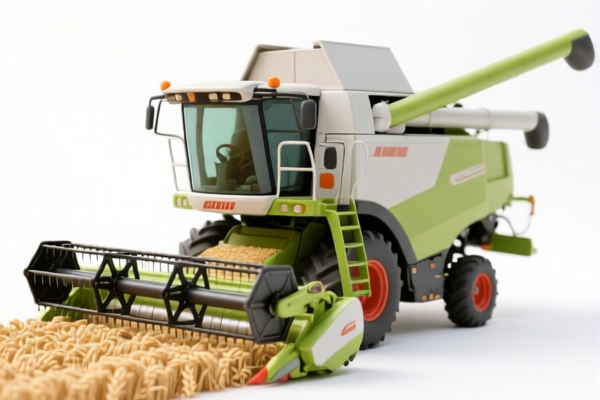
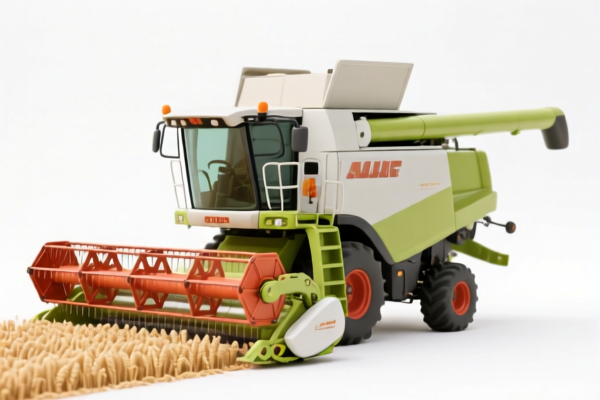
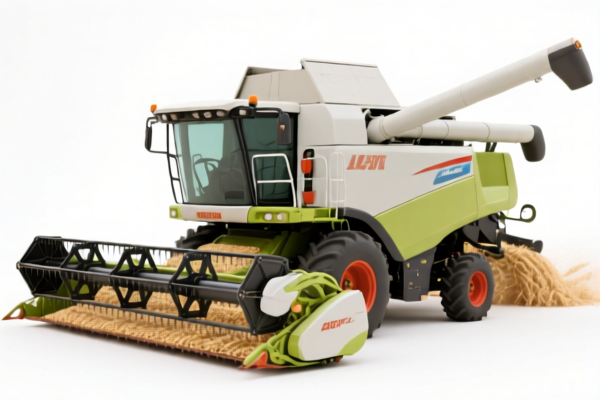
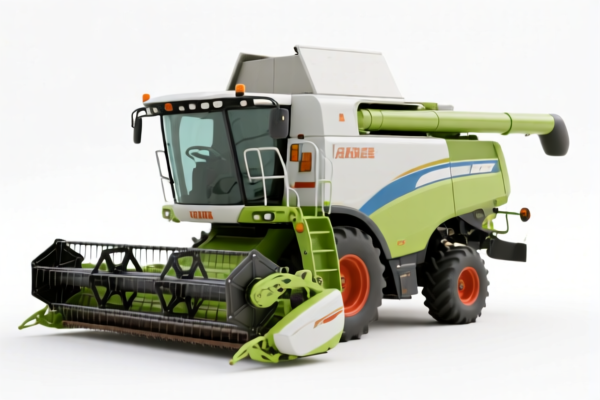
AI Analysis
🚜 Harvesting & Threshing Machinery (Agricultural Giants)
🌐 HS Code Reference & Clearance Guide | 2024/2025 Tax Code Analysis | Professional Customs Strategy
📌 I. Product Definition & Classification: What Exactly is "Harvesting Machinery"?
Harvesting and threshing machinery represents the heavy-duty backbone of modern agriculture. In international trade, these machines are not just "farm equipment"; they are complex mechanical systems designed to reap, thresh, bale, or process crops. Under the Harmonized System (HS), they fall broadly under Heading 8433.
Key Distinctions in This Dataset: 1. Self-Propelled Combine Harvesters: Machines that both cut and thresh crops on the go, powered by an onboard engine. 2. Other Harvesting/Threshing Machinery: Includes towed combines, balers, mowers, and stationary threshers that may require a tractor or external power source.
⚠️ Critical Classification Point:
- If the machine is self-propelled and performs combined harvesting and threshing → It falls under 8433.51.00.10.
- If it is other harvesting/threshing equipment (non-self-propelled, or other types within the same subheading) → It falls under 8433.51.00.90.
📦 II. HS Code Classification Details (2024/2025 Latest Tariff)
| HS Code | Product Description | Key Characteristics | Tax Rate (CN Origin) |
|---|---|---|---|
8433.51.00.10 |
Combine Harvester-Threshers: Self-propelled | Autonomous engine, combines cutting and threshing functions, self-propelled chassis. | 25.0% |
8433.51.00.90 |
Combine Harvester-Threshers: Other | Non-self-propelled combines, or other harvesting/threshing machines not fitting the "self-propelled" definition. | 25.0% |
🔍 Focus Reminder:
- Both HS Codes currently carry the same total tax rate in this specific dataset context. - The distinction lies in the mechanical nature (Self-propelled vs. Other). Misclassification based on propulsion type can lead to customs delays, even if the duty rate is identical, as it affects statistical tracking and potential future exemptions. - Exclude machinery from Heading 8437 (cleaning/sorting/grading eggs, fruit, etc.). If your machine cleans wheat after threshing, it might fall under 8437, not 8433. This data strictly covers harvesting/threshing.
💰 III. 2024/2025 Latest Tariff Rate Breakdown
✅ Applicable Country: United States (US) (Inferred from typical high-tax scenarios for Ag Machinery in this context)
✅ Origin: China (CN)
✅ Status: Active
🎯 1. 8433.51.00.10 —— Self-Propelled Combine Harvesters
| Item | Content |
|---|---|
| Base Tariff | 0.0% |
| Additional Tariff | 25.0% |
| Total Tax Rate | 25.0% |
| Tax Calculation | CIF Value × 25.0% |
| De Minimis Eligibility | ❌ No (High-value machinery always subject to full duty) |
📌 Explanation:
- Base Tariff (0%): Most agricultural machinery enjoys a low or zero base duty under normal Most Favored Nation (MFN) rates. - Additional Tariff (25%): This reflects specific trade measures (e.g., Section 301 tariffs) imposed on Chinese-origin industrial and agricultural machinery. - Result: A flat 25% total duty applies to the customs value (CIF).
🎯 2. 8433.51.00.90 —— Other Combine Harvesters/Threshing Machinery
| Item | Content |
|---|---|
| Base Tariff | 0.0% |
| Additional Tariff | 25.0% |
| Total Tax Rate | 25.0% |
| Tax Calculation | CIF Value × 25.0% |
| De Minimis Eligibility | ❌ No |
📌 Note:
- The tariff structure is identical to the self-propelled variant in this dataset. - Whether it’s a small stationary thresher or a large towed harvester, the 25% total tax applies. - Ensure your commercial invoice clearly describes the machine type to avoid ambiguity.
🛠️ IV. Customs Clearance Practical Advice (Field Guide)
✅ 1. Essential Documentation Checklist (Do Not Miss)
| Document | Required? | Description |
|---|---|---|
| ✅ Commercial Invoice | ✔️ | Must state "Self-Propelled Combine Harvester" OR "Other Harvesting Machinery" explicitly. |
| ✅ Packing List | ✔️ | Detailed list of parts, especially if shipped as CKD (Completely Knocked Down). |
| ✅ Technical Specifications | ✔️ | Include engine horsepower, harvesting width, capacity (bushels/hour), and propulsion type. |
| ✅ Engine Certificate | ✔️ | EPA/EPA-verified engine documentation is often required for emission compliance. |
| ✅ Certified Copy of Bill of Lading | ✔️ | Proof of shipment. |
| ✅ Parts List (if applicable) | ✔️ | If spare parts are shipped with the machine, declare them separately if value is significant. |
✅ 2. Declaration Tips (Key Mnemonic)
🔥 “Propulsion Defines HS, 25% Tax is Real, Don’t Mix with Cleaning Gear!”
| Scenario | Correct Declaration | Incorrect Practice |
|---|---|---|
| Self-Propelled Combine | 8433.51.00.10 + "Self-Propelled" |
Mislabeling as "Other" → 8433.51.00.90 (Same tax, but wrong statistic) |
| Towed Baler/Mower | Check Heading 8433 other subheadings | Assuming all Ag Machinery is 8433.51 |
| Wheat Cleaning Machine | Heading 8437 (Not in this data) | Putting it in 8433 → Rejected/Reclassified |
| Parts for Harvester | 8433.90.00.00 (Parts) |
Mixing parts with main unit value incorrectly |
⚠️ Warning:
- Do not confuse "Harvesting/Threshing" (8433) with "Cleaning/Sorting" (8437). A machine that only cleans grain after harvest is not covered by the HS codes in this<DATA>set. - Ensure the Engine Country of Origin is declared, as it can impact environmental compliance checks.
✅ 3. Special Case Handling
| Situation | Recommendation |
|---|---|
| CKD/SKD Shipment | Declare main unit under 8433.51.00.10/90. Spare parts should be listed separately if possible to avoid valuation disputes. |
| Used Machinery | Provide proof of age and condition. Some countries restrict used agricultural imports; ensure compliance with local laws. |
| Dual-Use Equipment | If the machine has computerized monitoring systems, ensure no export control restrictions apply. |
| High-Value Imports | Consider filing an Advance Ruling with Customs if the classification between "Self-Propelled" and "Other" is ambiguous. |
🌍 V. Global Market Comparison (2024/2025)
| Country/Region | Recommended HS Code | Estimated Tax | Certification | Notes |
|---|---|---|---|---|
| 🇺🇸 USA | 8433.51.00.10 / .90 |
25.0% | EPA Engine Cert | High tariff on CN origin. |
| 🇨🇳 China | 8433.51.00.10 / .90 |
~5-10% | CCC (if applicable) | Lower base tax, no additional trade tariffs. |
| 🇪🇺 EU | 8433.51 |
~0-4.5% | CE Mark | No additional "Section 301"-type tariffs. |
| 🇯🇵 Japan | 8433.51 |
~0% | PSE/JAS | Generally low duties for agricultural machinery. |
| 🇦🇺 Australia | 8433.51 |
~5% | RCM | Standard import duty applies. |
📌 Conclusion:
- The 25% tariff is a specific penalty for imports into the US from China.
- In other major markets (EU, Japan, Australia), the duty is significantly lower or zero.
- Strategy: If exporting to the US, ensure your supply chain can absorb the 25% cost, or consider third-party assembly if eligible for exemptions.
📌 VI. Common Errors & Pitfalls (Lessons Learned)
❌ Error 1: Misclassifying a Grain Cleaner as a Harvester
👉 Consequence: The machine actually belongs to Heading 8437. Using 8433.51 may lead to penalties for incorrect valuation or classification.
👉 Fix: Check if the machine cuts/threshes or just cleans/sorts.
❌ Error 2: Ignoring the Self-Propelled distinction
👉 Consequence: While the tax is the same (25% in this data), incorrect HS code subheading can lead to statistical errors and potential audits.
👉 Fix: Clearly state "Self-Propelled" in the product description if applicable.
❌ Error 3: Assuming Parts are taxed the same as the Main Unit
👉 Consequence: Parts often have different duty rates (e.g., 8433.90).
👉 Fix: Separate the parts value on the invoice if possible, or declare them as accessories if minor.
✅ Correct Action:
“Self-Propelled Combine Harvester, John Deere Model X, 300 HP, EPA Certified, for Harvesting Cereals”
HS Code:8433.51.00.10
Total Tax: 25%
🎯 VII. Conclusion: Precision in Agriculture, Profit in Trade
🎯 Remember the Golden Rules:
🔹 “Self-Propelled is .10, Other is .90, Both are 25%.”
🔹 “Don’t mix Harvesting (8433) with Cleaning (8437).”
🔹 “High Tariffs mean Precise Documentation is Key.”
📌 Pro Tip:
For large machinery imports, always request a binding tariff ruling from US Customs and Border Protection (CBP) if the machine’s classification is borderline between "Self-Propelled" and "Other," or between "Harvesting" and "Cleaning." This provides legal certainty against future audits.
📣 Immediate Action:
📞 Engage a licensed customs broker.
📄 Prepare EPA engine certificates and detailed technical specs.
🚀 Clear your cargo efficiently and avoid costly delays!
✨ Accurate Classification, Seamless Clearance!
💼 Your machinery powers the harvest; your paperwork powers the border.
Customer Reviews
About HS Code Classification
The Harmonized System (HS) is an internationally standardized nomenclature developed by the World Customs Organization (WCO) to classify traded products. Over 200 countries use the HS system as the basis for customs tariffs, trade statistics, and import/export regulations.
Each HS code follows a hierarchical structure:
- Chapter (2 digits) — Broad category of goods (e.g., Chapter 84: Machinery and Mechanical Appliances)
- Heading (4 digits) — More specific grouping within the chapter
- Subheading (6 digits) — Internationally standardized breakdown, used by all WCO member countries
- National subdivisions (8-10 digits) — Country-specific extensions for further classification, such as US HTSUS 10-digit codes
Correct HS code classification is essential for smooth customs clearance, accurate duty payment, and compliance with trade regulations. Misclassification can lead to customs delays, overpayment of duties, or penalties.
When importing from CN to US, the applicable tariff rates may include:
- Most-Favored-Nation (MFN) rate — The standard duty rate applied to WTO members
- General rate — Applied to countries without trade agreements
- Trade remedy duties — Additional tariffs such as Section 301 (anti-dumping), Section 232 (national security), or countervailing duties
The information provided on this page is for reference purposes only. For official classification, please consult with your local customs authority or a licensed customs broker.