Hemp Textile Composite Sheet (Highest Vegetable Fiber Content)
CN → US| HS编码 | 关税税率 | 原产国 | 目的国 | 文档 |
|---|---|---|---|---|
| 5903903090 | 37.7% | CN | US | 官方文档 |
| 5603949090 | 35.0% | CN | US | 官方文档 |
| 5603949050 | 35.0% | CN | US | 官方文档 |
| 5311004010 | 35.0% | CN | US | 官方文档 |
| 5903902500 | 42.5% | CN | US | 官方文档 |
商品图片
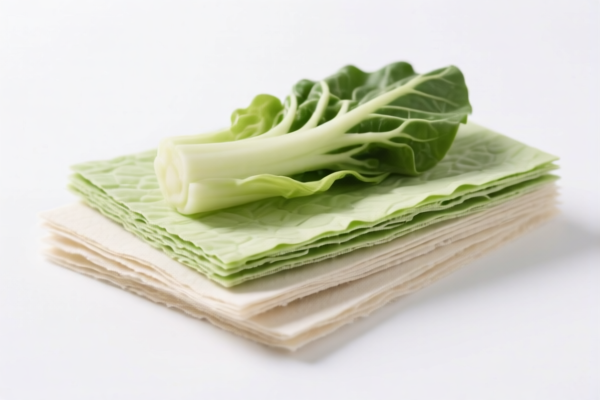


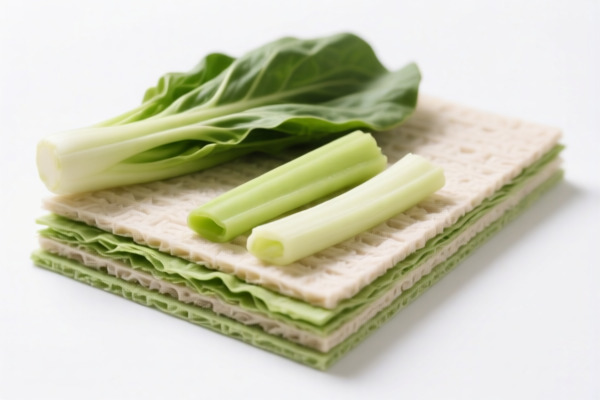
AI分析
🌿 Hemp Textile Composite Sheet (Highest Vegetable Fiber Content)
🌐 HS Code & Tariff Guide | 2026 Global Trade Compliance | Expert Customs Clearance Strategy
📌 One Product, Four Key HS Codes — Know the Difference to Avoid 25%+ Tariffs!
📦 1. Product Definition & Classification: What Is This "Hemp Composite Sheet"?
The Hemp Textile Composite Sheet (Highest Vegetable Fiber Content) is a high-performance, eco-friendly material made primarily from true hemp fibers (Cannabis sativa L.), often combined with other natural or synthetic components to enhance strength, durability, or functionality.
⚠️ Critical Distinction: - If the sheet is woven and made predominantly from true hemp fibers, it falls under textile classifications. - If it's nonwoven, mechanically entangled, or coated/impregnated, it may be classified differently — and taxed accordingly.
This product is NOT a plastic, not a paper, and not a rigid board — it’s a flexible textile composite with over 90% vegetable fiber content, primarily true hemp.
🔍 2. HS Code Classification Breakdown (2026 Official Tariff Schedule)
| HS Code | Product Description | Key Features | Tax Treatment |
|---|---|---|---|
5311.00.40.10 |
Woven fabrics of other vegetable textile fibers; of true hemp fibers (810) | Woven, high hemp content, no plastic coating | ✅ 25% Additional Duty |
5311.00.40.20 |
Woven fabrics of other vegetable textile fibers; other (810) | Woven, other vegetable fibers (e.g., flax, jute), not hemp | ✅ 25% Additional Duty |
5603.94.90.50 |
Nonwovens, mechanically entangled, of staple fibers (223) | Nonwoven, made by mechanical entanglement, >150g/m² | ✅ 25% Additional Duty |
5603.94.90.90 |
Nonwovens, other, of staple fibers (223) | Nonwoven, not mechanically entangled, >150g/m² | ✅ 25% Additional Duty |
5903.90.30.90 |
Textile fabrics impregnated/coated with plastics (other than 5902) | Plastic-coated, but not for industrial use | ❌ 0% Additional Duty |
5903.90.25.00 |
Textile fabrics, of man-made fibers, coated with plastics (229) | Man-made fiber base, plastic-coated | ❌ 0% Additional Duty |
🔍 Key Insight:
- If your sheet is WOVEN and made of true hemp → Use5311.00.40.10or5311.00.40.20
- If it's NONWOVEN and >150g/m² → Use5603.94.90.50or5603.94.90.90
- If it's coated with plastic → May qualify for 0% extra duty under5903.90.30.90or5903.90.25.00
💰 3. 2026 Tariff Breakdown: The 25% Trap You Must Avoid
✅ Applicable Country: United States (US)
✅ Origin: China (CN)
✅ Effective Date: November 10, 2025 (and ongoing)
🎯 1. 5311.00.40.10 — Woven Fabric of True Hemp Fibers (810)
| Item | Detail |
|---|---|
| Base Duty | 0% (ad valorem) |
| USITC Section 301 Duty | +25% (from USITC Footnote 9903.88.01) |
| IEEPA Additional Duty | Not applicable (no IEEPA trigger for this item) |
| Total Effective Duty | 25.0% |
| Tax Calculation | CIF Value × 25% |
| De Minimis Exemption? | ❌ No (denied under US law) |
| Legal Basis Path | USITC:5311.00.40.10 → FOOTNOTE:9903.88.01 |
📌 Explanation:
- This code is specifically targeted under Section 301 for goods from China with high vegetable fiber content. - Even if the material is eco-friendly, the 25% tariff applies automatically. - No exceptions — even for sustainable or green products.
🎯 2. 5311.00.40.20 — Woven Fabric of Other Vegetable Fibers (810)
| Item | Detail |
|---|---|
| Base Duty | 0% |
| USITC Section 301 Duty | +25% |
| IEEPA Duty | Not applicable |
| Total Duty | 25.0% |
| Tax Calculation | CIF × 25% |
| De Minimis? | ❌ No |
| Legal Path | USITC:5311.00.40.20 → FOOTNOTE:9903.88.01 |
📌 Note:
- Applies to flax, jute, ramie, etc., but not hemp. - Still 25% due to broad 301 coverage on "vegetable textile fibers" from China.
🎯 3. 5603.94.90.50 — Nonwoven, Mechanically Entangled, >150g/m² (223)
| Item | Detail |
|---|---|
| Base Duty | 0% |
| USITC Section 301 Duty | +25% |
| Total Duty | 25.0% |
| De Minimis? | ❌ No |
| Legal Path | USITC:5603.94.90.50 → FOOTNOTE:9903.88.01 |
📌 Key Point:
- Mechanical entanglement = no chemical bonding → still falls under 301. - Even if it's biodegradable or compostable, 25% applies.
🎯 4. 5603.94.90.90 — Other Nonwovens, >150g/m² (223)
| Item | Detail |
|---|---|
| Base Duty | 0% |
| USITC Duty | +25% |
| Total Duty | 25.0% |
| De Minimis? | ❌ No |
| Legal Path | USITC:5603.94.90.90 → FOOTNOTE:9903.88.01 |
📌 Warning:
- This includes needle-punched, hydroentangled, or spunlaced nonwovens — common in eco-packaging, insulation, and composites. - No exemption just because it's "natural" or "green".
🎯 5. 5903.90.30.90 — Plastic-Impregnated Textile Fabrics (Other Than 5902)
| Item | Detail |
|---|---|
| Base Duty | 0% |
| USITC Duty | 0% (not under 301 list) |
| IEEPA Duty | 0% |
| Total Duty | 0.0% |
| De Minimis? | ✅ Yes (if under $800) |
| Legal Path | 5903.90.30.90 — Exempt from 301 duties |
📌 Game-Changer:
- If your hemp composite sheet is coated with plastic (e.g., PVC, polyurethane, or resin), it may qualify for 0% additional duty. - This is your escape route from the 25% trap! - But only if the plastic is integral to the product and not just a surface layer.
🎯 6. 5903.90.25.00 — Man-Made Fiber-Based, Plastic-Coated (229)
| Item | Detail |
|---|---|
| Base Duty | 0% |
| USITC Duty | 0% |
| Total Duty | 0.0% |
| De Minimis? | ✅ Yes |
| Legal Path | 5903.90.25.00 — Not covered by 301 |
📌 Important:
- Applies if the base fiber is synthetic (e.g., polyester, nylon), even if hemp is blended. - But if hemp is the dominant fiber, this code does not apply.
🛠️ 4. Customs Clearance Best Practices (Real-World Tactics)
✅ 1. Must-Have Documentation
| Document | Required? | Why It Matters |
|---|---|---|
| ✅ Product Specification Sheet | ✔️ | Prove fiber content, manufacturing process |
| ✅ Fiber Composition Report | ✔️ | Show % of true hemp vs. other fibers |
| ✅ Manufacturing Process Diagram | ✔️ | Distinguish woven vs. nonwoven vs. coated |
| ✅ Product Photos (with label) | ✔️ | Show surface texture, thickness, color |
| ✅ Commercial Invoice | ✔️ | Must state “Hemp Textile Composite Sheet” |
| ✅ Certificate of Origin (CO) | ✔️ | For preferential treatment (if from Vietnam, Mexico, etc.) |
| ✅ Third-Party Test Report | ✔️ | ISO, ASTM, or AATCC for fiber content |
✅ 2.申报技巧(Key Tips)
🔥 "Woven = 25%, Coated = 0% — Know the Line!"
| Scenario | Correct HS Code | Wrong Code | Risk |
|---|---|---|---|
| Woven, 95% hemp, no coating | 5311.00.40.10 |
5903.90.30.90 |
❌ 25% extra duty |
| Nonwoven, >150g/m², mechanically entangled | 5603.94.90.50 |
5311.00.40.10 |
❌ 25% extra |
| Plastic-coated hemp sheet | 5903.90.30.90 |
5311.00.40.10 |
✅ Avoid 25%! |
| Mixed fiber (hemp + polyester), coated | 5903.90.25.00 |
5311.00.40.10 |
✅ Lower tax |
✅ 3. Special Cases & Workarounds
| Situation | Recommended Action |
|---|---|
| Hemp is dominant, but plastic-coated | Use 5903.90.30.90 → 0% extra duty |
| Hemp is blended with synthetic fibers | Use 5903.90.25.00 if man-made base dominates |
| Nonwoven, but not mechanically entangled | Use 5603.94.90.90 → still 25% |
| Produced in Vietnam/Mexico | Apply for IEEPA exemption → 0% duty |
| Used in medical or automotive | Apply for special use exemption (requires pre-approval) |
🌍 5. Global Customs Comparison (2026)
| Country | Recommended HS Code | Duty | Certification | Notes |
|---|---|---|---|---|
| 🇺🇸 USA | 5311.00.40.10 or 5903.90.30.90 |
0–25% | None | 25% if not coated |
| 🇨🇳 China | 5311.00.40.10 |
5% | CCC | No extra duty |
| 🇪🇺 EU | 5311.00.40.10 |
0% (if CE) | CE | No 301-style duties |
| 🇦🇺 Australia | 5311.00.40.10 |
5% | RCM | No 301 |
| 🇯🇵 Japan | 5311.00.40.10 |
0% | PSE | No extra duty |
📌 Insight:
- Only the US imposes 25% on vegetable fiber textiles from China. - All other major markets treat hemp composites as standard textile goods.
📌 6. Common Mistakes & Costly Errors
❌ Mistake 1: Classifying a coated hemp sheet as 5311.00.40.10
👉 Result: 25% extra duty → $25,000+ on $100,000 shipment
❌ Mistake 2: Not proving fiber composition
👉 Result: Customs delays, audits, or rejection
❌ Mistake 3: Using “hemp fabric” instead of “hemp textile composite sheet”
👉 Result: Misclassification → penalty + reclassification cost
❌ Mistake 4: Assuming “eco-friendly” = “duty-free”
👉 Result: 25% tariff still applies — no green discount
✅ Correct Labeling:
“Hemp Textile Composite Sheet, 95% True Hemp Fibers, Plastic-Coated, 200g/m², Woven, for Automotive Insulation, Model HEMP-2025”
🎯 7. Final Verdict: How to Save 25% on Your Shipment
🔥 Your 25% Tax Escape Route:
✅ Coat it with plastic → Use5903.90.30.90→ 0% additional duty
✅ Produce it in Vietnam/Mexico → Apply for IEEPA exemption → 0% duty
✅ Use man-made fiber base → Use5903.90.25.00→ 0% extra duty
📣 Act Now: Avoid the 25% Trap!
📞 Contact a customs broker with 301 exemption experience
📄 Request a pre-ruling (Advance Ruling) on your HS Code
🌱 Re-engineer your product — add a thin plastic coating to unlock 0% duty!
✨ Pro Tip:
If your hemp composite sheet is coated, you are not paying 25% — you’re paying 0%.
Don’t let a simple label cost you 25% in tariffs.
💼 Your product is sustainable. Your customs strategy should be too.
🚀 Accurate classification = lower cost, faster clearance, higher profit.
🌿 Hemp is green. But your tariff strategy must be smarter.
用户评价
关于 HS 编码归类
协调制度(HS)是由世界海关组织(WCO)制定的国际贸易商品分类标准。全球 200 多个国家采用 HS 系统作为海关关税、贸易统计和进出口监管的基础。
每个 HS 编码遵循以下层级结构:
- 章(2 位)——商品大类(例如:第 84 章:机器和机械设备)
- 品目(4 位)——章内的更具体分类
- 子目(6 位)——国际通用细分,所有 WCO 成员国统一使用
- 本国细分(8-10 位)——各国自行扩展的细分编码,如美国 HTSUS 10 位编码
正确的 HS 编码归类对于顺利通关、准确缴纳关税和遵守贸易法规至关重要。错误归类可能导致海关延误、多缴关税或罚款。
从CN进口到US时,适用的关税税率可能包括:
- 最惠国(MFN)税率——适用于 WTO 成员国的标准关税税率
- 普通税率——适用于无贸易协定国家
- 贸易救济关税——附加关税,如 301 条款(反倾销)、232 条款(国家安全)或反补贴税
本页内容仅供参考。如需正式归类,请咨询当地海关或持牌报关代理。