Hemp Textile Composite Sheet (Highest Vegetable Fiber Content)
CN → US| HS Code | Tariff Rate | Origin | Destination | Doc |
|---|---|---|---|---|
| 5903903090 | 37.7% | CN | US | Official Doc |
| 5603949090 | 35.0% | CN | US | Official Doc |
| 5603949050 | 35.0% | CN | US | Official Doc |
| 5311004010 | 35.0% | CN | US | Official Doc |
| 5903902500 | 42.5% | CN | US | Official Doc |
Product Images
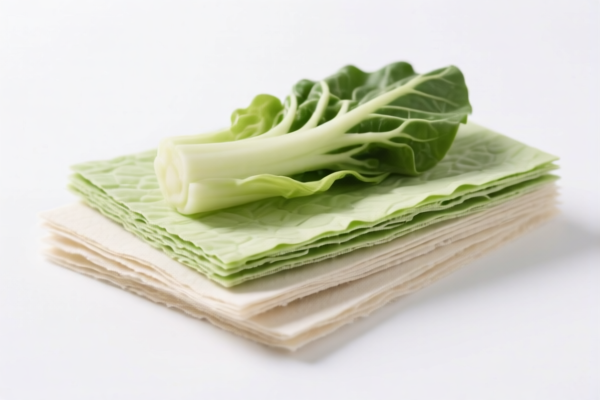


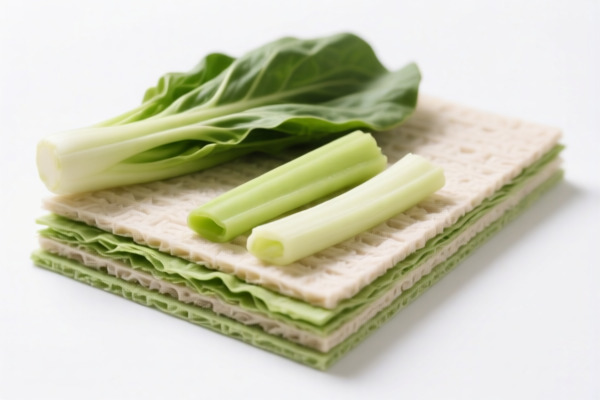
AI Analysis
🌿 Hemp Textile Composite Sheet (Highest Vegetable Fiber Content)
🌐 HS Code & Tariff Guide | 2026 Global Trade Compliance | Expert Customs Clearance Strategy
📌 One Product, Four Key HS Codes — Know the Difference to Avoid 25%+ Tariffs!
📦 1. Product Definition & Classification: What Is This "Hemp Composite Sheet"?
The Hemp Textile Composite Sheet (Highest Vegetable Fiber Content) is a high-performance, eco-friendly material made primarily from true hemp fibers (Cannabis sativa L.), often combined with other natural or synthetic components to enhance strength, durability, or functionality.
⚠️ Critical Distinction: - If the sheet is woven and made predominantly from true hemp fibers, it falls under textile classifications. - If it's nonwoven, mechanically entangled, or coated/impregnated, it may be classified differently — and taxed accordingly.
This product is NOT a plastic, not a paper, and not a rigid board — it’s a flexible textile composite with over 90% vegetable fiber content, primarily true hemp.
🔍 2. HS Code Classification Breakdown (2026 Official Tariff Schedule)
| HS Code | Product Description | Key Features | Tax Treatment |
|---|---|---|---|
5311.00.40.10 |
Woven fabrics of other vegetable textile fibers; of true hemp fibers (810) | Woven, high hemp content, no plastic coating | ✅ 25% Additional Duty |
5311.00.40.20 |
Woven fabrics of other vegetable textile fibers; other (810) | Woven, other vegetable fibers (e.g., flax, jute), not hemp | ✅ 25% Additional Duty |
5603.94.90.50 |
Nonwovens, mechanically entangled, of staple fibers (223) | Nonwoven, made by mechanical entanglement, >150g/m² | ✅ 25% Additional Duty |
5603.94.90.90 |
Nonwovens, other, of staple fibers (223) | Nonwoven, not mechanically entangled, >150g/m² | ✅ 25% Additional Duty |
5903.90.30.90 |
Textile fabrics impregnated/coated with plastics (other than 5902) | Plastic-coated, but not for industrial use | ❌ 0% Additional Duty |
5903.90.25.00 |
Textile fabrics, of man-made fibers, coated with plastics (229) | Man-made fiber base, plastic-coated | ❌ 0% Additional Duty |
🔍 Key Insight:
- If your sheet is WOVEN and made of true hemp → Use5311.00.40.10or5311.00.40.20
- If it's NONWOVEN and >150g/m² → Use5603.94.90.50or5603.94.90.90
- If it's coated with plastic → May qualify for 0% extra duty under5903.90.30.90or5903.90.25.00
💰 3. 2026 Tariff Breakdown: The 25% Trap You Must Avoid
✅ Applicable Country: United States (US)
✅ Origin: China (CN)
✅ Effective Date: November 10, 2025 (and ongoing)
🎯 1. 5311.00.40.10 — Woven Fabric of True Hemp Fibers (810)
| Item | Detail |
|---|---|
| Base Duty | 0% (ad valorem) |
| USITC Section 301 Duty | +25% (from USITC Footnote 9903.88.01) |
| IEEPA Additional Duty | Not applicable (no IEEPA trigger for this item) |
| Total Effective Duty | 25.0% |
| Tax Calculation | CIF Value × 25% |
| De Minimis Exemption? | ❌ No (denied under US law) |
| Legal Basis Path | USITC:5311.00.40.10 → FOOTNOTE:9903.88.01 |
📌 Explanation:
- This code is specifically targeted under Section 301 for goods from China with high vegetable fiber content. - Even if the material is eco-friendly, the 25% tariff applies automatically. - No exceptions — even for sustainable or green products.
🎯 2. 5311.00.40.20 — Woven Fabric of Other Vegetable Fibers (810)
| Item | Detail |
|---|---|
| Base Duty | 0% |
| USITC Section 301 Duty | +25% |
| IEEPA Duty | Not applicable |
| Total Duty | 25.0% |
| Tax Calculation | CIF × 25% |
| De Minimis? | ❌ No |
| Legal Path | USITC:5311.00.40.20 → FOOTNOTE:9903.88.01 |
📌 Note:
- Applies to flax, jute, ramie, etc., but not hemp. - Still 25% due to broad 301 coverage on "vegetable textile fibers" from China.
🎯 3. 5603.94.90.50 — Nonwoven, Mechanically Entangled, >150g/m² (223)
| Item | Detail |
|---|---|
| Base Duty | 0% |
| USITC Section 301 Duty | +25% |
| Total Duty | 25.0% |
| De Minimis? | ❌ No |
| Legal Path | USITC:5603.94.90.50 → FOOTNOTE:9903.88.01 |
📌 Key Point:
- Mechanical entanglement = no chemical bonding → still falls under 301. - Even if it's biodegradable or compostable, 25% applies.
🎯 4. 5603.94.90.90 — Other Nonwovens, >150g/m² (223)
| Item | Detail |
|---|---|
| Base Duty | 0% |
| USITC Duty | +25% |
| Total Duty | 25.0% |
| De Minimis? | ❌ No |
| Legal Path | USITC:5603.94.90.90 → FOOTNOTE:9903.88.01 |
📌 Warning:
- This includes needle-punched, hydroentangled, or spunlaced nonwovens — common in eco-packaging, insulation, and composites. - No exemption just because it's "natural" or "green".
🎯 5. 5903.90.30.90 — Plastic-Impregnated Textile Fabrics (Other Than 5902)
| Item | Detail |
|---|---|
| Base Duty | 0% |
| USITC Duty | 0% (not under 301 list) |
| IEEPA Duty | 0% |
| Total Duty | 0.0% |
| De Minimis? | ✅ Yes (if under $800) |
| Legal Path | 5903.90.30.90 — Exempt from 301 duties |
📌 Game-Changer:
- If your hemp composite sheet is coated with plastic (e.g., PVC, polyurethane, or resin), it may qualify for 0% additional duty. - This is your escape route from the 25% trap! - But only if the plastic is integral to the product and not just a surface layer.
🎯 6. 5903.90.25.00 — Man-Made Fiber-Based, Plastic-Coated (229)
| Item | Detail |
|---|---|
| Base Duty | 0% |
| USITC Duty | 0% |
| Total Duty | 0.0% |
| De Minimis? | ✅ Yes |
| Legal Path | 5903.90.25.00 — Not covered by 301 |
📌 Important:
- Applies if the base fiber is synthetic (e.g., polyester, nylon), even if hemp is blended. - But if hemp is the dominant fiber, this code does not apply.
🛠️ 4. Customs Clearance Best Practices (Real-World Tactics)
✅ 1. Must-Have Documentation
| Document | Required? | Why It Matters |
|---|---|---|
| ✅ Product Specification Sheet | ✔️ | Prove fiber content, manufacturing process |
| ✅ Fiber Composition Report | ✔️ | Show % of true hemp vs. other fibers |
| ✅ Manufacturing Process Diagram | ✔️ | Distinguish woven vs. nonwoven vs. coated |
| ✅ Product Photos (with label) | ✔️ | Show surface texture, thickness, color |
| ✅ Commercial Invoice | ✔️ | Must state “Hemp Textile Composite Sheet” |
| ✅ Certificate of Origin (CO) | ✔️ | For preferential treatment (if from Vietnam, Mexico, etc.) |
| ✅ Third-Party Test Report | ✔️ | ISO, ASTM, or AATCC for fiber content |
✅ 2.申报技巧(Key Tips)
🔥 "Woven = 25%, Coated = 0% — Know the Line!"
| Scenario | Correct HS Code | Wrong Code | Risk |
|---|---|---|---|
| Woven, 95% hemp, no coating | 5311.00.40.10 |
5903.90.30.90 |
❌ 25% extra duty |
| Nonwoven, >150g/m², mechanically entangled | 5603.94.90.50 |
5311.00.40.10 |
❌ 25% extra |
| Plastic-coated hemp sheet | 5903.90.30.90 |
5311.00.40.10 |
✅ Avoid 25%! |
| Mixed fiber (hemp + polyester), coated | 5903.90.25.00 |
5311.00.40.10 |
✅ Lower tax |
✅ 3. Special Cases & Workarounds
| Situation | Recommended Action |
|---|---|
| Hemp is dominant, but plastic-coated | Use 5903.90.30.90 → 0% extra duty |
| Hemp is blended with synthetic fibers | Use 5903.90.25.00 if man-made base dominates |
| Nonwoven, but not mechanically entangled | Use 5603.94.90.90 → still 25% |
| Produced in Vietnam/Mexico | Apply for IEEPA exemption → 0% duty |
| Used in medical or automotive | Apply for special use exemption (requires pre-approval) |
🌍 5. Global Customs Comparison (2026)
| Country | Recommended HS Code | Duty | Certification | Notes |
|---|---|---|---|---|
| 🇺🇸 USA | 5311.00.40.10 or 5903.90.30.90 |
0–25% | None | 25% if not coated |
| 🇨🇳 China | 5311.00.40.10 |
5% | CCC | No extra duty |
| 🇪🇺 EU | 5311.00.40.10 |
0% (if CE) | CE | No 301-style duties |
| 🇦🇺 Australia | 5311.00.40.10 |
5% | RCM | No 301 |
| 🇯🇵 Japan | 5311.00.40.10 |
0% | PSE | No extra duty |
📌 Insight:
- Only the US imposes 25% on vegetable fiber textiles from China. - All other major markets treat hemp composites as standard textile goods.
📌 6. Common Mistakes & Costly Errors
❌ Mistake 1: Classifying a coated hemp sheet as 5311.00.40.10
👉 Result: 25% extra duty → $25,000+ on $100,000 shipment
❌ Mistake 2: Not proving fiber composition
👉 Result: Customs delays, audits, or rejection
❌ Mistake 3: Using “hemp fabric” instead of “hemp textile composite sheet”
👉 Result: Misclassification → penalty + reclassification cost
❌ Mistake 4: Assuming “eco-friendly” = “duty-free”
👉 Result: 25% tariff still applies — no green discount
✅ Correct Labeling:
“Hemp Textile Composite Sheet, 95% True Hemp Fibers, Plastic-Coated, 200g/m², Woven, for Automotive Insulation, Model HEMP-2025”
🎯 7. Final Verdict: How to Save 25% on Your Shipment
🔥 Your 25% Tax Escape Route:
✅ Coat it with plastic → Use5903.90.30.90→ 0% additional duty
✅ Produce it in Vietnam/Mexico → Apply for IEEPA exemption → 0% duty
✅ Use man-made fiber base → Use5903.90.25.00→ 0% extra duty
📣 Act Now: Avoid the 25% Trap!
📞 Contact a customs broker with 301 exemption experience
📄 Request a pre-ruling (Advance Ruling) on your HS Code
🌱 Re-engineer your product — add a thin plastic coating to unlock 0% duty!
✨ Pro Tip:
If your hemp composite sheet is coated, you are not paying 25% — you’re paying 0%.
Don’t let a simple label cost you 25% in tariffs.
💼 Your product is sustainable. Your customs strategy should be too.
🚀 Accurate classification = lower cost, faster clearance, higher profit.
🌿 Hemp is green. But your tariff strategy must be smarter.
Customer Reviews
About HS Code Classification
The Harmonized System (HS) is an internationally standardized nomenclature developed by the World Customs Organization (WCO) to classify traded products. Over 200 countries use the HS system as the basis for customs tariffs, trade statistics, and import/export regulations.
Each HS code follows a hierarchical structure:
- Chapter (2 digits) — Broad category of goods (e.g., Chapter 84: Machinery and Mechanical Appliances)
- Heading (4 digits) — More specific grouping within the chapter
- Subheading (6 digits) — Internationally standardized breakdown, used by all WCO member countries
- National subdivisions (8-10 digits) — Country-specific extensions for further classification, such as US HTSUS 10-digit codes
Correct HS code classification is essential for smooth customs clearance, accurate duty payment, and compliance with trade regulations. Misclassification can lead to customs delays, overpayment of duties, or penalties.
When importing from CN to US, the applicable tariff rates may include:
- Most-Favored-Nation (MFN) rate — The standard duty rate applied to WTO members
- General rate — Applied to countries without trade agreements
- Trade remedy duties — Additional tariffs such as Section 301 (anti-dumping), Section 232 (national security), or countervailing duties
The information provided on this page is for reference purposes only. For official classification, please consult with your local customs authority or a licensed customs broker.