High Alumina Refractory Mortar
CN → US| HS编码 | 关税税率 | 原产国 | 目的国 | 文档 |
|---|---|---|---|---|
| 2530908050 | 10.0% | CN | US | 官方文档 |
| 2530908015 | 10.0% | CN | US | 官方文档 |
| 6902201020 | 35.0% | CN | US | 官方文档 |
| 6815994170 | 35.0% | CN | US | 官方文档 |
| 6903200000 | 35.0% | CN | US | 官方文档 |
商品图片
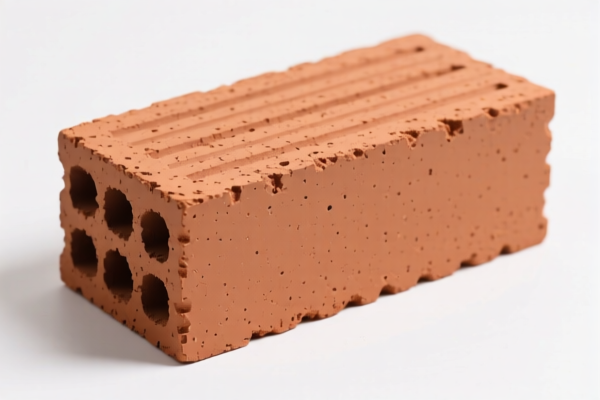
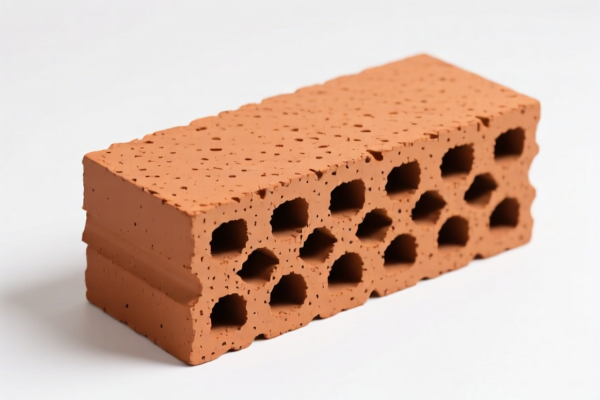
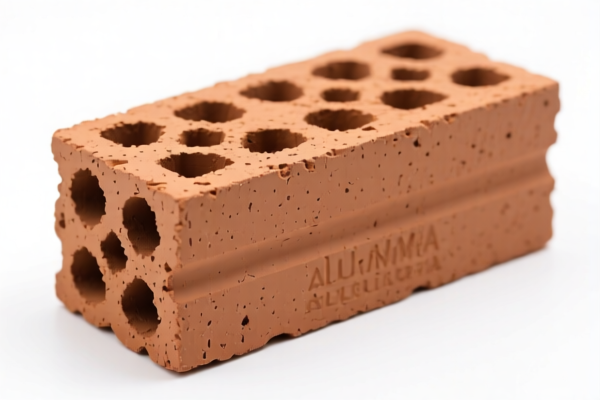
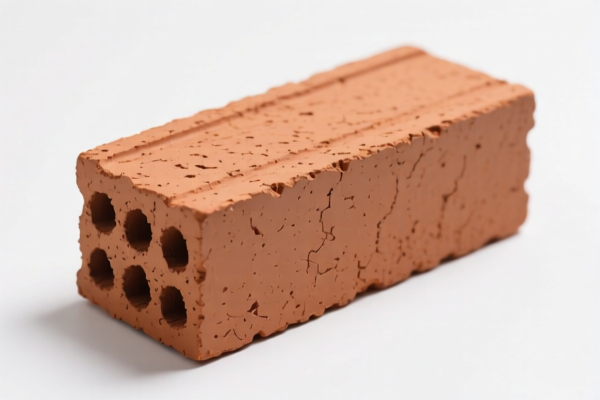
AI分析
🧱 High Alumina Refractory Mortar (Aluminum-Containing Mineral Products)
🌐 HS Code Reference & Customs Clearance Guide | 2026 Latest Tariff Analysis | Professional Entry Strategy
📌 I. Product Definition & Classification: What is "High Alumina Refractory Mortar"?
High Alumina Refractory Mortar is a specialized construction material used for jointing, lining, and repairing high-temperature industrial kilns, furnaces, and boilers. It is primarily composed of aluminum oxide (Al₂O₃) minerals, clay, and binding agents.
In international trade, its classification hinges on chemical composition and processing state: 1. Raw/Unprocessed Minerals: If the material is essentially crushed aluminum-containing minerals (like bauxite or alumina oxide) without complex shaping into finished ceramic structures. 2. Processed Refractory Ceramics: If the material has been fired, shaped, or processed into a specific refractory form (like cement or bricks/mortar for kiln lining).
⚠️ Critical Distinction Point:
- If the product is viewed strictly as an aluminum-bearing mineral powder/raw material → Classified under Chapter 25 (Mineral Products).
- If the product is viewed as a processed refractory article (fired cement/mortar) → Classified under Chapter 68 (Articles of Stone or Similar Materials) or Chapter 69 (Ceramic Products).
📦 II. HS Code Classification Details (2026 Latest Tariff Authoritative Comparison)
| HS Code | Product Description | Applicable Scenario | Tax Implication |
|---|---|---|---|
2530.90.80.50 |
Other mineral products (excluding bauxite); Aluminum-bearing minerals not elsewhere specified | Raw aluminum oxide powder, unprocessed mineral concentrates, simple mixtures | 10% Total Tax |
2530.90.80.15 |
Other mineral products containing aluminum oxide; Inorganic compounds of aluminum | Processed but not yet formed into refractory ceramics; Aluminum oxide compounds | 10% Total Tax |
6815.99.41.70 |
Articles of stone or other mineral substances (n.e.c.); Mineral products | Unfired or partially processed mineral articles; Basic mineral-based refractory compounds | 35% Total Tax |
6902.20.10.20 |
Refractory bricks, blocks, tiles, and similar refractory ceramic building construction products; Mortar with high alumina content | Processed mortar, fired refractory cement, shaped ceramic materials for kiln lining | 35% Total Tax |
6903.20.00.00 |
Refractory ceramic goods containing over 50% by weight of alumina | High-alumina (>50% Al₂O₃) refractory cement/mortar, advanced ceramic linings | 35% Total Tax |
🔍 Key Reminder:
- The shift from Chapter 25 (10%) to Chapter 68/69 (35%) represents a 25% tariff increase.
- Customs authorities often scrutinize whether the "mortar" is a simple mineral powder (Ch. 25) or a manufactured refractory article (Ch. 68/69).
- High Alumina Content (>50% Al₂O₃) strongly pushes classification toward 6903.20.00.00 due to its advanced ceramic nature.
💰 III. 2026 Latest Tariff Rate Breakdown (Including Additional Taxes & Policy Surcharges)
✅ Applicable Country: United States (US)
✅ Country of Origin: China (CN)
✅ Effective Date: November 10, 2025 onwards (and subsequent imports)
🎯 1. 2530.90.80.50 & 2530.90.80.15 —— Aluminum-Bearing Minerals / Unprocessed Mineral Products
| Item | Content |
|---|---|
| Base Tariff | 0% (ad valorem) |
| USITC Additional Tariff | 0% (No Section 301 surcharge for these specific subheadings) |
| IEEPA Additional Tariff | +10% (Targeting Chinese/HK products under Section 232/301 extensions) |
| Total Tax Rate | 10.0% |
| Tax Calculation | CIF Value × 10% |
| De Minimis Eligibility | ❌ No (deny_de_minimis) |
| Legal Basis Path | IEEPA:9903.01.25 → USITC:2530.90.80.50/15 |
📌 Explanation:
- The 10% rate is solely due to the IEEPA (International Emergency Economic Powers Act) surcharge.
- Unlike electronics or steel, raw mineral products in these specific subheadings escape the 25% Section 301 tariff, making them significantly cheaper to import.
- Cost Advantage: If your product qualifies for this classification, you save 25% compared to treated refractory goods.
🎯 2. 6815.99.41.70 —— Mineral Articles (Unfired/Partially Processed)
| Item | Content |
|---|---|
| Base Tariff | 0% |
| USITC Additional Tariff | +25% (Section 301 Surcharge) |
| IEEPA Additional Tariff | +10% |
| Total Tax Rate | 35.0% |
| Tax Calculation | CIF Value × 35% |
| De Minimis Eligibility | ❌ No |
| Legal Basis Path | IEEPA:9903.01.25 → USITC:6815.99.41.70 → FOOTNOTE:301 |
📌 Warning:
- This classification triggers the full Section 301 tariff (25%) in addition to IEEPA.
- This is common for unfired mineral articles or basic mineral-based composites that do not meet the strict "refractory ceramic" definition of Chapter 69.
🎯 3. 6902.20.10.20 & 6903.20.00.00 —— High-Alumina Refractory Ceramics & Mortar
| Item | Content |
|---|---|
| Base Tariff | 0% |
| USITC Additional Tariff | +25% (Section 301 Surcharge) |
| IEEPA Additional Tariff | +10% |
| Total Tax Rate | 35.0% |
| Tax Calculation | CIF Value × 35% |
| De Minimis Eligibility | ❌ No |
| Legal Basis Path | IEEPA:9903.01.25 → USITC:6902.20.10.20/6903.20.00.00 → FOOTNOTE:301 |
📌 Note:
- 6903.20.00.00 is the most precise code for High-Alumina (>50% Al₂O₃) Refractory Mortar.
- Despite being a "refractory," it is not exempt from Section 301 tariffs.
- The 35% total rate applies to all advanced ceramic refractory products from China.
- Cost Impact: High-alumina mortars are 2.5x more expensive in duties than raw mineral powders.
🛠️ IV. Customs Clearance Practical Advice (Battle-Tested Pitfall Avoidance)
✅ 1. Document Checklist (Mandatory)
| Document | Must Provide | Explanation |
|---|---|---|
| ✅ Product Specification Sheet | ✔️ | Must explicitly state Al₂O₃ content % (e.g., "55% Alumina"). |
| ✅ Material Safety Data Sheet (MSDS) | ✔️ | Confirms chemical composition and hazard class. |
| ✅ Process Description | ✔️ | Is it fired? Is it ground raw ore? Critical for Ch. 25 vs. Ch. 69 distinction. |
| ✅ Product Photos (Label & Bulk) | ✔️ | Show packaging, branding, and physical texture (powder vs. pre-formed brick/mortar). |
| ✅ Commercial Invoice | ✔️ | Clearly describe as "High Alumina Refractory Mortar" or "Aluminum Oxide Powder" depending on classification. |
| ✅ Certificate of Origin (CO) | ✔️ | Required for duty calculation and potential exemption claims. |
✅ 2. Declaration Strategy (Key Mnemonics)
🔥 "Raw Powder 10%, Mortar 35%; Alumina % Dictates Chapter!"
| Scenario | Correct Classification | Wrong Practice |
|---|---|---|
| Raw Aluminum Oxide Powder (Unfired, crushed) | 2530.90.80.15 |
Misdeclaring as "Refractory Mortar" → 35% |
| High-Alumina Refractory Mortar (>50% Al₂O₃, Processed) | 6903.20.00.00 |
Misdeclaring as "Mineral Powder" → Risk of Audit & Penalties |
| Low-Alumina Clay Mortar | 6902.20.10.20 |
Misdeclaring as "High Alumina" → Inaccuracy |
| Mixed Mineral Filler | 2530.90.80.50 |
Overstating Alumina Content → Fraud Risk |
📌 Tip:
- If your mortar is unfired and simple powder mix, argue for Chapter 25 (10%).
- If it is fired, shaped, or engineered for high-temp stability, expect Chapter 68/69 (35%).
- Do not mix raw minerals and finished mortars in one shipment without clear separation.
✅ 3. Special Case Handling
| Scenario | Handling Advice |
|---|---|
| OEM Custom Mortar | Provide client specs showing Al₂O₃ content. If >50%, use 6903.20.00.00. |
| Mixed with Clay | If Al₂O₃ < 50%, may fall under 6902.20.10.20. Check composition certificate. |
| Sample Shipments | Not exempt from duties. Declare accurately even for samples. |
| Warehousing in US | Duty suspension possible if stored in FTZ (Free Trade Zone), but entry declaration still required. |
🌍 V. Global Market Comparison (2026 Latest)
| Country/Region | Recommended HS Code | Tariff Rate | Certification Requirement | Note |
|---|---|---|---|---|
| 🇺🇸 USA | 6903.20.00.00 |
35% (China Origin) | No specific CE/FCC, but accurate composition proof | 10% if classified as raw mineral |
| 🇨🇳 China | 6903.20.00.00 |
5-10% | GB Standards | No Section 301 surcharge |
| 🇪🇺 EU | 6903.20.00 |
6.5% (if not restricted) | REACH Compliance | No additional punitive tariffs |
| 🇮🇳 India | 6903.20.00 |
7.5% + 10% SWS | BIS Certification | Higher effective rate due to SWS |
📌 Conclusion:
- USA imposes the highest effective duty on Chinese refractory materials (35%).
- Raw mineral classification (10%) offers significant savings, but requires strict adherence to "unprocessed" definition.
- EU and China offer more favorable rates for finished refractories.
📌 VI. Common Errors & Pitfall Avoidance (Blood Lessons)
❌ Error 1: Declaring High-Alumina Mortar as "Aluminum Powder" (2530) to avoid 25% tariff.
👉 Consequence: Customs inspection reveals firing/processing → Back taxes + 25% penalty + seizure risk.
❌ Error 2: Using vague description "Industrial Mineral Mix" without Al₂O₃ content.
👉 Consequence: Customs assigns 6815.99.41.70 (35%) by default due to lack of proof for Ch. 25.
❌ Error 3: Ignoring IEEPA 10% surcharge in cost calculation.
👉 Consequence: Profit margin erosion. Even "0% base" goods are taxed at 10% or 35%.
✅ Correct Practice:
"High Alumina Refractory Mortar, Al₂O₃ ≥ 50%, Fired Ceramic Composition, for Kiln Lining, Model XYZ"
🎯 VII. Conclusion: Precision in Classification Saves 25% in Duties!
🎯 Remember:
🔹 "Raw Powder 10%, Mortar 35%; Alumina Content is King!"
🔹 "HS Code Determines Duty, Declaration Determines Compliance!"
📌 Pro Tip:
If your product is borderline (e.g., partially processed), consider applying for an Advance Ruling (CBP Form 5439) before shipment. This provides legal certainty and protects against post-entry audits.
📣 Immediate Action:
📞 Verify Al₂O₃ Content → Select Correct Chapter (25 vs. 68/69) → Prepare Composition Certificate
🚀 Accurate Classification = Cost Savings + Smooth Clearance!
✨ Professional Clearance Starts with Precise Classification!
💼 Every Percentage Point Matters in Global Trade!
用户评价
关于 HS 编码归类
协调制度(HS)是由世界海关组织(WCO)制定的国际贸易商品分类标准。全球 200 多个国家采用 HS 系统作为海关关税、贸易统计和进出口监管的基础。
每个 HS 编码遵循以下层级结构:
- 章(2 位)——商品大类(例如:第 84 章:机器和机械设备)
- 品目(4 位)——章内的更具体分类
- 子目(6 位)——国际通用细分,所有 WCO 成员国统一使用
- 本国细分(8-10 位)——各国自行扩展的细分编码,如美国 HTSUS 10 位编码
正确的 HS 编码归类对于顺利通关、准确缴纳关税和遵守贸易法规至关重要。错误归类可能导致海关延误、多缴关税或罚款。
从CN进口到US时,适用的关税税率可能包括:
- 最惠国(MFN)税率——适用于 WTO 成员国的标准关税税率
- 普通税率——适用于无贸易协定国家
- 贸易救济关税——附加关税,如 301 条款(反倾销)、232 条款(国家安全)或反补贴税
本页内容仅供参考。如需正式归类,请咨询当地海关或持牌报关代理。