High Alumina Refractory Mortar
CN → US| HS Code | Tariff Rate | Origin | Destination | Doc |
|---|---|---|---|---|
| 2530908050 | 10.0% | CN | US | Official Doc |
| 2530908015 | 10.0% | CN | US | Official Doc |
| 6902201020 | 35.0% | CN | US | Official Doc |
| 6815994170 | 35.0% | CN | US | Official Doc |
| 6903200000 | 35.0% | CN | US | Official Doc |
Product Images
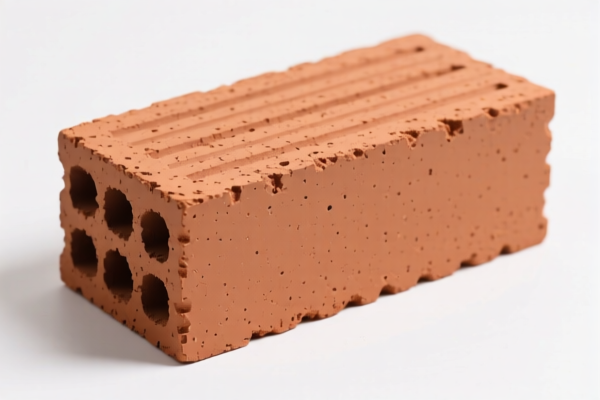
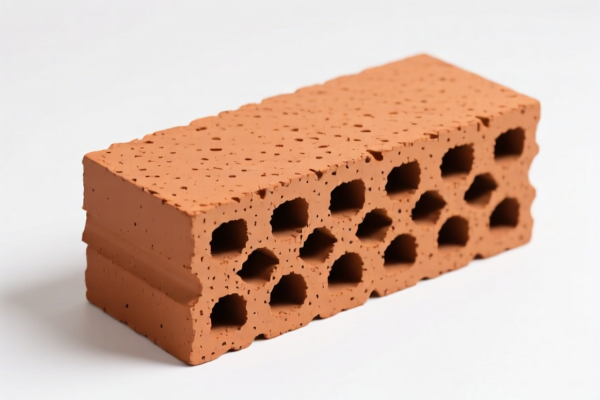
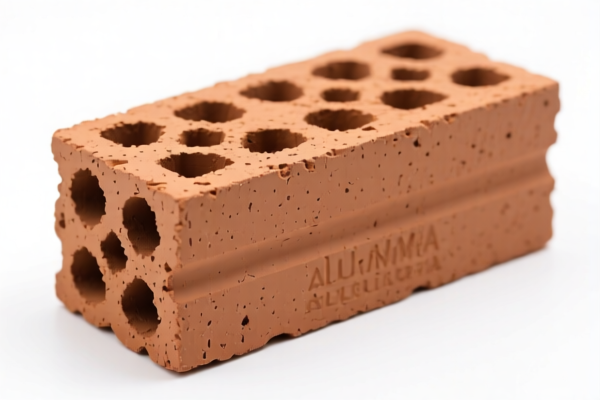
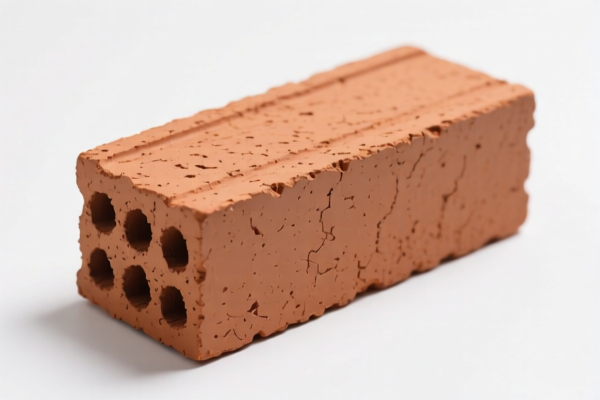
AI Analysis
🧱 High Alumina Refractory Mortar (Aluminum-Containing Mineral Products)
🌐 HS Code Reference & Customs Clearance Guide | 2026 Latest Tariff Analysis | Professional Entry Strategy
📌 I. Product Definition & Classification: What is "High Alumina Refractory Mortar"?
High Alumina Refractory Mortar is a specialized construction material used for jointing, lining, and repairing high-temperature industrial kilns, furnaces, and boilers. It is primarily composed of aluminum oxide (Al₂O₃) minerals, clay, and binding agents.
In international trade, its classification hinges on chemical composition and processing state: 1. Raw/Unprocessed Minerals: If the material is essentially crushed aluminum-containing minerals (like bauxite or alumina oxide) without complex shaping into finished ceramic structures. 2. Processed Refractory Ceramics: If the material has been fired, shaped, or processed into a specific refractory form (like cement or bricks/mortar for kiln lining).
⚠️ Critical Distinction Point:
- If the product is viewed strictly as an aluminum-bearing mineral powder/raw material → Classified under Chapter 25 (Mineral Products).
- If the product is viewed as a processed refractory article (fired cement/mortar) → Classified under Chapter 68 (Articles of Stone or Similar Materials) or Chapter 69 (Ceramic Products).
📦 II. HS Code Classification Details (2026 Latest Tariff Authoritative Comparison)
| HS Code | Product Description | Applicable Scenario | Tax Implication |
|---|---|---|---|
2530.90.80.50 |
Other mineral products (excluding bauxite); Aluminum-bearing minerals not elsewhere specified | Raw aluminum oxide powder, unprocessed mineral concentrates, simple mixtures | 10% Total Tax |
2530.90.80.15 |
Other mineral products containing aluminum oxide; Inorganic compounds of aluminum | Processed but not yet formed into refractory ceramics; Aluminum oxide compounds | 10% Total Tax |
6815.99.41.70 |
Articles of stone or other mineral substances (n.e.c.); Mineral products | Unfired or partially processed mineral articles; Basic mineral-based refractory compounds | 35% Total Tax |
6902.20.10.20 |
Refractory bricks, blocks, tiles, and similar refractory ceramic building construction products; Mortar with high alumina content | Processed mortar, fired refractory cement, shaped ceramic materials for kiln lining | 35% Total Tax |
6903.20.00.00 |
Refractory ceramic goods containing over 50% by weight of alumina | High-alumina (>50% Al₂O₃) refractory cement/mortar, advanced ceramic linings | 35% Total Tax |
🔍 Key Reminder:
- The shift from Chapter 25 (10%) to Chapter 68/69 (35%) represents a 25% tariff increase.
- Customs authorities often scrutinize whether the "mortar" is a simple mineral powder (Ch. 25) or a manufactured refractory article (Ch. 68/69).
- High Alumina Content (>50% Al₂O₃) strongly pushes classification toward 6903.20.00.00 due to its advanced ceramic nature.
💰 III. 2026 Latest Tariff Rate Breakdown (Including Additional Taxes & Policy Surcharges)
✅ Applicable Country: United States (US)
✅ Country of Origin: China (CN)
✅ Effective Date: November 10, 2025 onwards (and subsequent imports)
🎯 1. 2530.90.80.50 & 2530.90.80.15 —— Aluminum-Bearing Minerals / Unprocessed Mineral Products
| Item | Content |
|---|---|
| Base Tariff | 0% (ad valorem) |
| USITC Additional Tariff | 0% (No Section 301 surcharge for these specific subheadings) |
| IEEPA Additional Tariff | +10% (Targeting Chinese/HK products under Section 232/301 extensions) |
| Total Tax Rate | 10.0% |
| Tax Calculation | CIF Value × 10% |
| De Minimis Eligibility | ❌ No (deny_de_minimis) |
| Legal Basis Path | IEEPA:9903.01.25 → USITC:2530.90.80.50/15 |
📌 Explanation:
- The 10% rate is solely due to the IEEPA (International Emergency Economic Powers Act) surcharge.
- Unlike electronics or steel, raw mineral products in these specific subheadings escape the 25% Section 301 tariff, making them significantly cheaper to import.
- Cost Advantage: If your product qualifies for this classification, you save 25% compared to treated refractory goods.
🎯 2. 6815.99.41.70 —— Mineral Articles (Unfired/Partially Processed)
| Item | Content |
|---|---|
| Base Tariff | 0% |
| USITC Additional Tariff | +25% (Section 301 Surcharge) |
| IEEPA Additional Tariff | +10% |
| Total Tax Rate | 35.0% |
| Tax Calculation | CIF Value × 35% |
| De Minimis Eligibility | ❌ No |
| Legal Basis Path | IEEPA:9903.01.25 → USITC:6815.99.41.70 → FOOTNOTE:301 |
📌 Warning:
- This classification triggers the full Section 301 tariff (25%) in addition to IEEPA.
- This is common for unfired mineral articles or basic mineral-based composites that do not meet the strict "refractory ceramic" definition of Chapter 69.
🎯 3. 6902.20.10.20 & 6903.20.00.00 —— High-Alumina Refractory Ceramics & Mortar
| Item | Content |
|---|---|
| Base Tariff | 0% |
| USITC Additional Tariff | +25% (Section 301 Surcharge) |
| IEEPA Additional Tariff | +10% |
| Total Tax Rate | 35.0% |
| Tax Calculation | CIF Value × 35% |
| De Minimis Eligibility | ❌ No |
| Legal Basis Path | IEEPA:9903.01.25 → USITC:6902.20.10.20/6903.20.00.00 → FOOTNOTE:301 |
📌 Note:
- 6903.20.00.00 is the most precise code for High-Alumina (>50% Al₂O₃) Refractory Mortar.
- Despite being a "refractory," it is not exempt from Section 301 tariffs.
- The 35% total rate applies to all advanced ceramic refractory products from China.
- Cost Impact: High-alumina mortars are 2.5x more expensive in duties than raw mineral powders.
🛠️ IV. Customs Clearance Practical Advice (Battle-Tested Pitfall Avoidance)
✅ 1. Document Checklist (Mandatory)
| Document | Must Provide | Explanation |
|---|---|---|
| ✅ Product Specification Sheet | ✔️ | Must explicitly state Al₂O₃ content % (e.g., "55% Alumina"). |
| ✅ Material Safety Data Sheet (MSDS) | ✔️ | Confirms chemical composition and hazard class. |
| ✅ Process Description | ✔️ | Is it fired? Is it ground raw ore? Critical for Ch. 25 vs. Ch. 69 distinction. |
| ✅ Product Photos (Label & Bulk) | ✔️ | Show packaging, branding, and physical texture (powder vs. pre-formed brick/mortar). |
| ✅ Commercial Invoice | ✔️ | Clearly describe as "High Alumina Refractory Mortar" or "Aluminum Oxide Powder" depending on classification. |
| ✅ Certificate of Origin (CO) | ✔️ | Required for duty calculation and potential exemption claims. |
✅ 2. Declaration Strategy (Key Mnemonics)
🔥 "Raw Powder 10%, Mortar 35%; Alumina % Dictates Chapter!"
| Scenario | Correct Classification | Wrong Practice |
|---|---|---|
| Raw Aluminum Oxide Powder (Unfired, crushed) | 2530.90.80.15 |
Misdeclaring as "Refractory Mortar" → 35% |
| High-Alumina Refractory Mortar (>50% Al₂O₃, Processed) | 6903.20.00.00 |
Misdeclaring as "Mineral Powder" → Risk of Audit & Penalties |
| Low-Alumina Clay Mortar | 6902.20.10.20 |
Misdeclaring as "High Alumina" → Inaccuracy |
| Mixed Mineral Filler | 2530.90.80.50 |
Overstating Alumina Content → Fraud Risk |
📌 Tip:
- If your mortar is unfired and simple powder mix, argue for Chapter 25 (10%).
- If it is fired, shaped, or engineered for high-temp stability, expect Chapter 68/69 (35%).
- Do not mix raw minerals and finished mortars in one shipment without clear separation.
✅ 3. Special Case Handling
| Scenario | Handling Advice |
|---|---|
| OEM Custom Mortar | Provide client specs showing Al₂O₃ content. If >50%, use 6903.20.00.00. |
| Mixed with Clay | If Al₂O₃ < 50%, may fall under 6902.20.10.20. Check composition certificate. |
| Sample Shipments | Not exempt from duties. Declare accurately even for samples. |
| Warehousing in US | Duty suspension possible if stored in FTZ (Free Trade Zone), but entry declaration still required. |
🌍 V. Global Market Comparison (2026 Latest)
| Country/Region | Recommended HS Code | Tariff Rate | Certification Requirement | Note |
|---|---|---|---|---|
| 🇺🇸 USA | 6903.20.00.00 |
35% (China Origin) | No specific CE/FCC, but accurate composition proof | 10% if classified as raw mineral |
| 🇨🇳 China | 6903.20.00.00 |
5-10% | GB Standards | No Section 301 surcharge |
| 🇪🇺 EU | 6903.20.00 |
6.5% (if not restricted) | REACH Compliance | No additional punitive tariffs |
| 🇮🇳 India | 6903.20.00 |
7.5% + 10% SWS | BIS Certification | Higher effective rate due to SWS |
📌 Conclusion:
- USA imposes the highest effective duty on Chinese refractory materials (35%).
- Raw mineral classification (10%) offers significant savings, but requires strict adherence to "unprocessed" definition.
- EU and China offer more favorable rates for finished refractories.
📌 VI. Common Errors & Pitfall Avoidance (Blood Lessons)
❌ Error 1: Declaring High-Alumina Mortar as "Aluminum Powder" (2530) to avoid 25% tariff.
👉 Consequence: Customs inspection reveals firing/processing → Back taxes + 25% penalty + seizure risk.
❌ Error 2: Using vague description "Industrial Mineral Mix" without Al₂O₃ content.
👉 Consequence: Customs assigns 6815.99.41.70 (35%) by default due to lack of proof for Ch. 25.
❌ Error 3: Ignoring IEEPA 10% surcharge in cost calculation.
👉 Consequence: Profit margin erosion. Even "0% base" goods are taxed at 10% or 35%.
✅ Correct Practice:
"High Alumina Refractory Mortar, Al₂O₃ ≥ 50%, Fired Ceramic Composition, for Kiln Lining, Model XYZ"
🎯 VII. Conclusion: Precision in Classification Saves 25% in Duties!
🎯 Remember:
🔹 "Raw Powder 10%, Mortar 35%; Alumina Content is King!"
🔹 "HS Code Determines Duty, Declaration Determines Compliance!"
📌 Pro Tip:
If your product is borderline (e.g., partially processed), consider applying for an Advance Ruling (CBP Form 5439) before shipment. This provides legal certainty and protects against post-entry audits.
📣 Immediate Action:
📞 Verify Al₂O₃ Content → Select Correct Chapter (25 vs. 68/69) → Prepare Composition Certificate
🚀 Accurate Classification = Cost Savings + Smooth Clearance!
✨ Professional Clearance Starts with Precise Classification!
💼 Every Percentage Point Matters in Global Trade!
Customer Reviews
About HS Code Classification
The Harmonized System (HS) is an internationally standardized nomenclature developed by the World Customs Organization (WCO) to classify traded products. Over 200 countries use the HS system as the basis for customs tariffs, trade statistics, and import/export regulations.
Each HS code follows a hierarchical structure:
- Chapter (2 digits) — Broad category of goods (e.g., Chapter 84: Machinery and Mechanical Appliances)
- Heading (4 digits) — More specific grouping within the chapter
- Subheading (6 digits) — Internationally standardized breakdown, used by all WCO member countries
- National subdivisions (8-10 digits) — Country-specific extensions for further classification, such as US HTSUS 10-digit codes
Correct HS code classification is essential for smooth customs clearance, accurate duty payment, and compliance with trade regulations. Misclassification can lead to customs delays, overpayment of duties, or penalties.
When importing from CN to US, the applicable tariff rates may include:
- Most-Favored-Nation (MFN) rate — The standard duty rate applied to WTO members
- General rate — Applied to countries without trade agreements
- Trade remedy duties — Additional tariffs such as Section 301 (anti-dumping), Section 232 (national security), or countervailing duties
The information provided on this page is for reference purposes only. For official classification, please consult with your local customs authority or a licensed customs broker.