High Density Polyethylene HDPE Agricultural Mulch Film
CN → US| HS编码 | 关税税率 | 原产国 | 目的国 | 文档 |
|---|---|---|---|---|
| 3920991000 | 41.0% | CN | US | 官方文档 |
| 3920992000 | 39.2% | CN | US | 官方文档 |
| 3921190010 | 41.5% | CN | US | 官方文档 |
| 3921905050 | 39.8% | CN | US | 官方文档 |
商品图片
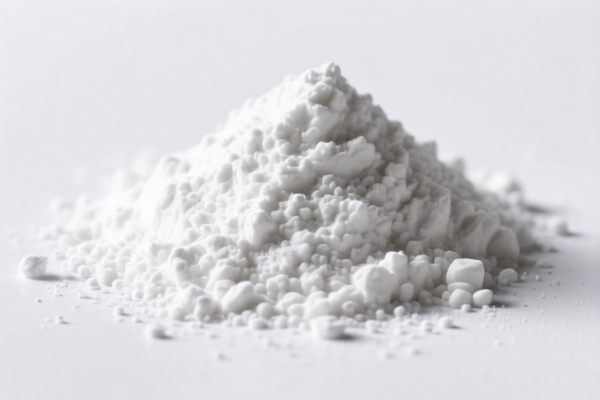

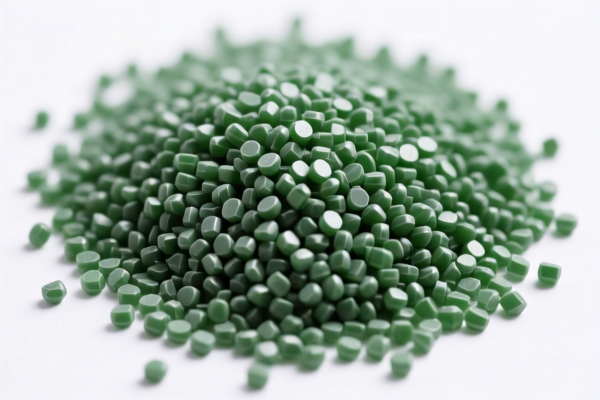
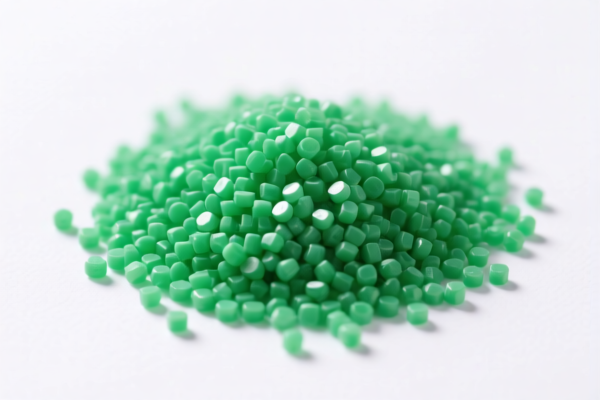
AI分析
🌿 Agricultural Mulch Film (High Density Polyethylene - HDPE)
🌐 HS Code Reference & Customs Clearance Guide | 2026 Latest Tariff Analysis | Professional-Level Clearance Strategy
📌 I. Product Definition & Classification: Do You Really Understand "Agricultural Mulch Film"?
Agricultural mulch film is a critical input in modern agriculture, used to regulate soil temperature, retain moisture, suppress weeds, and improve crop yield. In international trade, these films are primarily categorized under Chapter 39: Plastics and Articles Thereof. The classification depends heavily on the cellular structure (foamed vs. solid), thickness, and physical form (rolls vs. sheets).
⚠️ Key Distinction Point:
- If the film is cellular (has air pockets/foam structure), especially made of polyethylene/polypropylene and microporous, it falls under 3921.
- If the film is non-cellular (solid, dense), it falls under 3920.
- Thickness matters: Films over 0.152mm (approx. 6 mils) that are flexible but not in rolls may be treated differently than rolls.
📦 II. HS Code Classification Details (2026 Latest Tariff Authority Cross-Reference)
| HS Code | Product Description | Applicable Scenario | Cellular/Structure |
|---|---|---|---|
3921.19.00.10 |
Other plates, sheets, film, foil and strip, of plastics: Cellular: Of other plastics Microporous sheets of polyethylene or polypropylene film | Specialized agricultural mulch with foam/air-layer structure for insulation | ✅ Yes (Cellular/Microporous) |
3921.90.50.50 |
Other plates, sheets, film, foil and strip, of plastics: Other: Other: Other Other | General plastic sheets/films not specified elsewhere (e.g., rigid plastic sheets, non-agricultural films) | ❌ No (General) |
3920.99.10.00 |
Other plates, sheets, film, foil and strip, of plastics, noncellular: Of other plastics: Film, strip and sheets... flexible: Over 0.152 mm in thickness, and not in rolls | Solid HDPE films, thick sheets, not rolled up | ❌ No (Non-cellular, >0.152mm) |
3920.99.20.00 |
Other plates, sheets, film, foil and strip, of plastics, noncellular: Of other plastics: Film, strip and sheets... flexible: Other | Standard solid HDPE mulch films (rolls or thin sheets <0.152mm) | ❌ No (Non-cellular) |
🔍 Critical Reminder:
- Most standard HDPE Agricultural Mulch Films are non-cellular (solid). Therefore, they typically fall under HS 3920.
- Only if the mulch film has a specific foamed/microporous cellular structure (often used for extreme weather insulation) does it fall under HS 3921.
- Misclassification Risk: Declaring a solid film as "cellular" (3921) to avoid taxes will lead to severe penalties if audited.
💰 III. 2026 Latest Tariff Rate Breakdown (Including Supplementary Taxes)
✅ Applicable Country: United States (US)
✅ Origin: China (CN)
✅ Effective Date: November 10, 2025 (and onwards)
🎯 1. 3921.19.00.10 —— Cellular Polyethylene Microporous Sheets
| Item | Details |
|---|---|
| Base Tariff | 0.0% (ad valorem) |
| Section 301 Supplementary Tax | 0.0% |
| Total Tax Rate | 0.0% |
| Tax Calculation | CIF Value × 0% = $0 |
| De Minimis Eligibility | ✅ Yes (for shipments under $800) |
| Legal Basis Path | HTSUS:3921.19.00.10 → No Footnotes for US/CN |
📌 Explanation:
- This code has zero duty and no supplementary taxes.
- Caution: This code is strictly for cellular/microporous polyethylene or polypropylene films. If your HDPE mulch film is solid (non-cellular), do not use this code. Misclassification can result in back taxes + penalties.
🎯 2. 3921.90.50.50 —— Other Plastic Sheets/Films (Non-Cellular or General)
| Item | Details |
|---|---|
| Base Tariff | 4.8% |
| Section 301 Supplementary Tax | +25.0% |
| Total Tax Rate | 29.8% |
| Tax Calculation | CIF Value × 29.8% |
| De Minimis Eligibility | ❌ No (Denied for de minimis) |
| Legal Basis Path | HTSUS:3921.90.50.50 → Section 301 Footnote |
📌 Note:
- This code captures "other" plastic sheets not specifically classified elsewhere.
- If your film does not meet the strict "microporous cellular" definition of 3921.19.00.10, but is also not a standard flexible film, it might land here.
- High Tax Impact: Nearly 30% duty significantly affects profitability.
🎯 3. 3920.99.10.00 —— Non-Cellular Flexible Films (Thickness > 0.152mm, Not in Rolls)
| Item | Details |
|---|---|
| Base Tariff | 0.0% |
| Section 301 Supplementary Tax | 0.0% |
| Total Tax Rate | 0.0% |
| Tax Calculation | CIF Value × 0% = $0 |
| De Minimis Eligibility | ✅ Yes |
| Legal Basis Path | HTSUS:3920.99.10.00 → No Footnotes for US/CN |
📌 Explanation:
- Zero Duty.
- Condition: Must be non-cellular (solid), flexible, and thickness > 0.152mm, and NOT in rolls.
- If your mulch film comes in rolls, this code is incorrect.
🎯 4. 3920.99.20.00 —— Non-Cellular Flexible Films (Other)
| Item | Details |
|---|---|
| Base Tariff | 4.2% |
| Section 301 Supplementary Tax | +25.0% |
| Total Tax Rate | 29.2% |
| Tax Calculation | CIF Value × 29.2% |
| De Minimis Eligibility | ❌ No |
| Legal Basis Path | HTSUS:3920.99.20.00 → Section 301 Footnote |
📌 Most Common Code for Standard HDPE Mulch:
- Most agricultural HDPE mulch films are solid (non-cellular), flexible, and come in rolls.
- If thickness is ≤ 0.152mm, or if it’s in rolls, this is the likely correct code.
- Total Tax: 29.2%. This is the standard high-tax scenario for Chinese-made plastic films.
🛠️ IV. Customs Clearance Practical Advice (Battle-Tested Pitfall Guide)
✅ 1. Preparation Checklist (Essential Documents)
| Document | Required | Notes |
|---|---|---|
| ✅ Product Specification Sheet | ✔️ | Must specify: Material (HDPE), Thickness (mm/mils), Width, Roll Length, Cellular vs. Non-Cellular status |
| ✅ Photos of Product & Packaging | ✔️ | Show roll structure, any labeling, and close-up of film texture (to prove cellular/non-cellular) |
| ✅ Commercial Invoice | ✔️ | Clearly state "HDPE Agricultural Mulch Film", "Non-Cellular", and HS Code |
| ✅ Packing List | ✔️ | Detail weight, dimensions, number of rolls |
| ✅ Certificate of Origin (CO) | ✔️ | For potential FTAA benefits if applicable (though rare for HDPE films from China) |
| ✅ Test Report (Optional but Helpful) | ✔️ | UV resistance, tensile strength, and density/foam structure report to prove cellular/non-cellular nature |
✅ 2. Declaration Tips (Key Mantra)
🔥 "Cellular is Free, Solid is Taxed; Roll vs. Sheet Matters, Don't Guess!"
| Scenario | Correct HS Code | Mistake to Avoid |
|---|---|---|
| Foamed/Cellular PE Film | 3921.19.00.10 (0%) |
Misdeclaring as solid → 29.2% Tax |
| Solid HDPE Film (Rolls) | 3920.99.20.00 (29.2%) |
Misdeclaring as cellular → 0% → Audit Risk |
| Solid HDPE Film (>0.152mm, Not Rolls) | 3920.99.10.00 (0%) |
Misdeclaring as rolls → 29.2% Tax |
| General Plastic Sheet (Not Mulch) | 3921.90.50.50 (29.8%) |
N/A |
📌 Critical Note:
- Most agricultural mulch films are solid (non-cellular). Therefore, they usually fall under 3920.
- If your film is solid and in rolls, it will likely be3920.99.20.00with a 29.2% total tax.
- Do not try to classify solid films as3921.19.00.10(0%) unless you have proof of cellular/microporous structure.
✅ 3. Special Cases Handling
| Scenario | Handling Advice |
|---|---|
| Mixed Cellular & Non-Cellular | Declare separately. Do not mix. |
| Films with Additives (UV Stabilizers) | Still falls under 3920/3921. Declare "HDPE Film with UV Stabilizers". |
| Biodegradable Mulch Film | If it meets biodegradability standards, it may still be HDPE-based. Clarify material composition. Some biodegradable films may have different classifications (check Chapter 39 vs. 38). |
| Rolls vs. Sheets | Ensure packaging matches description. If shipped in rolls, do not declare as "sheets not in rolls". |
🌍 V. Global Market Comparison (2026 Latest)
| Country/Region | Recommended HS Code | Tariff (China Origin) | Certification Requirements | Notes |
|---|---|---|---|---|
| 🇺🇸 USA | 3920.99.20.00 |
29.2% | None specific for mulch | High tax due to Section 301 |
| 🇨🇳 China | 3920.99.20.00 |
5% (Import) | N/A | Domestic production is common |
| 🇪🇺 EU | 3920.99.00 |
4.0% | REACH Compliance | No Section 301 equivalent |
| 🇲🇽 Mexico | 3920.99.00 |
0% (USMCA) | N/A | Check origin rules |
| 🇯🇵 Japan | 3920.99.00 |
6.0% | JIS Standards | No major additional taxes |
📌 Conclusion:
- USA imposes the highest burden (29.2%) on standard solid HDPE mulch films.
- Cellular films enjoy 0% duty in the US, but they are niche products.
- Strategy: If you are exporting to the US, ensure accurate classification. If you are selling solid films, budget for ~30% duty.
📌 VI. Common Errors & Pitfalls (Lessons Learned)
❌ Error 1: Declaring solid HDPE film as "Cellular" to get 0% tax
👉 Consequence: Customs audit → Back taxes of ~29% + Penalties + Potential seizure
❌ Error 2: Misstating thickness
👉 Consequence: Confusion between 3920.99.10.00 (0%) and 3920.99.20.00 (29.2%). If thickness is >0.152mm but shipped in rolls, it is not 10.00. It is 20.00.
❌ Error 3: Vague description "Plastic Film"
👉 Consequence: Customs may assign a higher default code or request extensive documentation, causing delays.
❌ Error 4: Ignoring "Section 301" impact
👉 Consequence: Underestimating landed cost. 29.2% is significant for low-margin agricultural products.
✅ Correct Practice:
"HDPE Agricultural Mulch Film, Solid, Non-Cellular, 2.5 mil Thickness, 4 Feet Width, 1000 Feet/roll, UV Treated, Made in China"
🎯 VII. Conclusion: Precision Classification Saves Costs!
🎯 Remember the Mantra:
🔹 "Cellular is Free, Solid is Taxed; Roll vs. Sheet Matters, Don't Guess!"
🔹 "HS Code determines duty, 29% difference can kill your margin, declare accurately to avoid penalties!"
📌 Pro Tip:
If your HDPE mulch film has a unique foamed structure, obtain a third-party lab test to certify its cellular nature before claiming HS 3921.19.00.10.
For standard films, budget for 29.2% duty in the US market. Consider pre-classification rulings from US Customs if you are unsure about the cellular/non-cellular status.
📣 Immediate Action:
📞 Consult with a licensed customs broker + Provide product photos + Verify cellular structure
🚀 Ensure your HDPE mulch film clears customs smoothly, efficiently, and cost-effectively!
✨ Professional customs clearance starts with accurate classification!
💼 Every percentage point of duty counts!
用户评价
关于 HS 编码归类
协调制度(HS)是由世界海关组织(WCO)制定的国际贸易商品分类标准。全球 200 多个国家采用 HS 系统作为海关关税、贸易统计和进出口监管的基础。
每个 HS 编码遵循以下层级结构:
- 章(2 位)——商品大类(例如:第 84 章:机器和机械设备)
- 品目(4 位)——章内的更具体分类
- 子目(6 位)——国际通用细分,所有 WCO 成员国统一使用
- 本国细分(8-10 位)——各国自行扩展的细分编码,如美国 HTSUS 10 位编码
正确的 HS 编码归类对于顺利通关、准确缴纳关税和遵守贸易法规至关重要。错误归类可能导致海关延误、多缴关税或罚款。
从CN进口到US时,适用的关税税率可能包括:
- 最惠国(MFN)税率——适用于 WTO 成员国的标准关税税率
- 普通税率——适用于无贸易协定国家
- 贸易救济关税——附加关税,如 301 条款(反倾销)、232 条款(国家安全)或反补贴税
本页内容仅供参考。如需正式归类,请咨询当地海关或持牌报关代理。