High Density Textile Plastic Sheets
CN → US| HS编码 | 关税税率 | 原产国 | 目的国 | 文档 |
|---|---|---|---|---|
| 3926905900 | 37.4% | CN | US | 官方文档 |
| 3926905700 | 41.5% | CN | US | 官方文档 |
| 5911900080 | 38.8% | CN | US | 官方文档 |
| 3920992000 | 39.2% | CN | US | 官方文档 |
| 3920995000 | 40.8% | CN | US | 官方文档 |
商品图片
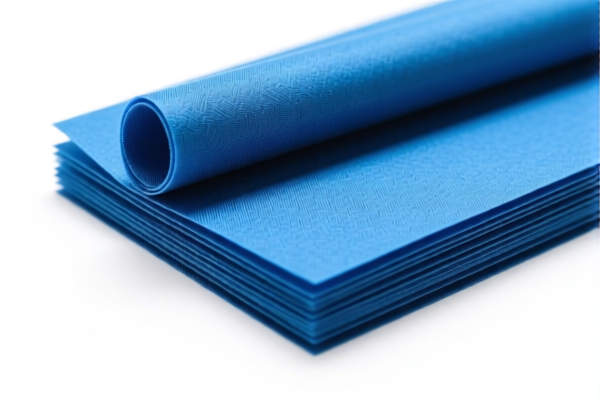
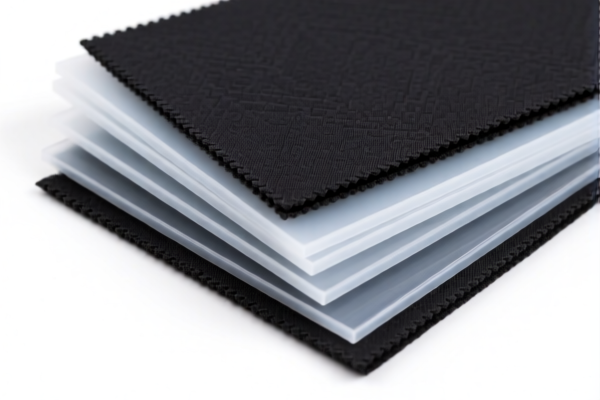
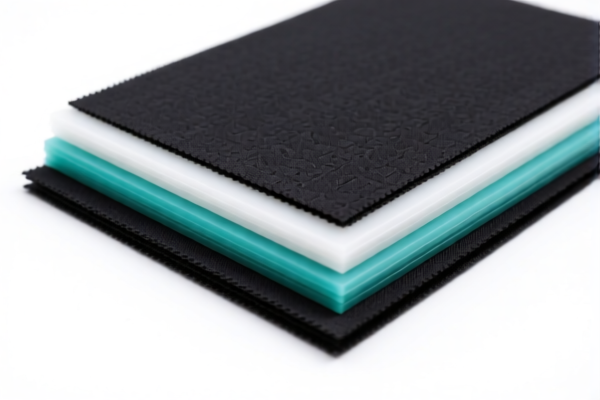
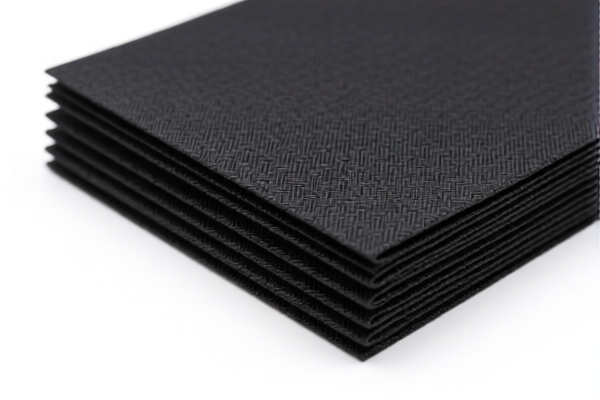
AI分析
🏗️ High Density Textile Plastic Sheets (Composite Materials)
🌐 HS Code Reference & Customs Clearance Guide | 2026 Latest Tariff Analysis | Strategic Entry Strategy for Composite Sheets
📌 I. Product Definition & Classification: Decoding "High Density Textile Plastic"
"High Density Textile Plastic Sheets" are complex composite materials, not simple plastics or textiles. They consist of a plastic matrix bonded with textile fibers (reinforcement), formed into sheet/plate structures. In international trade, these are often used for industrial lining, geomembranes, protective coverings, or technical applications.
Key Distinction Points: * Plastic-Dominant vs. Textile-Dominant: If the plastic content/matrix is predominant in form or function, it typically falls under Chapter 39 (Plastics). If the textile reinforcement is the essential character, it might fall under Chapter 59 (Impregnated Textiles). * Form Factor: Being "Sheets" narrows the classification significantly within Chapter 39 to headings like 3920 (Plates, Sheets, Film, Foil, and Strip, of Plastics). * Technical vs. General Use: "High Density" often implies industrial or technical use, potentially pushing classification towards Chapter 59 (Technical Textiles) if the fabric structure is more defining.
⚠️ Critical Classification Dilemma:
- If the sheet is primarily plastic with textile reinforcement → 3920/3926 Series
- If the sheet is primarily textile impregnated with plastic → 5911 Series
📦 II. HS Code Classification Details (2026 Latest Tariff Authority Cross-Reference)
Based on the product description and available matching logic, here are the five most probable HS Codes:
| HS Code | Product Description | Application Scenario | Classification Logic |
|---|---|---|---|
3926.90.59.00 |
Other articles of plastics, containing textile fibers | General industrial plastic sheets with textile backing/reinforcement | ✅ Match: Explicitly mentions "containing textile fibers" in summary. |
3926.90.57.00 |
Other articles of plastics, intermediate/semi-finished goods | Raw or semi-finished plastic sheets for further processing | ✅ Match: Identified as "intermediate/semi-finished" due to sheet form. |
5911.90.00.80 |
Technical textile products, other | Industrial fabric sheets, liners, or filter cloths with plastic coating | ✅ Match: Classified as "technical textile" where textile character is key. |
3920.99.20.00 |
Other plastics plates, sheets, etc., non-cellular, non-extruded | Standard plastic sheets (high density) without specific textile mention in code | ✅ Match: Broad "Other" category for plastic sheets; inferred compatibility. |
3920.99.50.00 |
Other plastics plates, sheets, etc., heavy-duty | High-density, heavy-duty plastic sheets for industrial use | ✅ Match: "Heavy" description inferred to align with high-density utility. |
🔍 Key Insight:
- 3926.90.59.00 is the most precise fit if the textile component is explicitly part of the plastic article's definition.
- 5911.90.00.80 is the strongest competitor if Customs views the textile reinforcement as the "essential character."
- 3920 series assumes the product is fundamentally a plastic sheet, with textiles being incidental or minor reinforcement.
💰 III. 2026 Latest Tariff Rate Breakdown (Including Surcharges & Policy Add-ons)
✅ Applicable Country: United States (US)
✅ Origin: China (CN)
✅ Effective Date: November 10, 2025 onwards (for subsequent imports)
🎯 1. 3926.90.59.00 —— Other Plastic Articles, Containing Textile Fibers
| Item | Content |
|---|---|
| Base Tariff | 2.4% (ad valorem) |
| USITC Surcharge (Section 301) | +25.0% |
| IEEPA Surcharge (China-Specific) | +10.0% (122 Clause) |
| Total Effective Rate | 37.4% |
| Tax Calculation | CIF Value × 37.4% |
| De Minimis Exemption | ❌ Not Applicable (High-risk category) |
| Legal Path | IEEPA:9903.01.25 → USITC:3926.90.59.00 → FOOTNOTE:301 |
📌 Explanation:
- Base rate is low (2.4%), but the 35% surcharge (25% + 10%) dominates the cost.
- This code is often scrutinized for "textile content" to ensure it doesn't fall under Chapter 59.
🎯 2. 3926.90.57.00 —— Other Plastic Articles, Intermediate Goods
| Item | Content |
|---|---|
| Base Tariff | 6.5% |
| USITC Surcharge (Section 301) | +25.0% |
| IEEPA Surcharge (China-Specific) | +10.0% (122 Clause) |
| Total Effective Rate | 41.5% |
| Tax Calculation | CIF Value × 41.5% |
| De Minimis Exemption | ❌ Not Applicable |
| Legal Path | IEEPA:9903.01.25 → USITC:3926.90.57.00 → FOOTNOTE:301 |
📌 Explanation:
- Higher base rate (6.5%) leads to a higher total tax burden.
- Classified as "intermediate," implying it’s not a finished consumer good, which may attract additional scrutiny.
🎯 3. 5911.90.00.80 —— Other Technical Textile Products
| Item | Content |
|---|---|
| Base Tariff | 3.8% |
| USITC Surcharge (Section 301) | +25.0% |
| IEEPA Surcharge (China-Specific) | +10.0% (122 Clause) |
| Total Effective Rate | 38.8% |
| Tax Calculation | CIF Value × 38.8% |
| De Minimis Exemption | ❌ Not Applicable |
| Legal Path | IEEPA:9903.01.25 → USITC:5911.90.00.80 → FOOTNOTE:301 |
📌 Explanation:
- Chapter 59 (Textiles) often has lower base rates but is highly sensitive to composition.
- Risk: If Customs reclassifies to Chapter 39, you may face penalties for misclassification.
🎯 4. 3920.99.20.00 —— Other Plastic Sheets, Non-Specific
| Item | Content |
|---|---|
| Base Tariff | 4.2% |
| USITC Surcharge (Section 301) | +25.0% |
| IEEPA Surcharge (China-Specific) | +10.0% (122 Clause) |
| Total Effective Rate | 39.2% |
| Tax Calculation | CIF Value × 39.2% |
| De Minimis Exemption | ❌ Not Applicable |
| Legal Path | IEEPA:9903.01.25 → USITC:3920.99.20.00 → FOOTNOTE:301 |
📌 Explanation:
- A "catch-all" for plastic sheets. Lower risk of textile conflict, but potentially less accurate if textile reinforcement is significant.
🎯 5. 3920.99.50.00 —— Heavy-Duty Plastic Sheets
| Item | Content |
|---|---|
| Base Tariff | 5.8% |
| USITC Surcharge (Section 301) | +25.0% |
| IEEPA Surcharge (China-Specific) | +10.0% (122 Clause) |
| Total Effective Rate | 40.8% |
| Tax Calculation | CIF Value × 40.8% |
| De Minimis Exemption | ❌ Not Applicable |
| Legal Path | IEEPA:9903.01.25 → USITC:3920.99.50.00 → FOOTNOTE:301 |
📌 Explanation:
- "Heavy-duty" inference aligns with "High Density." Higher base rate (5.8%) increases total cost.
🛠️ IV. Customs Clearance Practical Advice (Battle-Tested Pitfall Avoidance)
✅ 1. Documentation Checklist (Non-Negotiable)
| Document | Mandatory? | Notes |
|---|---|---|
| ✅ Product Specification Sheet | ✔️ | Must detail: Plastic type, textile fiber type (e.g., polyester, nylon), thickness, density, and manufacturing process. |
| ✅ Composition Analysis Report | ✔️ | Critical to prove if plastic or textile is the "essential character." Lab test results preferred. |
| ✅ High-Res Photos (Cross-section) | ✔️ | Show the lamination/coating structure to prove it’s a composite, not a woven fabric. |
| ✅ Commercial Invoice | ✔️ | Describe as "Composite Plastic-Textile Sheet, High Density, For Industrial Use." Avoid vague terms like "Plastic Mat." |
| ✅ Packing List | ✔️ | Ensure no loose textile pieces that could trigger Chapter 59 classification. |
| ✅ HS Code Pre-Ruling (Optional but Recommended) | ✔️ | Apply for an Advance Ruling from CBP to lock in the correct HS Code and avoid post-import audits. |
✅ 2. Declaration Strategy (Key Mantras)
🔥 “Character is Key, Structure is Proof, Name is Specific!”
| Scenario | Correct Declaration | Incorrect Action |
|---|---|---|
| Plastic-dominated composite | 3926.90.59.00 or 3920.99.20.00 |
Misdeclare as 5911 → Risk of penalty if plastic is dominant. |
| Textile-dominated composite | 5911.90.00.80 |
Misdeclare as 3926 → Risk of penalty if textile is dominant. |
| Semi-finished raw sheets | 3926.90.57.00 |
Declare as finished product → Higher scrutiny. |
| Vague description "Plastic Sheet" | Provide full composition | Vague description → Delay + 10% penalty risk. |
✅ 3. Special Handling Tips
| Situation | Recommendation |
|---|---|
| OEM Custom Sheets | Provide design specs to prove intended use (e.g., "industrial liner" vs. "fashion material"). |
| High Density/Heavy Duty | Provide tensile strength test reports to justify "Heavy Duty" claims for 3920.99.50.00. |
| Mixed Shipments | Do not mix 3926 and 5911 shipments. Clear separation is mandatory. |
| Third-Country Transshipment | Ensure no Chinese origin is obscured. US Customs tracks "circumvention" aggressively for Chapter 39/59. |
🌍 V. Global Market Comparison (2026 Latest)
| Country/Region | Recommended HS Code | Estimated Duty (China Origin) | Certification | Notes |
|---|---|---|---|---|
| 🇺🇸 USA | 3926.90.59.00 |
37.4% (Total) | No specific certs required for general use | Highest duty burden due to 301 & IEEPA. |
| 🇨🇳 China | 3926.90.59.00 |
~2.4% - 3.8% | N/A | Low import duty for domestic use. |
| 🇪🇺 EU | 3920.99.20.00 |
~6.5% | CE (if applicable) | No Section 301 equivalent, but VAT applies. |
| 🇬🇧 UK | 3926.90.59.00 |
~3.9% | UKCA | Post-Brexit rules may vary. |
| 🇨🇦 Canada | 3926.90.59.00 |
~5.0% | N/A | CUSMA benefits if from Mexico/US. |
📌 Conclusion:
- USA is the most challenging market for this product due to layered surcharges (25% + 10%).
- Cost Impact: A $10,000 shipment will incur $3,740 - $4,150 in duties alone.
- Strategy: Consider sourcing from non-China origins (e.g., Vietnam, Thailand) to mitigate IEEPA surcharges if feasible.
📌 VI. Common Errors & Pitfall Guide (Lessons Learned)
❌ Error 1: Declaring as "Textile Fabric" when it’s Plastic-Dominated
👉 Result: Customs may reassess to Chapter 39, leading to retroactive duty differences + penalties.
❌ Error 2: Using vague terms like "Composite Mat"
👉 Result: CBP may assign a generic, higher-duty code or request additional documentation, causing delays.
❌ Error 3: Ignoring the "Textile" Component in Description
👉 Result: If textile content >5%, Chapter 59 may be argued, leading to audit flags.
❌ Error 4: Assuming De Minimis Exemption Applies
👉 Result: ❌ NO De Minimis. All these codes are high-risk and subject to full duty collection.
✅ Correct Approach:
"High-Density Polyethylene Sheet Reinforced with Polyester Textile, 2mm Thickness, Industrial Lining Application, Origin: China"
🎯 VII. Conclusion: Precision Classification Saves Money
🎯 Remember Mantra:
🔹 "Plastic or Textile? Find the Essential Character!"
🔹 "3926 vs 5911: One 1% Shift Can Save Thousands!"
🔹 "No De Minimis: Budget for 37-42% Duty!"
📌 Pro Tip:
If your product is essential for medical or food packaging, verify if it qualifies for Chapter 39.01/39.02 exceptions or lower-duty categories.
For high-volume imports, Apply for a CBP Advance Ruling to lock in the HS Code and avoid surprise audits.
📣 Immediate Action:
📞 Consult with a licensed customs broker.
📄 Prepare Composition Analysis Reports.
🚀 Optimize supply chain to consider non-China origins for cost-sensitive shipments.
✨ Professional Clearance Starts with Accurate Classification!
💼 Your Profit Margin Depends on Your HS Code!
用户评价
关于 HS 编码归类
协调制度(HS)是由世界海关组织(WCO)制定的国际贸易商品分类标准。全球 200 多个国家采用 HS 系统作为海关关税、贸易统计和进出口监管的基础。
每个 HS 编码遵循以下层级结构:
- 章(2 位)——商品大类(例如:第 84 章:机器和机械设备)
- 品目(4 位)——章内的更具体分类
- 子目(6 位)——国际通用细分,所有 WCO 成员国统一使用
- 本国细分(8-10 位)——各国自行扩展的细分编码,如美国 HTSUS 10 位编码
正确的 HS 编码归类对于顺利通关、准确缴纳关税和遵守贸易法规至关重要。错误归类可能导致海关延误、多缴关税或罚款。
从CN进口到US时,适用的关税税率可能包括:
- 最惠国(MFN)税率——适用于 WTO 成员国的标准关税税率
- 普通税率——适用于无贸易协定国家
- 贸易救济关税——附加关税,如 301 条款(反倾销)、232 条款(国家安全)或反补贴税
本页内容仅供参考。如需正式归类,请咨询当地海关或持牌报关代理。