High Density Textile Plastic Sheets
CN → US| HS Code | Tariff Rate | Origin | Destination | Doc |
|---|---|---|---|---|
| 3926905900 | 37.4% | CN | US | Official Doc |
| 3926905700 | 41.5% | CN | US | Official Doc |
| 5911900080 | 38.8% | CN | US | Official Doc |
| 3920992000 | 39.2% | CN | US | Official Doc |
| 3920995000 | 40.8% | CN | US | Official Doc |
Product Images
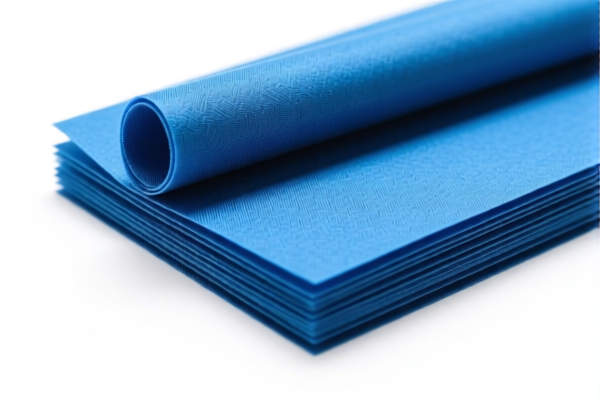
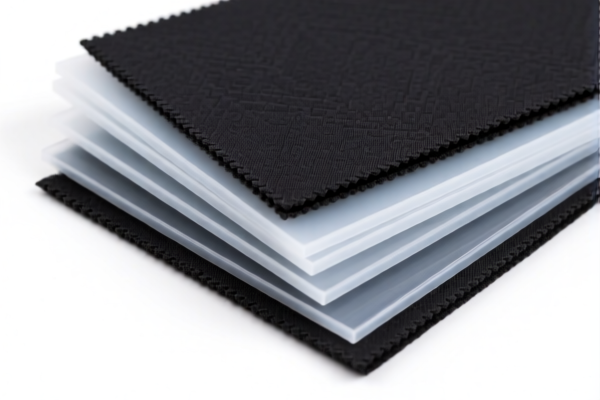
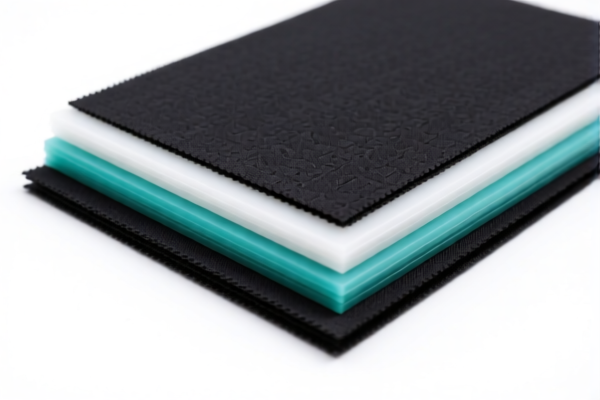
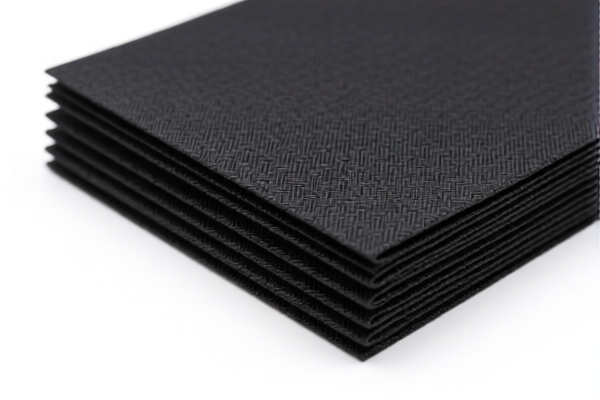
AI Analysis
🏗️ High Density Textile Plastic Sheets (Composite Materials)
🌐 HS Code Reference & Customs Clearance Guide | 2026 Latest Tariff Analysis | Strategic Entry Strategy for Composite Sheets
📌 I. Product Definition & Classification: Decoding "High Density Textile Plastic"
"High Density Textile Plastic Sheets" are complex composite materials, not simple plastics or textiles. They consist of a plastic matrix bonded with textile fibers (reinforcement), formed into sheet/plate structures. In international trade, these are often used for industrial lining, geomembranes, protective coverings, or technical applications.
Key Distinction Points: * Plastic-Dominant vs. Textile-Dominant: If the plastic content/matrix is predominant in form or function, it typically falls under Chapter 39 (Plastics). If the textile reinforcement is the essential character, it might fall under Chapter 59 (Impregnated Textiles). * Form Factor: Being "Sheets" narrows the classification significantly within Chapter 39 to headings like 3920 (Plates, Sheets, Film, Foil, and Strip, of Plastics). * Technical vs. General Use: "High Density" often implies industrial or technical use, potentially pushing classification towards Chapter 59 (Technical Textiles) if the fabric structure is more defining.
⚠️ Critical Classification Dilemma:
- If the sheet is primarily plastic with textile reinforcement → 3920/3926 Series
- If the sheet is primarily textile impregnated with plastic → 5911 Series
📦 II. HS Code Classification Details (2026 Latest Tariff Authority Cross-Reference)
Based on the product description and available matching logic, here are the five most probable HS Codes:
| HS Code | Product Description | Application Scenario | Classification Logic |
|---|---|---|---|
3926.90.59.00 |
Other articles of plastics, containing textile fibers | General industrial plastic sheets with textile backing/reinforcement | ✅ Match: Explicitly mentions "containing textile fibers" in summary. |
3926.90.57.00 |
Other articles of plastics, intermediate/semi-finished goods | Raw or semi-finished plastic sheets for further processing | ✅ Match: Identified as "intermediate/semi-finished" due to sheet form. |
5911.90.00.80 |
Technical textile products, other | Industrial fabric sheets, liners, or filter cloths with plastic coating | ✅ Match: Classified as "technical textile" where textile character is key. |
3920.99.20.00 |
Other plastics plates, sheets, etc., non-cellular, non-extruded | Standard plastic sheets (high density) without specific textile mention in code | ✅ Match: Broad "Other" category for plastic sheets; inferred compatibility. |
3920.99.50.00 |
Other plastics plates, sheets, etc., heavy-duty | High-density, heavy-duty plastic sheets for industrial use | ✅ Match: "Heavy" description inferred to align with high-density utility. |
🔍 Key Insight:
- 3926.90.59.00 is the most precise fit if the textile component is explicitly part of the plastic article's definition.
- 5911.90.00.80 is the strongest competitor if Customs views the textile reinforcement as the "essential character."
- 3920 series assumes the product is fundamentally a plastic sheet, with textiles being incidental or minor reinforcement.
💰 III. 2026 Latest Tariff Rate Breakdown (Including Surcharges & Policy Add-ons)
✅ Applicable Country: United States (US)
✅ Origin: China (CN)
✅ Effective Date: November 10, 2025 onwards (for subsequent imports)
🎯 1. 3926.90.59.00 —— Other Plastic Articles, Containing Textile Fibers
| Item | Content |
|---|---|
| Base Tariff | 2.4% (ad valorem) |
| USITC Surcharge (Section 301) | +25.0% |
| IEEPA Surcharge (China-Specific) | +10.0% (122 Clause) |
| Total Effective Rate | 37.4% |
| Tax Calculation | CIF Value × 37.4% |
| De Minimis Exemption | ❌ Not Applicable (High-risk category) |
| Legal Path | IEEPA:9903.01.25 → USITC:3926.90.59.00 → FOOTNOTE:301 |
📌 Explanation:
- Base rate is low (2.4%), but the 35% surcharge (25% + 10%) dominates the cost.
- This code is often scrutinized for "textile content" to ensure it doesn't fall under Chapter 59.
🎯 2. 3926.90.57.00 —— Other Plastic Articles, Intermediate Goods
| Item | Content |
|---|---|
| Base Tariff | 6.5% |
| USITC Surcharge (Section 301) | +25.0% |
| IEEPA Surcharge (China-Specific) | +10.0% (122 Clause) |
| Total Effective Rate | 41.5% |
| Tax Calculation | CIF Value × 41.5% |
| De Minimis Exemption | ❌ Not Applicable |
| Legal Path | IEEPA:9903.01.25 → USITC:3926.90.57.00 → FOOTNOTE:301 |
📌 Explanation:
- Higher base rate (6.5%) leads to a higher total tax burden.
- Classified as "intermediate," implying it’s not a finished consumer good, which may attract additional scrutiny.
🎯 3. 5911.90.00.80 —— Other Technical Textile Products
| Item | Content |
|---|---|
| Base Tariff | 3.8% |
| USITC Surcharge (Section 301) | +25.0% |
| IEEPA Surcharge (China-Specific) | +10.0% (122 Clause) |
| Total Effective Rate | 38.8% |
| Tax Calculation | CIF Value × 38.8% |
| De Minimis Exemption | ❌ Not Applicable |
| Legal Path | IEEPA:9903.01.25 → USITC:5911.90.00.80 → FOOTNOTE:301 |
📌 Explanation:
- Chapter 59 (Textiles) often has lower base rates but is highly sensitive to composition.
- Risk: If Customs reclassifies to Chapter 39, you may face penalties for misclassification.
🎯 4. 3920.99.20.00 —— Other Plastic Sheets, Non-Specific
| Item | Content |
|---|---|
| Base Tariff | 4.2% |
| USITC Surcharge (Section 301) | +25.0% |
| IEEPA Surcharge (China-Specific) | +10.0% (122 Clause) |
| Total Effective Rate | 39.2% |
| Tax Calculation | CIF Value × 39.2% |
| De Minimis Exemption | ❌ Not Applicable |
| Legal Path | IEEPA:9903.01.25 → USITC:3920.99.20.00 → FOOTNOTE:301 |
📌 Explanation:
- A "catch-all" for plastic sheets. Lower risk of textile conflict, but potentially less accurate if textile reinforcement is significant.
🎯 5. 3920.99.50.00 —— Heavy-Duty Plastic Sheets
| Item | Content |
|---|---|
| Base Tariff | 5.8% |
| USITC Surcharge (Section 301) | +25.0% |
| IEEPA Surcharge (China-Specific) | +10.0% (122 Clause) |
| Total Effective Rate | 40.8% |
| Tax Calculation | CIF Value × 40.8% |
| De Minimis Exemption | ❌ Not Applicable |
| Legal Path | IEEPA:9903.01.25 → USITC:3920.99.50.00 → FOOTNOTE:301 |
📌 Explanation:
- "Heavy-duty" inference aligns with "High Density." Higher base rate (5.8%) increases total cost.
🛠️ IV. Customs Clearance Practical Advice (Battle-Tested Pitfall Avoidance)
✅ 1. Documentation Checklist (Non-Negotiable)
| Document | Mandatory? | Notes |
|---|---|---|
| ✅ Product Specification Sheet | ✔️ | Must detail: Plastic type, textile fiber type (e.g., polyester, nylon), thickness, density, and manufacturing process. |
| ✅ Composition Analysis Report | ✔️ | Critical to prove if plastic or textile is the "essential character." Lab test results preferred. |
| ✅ High-Res Photos (Cross-section) | ✔️ | Show the lamination/coating structure to prove it’s a composite, not a woven fabric. |
| ✅ Commercial Invoice | ✔️ | Describe as "Composite Plastic-Textile Sheet, High Density, For Industrial Use." Avoid vague terms like "Plastic Mat." |
| ✅ Packing List | ✔️ | Ensure no loose textile pieces that could trigger Chapter 59 classification. |
| ✅ HS Code Pre-Ruling (Optional but Recommended) | ✔️ | Apply for an Advance Ruling from CBP to lock in the correct HS Code and avoid post-import audits. |
✅ 2. Declaration Strategy (Key Mantras)
🔥 “Character is Key, Structure is Proof, Name is Specific!”
| Scenario | Correct Declaration | Incorrect Action |
|---|---|---|
| Plastic-dominated composite | 3926.90.59.00 or 3920.99.20.00 |
Misdeclare as 5911 → Risk of penalty if plastic is dominant. |
| Textile-dominated composite | 5911.90.00.80 |
Misdeclare as 3926 → Risk of penalty if textile is dominant. |
| Semi-finished raw sheets | 3926.90.57.00 |
Declare as finished product → Higher scrutiny. |
| Vague description "Plastic Sheet" | Provide full composition | Vague description → Delay + 10% penalty risk. |
✅ 3. Special Handling Tips
| Situation | Recommendation |
|---|---|
| OEM Custom Sheets | Provide design specs to prove intended use (e.g., "industrial liner" vs. "fashion material"). |
| High Density/Heavy Duty | Provide tensile strength test reports to justify "Heavy Duty" claims for 3920.99.50.00. |
| Mixed Shipments | Do not mix 3926 and 5911 shipments. Clear separation is mandatory. |
| Third-Country Transshipment | Ensure no Chinese origin is obscured. US Customs tracks "circumvention" aggressively for Chapter 39/59. |
🌍 V. Global Market Comparison (2026 Latest)
| Country/Region | Recommended HS Code | Estimated Duty (China Origin) | Certification | Notes |
|---|---|---|---|---|
| 🇺🇸 USA | 3926.90.59.00 |
37.4% (Total) | No specific certs required for general use | Highest duty burden due to 301 & IEEPA. |
| 🇨🇳 China | 3926.90.59.00 |
~2.4% - 3.8% | N/A | Low import duty for domestic use. |
| 🇪🇺 EU | 3920.99.20.00 |
~6.5% | CE (if applicable) | No Section 301 equivalent, but VAT applies. |
| 🇬🇧 UK | 3926.90.59.00 |
~3.9% | UKCA | Post-Brexit rules may vary. |
| 🇨🇦 Canada | 3926.90.59.00 |
~5.0% | N/A | CUSMA benefits if from Mexico/US. |
📌 Conclusion:
- USA is the most challenging market for this product due to layered surcharges (25% + 10%).
- Cost Impact: A $10,000 shipment will incur $3,740 - $4,150 in duties alone.
- Strategy: Consider sourcing from non-China origins (e.g., Vietnam, Thailand) to mitigate IEEPA surcharges if feasible.
📌 VI. Common Errors & Pitfall Guide (Lessons Learned)
❌ Error 1: Declaring as "Textile Fabric" when it’s Plastic-Dominated
👉 Result: Customs may reassess to Chapter 39, leading to retroactive duty differences + penalties.
❌ Error 2: Using vague terms like "Composite Mat"
👉 Result: CBP may assign a generic, higher-duty code or request additional documentation, causing delays.
❌ Error 3: Ignoring the "Textile" Component in Description
👉 Result: If textile content >5%, Chapter 59 may be argued, leading to audit flags.
❌ Error 4: Assuming De Minimis Exemption Applies
👉 Result: ❌ NO De Minimis. All these codes are high-risk and subject to full duty collection.
✅ Correct Approach:
"High-Density Polyethylene Sheet Reinforced with Polyester Textile, 2mm Thickness, Industrial Lining Application, Origin: China"
🎯 VII. Conclusion: Precision Classification Saves Money
🎯 Remember Mantra:
🔹 "Plastic or Textile? Find the Essential Character!"
🔹 "3926 vs 5911: One 1% Shift Can Save Thousands!"
🔹 "No De Minimis: Budget for 37-42% Duty!"
📌 Pro Tip:
If your product is essential for medical or food packaging, verify if it qualifies for Chapter 39.01/39.02 exceptions or lower-duty categories.
For high-volume imports, Apply for a CBP Advance Ruling to lock in the HS Code and avoid surprise audits.
📣 Immediate Action:
📞 Consult with a licensed customs broker.
📄 Prepare Composition Analysis Reports.
🚀 Optimize supply chain to consider non-China origins for cost-sensitive shipments.
✨ Professional Clearance Starts with Accurate Classification!
💼 Your Profit Margin Depends on Your HS Code!
Customer Reviews
About HS Code Classification
The Harmonized System (HS) is an internationally standardized nomenclature developed by the World Customs Organization (WCO) to classify traded products. Over 200 countries use the HS system as the basis for customs tariffs, trade statistics, and import/export regulations.
Each HS code follows a hierarchical structure:
- Chapter (2 digits) — Broad category of goods (e.g., Chapter 84: Machinery and Mechanical Appliances)
- Heading (4 digits) — More specific grouping within the chapter
- Subheading (6 digits) — Internationally standardized breakdown, used by all WCO member countries
- National subdivisions (8-10 digits) — Country-specific extensions for further classification, such as US HTSUS 10-digit codes
Correct HS code classification is essential for smooth customs clearance, accurate duty payment, and compliance with trade regulations. Misclassification can lead to customs delays, overpayment of duties, or penalties.
When importing from CN to US, the applicable tariff rates may include:
- Most-Favored-Nation (MFN) rate — The standard duty rate applied to WTO members
- General rate — Applied to countries without trade agreements
- Trade remedy duties — Additional tariffs such as Section 301 (anti-dumping), Section 232 (national security), or countervailing duties
The information provided on this page is for reference purposes only. For official classification, please consult with your local customs authority or a licensed customs broker.