High Flow Polystyrene Resin
CN → US| HS编码 | 关税税率 | 原产国 | 目的国 | 文档 |
|---|---|---|---|---|
| 3903190000 | 41.5% | CN | US | 官方文档 |
| 3903110000 | 41.5% | CN | US | 官方文档 |
| 3903901000 | 41.5% | CN | US | 官方文档 |
商品图片
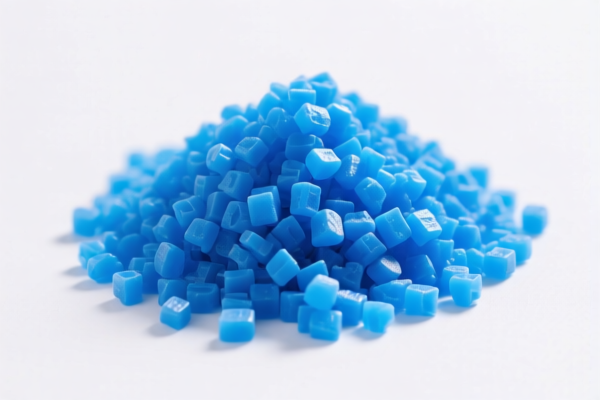
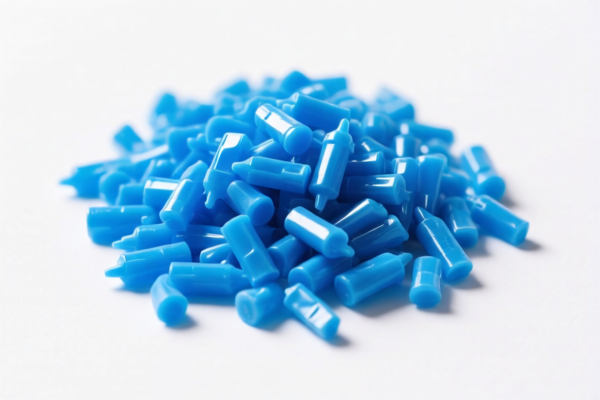
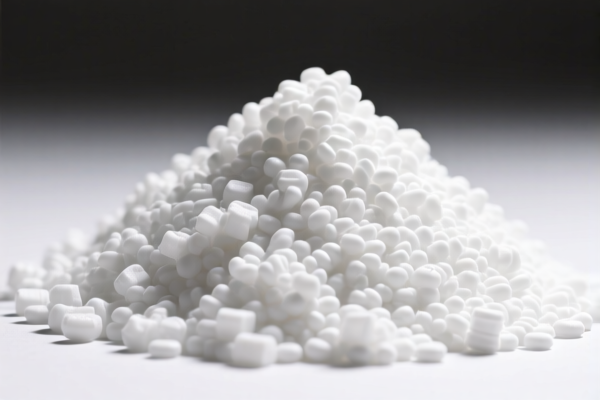
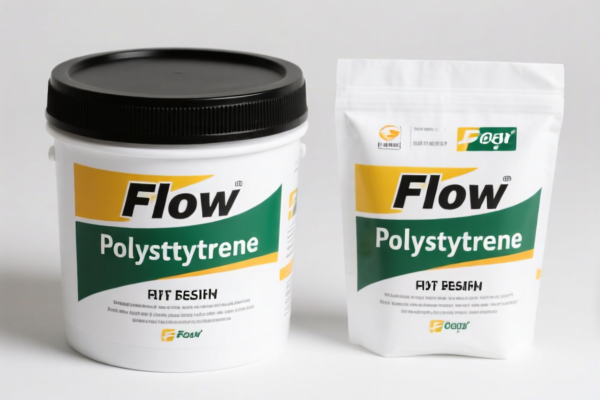
AI分析
🧪 High Flow Polystyrene Resin (HIPS & PS)
🌐 HS Code Reference & Customs Clearance Guide | 2024/2026 Tax Regime Analysis | Professional Clearance Strategy
📌 I. Product Definition & Classification: Do You Really Know "High Flow Polystyrene"?
High Flow Polystyrene Resin is a critical raw material in the plastics industry, primarily used for injection molding of consumer goods, electronics housings, and packaging. In international trade, it falls under Chapter 39: Plastics and Articles Thereof.
It is crucial to distinguish between two main types based on density and processing characteristics, as this determines the correct HS Code:
High Impact Polystyrene (HIPS) / General Purpose PS: Often referred to as "High Flow" due to its processing ease, falling under 3903.19 or 3903.90.
High Density Expandable Polystyrene (EPS): Used specifically for foam packaging, falling under 3903.11.
⚠️ Key Distinction:
- If it is General Purpose/HIPS (used for hard plastic parts, not foaming) → Check3903.19.00.00or3903.90.10.00.
- If it is Expandable (EPS) (used for foam boxes, beads) → Check3903.11.00.00.
- Note: The provided data also includes HDPE (3901.20), which is Polyethylene, NOT Polystyrene. Do not confuse them. HDPE is a different polymer entirely.
📦 II. HS Code Classification Details (Based on Provided Data)
The provided dataset contains 5 HS Codes. However, only 3 are related to Polystyrene (PS). The other 2 are for Polyethylene (HDPE). Below is the precise mapping for "High Flow Polystyrene":
| HS Code | Product Description (From Data) | Type of Polymer | Primary Application |
|---|---|---|---|
3903.19.00.00 |
High refractive index Polystyrene resin; belongs to styrene polymer primary shapes | Styrene Polymer (PS) | Optical components, high-clarity plastics, general injection molding |
3903.11.00.00 |
High refractive index Polystyrene resin OR High density expandable Polystyrene resin; belongs to polystyrene polymer primary shapes | Polystyrene (PS) | Foam packaging (EPS), high-clarity PS parts |
3903.90.10.00 |
High density expandable Polystyrene resin; belongs to styrene polymer primary shapes | Styrene Polymer (PS) | Specifically for Expandable Polystyrene (EPS) beads/granules |
📌 Important Note on HDPE in Data:
-3901.20.10.00and3901.20.50.00refer to High Density Polyethylene (HDPE).
- HDPE is NOT Polystyrene. It is a different chemical structure (Ethylene vs. Styrene).
- If your product is truly "Polystyrene," do not use these HS Codes. Using them will result in misclassification penalties.🔍 Key Reminder:
- "High Flow" usually refers to HIPS (High Impact Polystyrene) or General Purpose PS, which typically falls under3903.19.00.00or3903.90.10.00.
- If the material is specifically for foaming, it is3903.11.00.00or3903.90.10.00.
- All listed PS codes in the data carry a 41.5% total tax rate.
💰 III. 2024/2026 Latest Tariff Rate Breakdown (Including Surtaxes, Policy Add-ons)
✅ Applicable Country: United States (US)
✅ Country of Origin: China (CN)
✅ Effective Date: Rates apply to imports from China (based on provided tax details)
🎯 1. Polystyrene Resin Codes (3903.19.00.00, 3903.11.00.00, 3903.90.10.00)
All three Polystyrene HS Codes listed in the data have identical tax structures:
| Item | Content |
|---|---|
| Base Tariff | 6.5% |
| Section 301 Surtax | +25.0% |
| Section 122 Surtax | +10.0% |
| Total Effective Rate | 41.5% |
| Tax Calculation | CIF Value × 41.5% |
| De Minimis Exemption | ❌ Not Applicable (High tax rate excludes small packages from $800 exemption) |
| Legal Basis Path | HTSUS:3903.19.00.00 → USITC Footnote 9903.88.01 (Section 301) + IEEPA:9903.01.24 (Section 122) |
📌 Explanation:
- "Base Tariff 6.5%": The standard Most Favored Nation (MFN) duty for Polystyrene in primary forms.
- "Section 301 Surtax 25%": Imposed by the US Trade Representative on specific Chinese goods, including many plastics and chemical raw materials.
- "Section 122 Surtax 10%": Imposed under the International Emergency Economic Powers Act (IEEPA) for national security reasons on certain Chinese imports.
- Total 41.5%: This is a very high tariff. It significantly impacts the competitiveness of Chinese Polystyrene exports to the US.
- No Exemption: Due to the high base and surtax rates, the de minimis rule (allowing imports under $800 duty-free) does not apply. All shipments, regardless of value, must pay the full 41.5%.
🛠️ IV. Customs Clearance Practical Advice (Field Pitfall Avoidance Guide)
✅ 1. Document Checklist (All Required)
| Document | Must Provide | Description |
|---|---|---|
| ✅ Product Specification Sheet | ✔️ | Must clearly state: "Polystyrene," "Styrene Polymer," Melt Flow Index (MFI), Density, and whether it is Expandable (EPS) or Non-Expandable. |
| ✅ Chemical Composition Statement | ✔️ | Confirm it is not Polyethylene (HDPE) or Polypropylene (PP). Mismatched HS Codes cause delays. |
| ✅ Product Photos (with Label) | ✔️ | Clear label showing "HIPS," "GPPS," or "EPS." |
| ✅ Commercial Invoice | ✔️ | Must explicitly state "Polystyrene Resin, Primary Shape" or "Styrene Polymer." Avoid vague terms like "Plastic Pellets." |
| ✅ Packing List | ✔️ | Detail net/gross weight. Ensure no mixed containers with non-PS plastics unless declared separately. |
| ✅ COA (Certificate of Analysis) | ✔️ | Proves chemical composition matches HS Code description. |
✅ 2. Declaration Tips (Key Mantra)
🔥 "Precise Name, Clear Type, No Mix-Ups with HDPE!"
| Scenario | Correct Declaration | Wrong Practice |
|---|---|---|
| General HIPS / GPPS | 3903.19.00.00 |
Misdeclaring as HDPE (3901.20) → Penalty + Back Tax |
| Expandable EPS (Foam Beads) | 3903.90.10.00 |
Declaring as General PS → Risk of Rejection |
| High Refractive Index PS | 3903.11.00.00 or 3903.19.00.00 |
Vague description "Plastic Material" → Inspection Delay |
| HDPE (Polyethylene) | 3901.20.10.00 or 3901.20.50.00 |
Declaring as PS → Major Misclassification |
📌 Critical Warning:
- Do NOT mix HDPE and PS in one HS Code. They are chemically distinct.
- HDPE (3901.20) also has a 41.5% tax rate, but it is a different HS Code. Using the wrong PS code for HDPE (or vice versa) is a compliance error.
- "High Flow" is a processing property, not a chemical definition. You must declare the chemical composition (Polystyrene).
✅ 3. Special Case Handling
| Situation | Handling Advice |
|---|---|
| OEM Custom Color Masterbatch | If masterbatch contains >20% polymer, it may still be classified as PS. Provide formula sheet. |
| Recycled Polystyrene | Same HS Code applies. Ensure "Recycled" is stated on invoice to avoid contamination claims. |
| Sample Shipments (<$800) | ❌ Still Pay Tax! Section 301 and 122 surtaxes apply to all shipments from China, regardless of value. |
| Mixed Container (PS + HDPE) | Declare separately on invoice. Use 3903.xxxx for PS and 3901.20 for HDPE. Do not average the tax. |
🌍 V. Global Market Clearance Comparison (2024/2026)
| Country/Region | Recommended HS Code | Tariff Rate (China Origin) | Certification Requirements | Notes |
|---|---|---|---|---|
| 🇺🇸 USA | 3903.19.00.00 / 3903.11.00.00 / 3903.90.10.00 |
41.5% | None specific for PS, but FDA for food contact | High Tariff! Consider supply chain diversification. |
| 🇨🇳 China | 3903.19.00.00 (Import) |
6.5% (Base) | None | Import duty is just the base rate. |
| 🇪🇺 EU | 3903.19.00 (8-digit) |
6.5% | REACH Registration Required | No Section 301/122 equivalent, but REACH compliance is strict. |
| 🇦🇺 Australia | 3903.19.00 |
5% | None | Lower tariff than US. |
| 🇯🇵 Japan | 3903.19.00 |
6% | None | Stable trade relations, moderate tariff. |
📌 Conclusion:
- USA is the most expensive market for Polystyrene imports from China due to the 41.5% combined tax rate.
- EU, Japan, and Australia offer significantly lower tariff burdens (5-6.5%).
- HDPE (3901.20) also faces 41.5% in the US, so the issue is systemic for Chinese plastic resins.
📌 VI. Common Errors & Pitfall Guide (Blood & Tears Lessons)
❌ Error 1: Declaring Polystyrene as HDPE (3901.20) to avoid inspection
👉 Consequence: Chemical analysis reveals PS → Penalty + Back Tax + Possible Fraud Charge.
❌ Error 2: Ignoring the 10% Section 122 tax
👉 Consequence: Underpayment of 10% on every shipment → Audit Trigger & Liens.
❌ Error 3: Using "Plastic Pellets" as product name
👉 Consequence: Customs cannot classify → Hold for Inspection & Demurrage Charges.
❌ Error 4: Assuming samples are tax-free
👉 Consequence: $800 de minimis does not apply to goods subject to Section 301/122 surtaxes → Unexpected Bill.
✅ Correct Approach:
"High Impact Polystyrene (HIPS) Resin, Primary Shape, Melt Flow Index: 15 g/10min, White, Non-Expandable, Model: PS-HIPS-100, Origin: China"
🎯 VII. Conclusion: Professional Declaration, Cost Control, Efficiency!
🎯 Remember the Mantra:
🔹 "Polystyrene is 3903, HDPE is 3901, Don't Mix Them!"
🔹 "41.5% Tax in USA, No De Minimis Exemption, Plan Ahead!"
🔹 "Clear Chemical Name, Avoid Delays, Keep Cash Flow Healthy!"
📌 Pro Tip:
If your product is food-contact grade, ensure the supplier provides FDA 21 CFR 177.1580 compliance statement.
For high-volume imports, consider Advance Ruling (Ruling Letter) from CBP to confirm HS Code and tax rate certainty.
📣 Immediate Action:
📞 Contact a licensed customs broker + Provide COA + Request HS Code Pre-ruling
🚀 Let your Polystyrene Resin clear smoothly, minimize taxes, and boost margins!
✨ Professional Clearance Starts with Accurate Classification!
💼 Every cent of tax is worth calculating precisely!
用户评价
关于 HS 编码归类
协调制度(HS)是由世界海关组织(WCO)制定的国际贸易商品分类标准。全球 200 多个国家采用 HS 系统作为海关关税、贸易统计和进出口监管的基础。
每个 HS 编码遵循以下层级结构:
- 章(2 位)——商品大类(例如:第 84 章:机器和机械设备)
- 品目(4 位)——章内的更具体分类
- 子目(6 位)——国际通用细分,所有 WCO 成员国统一使用
- 本国细分(8-10 位)——各国自行扩展的细分编码,如美国 HTSUS 10 位编码
正确的 HS 编码归类对于顺利通关、准确缴纳关税和遵守贸易法规至关重要。错误归类可能导致海关延误、多缴关税或罚款。
从CN进口到US时,适用的关税税率可能包括:
- 最惠国(MFN)税率——适用于 WTO 成员国的标准关税税率
- 普通税率——适用于无贸易协定国家
- 贸易救济关税——附加关税,如 301 条款(反倾销)、232 条款(国家安全)或反补贴税
本页内容仅供参考。如需正式归类,请咨询当地海关或持牌报关代理。