High Flow Polystyrene Resin
CN → US| HS Code | Tariff Rate | Origin | Destination | Doc |
|---|---|---|---|---|
| 3903190000 | 41.5% | CN | US | Official Doc |
| 3903110000 | 41.5% | CN | US | Official Doc |
| 3903901000 | 41.5% | CN | US | Official Doc |
Product Images
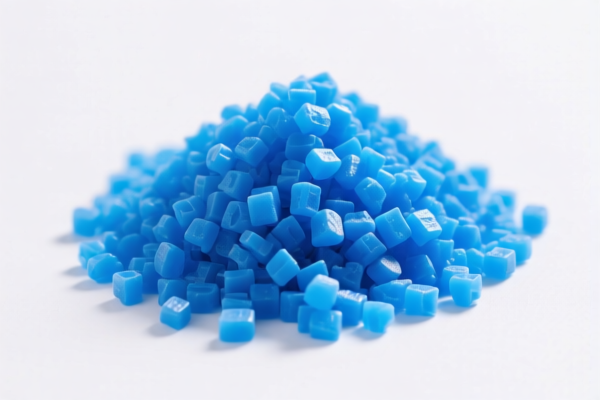

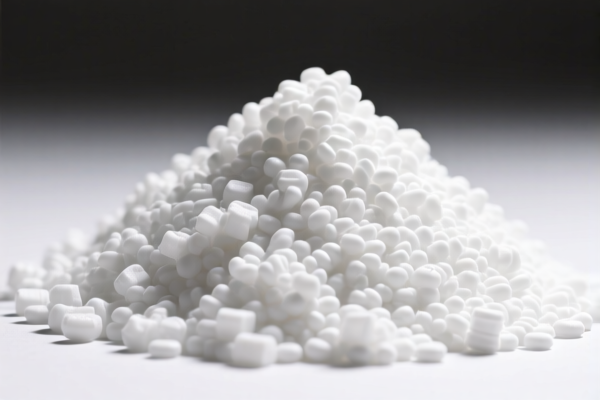
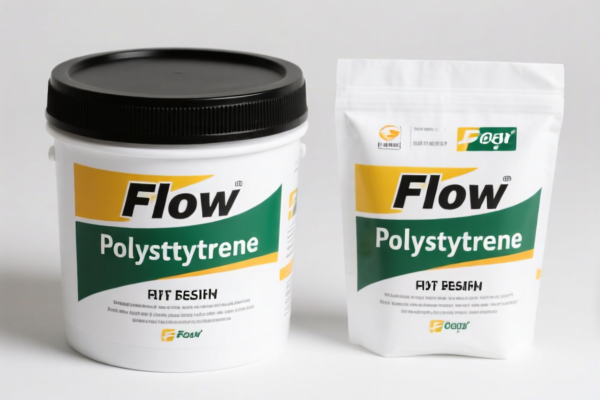
AI Analysis
🧪 High Flow Polystyrene Resin (HIPS & PS)
🌐 HS Code Reference & Customs Clearance Guide | 2024/2026 Tax Regime Analysis | Professional Clearance Strategy
📌 I. Product Definition & Classification: Do You Really Know "High Flow Polystyrene"?
High Flow Polystyrene Resin is a critical raw material in the plastics industry, primarily used for injection molding of consumer goods, electronics housings, and packaging. In international trade, it falls under Chapter 39: Plastics and Articles Thereof.
It is crucial to distinguish between two main types based on density and processing characteristics, as this determines the correct HS Code:
High Impact Polystyrene (HIPS) / General Purpose PS: Often referred to as "High Flow" due to its processing ease, falling under 3903.19 or 3903.90.
High Density Expandable Polystyrene (EPS): Used specifically for foam packaging, falling under 3903.11.
⚠️ Key Distinction:
- If it is General Purpose/HIPS (used for hard plastic parts, not foaming) → Check3903.19.00.00or3903.90.10.00.
- If it is Expandable (EPS) (used for foam boxes, beads) → Check3903.11.00.00.
- Note: The provided data also includes HDPE (3901.20), which is Polyethylene, NOT Polystyrene. Do not confuse them. HDPE is a different polymer entirely.
📦 II. HS Code Classification Details (Based on Provided Data)
The provided dataset contains 5 HS Codes. However, only 3 are related to Polystyrene (PS). The other 2 are for Polyethylene (HDPE). Below is the precise mapping for "High Flow Polystyrene":
| HS Code | Product Description (From Data) | Type of Polymer | Primary Application |
|---|---|---|---|
3903.19.00.00 |
High refractive index Polystyrene resin; belongs to styrene polymer primary shapes | Styrene Polymer (PS) | Optical components, high-clarity plastics, general injection molding |
3903.11.00.00 |
High refractive index Polystyrene resin OR High density expandable Polystyrene resin; belongs to polystyrene polymer primary shapes | Polystyrene (PS) | Foam packaging (EPS), high-clarity PS parts |
3903.90.10.00 |
High density expandable Polystyrene resin; belongs to styrene polymer primary shapes | Styrene Polymer (PS) | Specifically for Expandable Polystyrene (EPS) beads/granules |
📌 Important Note on HDPE in Data:
-3901.20.10.00and3901.20.50.00refer to High Density Polyethylene (HDPE).
- HDPE is NOT Polystyrene. It is a different chemical structure (Ethylene vs. Styrene).
- If your product is truly "Polystyrene," do not use these HS Codes. Using them will result in misclassification penalties.🔍 Key Reminder:
- "High Flow" usually refers to HIPS (High Impact Polystyrene) or General Purpose PS, which typically falls under3903.19.00.00or3903.90.10.00.
- If the material is specifically for foaming, it is3903.11.00.00or3903.90.10.00.
- All listed PS codes in the data carry a 41.5% total tax rate.
💰 III. 2024/2026 Latest Tariff Rate Breakdown (Including Surtaxes, Policy Add-ons)
✅ Applicable Country: United States (US)
✅ Country of Origin: China (CN)
✅ Effective Date: Rates apply to imports from China (based on provided tax details)
🎯 1. Polystyrene Resin Codes (3903.19.00.00, 3903.11.00.00, 3903.90.10.00)
All three Polystyrene HS Codes listed in the data have identical tax structures:
| Item | Content |
|---|---|
| Base Tariff | 6.5% |
| Section 301 Surtax | +25.0% |
| Section 122 Surtax | +10.0% |
| Total Effective Rate | 41.5% |
| Tax Calculation | CIF Value × 41.5% |
| De Minimis Exemption | ❌ Not Applicable (High tax rate excludes small packages from $800 exemption) |
| Legal Basis Path | HTSUS:3903.19.00.00 → USITC Footnote 9903.88.01 (Section 301) + IEEPA:9903.01.24 (Section 122) |
📌 Explanation:
- "Base Tariff 6.5%": The standard Most Favored Nation (MFN) duty for Polystyrene in primary forms.
- "Section 301 Surtax 25%": Imposed by the US Trade Representative on specific Chinese goods, including many plastics and chemical raw materials.
- "Section 122 Surtax 10%": Imposed under the International Emergency Economic Powers Act (IEEPA) for national security reasons on certain Chinese imports.
- Total 41.5%: This is a very high tariff. It significantly impacts the competitiveness of Chinese Polystyrene exports to the US.
- No Exemption: Due to the high base and surtax rates, the de minimis rule (allowing imports under $800 duty-free) does not apply. All shipments, regardless of value, must pay the full 41.5%.
🛠️ IV. Customs Clearance Practical Advice (Field Pitfall Avoidance Guide)
✅ 1. Document Checklist (All Required)
| Document | Must Provide | Description |
|---|---|---|
| ✅ Product Specification Sheet | ✔️ | Must clearly state: "Polystyrene," "Styrene Polymer," Melt Flow Index (MFI), Density, and whether it is Expandable (EPS) or Non-Expandable. |
| ✅ Chemical Composition Statement | ✔️ | Confirm it is not Polyethylene (HDPE) or Polypropylene (PP). Mismatched HS Codes cause delays. |
| ✅ Product Photos (with Label) | ✔️ | Clear label showing "HIPS," "GPPS," or "EPS." |
| ✅ Commercial Invoice | ✔️ | Must explicitly state "Polystyrene Resin, Primary Shape" or "Styrene Polymer." Avoid vague terms like "Plastic Pellets." |
| ✅ Packing List | ✔️ | Detail net/gross weight. Ensure no mixed containers with non-PS plastics unless declared separately. |
| ✅ COA (Certificate of Analysis) | ✔️ | Proves chemical composition matches HS Code description. |
✅ 2. Declaration Tips (Key Mantra)
🔥 "Precise Name, Clear Type, No Mix-Ups with HDPE!"
| Scenario | Correct Declaration | Wrong Practice |
|---|---|---|
| General HIPS / GPPS | 3903.19.00.00 |
Misdeclaring as HDPE (3901.20) → Penalty + Back Tax |
| Expandable EPS (Foam Beads) | 3903.90.10.00 |
Declaring as General PS → Risk of Rejection |
| High Refractive Index PS | 3903.11.00.00 or 3903.19.00.00 |
Vague description "Plastic Material" → Inspection Delay |
| HDPE (Polyethylene) | 3901.20.10.00 or 3901.20.50.00 |
Declaring as PS → Major Misclassification |
📌 Critical Warning:
- Do NOT mix HDPE and PS in one HS Code. They are chemically distinct.
- HDPE (3901.20) also has a 41.5% tax rate, but it is a different HS Code. Using the wrong PS code for HDPE (or vice versa) is a compliance error.
- "High Flow" is a processing property, not a chemical definition. You must declare the chemical composition (Polystyrene).
✅ 3. Special Case Handling
| Situation | Handling Advice |
|---|---|
| OEM Custom Color Masterbatch | If masterbatch contains >20% polymer, it may still be classified as PS. Provide formula sheet. |
| Recycled Polystyrene | Same HS Code applies. Ensure "Recycled" is stated on invoice to avoid contamination claims. |
| Sample Shipments (<$800) | ❌ Still Pay Tax! Section 301 and 122 surtaxes apply to all shipments from China, regardless of value. |
| Mixed Container (PS + HDPE) | Declare separately on invoice. Use 3903.xxxx for PS and 3901.20 for HDPE. Do not average the tax. |
🌍 V. Global Market Clearance Comparison (2024/2026)
| Country/Region | Recommended HS Code | Tariff Rate (China Origin) | Certification Requirements | Notes |
|---|---|---|---|---|
| 🇺🇸 USA | 3903.19.00.00 / 3903.11.00.00 / 3903.90.10.00 |
41.5% | None specific for PS, but FDA for food contact | High Tariff! Consider supply chain diversification. |
| 🇨🇳 China | 3903.19.00.00 (Import) |
6.5% (Base) | None | Import duty is just the base rate. |
| 🇪🇺 EU | 3903.19.00 (8-digit) |
6.5% | REACH Registration Required | No Section 301/122 equivalent, but REACH compliance is strict. |
| 🇦🇺 Australia | 3903.19.00 |
5% | None | Lower tariff than US. |
| 🇯🇵 Japan | 3903.19.00 |
6% | None | Stable trade relations, moderate tariff. |
📌 Conclusion:
- USA is the most expensive market for Polystyrene imports from China due to the 41.5% combined tax rate.
- EU, Japan, and Australia offer significantly lower tariff burdens (5-6.5%).
- HDPE (3901.20) also faces 41.5% in the US, so the issue is systemic for Chinese plastic resins.
📌 VI. Common Errors & Pitfall Guide (Blood & Tears Lessons)
❌ Error 1: Declaring Polystyrene as HDPE (3901.20) to avoid inspection
👉 Consequence: Chemical analysis reveals PS → Penalty + Back Tax + Possible Fraud Charge.
❌ Error 2: Ignoring the 10% Section 122 tax
👉 Consequence: Underpayment of 10% on every shipment → Audit Trigger & Liens.
❌ Error 3: Using "Plastic Pellets" as product name
👉 Consequence: Customs cannot classify → Hold for Inspection & Demurrage Charges.
❌ Error 4: Assuming samples are tax-free
👉 Consequence: $800 de minimis does not apply to goods subject to Section 301/122 surtaxes → Unexpected Bill.
✅ Correct Approach:
"High Impact Polystyrene (HIPS) Resin, Primary Shape, Melt Flow Index: 15 g/10min, White, Non-Expandable, Model: PS-HIPS-100, Origin: China"
🎯 VII. Conclusion: Professional Declaration, Cost Control, Efficiency!
🎯 Remember the Mantra:
🔹 "Polystyrene is 3903, HDPE is 3901, Don't Mix Them!"
🔹 "41.5% Tax in USA, No De Minimis Exemption, Plan Ahead!"
🔹 "Clear Chemical Name, Avoid Delays, Keep Cash Flow Healthy!"
📌 Pro Tip:
If your product is food-contact grade, ensure the supplier provides FDA 21 CFR 177.1580 compliance statement.
For high-volume imports, consider Advance Ruling (Ruling Letter) from CBP to confirm HS Code and tax rate certainty.
📣 Immediate Action:
📞 Contact a licensed customs broker + Provide COA + Request HS Code Pre-ruling
🚀 Let your Polystyrene Resin clear smoothly, minimize taxes, and boost margins!
✨ Professional Clearance Starts with Accurate Classification!
💼 Every cent of tax is worth calculating precisely!
Customer Reviews
About HS Code Classification
The Harmonized System (HS) is an internationally standardized nomenclature developed by the World Customs Organization (WCO) to classify traded products. Over 200 countries use the HS system as the basis for customs tariffs, trade statistics, and import/export regulations.
Each HS code follows a hierarchical structure:
- Chapter (2 digits) — Broad category of goods (e.g., Chapter 84: Machinery and Mechanical Appliances)
- Heading (4 digits) — More specific grouping within the chapter
- Subheading (6 digits) — Internationally standardized breakdown, used by all WCO member countries
- National subdivisions (8-10 digits) — Country-specific extensions for further classification, such as US HTSUS 10-digit codes
Correct HS code classification is essential for smooth customs clearance, accurate duty payment, and compliance with trade regulations. Misclassification can lead to customs delays, overpayment of duties, or penalties.
When importing from CN to US, the applicable tariff rates may include:
- Most-Favored-Nation (MFN) rate — The standard duty rate applied to WTO members
- General rate — Applied to countries without trade agreements
- Trade remedy duties — Additional tariffs such as Section 301 (anti-dumping), Section 232 (national security), or countervailing duties
The information provided on this page is for reference purposes only. For official classification, please consult with your local customs authority or a licensed customs broker.