High Impact Polystyrene (HIPS)
CN → US商品图片

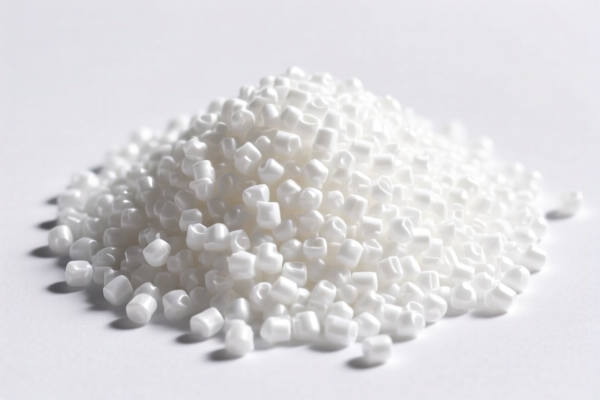
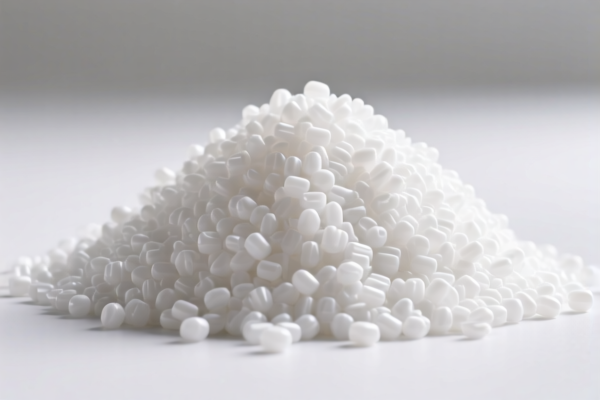
AI分析
🏗️ High Impact Polystyrene (HIPS) – The Versatile Engineering Plastic
🌐 HS Code Reference & Customs Clearance Guide | 2026 Latest Tariff Analysis | Professional Clearance Strategy
📌 I. Product Definition & Classification: What Exactly is HIPS?
High Impact Polystyrene (HIPS) is a modified type of polystyrene that incorporates polybutadiene rubber to enhance its toughness and impact resistance compared to general-purpose polystyrene (GPPS). It is a widely used thermoplastic known for its rigidity, ease of processing, and excellent printability.
In international trade, HIPS is primarily classified under Chapter 39 (Plastics and Articles Thereof), specifically as primary forms (such as granules, pellets, or powders) or semi-manufactured shapes (such as sheets, rods, or profiles).
⚠️ Key Distinction Point:
- Raw Material Form (Pellets/Granules): Falls under 3903.30 (if in primary forms).
- Finished Goods (e.g., Packaging Boxes, Toys, Appliance Housings): May fall under Chapter 39 (other plastic articles) or other chapters depending on the end-use (e.g., Chapter 95 for toys, Chapter 85 for appliance parts).
- Recycled HIPS: Must be declared separately and may face different duties depending on destination country regulations.
📦 II. HS Code Classification Details (2026 Latest Tariff Authority对照)
| HS Code | Product Description | Application Scenarios | Form |
|---|---|---|---|
3903.30.00.00 |
Polystyrene, not mixed with other substances (including HIPS in primary forms) | Plastic manufacturing raw material, injection molding, extrusion | ✅ Granules/Pellets |
3903.90.00.00 |
Polystyrene in other forms (e.g., sheets, rods, powder) | Construction materials, specialty films, non-standard shapes | ✅ Semi-manufactured |
3926.90.97.00 |
Other articles of plastics (finished goods made from HIPS) | Packaging boxes, toy parts, appliance casings, furniture components | ✅ Finished Goods |
3915.90.90.00 |
Waste, scrap, and offal of plastics (recycled HIPS) | Recycling industry, reprocessing facilities | ✅ Recycled |
🔍 Critical Reminder:
- Primary Forms (Granules/Pellets) are classified under 3903.30.00.00. This is the most common HS code for imported HIPS raw materials.
- Finished Products (e.g., a HIPS-made toy or box) are not classified under 3903 but under 3926 or specific end-use chapters. Misclassification here can lead to significant duty differences.
- Recycled HIPS must be clearly declared. Some countries impose higher duties or restrictions on recycled plastics due to environmental concerns.
💰 III. 2026 Latest Tariff Rate Breakdown (Including Additional Taxes & Policy Surcharges)
✅ Applicable Country: United States (US)
✅ Country of Origin: China (CN)
✅ Effective Date: November 10, 2025 onwards (including subsequent imports)
🎯 1. 3903.30.00.00 —— Polystyrene (Including HIPS) in Primary Forms
| Item | Details |
|---|---|
| Base Tariff Rate | 0% (ad valorem) |
| USITC Surcharge | +25% (Under USITC Footnote 9903.30.00) |
| IEEPA Surcharge | +10% (Targeting Chinese/Hong Kong products, effective Nov 10, 2025) |
| Total Tariff Rate | 35% |
| Tax Calculation | CIF Value × 35% |
| De Minimis Eligibility | ❌ Not Eligible (deny_de_minimis) |
| Legal Basis Path | IEEPA:9903.01.25 → IEEPA:9903.01.24 → USITC:3903.30.00.00 → FOOTNOTE:9903.30.00 |
📌 Explanation:
- The "25% USITC Surcharge" stems from Section 301 of the U.S. Trade Act, targeting specific Chinese plastic products.
- The "10% IEEPA Surcharge" is an additional tariff under the International Emergency Economic Powers Act targeting Chinese imports.
- Total 35% is considered a high tariff burden. Pre-arrival cost assessment is essential.
🎯 2. 3903.90.00.00 —— Polystyrene in Other Forms
| Item | Details |
|---|---|
| Base Tariff Rate | 0% |
| USITC Surcharge | +25% |
| IEEPA Surcharge | +10% |
| Total Tariff Rate | 35% |
| Tax Calculation | CIF × 35% |
| De Minimis Eligibility | ❌ Not Eligible |
| Legal Basis Path | IEEPA:9901.25 → IEEPA:9903.01.24 → USITC:3903.90.00.00 → FOOTNOTE:9903.30.00 |
📌 Note:
- Same tariff structure as primary forms. Applies to HIPS sheets, rods, or powders imported from China.
🎯 3. 3926.90.97.00 —— Other Plastic Articles (Finished HIPS Goods)
| Item | Details |
|---|---|
| Base Tariff Rate | 5.3% (standard) |
| USITC Surcharge | Varies (Check Section 301 List) |
| IEEPA Surcharge | +10% (if applicable to specific HTS subheading) |
| Total Tariff Rate | Variable (Often 15%-35%) |
| De Minimis Eligibility | ❌ Not Eligible for Section 301 items |
| Legal Basis Path | Depends on specific HTS subheading and Section 301 exclusion list |
📌 Caution:
- Finished HIPS products (e.g., toys, packaging) may have different tariff treatments. Some may be exempt from Section 301 surcharges if listed in exclusion lists. Always verify the specific HTS code for finished goods.
🛠️ IV. Customs Clearance Practical Advice (Battle-Tested Pitfall Avoidance Guide)
✅ 1. Required Documentation Checklist (None Can Be Missing)
| Document | Mandatory | Notes |
|---|---|---|
| ✅ Product Specification Sheet | ✔️ | Must specify HIPS vs. GPPS, rubber content, impact strength, melt flow index |
| ✅ Chemical Composition Report | ✔️ | Proves it is HIPS (polystyrene + polybutadiene), not mixed with other polymers |
| ✅ Product Photos (Including Labels) | ✔️ | Show granule shape, packaging, and any certifications |
| ✅ Third-Party Test Report | ✔️ | FDA (if food contact), REACH, RoHS, Prop 65 (if applicable) |
| ✅ Commercial Invoice | ✔️ | Clearly state "High Impact Polystyrene (HIPS) – Polystyrene with rubber modifier" |
| ✅ Certificate of Origin (CO) | ✔️ | Critical for verifying Chinese origin; if from Vietnam/Malaysia, may reduce tariffs |
| ✅ Packing List | ✔️ | Detail net/gross weight, number of bags/pallets |
✅ 2. Declaration Tips (Key Mnemonic)
🔥 "Granules under 3903, finished under 3926, origin is key, surcharges are real!"
| Scenario | Correct Declaration | Wrong Practice |
|---|---|---|
| HIPS Granules/Pellets | 3903.30.00.00 |
Misdeclare as "Plastic Waste" → Higher duties |
| HIPS Sheets/Rods | 3903.90.00.00 |
Misdeclare as finished goods → Lower duty but audit risk |
| HIPS Toys/Appliance Parts | 3926.90.97.00 (or end-use chapter) |
Misdeclare as raw material → Underpayment of duties |
| Recycled HIPS | 3915.90.90.00 |
Declare as virgin HIPS → Fraud penalty & seizure |
✅ 3. Special Cases Handling
| Case | Handling Advice |
|---|---|
| OEM Custom HIPS Colorants | Provide MSDS and colorant composition. Do not declare as "mixed polymer" if base is still PS. |
| Food-Contact HIPS | Must declare FDA compliance. Provide FDA certificate. Non-compliance leads to rejection. |
| HIPS with Flame Retardants | If modified with brominated flame retardants, may trigger additional environmental declarations (e.g., EU REACH). |
| Shipped from Third-Country (e.g., Vietnam) | If substantial transformation occurred, apply for non-preferential origin. May avoid 35% China surcharge. |
🌍 V. Global Major Markets Customs Comparison (2026 Latest)
| Country/Region | Recommended HS Code | Tariff (China Origin) | Certification Requirements | Notes |
|---|---|---|---|---|
| 🇺🇸 United States | 3903.30.00.00 |
35% (Section 301 + IEEPA) | FDA, Prop 65 (if applicable) | High tariff burden; consider third-country origin |
| 🇨🇳 China | 3903.30.00.00 |
0-6% | CCC (if electrical parts) | Low tariff for domestic market |
| 🇪🇺 European Union | 3903.30 |
0% (Most Favored Nation) | REACH, RoHS, REACH SVHC | No Section 301 equivalent; focus on environmental compliance |
| 🇦🇺 Australia | 3903.30 |
5% | AICA (Australian Industrial Chemicals Introduction Scheme) | Low tariff; strict chemical registration |
| 🇯🇵 Japan | 3903.30 |
0-3.5% | JIS, RoHS Japan | Low tariff; focus on quality standards |
📌 Conclusion:
- USA is the only major market with punitive surcharges on Chinese HIPS raw materials.
- EU, Japan, and Australia offer favorable tariff rates. Compliance focuses on environmental and safety standards (REACH, RoHS, JIS).
- For US imports, consider supply chain diversification (e.g., sourcing from Vietnam, Malaysia, or Korea) to mitigate 35% tariff impact.
📌 VI. Common Errors & Pitfall Guide (Lessons from Blood & Tears)
❌ Error 1: Declaring HIPS Granules as "Plastic Recycling Waste" (3915)
👉 Consequence: Even if duty is lower, improper declaration can lead to fraud charges and seizure if not truly waste.
❌ Error 2: Declaring Finished HIPS Toys as Raw Material (3903)
👉 Consequence: Underpayment of duties → Back taxes + penalties + potential blacklist.
❌ Error 3: Ignoring "Mixed with Other Substances" Clause
👉 Consequence: If HIPS is blended with >5% other polymers (e.g., ABS, PVC), it may not qualify for 3903.30. Misclassification → Audit risk.
❌ Error 4: Not Providing MSDS for Flame-Retardant HIPS
👉 Consequence: Customs may hold shipment for chemical safety review → Delays of weeks.
✅ Correct Practice:
"High Impact Polystyrene (HIPS), Virgin Granules, Rubber-modified Polystyrene, Melting Point 200°C, Impact Strength >20 kJ/m², Not Mixed with Other Polymers, Model XYZ, FDA Compliant for Food Contact"
🎯 VII. Conclusion: Precise Classification Saves Money and Time!
🎯 Remember the Mnemonic:
🔹 "Granules under 3903, finished under 3926, China origin means 35%, origin shift saves big!"
🔹 "HS Code determines cost, 35% is painful, proper declaration is key!"
📌 Pro Tip:
If your HIPS is sourced from Vietnam, Malaysia, South Korea, or Germany, you can avoid the 25% USITC surcharge and reduce total tariff to 0%–5%.
Consider pre-ruling applications with US Customs and Border Protection (CBP) for complex blends or multi-origin supply chains.
📣 Act Now:
📞 Contact a professional customs broker + Provide material specs + Apply for HS Code Advance Ruling
🚀 Ensure your HIPS shipment clears smoothly, minimizes costs, and maximizes profit!
✨ Professional Customs Clearance Starts with Accurate Classification!
💼 Every dollar saved is a dollar earned!
用户评价
关于 HS 编码归类
协调制度(HS)是由世界海关组织(WCO)制定的国际贸易商品分类标准。全球 200 多个国家采用 HS 系统作为海关关税、贸易统计和进出口监管的基础。
每个 HS 编码遵循以下层级结构:
- 章(2 位)——商品大类(例如:第 84 章:机器和机械设备)
- 品目(4 位)——章内的更具体分类
- 子目(6 位)——国际通用细分,所有 WCO 成员国统一使用
- 本国细分(8-10 位)——各国自行扩展的细分编码,如美国 HTSUS 10 位编码
正确的 HS 编码归类对于顺利通关、准确缴纳关税和遵守贸易法规至关重要。错误归类可能导致海关延误、多缴关税或罚款。
从CN进口到US时,适用的关税税率可能包括:
- 最惠国(MFN)税率——适用于 WTO 成员国的标准关税税率
- 普通税率——适用于无贸易协定国家
- 贸易救济关税——附加关税,如 301 条款(反倾销)、232 条款(国家安全)或反补贴税
本页内容仅供参考。如需正式归类,请咨询当地海关或持牌报关代理。