High Precision Punch Cards
CN → US商品图片
AI分析
🖥️ High Precision Punch Cards (Punched Cards for Data Processing)
🌐 HS Code Reference & Customs Clearance Guide | 2026 Latest Tariff Analysis | Professional-Level Clearance Strategy
📌 I. Product Definition & Classification: Do You Really Understand "Punch Cards"?
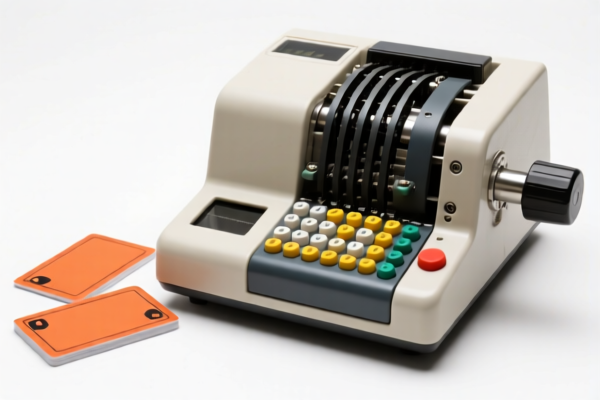
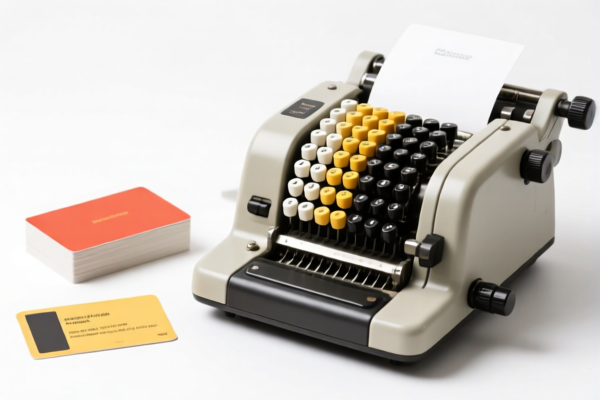
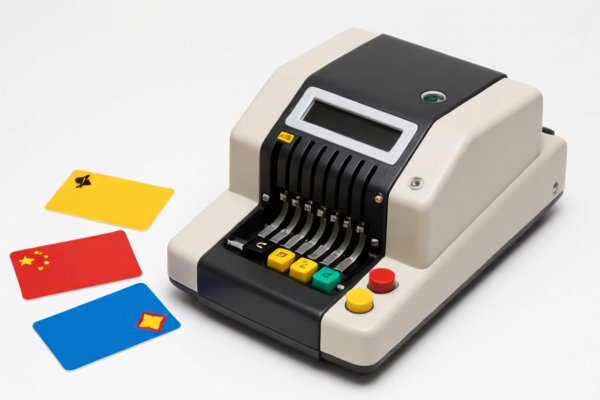
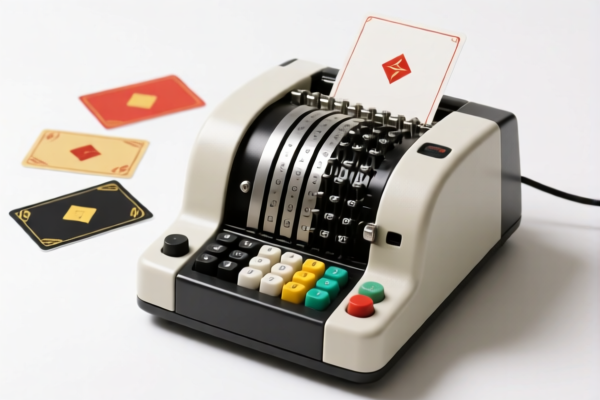
High Precision Punch Cards, also known as punched cards, are rectangular pieces of stiff paper, originally used as a primitive form of data storage and input for early computers and data processing machines. They are characterized by holes punched in specific patterns to represent binary data (on/off, 0/1).
In international trade, they are strictly classified based on their functional purpose and physical state:
- Punched Cards (Ready for Use): Cards with pre-punched holes designed for reading by data processing machines (computers, calculators).
- Blank Punched Cards: Raw materials or semi-finished products intended for subsequent punching or use in specific mechanical devices.
- Specialized Precision Cards: Cards with higher tolerance levels used in industrial control systems, banking, or legacy mainframe systems.
⚠️ Key Distinction Point:
- If the card is functional (pre-punched with data patterns) and used for data input into a computer → It is classified as a part/accessory or a specific storage medium for data processing machines.
- If the card is blank and intended solely for punching → It may be classified differently depending on the material (paper vs. plastic) and final use.
- Note: Modern electronic media (USB, SSDs) are NOT punch cards. This category is largely legacy or specialized industrial use.
📦 II. HS Code Classification Details (2026 Latest Tariff Authority Comparison)
| HS Code | Product Description | Application Scenario | Data Storage Capability |
|---|---|---|---|
4820.10.20.00 |
Punched cards, with or without adhesive strips | Legacy data input, banking, industrial logging | ✅ Yes (Pre-punched) |
4820.10.00.00 |
Punched cards, blank or pre-punched, of paper or paperboard | General use, educational, basic industrial control | ✅/❌ (Depends on punch status) |
8471.99.00.00 |
Other parts and accessories of automatic data processing machines | If the punch card is considered a "storage device" part for legacy systems | ✅ (As a storage medium) |
3926.90.97.00 |
Other articles of plastics (if plastic punch cards) | Industrial control panels, durable reuse cards | ❌ (Not standard data storage) |
🔍 Critical Reminder:
- Most standard paper punch cards (80-column, 48-column, etc.) fall under Chapter 48 (Paper Products) if they are considered "printed articles" or "stationery-like" items, specifically heading 4820.
- However, if they are specialized plastic cards or considered parts of the machine, they might fall under Chapter 39 or Chapter 84.
- Most Common: For standard high-precision paper punch cards used in data processing,4820.10.20.00(Punched cards, with adhesive strips) or4820.10.00.00(Other punched cards) is the primary classification.
- Avoid: Do not classify as9603(Brooms/Brushes) or4816(Carbon paper). This is a specific data storage medium.
💰 III. 2026 Latest Tariff Rate Details (Including Surtaxes, Policy Add-ons)
✅ Applicable Country: United States (US)
✅ Country of Origin: China (CN)
✅ Effective Date: November 10, 2025 onwards (for subsequent imports)
🎯 1. 4820.10.20.00 —— Punched Cards, with Adhesive Strips (High Precision/Standard)
| Item | Content |
|---|---|
| Base Tariff Rate | 0% (ad valorem) |
| USITC Surtax | +25% (Under USITC Footnote 9903.88.01 for certain paper products from China) |
| IEEPA Surtax | +10% (China-specific surcharge under International Emergency Economic Powers Act) |
| Total Tariff Rate | 45% |
| Tax Calculation | CIF Value × 45% |
| De Minimis Exemption Eligible? | ❌ No (deny_de_minimis) |
| Legal Basis Path | IEEPA:9903.01.25 → IEEPA:9903.01.24 → USITC:4820.10.20.00 → FOOTNOTE:9903.88.01 |
📌 Explanation:
- The 25% USITC surtax applies to specific paper and paperboard articles under Section 301 tariffs.
- The 10% IEEPA surtax is a blanket additional duty on Chinese-origin goods.
- Total 45% is a high tariff burden, despite the base rate being 0%.
- De Minimis (Section 321) does not apply to these goods from China.
🎯 2. 4820.10.00.00 —— Other Punched Cards (Blank or Pre-Punched)
| Item | Content |
|---|---|
| Base Tariff Rate | 0% |
| USITC Surtax | +25% |
| IEEPA Surtax | +10% |
| Total Tariff Rate | 45% |
| Tax Calculation | CIF Value × 45% |
| De Minimis Exemption Eligible? | ❌ No |
| Legal Basis Path | IEEPA:9901.25 → IEEPA:9903.01.24 → USITC:4820.10.00.00 → FOOTNOTE:9903.88.01 |
📌 Note:
- Same tariff structure as above.
- Even blank punch cards are subject to these surtaxes if they are ultimately intended for use in data processing systems from China.
🛠️ IV. Customs Clearance Practical Advice (Combat Pitfalls Guide)
✅ 1. Required Documentation Checklist (Missing Any = Delay)
| Document | Must Provide | Description |
|---|---|---|
| ✅ Product Specification Sheet | ✔️ | Dimensions (e.g., 8.375" x 3.25"), thickness, material (paper/plastic), hole pattern (80/48 col) |
| ✅ Function Description | ✔️ | Explicitly state "Used for data input in legacy computing systems" or "Industrial control logging" |
| ✅ Product Photos | ✔️ | Clear images of front/back, showing punch holes and any adhesive strips |
| ✅ Commercial Invoice | ✔️ | Must clearly state "Punched Cards" and HS Code 4820.10.xx.xx |
| ✅ Packing List | ✔️ | Detail quantity (e.g., 10,000 cards per box) and net/gross weight |
| ✅ Certificate of Origin (CO) | ✔️ | To prove Chinese origin (triggering surtaxes) or other origin (for exemption) |
✅ 2. Declaration Tips (Key Mantra)
🔥 "Specify Material, Specify Use, Avoid 'Computer Part' Ambiguity!"
| Scenario | Correct Declaration | Incorrect Practice |
|---|---|---|
| Standard Paper Punch Cards | 4820.10.20.00 – "Punched Cards, Paper, 80-Column" |
Misdeclaring as "Paper" (Chapter 48, different heading) → 0% but risky if audited |
| Plastic Punch Cards | 3926.90.97.00 – "Plastic Articles" |
Misdeclaring as 4820 → Wrong Chapter, penalties |
| Blank vs. Pre-Punched | Clearly state "Pre-Punched" or "Blank" | Vague description "Cards for machines" → Classification uncertainty |
| With Adhesive Strips | Mention "With Adhesive Strips" | Omitting this detail → Wrong subheading (4820.10.00 vs 4820.10.20) |
✅ 3. Special Circumstances Handling
| Situation | Handling Advice |
|---|---|
| Legacy System Support | Provide proof of use in legacy manufacturing/banking systems to justify classification under 4820 |
| Plastic vs. Paper | If plastic, declare under Chapter 39. If paper, Chapter 48. Do not mix |
| Small Quantities (De Minimis) | NOT ELIGIBLE for $800 de minimis exemption if from China due to surtaxes |
| High Precision Industrial Cards | If used in non-computer industrial automation, provide technical specs to argue against "Data Processing" classification if possible (though still likely 4820) |
🌍 V. Global Major Market Comparison (2026 Latest)
| Country/Region | Recommended HS Code | Tariff Rate | Certification Requirements | Notes |
|---|---|---|---|---|
| 🇺🇸 United States | 4820.10.20.00 |
45% (CN origin) | None specific | High surtaxes apply |
| 🇨🇳 China | 4820.10.00.00 |
0% | N/A | Low import duty |
| 🇪🇺 European Union | 4820.10.00.00 |
0% | REACH (if plastic) | Generally free trade |
| 🇬🇧 United Kingdom | 4820.10.00.00 |
0% | UKCA (if applicable) | Post-Brexit rules apply |
| 🇦🇺 Australia | 4820.10.00.00 |
5% | N/A | Standard MFN rate |
| 🇯🇵 Japan | 4820.10.00.00 |
0% | PSE (if plastic/electronic) | Low duty |
📌 Conclusion:
- The US is the most expensive market for importing punch cards from China due to 45% combined tariffs.
- Other markets generally have 0–5% tariffs.
- Consider sourcing from Vietnam or Mexico if US-bound, as IEEPA exemptions may apply (0–5% total duty).
📌 VI. Common Errors & Pitfall Avoidance (Lessons Learned)
❌ Error 1: Declaring punch cards as "Paper" (HS 4801–4811)
👉 Consequence: Incorrect classification → HS Code mismatch → Seizure or Penalty
❌ Error 2: Ignoring "With Adhesive Strips" distinction
👉 Consequence: Wrong subheading → Incorrect duty calculation → Back Taxes
❌ Error 3: Assuming De Minimis applies to small batches from China
👉 Consequence: 45% tariff still applies → Unexpected costs for buyers
❌ Error 4: Mixing Paper and Plastic cards in one shipment
👉 Consequence: Multiple HS Codes required → Complex declaration → Clearance Delay
✅ Correct Approach:
"High Precision Punched Cards, Paper, 80-Column, Pre-Punched, With Adhesive Strips, Model PC-80-AP, for Legacy Data Processing Systems"
🎯 VII. Conclusion: Professional Declaration Saves Money!
🎯 Remember the Mantra:
🔹 "Paper Punch Cards: HS 4820, 45% US Tax from China"
🔹 "Plastic Cards: HS 3926, Check Specifics"
🔹 "Adhesive Strips? Declare It!"
📌 Pro Tip:
If your punch cards are high-precision and critical for legacy manufacturing, consider Advance Ruling (Pre-Ruling) from CBP to confirm classification.
For US-bound goods, explore alternative origins (Vietnam, Thailand, Malaysia) to avoid the 45% surtax.
📣 Immediate Action:
📞 Contact a customs broker + Provide product specs + Verify HS Code pre-shipment
🚀 Ensure your legacy systems stay powered with clearance-smart supply chain strategies!
✨ Professional Customs Clearance Starts with Accurate Classification!
💼 Every percentage point of duty matters!
用户评价
关于 HS 编码归类
协调制度(HS)是由世界海关组织(WCO)制定的国际贸易商品分类标准。全球 200 多个国家采用 HS 系统作为海关关税、贸易统计和进出口监管的基础。
每个 HS 编码遵循以下层级结构:
- 章(2 位)——商品大类(例如:第 84 章:机器和机械设备)
- 品目(4 位)——章内的更具体分类
- 子目(6 位)——国际通用细分,所有 WCO 成员国统一使用
- 本国细分(8-10 位)——各国自行扩展的细分编码,如美国 HTSUS 10 位编码
正确的 HS 编码归类对于顺利通关、准确缴纳关税和遵守贸易法规至关重要。错误归类可能导致海关延误、多缴关税或罚款。
从CN进口到US时,适用的关税税率可能包括:
- 最惠国(MFN)税率——适用于 WTO 成员国的标准关税税率
- 普通税率——适用于无贸易协定国家
- 贸易救济关税——附加关税,如 301 条款(反倾销)、232 条款(国家安全)或反补贴税
本页内容仅供参考。如需正式归类,请咨询当地海关或持牌报关代理。