High Precision Punch Cards
CN → USProduct Images
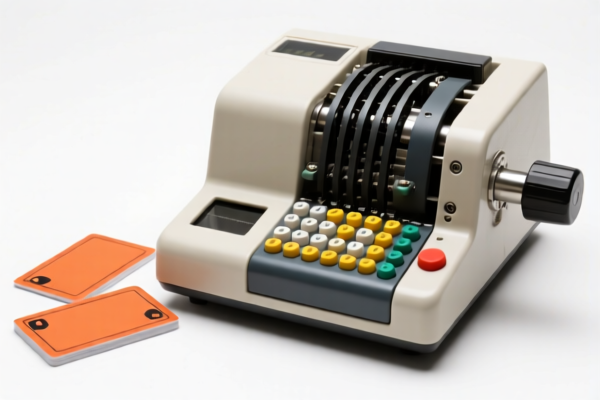
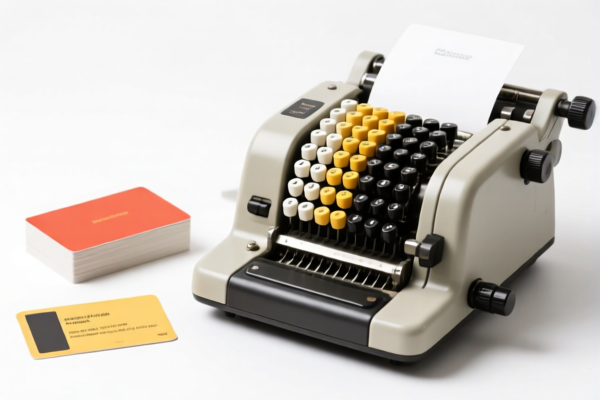
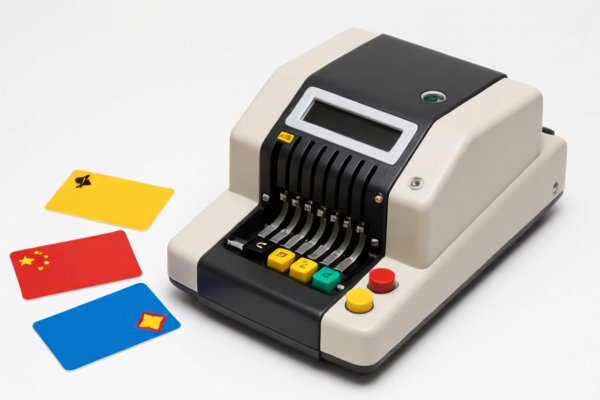
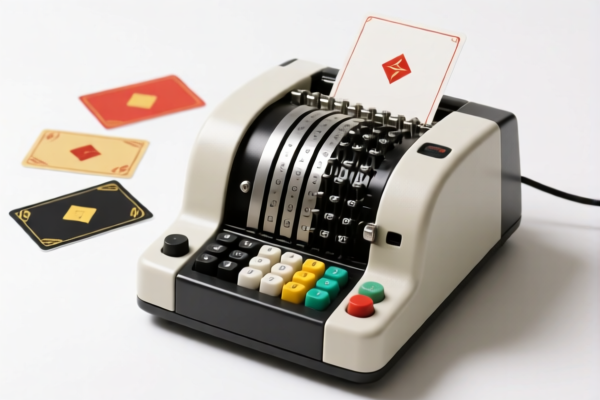
AI Analysis
🖥️ High Precision Punch Cards (Punched Cards for Data Processing)
🌐 HS Code Reference & Customs Clearance Guide | 2026 Latest Tariff Analysis | Professional-Level Clearance Strategy
📌 I. Product Definition & Classification: Do You Really Understand "Punch Cards"?
High Precision Punch Cards, also known as punched cards, are rectangular pieces of stiff paper, originally used as a primitive form of data storage and input for early computers and data processing machines. They are characterized by holes punched in specific patterns to represent binary data (on/off, 0/1).
In international trade, they are strictly classified based on their functional purpose and physical state:
- Punched Cards (Ready for Use): Cards with pre-punched holes designed for reading by data processing machines (computers, calculators).
- Blank Punched Cards: Raw materials or semi-finished products intended for subsequent punching or use in specific mechanical devices.
- Specialized Precision Cards: Cards with higher tolerance levels used in industrial control systems, banking, or legacy mainframe systems.
⚠️ Key Distinction Point:
- If the card is functional (pre-punched with data patterns) and used for data input into a computer → It is classified as a part/accessory or a specific storage medium for data processing machines.
- If the card is blank and intended solely for punching → It may be classified differently depending on the material (paper vs. plastic) and final use.
- Note: Modern electronic media (USB, SSDs) are NOT punch cards. This category is largely legacy or specialized industrial use.
📦 II. HS Code Classification Details (2026 Latest Tariff Authority Comparison)
| HS Code | Product Description | Application Scenario | Data Storage Capability |
|---|---|---|---|
4820.10.20.00 |
Punched cards, with or without adhesive strips | Legacy data input, banking, industrial logging | ✅ Yes (Pre-punched) |
4820.10.00.00 |
Punched cards, blank or pre-punched, of paper or paperboard | General use, educational, basic industrial control | ✅/❌ (Depends on punch status) |
8471.99.00.00 |
Other parts and accessories of automatic data processing machines | If the punch card is considered a "storage device" part for legacy systems | ✅ (As a storage medium) |
3926.90.97.00 |
Other articles of plastics (if plastic punch cards) | Industrial control panels, durable reuse cards | ❌ (Not standard data storage) |
🔍 Critical Reminder:
- Most standard paper punch cards (80-column, 48-column, etc.) fall under Chapter 48 (Paper Products) if they are considered "printed articles" or "stationery-like" items, specifically heading 4820.
- However, if they are specialized plastic cards or considered parts of the machine, they might fall under Chapter 39 or Chapter 84.
- Most Common: For standard high-precision paper punch cards used in data processing,4820.10.20.00(Punched cards, with adhesive strips) or4820.10.00.00(Other punched cards) is the primary classification.
- Avoid: Do not classify as9603(Brooms/Brushes) or4816(Carbon paper). This is a specific data storage medium.
💰 III. 2026 Latest Tariff Rate Details (Including Surtaxes, Policy Add-ons)
✅ Applicable Country: United States (US)
✅ Country of Origin: China (CN)
✅ Effective Date: November 10, 2025 onwards (for subsequent imports)
🎯 1. 4820.10.20.00 —— Punched Cards, with Adhesive Strips (High Precision/Standard)
| Item | Content |
|---|---|
| Base Tariff Rate | 0% (ad valorem) |
| USITC Surtax | +25% (Under USITC Footnote 9903.88.01 for certain paper products from China) |
| IEEPA Surtax | +10% (China-specific surcharge under International Emergency Economic Powers Act) |
| Total Tariff Rate | 45% |
| Tax Calculation | CIF Value × 45% |
| De Minimis Exemption Eligible? | ❌ No (deny_de_minimis) |
| Legal Basis Path | IEEPA:9903.01.25 → IEEPA:9903.01.24 → USITC:4820.10.20.00 → FOOTNOTE:9903.88.01 |
📌 Explanation:
- The 25% USITC surtax applies to specific paper and paperboard articles under Section 301 tariffs.
- The 10% IEEPA surtax is a blanket additional duty on Chinese-origin goods.
- Total 45% is a high tariff burden, despite the base rate being 0%.
- De Minimis (Section 321) does not apply to these goods from China.
🎯 2. 4820.10.00.00 —— Other Punched Cards (Blank or Pre-Punched)
| Item | Content |
|---|---|
| Base Tariff Rate | 0% |
| USITC Surtax | +25% |
| IEEPA Surtax | +10% |
| Total Tariff Rate | 45% |
| Tax Calculation | CIF Value × 45% |
| De Minimis Exemption Eligible? | ❌ No |
| Legal Basis Path | IEEPA:9901.25 → IEEPA:9903.01.24 → USITC:4820.10.00.00 → FOOTNOTE:9903.88.01 |
📌 Note:
- Same tariff structure as above.
- Even blank punch cards are subject to these surtaxes if they are ultimately intended for use in data processing systems from China.
🛠️ IV. Customs Clearance Practical Advice (Combat Pitfalls Guide)
✅ 1. Required Documentation Checklist (Missing Any = Delay)
| Document | Must Provide | Description |
|---|---|---|
| ✅ Product Specification Sheet | ✔️ | Dimensions (e.g., 8.375" x 3.25"), thickness, material (paper/plastic), hole pattern (80/48 col) |
| ✅ Function Description | ✔️ | Explicitly state "Used for data input in legacy computing systems" or "Industrial control logging" |
| ✅ Product Photos | ✔️ | Clear images of front/back, showing punch holes and any adhesive strips |
| ✅ Commercial Invoice | ✔️ | Must clearly state "Punched Cards" and HS Code 4820.10.xx.xx |
| ✅ Packing List | ✔️ | Detail quantity (e.g., 10,000 cards per box) and net/gross weight |
| ✅ Certificate of Origin (CO) | ✔️ | To prove Chinese origin (triggering surtaxes) or other origin (for exemption) |
✅ 2. Declaration Tips (Key Mantra)
🔥 "Specify Material, Specify Use, Avoid 'Computer Part' Ambiguity!"
| Scenario | Correct Declaration | Incorrect Practice |
|---|---|---|
| Standard Paper Punch Cards | 4820.10.20.00 – "Punched Cards, Paper, 80-Column" |
Misdeclaring as "Paper" (Chapter 48, different heading) → 0% but risky if audited |
| Plastic Punch Cards | 3926.90.97.00 – "Plastic Articles" |
Misdeclaring as 4820 → Wrong Chapter, penalties |
| Blank vs. Pre-Punched | Clearly state "Pre-Punched" or "Blank" | Vague description "Cards for machines" → Classification uncertainty |
| With Adhesive Strips | Mention "With Adhesive Strips" | Omitting this detail → Wrong subheading (4820.10.00 vs 4820.10.20) |
✅ 3. Special Circumstances Handling
| Situation | Handling Advice |
|---|---|
| Legacy System Support | Provide proof of use in legacy manufacturing/banking systems to justify classification under 4820 |
| Plastic vs. Paper | If plastic, declare under Chapter 39. If paper, Chapter 48. Do not mix |
| Small Quantities (De Minimis) | NOT ELIGIBLE for $800 de minimis exemption if from China due to surtaxes |
| High Precision Industrial Cards | If used in non-computer industrial automation, provide technical specs to argue against "Data Processing" classification if possible (though still likely 4820) |
🌍 V. Global Major Market Comparison (2026 Latest)
| Country/Region | Recommended HS Code | Tariff Rate | Certification Requirements | Notes |
|---|---|---|---|---|
| 🇺🇸 United States | 4820.10.20.00 |
45% (CN origin) | None specific | High surtaxes apply |
| 🇨🇳 China | 4820.10.00.00 |
0% | N/A | Low import duty |
| 🇪🇺 European Union | 4820.10.00.00 |
0% | REACH (if plastic) | Generally free trade |
| 🇬🇧 United Kingdom | 4820.10.00.00 |
0% | UKCA (if applicable) | Post-Brexit rules apply |
| 🇦🇺 Australia | 4820.10.00.00 |
5% | N/A | Standard MFN rate |
| 🇯🇵 Japan | 4820.10.00.00 |
0% | PSE (if plastic/electronic) | Low duty |
📌 Conclusion:
- The US is the most expensive market for importing punch cards from China due to 45% combined tariffs.
- Other markets generally have 0–5% tariffs.
- Consider sourcing from Vietnam or Mexico if US-bound, as IEEPA exemptions may apply (0–5% total duty).
📌 VI. Common Errors & Pitfall Avoidance (Lessons Learned)
❌ Error 1: Declaring punch cards as "Paper" (HS 4801–4811)
👉 Consequence: Incorrect classification → HS Code mismatch → Seizure or Penalty
❌ Error 2: Ignoring "With Adhesive Strips" distinction
👉 Consequence: Wrong subheading → Incorrect duty calculation → Back Taxes
❌ Error 3: Assuming De Minimis applies to small batches from China
👉 Consequence: 45% tariff still applies → Unexpected costs for buyers
❌ Error 4: Mixing Paper and Plastic cards in one shipment
👉 Consequence: Multiple HS Codes required → Complex declaration → Clearance Delay
✅ Correct Approach:
"High Precision Punched Cards, Paper, 80-Column, Pre-Punched, With Adhesive Strips, Model PC-80-AP, for Legacy Data Processing Systems"
🎯 VII. Conclusion: Professional Declaration Saves Money!
🎯 Remember the Mantra:
🔹 "Paper Punch Cards: HS 4820, 45% US Tax from China"
🔹 "Plastic Cards: HS 3926, Check Specifics"
🔹 "Adhesive Strips? Declare It!"
📌 Pro Tip:
If your punch cards are high-precision and critical for legacy manufacturing, consider Advance Ruling (Pre-Ruling) from CBP to confirm classification.
For US-bound goods, explore alternative origins (Vietnam, Thailand, Malaysia) to avoid the 45% surtax.
📣 Immediate Action:
📞 Contact a customs broker + Provide product specs + Verify HS Code pre-shipment
🚀 Ensure your legacy systems stay powered with clearance-smart supply chain strategies!
✨ Professional Customs Clearance Starts with Accurate Classification!
💼 Every percentage point of duty matters!
Customer Reviews
About HS Code Classification
The Harmonized System (HS) is an internationally standardized nomenclature developed by the World Customs Organization (WCO) to classify traded products. Over 200 countries use the HS system as the basis for customs tariffs, trade statistics, and import/export regulations.
Each HS code follows a hierarchical structure:
- Chapter (2 digits) — Broad category of goods (e.g., Chapter 84: Machinery and Mechanical Appliances)
- Heading (4 digits) — More specific grouping within the chapter
- Subheading (6 digits) — Internationally standardized breakdown, used by all WCO member countries
- National subdivisions (8-10 digits) — Country-specific extensions for further classification, such as US HTSUS 10-digit codes
Correct HS code classification is essential for smooth customs clearance, accurate duty payment, and compliance with trade regulations. Misclassification can lead to customs delays, overpayment of duties, or penalties.
When importing from CN to US, the applicable tariff rates may include:
- Most-Favored-Nation (MFN) rate — The standard duty rate applied to WTO members
- General rate — Applied to countries without trade agreements
- Trade remedy duties — Additional tariffs such as Section 301 (anti-dumping), Section 232 (national security), or countervailing duties
The information provided on this page is for reference purposes only. For official classification, please consult with your local customs authority or a licensed customs broker.