High Strength Polyester Multi Filament Yarn
CN → US| HS编码 | 关税税率 | 原产国 | 目的国 | 文档 |
|---|---|---|---|---|
| 5407532020 | 47.0% | CN | US | 官方文档 |
| 5407619945 | 49.9% | CN | US | 官方文档 |
| 5408232930 | 47.0% | CN | US | 官方文档 |
| 5408232960 | 47.0% | CN | US | 官方文档 |
商品图片
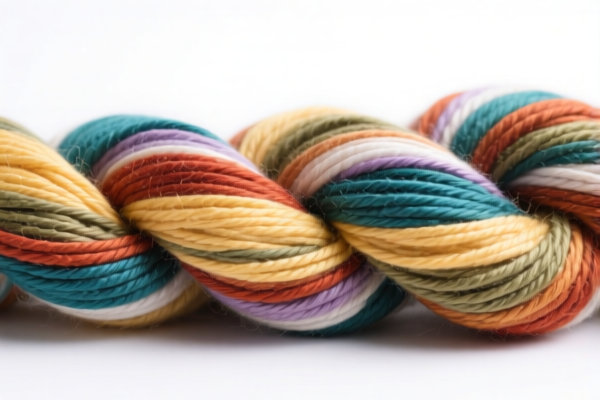
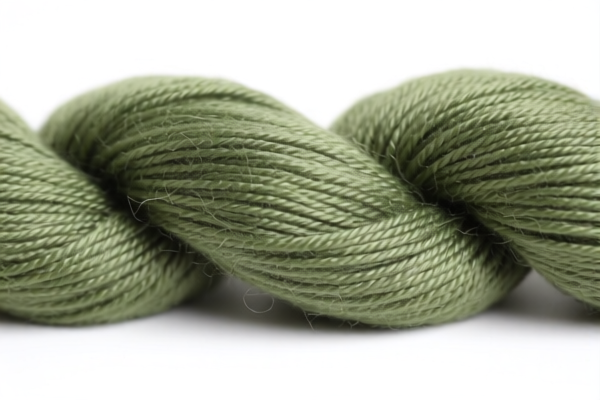
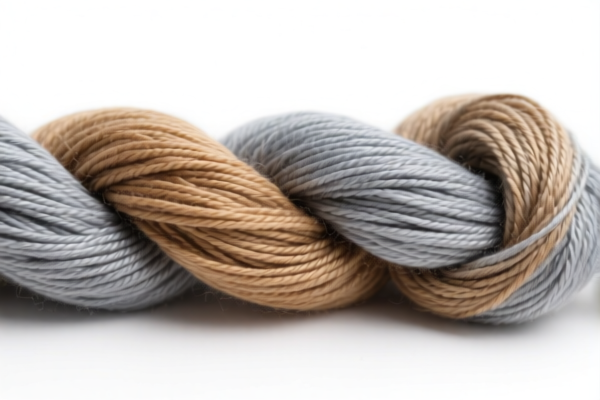
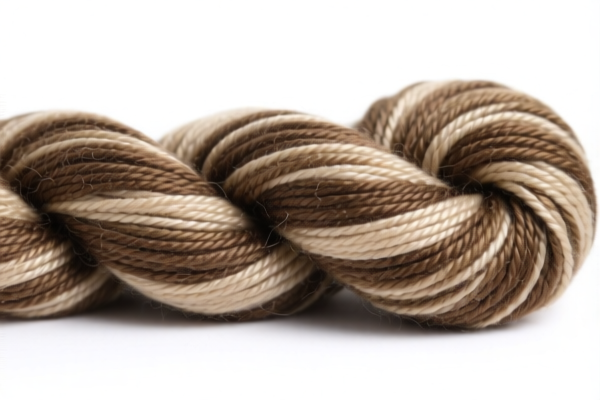
AI分析
🧵 High Strength Polyester Multi-Filament Yarn (Industrial/Technical Textiles)
🌐 HS Code Reference & Customs Clearance Guide | 2026 Latest Tariff Analysis | Professional Level Entry Strategy
📌 I. Product Definition & Classification: What Exactly is "High Strength Polyester Yarn"?
High-strength polyester multi-filament yarn is a critical industrial material, widely used in geotextiles, conveyor belts, tire cords, ropes, and heavy-duty fabrics. Unlike standard decorative yarns, these are engineered for tensile strength and durability.
In international trade, the classification hinges on two key factors: 1. Material Composition: Is it 100% Polyester (Synthetic) or a blend with other man-made fibers? 2. Coloration Process: Is it dyed in the mass (colored before spinning), woven from colored yarns, or finished after weaving?
⚠️ Key Distinction:
- If the fabric is made from 100% Polyester with multi-color characteristics (e.g., variegated or multi-colored appearance), it typically falls under 5407.53.
- If the fabric is made from Polyester but uses different colored yarns woven together, it may fall under 5407.61.
- If the fabric contains non-polyester man-made filaments (blends) and shows multi-color features, it falls under 5408.23.
📦 II. HS Code Classification Details (Based on Provided Data)
| HS Code | Product Description | Key Features | Applicability |
|---|---|---|---|
5407.53.20.20 |
Polyester Long-Filament Fabric, Multi-Color Characteristic | 100% Polyester; Dyed/Variegated | High-strength fabrics with inherent multi-color texture |
5407.61.99.45 |
Polyester Long-Filament Fabric, Different Colored Yarns | 100% Polyester; Woven with multiple yarn colors | Fabrics constructed from distinctly colored threads |
5408.23.29.30 |
Man-Made Filament Fabric, Multi-Color Characteristic | Blend (Non-100% Polyester); Multi-color | Blends with other synthetic fibers, multi-colored |
5408.23.29.60 |
Man-Made Filament Fabric, Different Colored Silk/Filaments | Blend; Woven with different colored filaments | Blends with distinct colored filaments |
🔍 Critical Reminder:
- 5407 codes are for 100% Polyester.
- 5408 codes are for Other Man-Made Filaments (blends or non-polyester synthetics).
- Ensure the product description matches the exact coloring method (mass-dyed vs. woven colored yarns) to avoid misclassification.
💰 III. 2026 Latest Tariff Rate Breakdown (Including Additional Duties & Policy Surcharges)
✅ Applicable Country: United States (US)
✅ Origin: China (CN)
✅ Effective Date: From 2025/2026 (Current Trade Policy)
🎯 1. 5407.53.20.20 & 5408.23.29.30 & 5408.23.29.60
(Note: 5408.23.29.30 and 5408.23.29.60 share the same total tax rate in the data provided)
| Item | Content |
|---|---|
| Base Duty Rate | 12.0% (Ad Valorem) |
| Section 301 Surcharge | +25.0% (USITC Footnote for China) |
| Section 122 Clause Surcharge | +10.0% (Specific trade remedy/additional duty) |
| Total Tax Rate | 47.0% |
| Tax Calculation | CIF Value × 47.0% |
| De Minimis Exemption | ❌ Not Applicable (High tariff goods usually excluded) |
| Legal Basis Path | Base Tariff → Section 301 (30%+ list) → Section 122 (10%) |
📌 Explanation:
- Base 12%: Standard Most Favored Nation (MFN) rate for these textile categories.
- Section 301 (25%): Additional duty on Chinese goods under Trade Act Section 301.
- Section 122 (10%): Specific additional tariff clause applicable to these fabric types.
- Total 47%: This is a high-cost entry point. Profit margin calculations must account for this significant duty burden.
🎯 2. 5407.61.99.45
(Polyester Fabric, Different Colored Yarns)
| Item | Content |
|---|---|
| Base Duty Rate | 14.9% (Ad Valorem) |
| Section 301 Surcharge | +25.0% (USITC Footnote for China) |
| Section 122 Clause Surcharge | +10.0% |
| Total Tax Rate | 49.9% |
| Tax Calculation | CIF Value × 49.9% |
| De Minimis Exemption | ❌ Not Applicable |
| Legal Basis Path | Base Tariff → Section 301 → Section 122 |
📌 Explanation:
- Base 14.9%: Slightly higher base rate for fabrics made from different colored yarns compared to multi-color character fabrics.
- Total 49.9%: The highest duty rate in this dataset. Importers must exercise extreme caution with cost estimation.
🛠️ IV. Customs Clearance Practical Advice (Avoiding Pitfalls)
✅ 1. Preparation Checklist (Mandatory)
| Document | Required | Notes |
|---|---|---|
| ✅ Product Specification Sheet | ✔️ | Must specify: Fiber content (%), Yarn count, Fabric weight, Width, Coloring Method |
| ✅ Composition Certificate | ✔️ | Confirm if 100% Polyester or Blend (Critical for 5407 vs. 5408) |
| ✅ Photos of Fabric | ✔️ | Show weave structure and color distribution (mass-dyed vs. woven colors) |
| ✅ Commercial Invoice | ✔️ | Clearly state "High Strength Polyester Multi-Filament Yarn Fabric" |
| ✅ Packing List | ✔️ | Weight and dimensions must match invoice |
| ✅ Certificate of Origin (CO) | ✔️ | Essential for proving Chinese origin (triggers tariffs) |
✅ 2. Declaration Tips (Key Mnemonic)
🔥 "Polyester 5407, Blend 5408, Color Method Matters, Tariff Varies!"
| Scenario | Correct HS Code | Wrong Practice | Consequence |
|---|---|---|---|
| 100% Polyester, Multi-color effect | 5407.53.20.20 |
Misclassify as Blend | May lead to audit or under/overpayment |
| 100% Polyester, Woven colored yarns | 5407.61.99.45 |
Misclassify as Multi-color effect | 49.9% vs 47.0% → Higher cost! |
| Blend, Multi-color effect | 5408.23.29.30 |
Misclassify as 100% Polyester | Classification error → Penalties |
| Blend, Woven colored filaments | 5408.23.29.60 |
Misclassify as 100% Polyester | Classification error → Penalties |
✅ 3. Special Cases
| Situation | Handling Advice |
|---|---|
| OEM/Contract Manufacturing | Provide end-user contract and design specs to prove origin and composition |
| Sample vs. Bulk | Samples may have different tax treatment if declared correctly, but bulk shipments are subject to full duty |
| Re-export/Transshipment | If goods pass through third countries, ensure no substantial transformation occurs to avoid "China origin" tagging |
| Value Declaration | Ensure CIF value includes all costs (shipping, insurance, freight) to avoid undervaluation penalties |
🌍 V. Global Market Comparison (2026)
| Country/Region | Recommended HS Code | Approx. Duty (China Origin) | Certification Req. | Notes |
|---|---|---|---|---|
| 🇺🇸 USA | 5407.53.20.20 / 5407.61.99.45 |
47.0% - 49.9% | None specific for fabric | Highest duty due to Section 301 + 122 |
| 🇨🇳 China | 5407.53.20.20 |
~5-10% | CE/RoHS (if exported back) | Low duty for domestic use |
| 🇪🇺 EU | 5407.53.20.20 |
~12-15% | REACH | No Section 301 equivalent |
| 🇬🇧 UK | 5407.53.20.20 |
~12-15% | UKCA | Post-Brexit rules apply |
| 🇦🇺 Australia | 5407.53.20.20 |
~5% | RCM | Free Trade Agreement benefits may apply |
📌 Conclusion:
- The US market is exceptionally costly for Chinese-origin polyester fabrics due to the cumulative effect of Base Tariff + Section 301 + Section 122.
- Duty Savings Opportunity: If possible, source from countries with Free Trade Agreements (FTAs) with the US (e.g., Vietnam, Mexico) to reduce or eliminate Section 301 duties.
📌 VI. Common Errors & Pitfalls (Lessons Learned)
❌ Error 1: Confusing "Multi-color Character" with "Different Colored Yarns"
👉 Consequence: Using 5407.61.99.45 (49.9%) instead of 5407.53.20.20 (47.0%) → Unnecessary 2.9% extra tax.
👉 Fix: Clearly define the manufacturing process in documentation.
❌ Error 2: Misclassifying Polyester as "Cotton" or "Natural Fiber"
👉 Consequence: Wrong HS Code, potential fraud allegations, severe penalties.
👉 Fix: Provide lab test reports for fiber composition.
❌ Error 3: Ignoring Section 122 Duties
👉 Consequence: Under-declaring total duty liability → Audit flags and back taxes.
👉 Fix: Include all applicable surcharges in landed cost calculations.
❌ Error 4: Incomplete Product Description
👉 Consequence: Customs requests for additional information → Delays, demurrage fees.
👉 Fix: Use precise descriptions: "High Strength, 100% Polyester, Multi-Filament, Woven Fabric, Dyed, Width 150cm".
✅ Correct Approach:
"Polyester Long-Filament Fabric, 100%, Multi-Color Character, High Strength, For Industrial Use"
🎯 VII. Conclusion: Professional Classification, Cost Efficiency!
🎯 Remember the Mantra:
🔹 "100% Polyester = 5407, Blend = 5408"
🔹 "Multi-Color Character = 47%, Different Colored Yarns = 49.9%"
🔹 "Section 301 + 122 = ~35% Additional Burden on Top of Base Rate"
📌 Pro Tip:
If your high-strength polyester yarns are destined for the US market, consider:
1. Pre-Arrangement with Customs Broker: Get a binding ruling if possible.
2. Supply Chain Diversification: Explore production in Vietnam or Indonesia to mitigate Section 301 risks.
3. Accurate Documentation: Ensure "Coloring Method" is explicitly stated to choose the lower-tariff code (5407.53vs5407.61).
📣 Immediate Action:
📞 Consult a licensed customs broker with textile expertise.
📄 Prepare composition certificates and color method declarations.
💡 Optimize your HS Code selection to save up to 3% on duties.
✨ Precision in Classification Saves You Thousands!
💼 Every percentage point of duty reduction is pure profit.
用户评价
关于 HS 编码归类
协调制度(HS)是由世界海关组织(WCO)制定的国际贸易商品分类标准。全球 200 多个国家采用 HS 系统作为海关关税、贸易统计和进出口监管的基础。
每个 HS 编码遵循以下层级结构:
- 章(2 位)——商品大类(例如:第 84 章:机器和机械设备)
- 品目(4 位)——章内的更具体分类
- 子目(6 位)——国际通用细分,所有 WCO 成员国统一使用
- 本国细分(8-10 位)——各国自行扩展的细分编码,如美国 HTSUS 10 位编码
正确的 HS 编码归类对于顺利通关、准确缴纳关税和遵守贸易法规至关重要。错误归类可能导致海关延误、多缴关税或罚款。
从CN进口到US时,适用的关税税率可能包括:
- 最惠国(MFN)税率——适用于 WTO 成员国的标准关税税率
- 普通税率——适用于无贸易协定国家
- 贸易救济关税——附加关税,如 301 条款(反倾销)、232 条款(国家安全)或反补贴税
本页内容仅供参考。如需正式归类,请咨询当地海关或持牌报关代理。