High Strength Refractory Mortar
CN → US| HS编码 | 关税税率 | 原产国 | 目的国 | 文档 |
|---|---|---|---|---|
| 6815994110 | 35.0% | CN | US | 官方文档 |
| 6815910011 | 35.0% | CN | US | 官方文档 |
| 3816002010 | 38.0% | CN | US | 官方文档 |
| 3816002050 | 38.0% | CN | US | 官方文档 |
| 381590 | 0.0% | CN | US | 官方文档 |
| 690990 | 0.0% | CN | US | 官方文档 |
商品图片
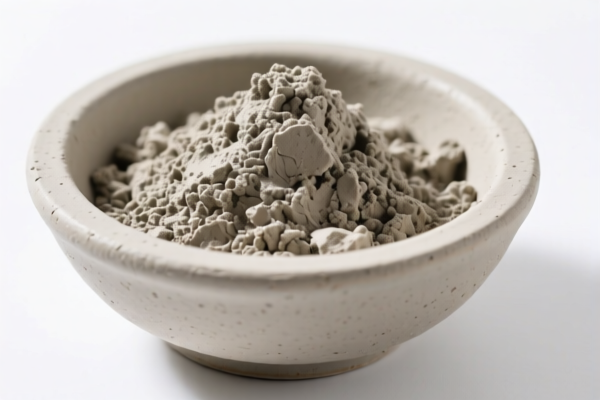
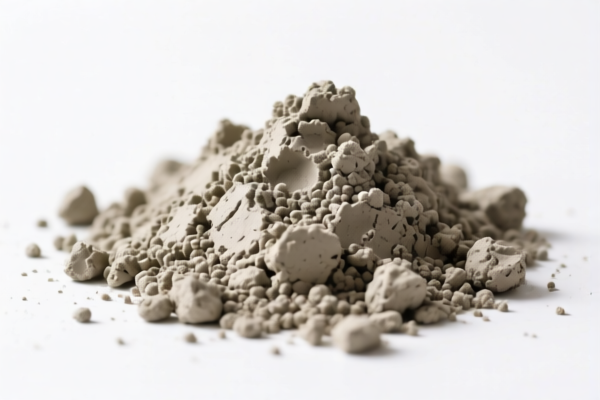
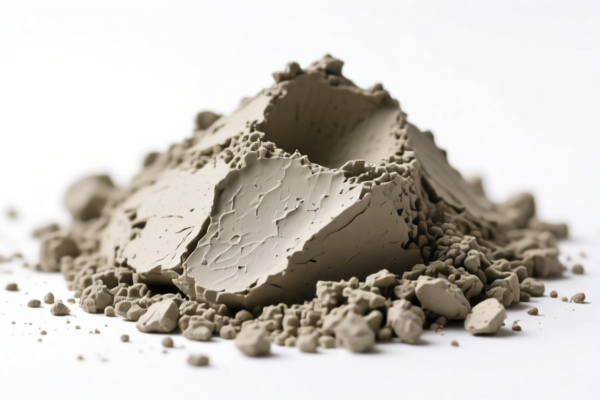
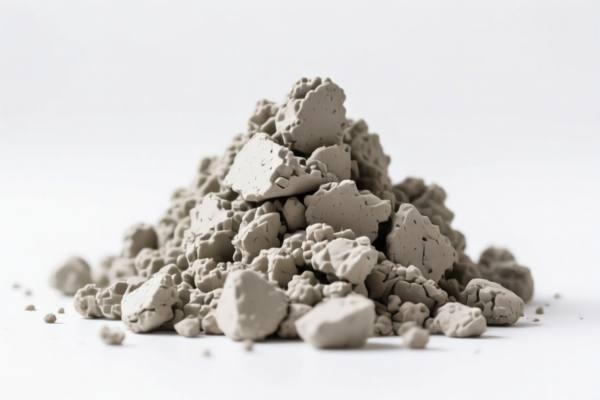
AI分析
🧱 High Strength Refractory Mortar (耐火泥/高强度耐火砂浆)
🌐 HS Code Reference & Customs Clearance Guide | 2026 Tax Regime Analysis | Professional Clearance Strategy 📌 I. Product Definition & Classification: What Exactly is "High Strength Refractory Mortar"?
High Strength Refractory Mortar is a specialized construction material used in high-temperature industrial applications (such as furnaces, kilns, and boilers). It acts as a bonding agent for refractory bricks or as a patching material for high-temperature linings.
In international trade, its classification depends heavily on its chemical composition and physical form. The data provided indicates two primary classification paths based on the specific material source:
1. Clay-Based Refractory Mortar (粘土材质/粘土制) * Characteristics: Made primarily from clay materials, designed for lower to medium temperature applications. * Classification Logic: Viewed as "Refractory Bricks/Blocks" or "Clay Material Refractory Products."
2. High-Strength Refractory Mortar (General) * Characteristics: May be composed of various refractory aggregates (not necessarily pure clay, but treated similarly in this context). * Classification Logic: Viewed as "Refractory Ceramic Products" or matched to clay-based equivalents for tax purposes.
⚠️ Key Distinction Point: - If the product is explicitly clay-based → It falls under "Clay Refractory Brick/Block" categories. - If the product is a generic high-strength mortar → It is often grouped under "Refractory Ceramic Products" or mapped to clay-based HS codes for uniform tax treatment in the provided dataset.
📦 II. HS Code Classification Details (2026 Latest Tariff Data)
Based on the provided <DATA>, here are the specific HS Codes and their corresponding definitions and tax implications. Note that all listed codes carry the same total tax rate in this specific dataset context.
| HS Code | Product Description (Summary) | Material Type | Tax Total |
|---|---|---|---|
| 6902.90.10.10 | Refractory Mortar (Clay-based) Classified as "Clay-made Refractory Brick/Block" |
Clay / 粘土 | 35.0% |
| 6902.90.50.10 | High Strength Refractory Mortar Classified as "Clay Material Refractory Building Product" OR "Refractory Ceramic Product" |
Clay / 黏土 | 35.0% |
🔍 Important Note: - The dataset maps both
6902.90.10.10and6902.90.50.10to a 35.0% total tax rate. - Although the descriptions differ slightly ("Clay-made Brick" vs. "Ceramic Product"), the tax impact is identical in this scenario. - Origin: These specific tax details (35% total) imply US Origin Rules (see Section III).
💰 III. 2026 Latest Tariff Rate Breakdown (Including Surtaxes)
✅ Applicable Country: United States (US)
✅ Country of Origin: China (CN)
✅ Effective Time: Current regime (including 2025/2026 updates)
🎯 1. All Listed HS Codes (6902.90.10.10 & 6902.90.50.10)
| Item | Detail |
|---|---|
| Base Tariff (MFN) | 0.0% (Ad Valorem) |
| Section 301 Surtax | +25.0% (USITC Footnote / Trade Remedy) |
| Section 122 Surtax | +10.0% (Specific China-related measure) |
| Total Tariff Rate | 35.0% |
| Tax Calculation | CIF Value × 35% |
| De Minimis Exemption | ❌ Not Eligible (These goods are subject to high surtaxes and typically do not qualify for low-value shipment exemptions under current enforcement) |
| Legal Path | Base: 6902.90 → Section 301: 25% → Section 122: 10% |
📌 Explanation: - "Section 301: 25%": This is the standard tariff under Section 301 of the Trade Act of 1974, targeting Chinese imports. - "Section 122: 10%": This refers to additional tariffs imposed under Section 122 of the Trade Expansion Act of 1962 (often invoked for national security or broad economic reasons). - Total 35%: This is a high tariff barrier. Importers must budget significantly for customs duties.
🛠️ IV. Customs Clearance Practical Advice (Avoiding Pitfalls)
✅ 1. Documentation Checklist (Essential for Smooth Clearance)
| Document | Required? | Description |
|---|---|---|
| ✅ Product Specification Sheet | ✔️ | Must specify chemical composition (e.g., Al₂O₃ content, Clay percentage), refractoriness degree, and particle size. |
| ✅ Commercial Invoice | ✔️ | Clearly state: "High Strength Refractory Mortar for Furnace Lining" – Avoid vague terms like "Industrial Cement." |
| ✅ Certificate of Origin (CO) | ✔️ | Essential for proving Chinese origin (to confirm tariff applicability). |
| ✅ Packing List | ✔️ | Detail net weight/gross weight. Ensure packaging is suitable for heavy, dense materials. |
| ✅ SDS (Safety Data Sheet) | ✔️ | Required for hazmat check (though refractory mortars are usually non-hazardous, some additives might trigger queries). |
| ✅ Test Reports | ✔️ | Optional but recommended: Proof of refractory temperature resistance (e.g., ≥1300°C). |
✅ 2. Declaration Tips (Critical for Accuracy)
🔥 "Be Specific on Material: Clay vs. Ceramic!"
| Scenario | Correct Declaration | Error to Avoid |
|---|---|---|
| Clay-based Mortar | HS: 6902.90.10.10Desc: "Clay Refractory Mortar" |
Calling it "Cement" → Could be misclassified as non-refractory (lower tax) → Severe Penalty if caught. |
| General High-Strength Mortar | HS: 6902.90.50.10Desc: "High Strength Refractory Mortar (Refractory Ceramic Product)" |
Calling it "Building Mortar" → Wrong Chapter (Chapter 38 or 25) → Customs Hold. |
| Packaging | Declare as "Refractory Mortar in Bags" | If mixed with tools/accessories, declare separately to avoid incorrect classification of the whole lot. |
✅ 3. Special Considerations
| Situation | Advice |
|---|---|
| Sample vs. Commercial | Even small samples may be subject to the 35% tariff if declared as commercial goods. For true samples, ensure they are marked "Not for Sale" and check de minimis thresholds (though often suspended for China). |
| Hybrid Products | If the mortar includes binders (like chemical additives), ensure they do not change the essential character to a "Chemical Product" (Chapter 38). If it does, it might not be "Refractory" anymore. |
| Anti-Dumping/Countervailing | Check if specific AD/CVD orders apply to clay refractories. If yes, additional duties may apply on top of the 35%. Verify with CBP. |
🌍 V. Global Market Comparison (2026 Context)
| Country/Region | Recommended HS Code | Est. Tariff (China Origin) | Notes |
|---|---|---|---|
| 🇺🇸 USA | 6902.90.10.10 / 6902.90.50.10 |
35.0% | High burden due to Sec 301 + Sec 122. |
| 🇨🇳 China | 6902.90.10.00 (Local) |
~5-10% | Lower import duty, but domestic taxes apply. |
| 🇪🇺 EU | 6902.10 / 6902.20 / 6902.90 |
2.5% - 6.5% | No major surtaxes, but Carbon Border Adjustment Mechanism (CBAM) may apply in future phases. |
| 🇮🇳 India | 6902.90.00 |
7.5% - 10% | Additional GST applies. Check for anti-dumping duties on Chinese refractories. |
📌 Conclusion: - USA is the most expensive market for this product due to layered tariffs. - EU and India offer more standard rates but require strict compliance with environmental and labeling standards.
📌 VI. Common Errors & Pitfalls (Lessons Learned)
❌ Error 1: Declaring "Refractory Mortar" as "Construction Cement" (HS 2523) 👉 Consequence: Incorrect classification. If discovered, back taxes + penalties. Cement is generally not heat-resistant.
❌ Error 2: Ignoring "Section 122" tariff 👉 Consequence: Underpaying by 10%. CBP will issue a Bill for Additional Duties.
❌ Error 3: Vague Product Description ("Brick Cement") 👉 Consequence: Customs may detain the shipment for clarification, causing demurrage charges.
✅ Correct Practice:
"High Strength Refractory Mortar, Clay-Based, for Kiln Lining, Al₂O₃ Content: XX%, Heat Resistance: 1400°C, Model: XYZ"
🎯 VII. Conclusion: Smart Clearance, Cost Control!
🎯 Remember the Key:
🔹 "HS 6902 is Key, Clay or Ceramic, Check Both!" 🔹 "35% Total Tax in USA, Plan Your Budget!" 🔹 "Specify Material, Avoid Delays!"
📌 Pro Tip:
If you are exporting to the USA, consider: 1. Pre-classification Ruling: Apply to US CBP for a binding ruling to confirm
6902.90.50.10vs6902.90.10.10(though tax is same, accuracy prevents future disputes). 2. Supply Chain Diversification: If tariffs are unsustainable, evaluate production in non-China origins (e.g., Vietnam, India) to avoid Section 301/122 surtaxes. 3. Bonded Warehouses: Use for temporary storage if cash flow is tight.
📣 Immediate Action:
📞 Contact a Licensed Customs Broker
📄 Prepare Technical Data Sheets
🚀 Ensure HS Code6902.90.xxxxis correctly applied
✨ Professional Clearance Starts with Accurate Classification!
💼 Your Profit Margin Depends on Your Duty Strategy!
用户评价
关于 HS 编码归类
协调制度(HS)是由世界海关组织(WCO)制定的国际贸易商品分类标准。全球 200 多个国家采用 HS 系统作为海关关税、贸易统计和进出口监管的基础。
每个 HS 编码遵循以下层级结构:
- 章(2 位)——商品大类(例如:第 84 章:机器和机械设备)
- 品目(4 位)——章内的更具体分类
- 子目(6 位)——国际通用细分,所有 WCO 成员国统一使用
- 本国细分(8-10 位)——各国自行扩展的细分编码,如美国 HTSUS 10 位编码
正确的 HS 编码归类对于顺利通关、准确缴纳关税和遵守贸易法规至关重要。错误归类可能导致海关延误、多缴关税或罚款。
从CN进口到US时,适用的关税税率可能包括:
- 最惠国(MFN)税率——适用于 WTO 成员国的标准关税税率
- 普通税率——适用于无贸易协定国家
- 贸易救济关税——附加关税,如 301 条款(反倾销)、232 条款(国家安全)或反补贴税
本页内容仅供参考。如需正式归类,请咨询当地海关或持牌报关代理。