High Strength Refractory Mortar
CN → USProduct Images
AI Analysis
🧱 High Strength Refractory Mortar (耐火泥/高强度耐火砂浆)
🌐 HS Code Reference & Customs Clearance Guide | 2026 Tax Regime Analysis | Professional Clearance Strategy 📌 I. Product Definition & Classification: What Exactly is "High Strength Refractory Mortar"?
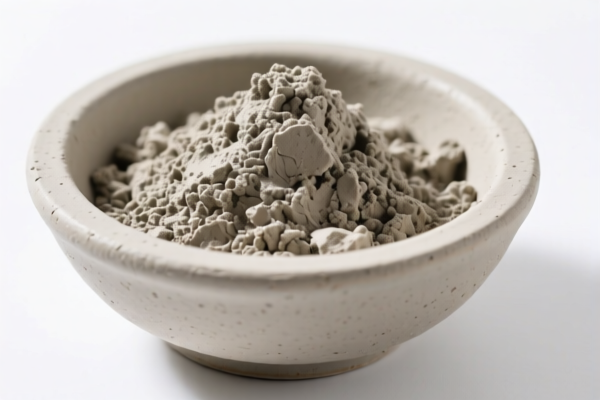
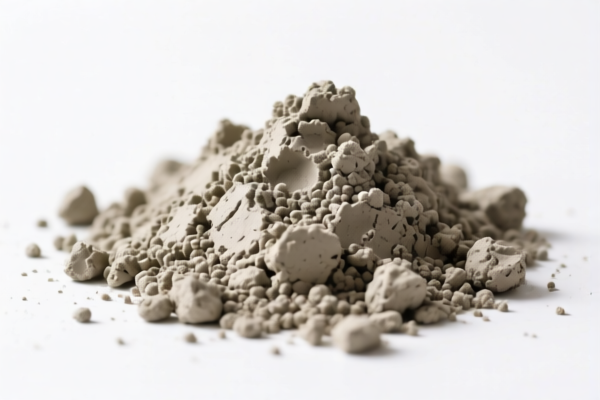
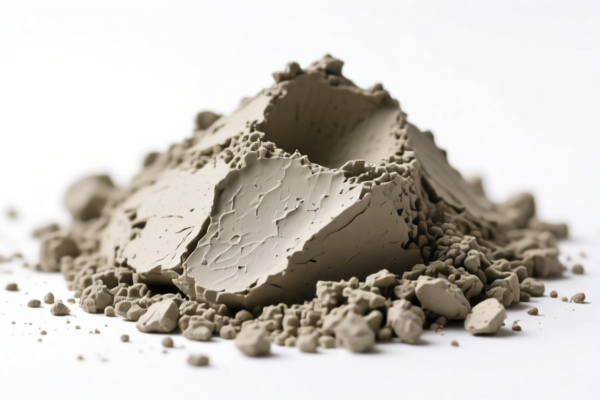
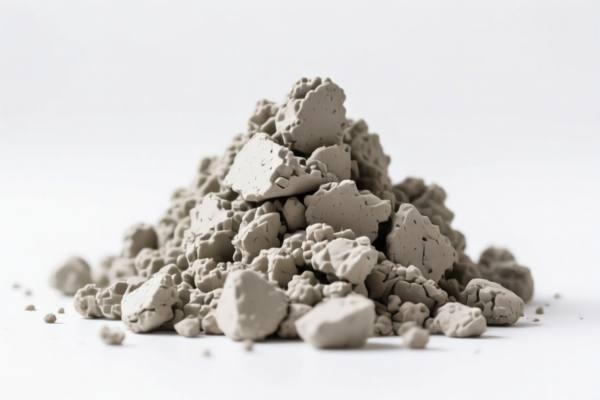
High Strength Refractory Mortar is a specialized construction material used in high-temperature industrial applications (such as furnaces, kilns, and boilers). It acts as a bonding agent for refractory bricks or as a patching material for high-temperature linings.
In international trade, its classification depends heavily on its chemical composition and physical form. The data provided indicates two primary classification paths based on the specific material source:
1. Clay-Based Refractory Mortar (粘土材质/粘土制) * Characteristics: Made primarily from clay materials, designed for lower to medium temperature applications. * Classification Logic: Viewed as "Refractory Bricks/Blocks" or "Clay Material Refractory Products."
2. High-Strength Refractory Mortar (General) * Characteristics: May be composed of various refractory aggregates (not necessarily pure clay, but treated similarly in this context). * Classification Logic: Viewed as "Refractory Ceramic Products" or matched to clay-based equivalents for tax purposes.
⚠️ Key Distinction Point: - If the product is explicitly clay-based → It falls under "Clay Refractory Brick/Block" categories. - If the product is a generic high-strength mortar → It is often grouped under "Refractory Ceramic Products" or mapped to clay-based HS codes for uniform tax treatment in the provided dataset.
📦 II. HS Code Classification Details (2026 Latest Tariff Data)
Based on the provided <DATA>, here are the specific HS Codes and their corresponding definitions and tax implications. Note that all listed codes carry the same total tax rate in this specific dataset context.
| HS Code | Product Description (Summary) | Material Type | Tax Total |
|---|---|---|---|
| 6902.90.10.10 | Refractory Mortar (Clay-based) Classified as "Clay-made Refractory Brick/Block" |
Clay / 粘土 | 35.0% |
| 6902.90.50.10 | High Strength Refractory Mortar Classified as "Clay Material Refractory Building Product" OR "Refractory Ceramic Product" |
Clay / 黏土 | 35.0% |
🔍 Important Note: - The dataset maps both
6902.90.10.10and6902.90.50.10to a 35.0% total tax rate. - Although the descriptions differ slightly ("Clay-made Brick" vs. "Ceramic Product"), the tax impact is identical in this scenario. - Origin: These specific tax details (35% total) imply US Origin Rules (see Section III).
💰 III. 2026 Latest Tariff Rate Breakdown (Including Surtaxes)
✅ Applicable Country: United States (US)
✅ Country of Origin: China (CN)
✅ Effective Time: Current regime (including 2025/2026 updates)
🎯 1. All Listed HS Codes (6902.90.10.10 & 6902.90.50.10)
| Item | Detail |
|---|---|
| Base Tariff (MFN) | 0.0% (Ad Valorem) |
| Section 301 Surtax | +25.0% (USITC Footnote / Trade Remedy) |
| Section 122 Surtax | +10.0% (Specific China-related measure) |
| Total Tariff Rate | 35.0% |
| Tax Calculation | CIF Value × 35% |
| De Minimis Exemption | ❌ Not Eligible (These goods are subject to high surtaxes and typically do not qualify for low-value shipment exemptions under current enforcement) |
| Legal Path | Base: 6902.90 → Section 301: 25% → Section 122: 10% |
📌 Explanation: - "Section 301: 25%": This is the standard tariff under Section 301 of the Trade Act of 1974, targeting Chinese imports. - "Section 122: 10%": This refers to additional tariffs imposed under Section 122 of the Trade Expansion Act of 1962 (often invoked for national security or broad economic reasons). - Total 35%: This is a high tariff barrier. Importers must budget significantly for customs duties.
🛠️ IV. Customs Clearance Practical Advice (Avoiding Pitfalls)
✅ 1. Documentation Checklist (Essential for Smooth Clearance)
| Document | Required? | Description |
|---|---|---|
| ✅ Product Specification Sheet | ✔️ | Must specify chemical composition (e.g., Al₂O₃ content, Clay percentage), refractoriness degree, and particle size. |
| ✅ Commercial Invoice | ✔️ | Clearly state: "High Strength Refractory Mortar for Furnace Lining" – Avoid vague terms like "Industrial Cement." |
| ✅ Certificate of Origin (CO) | ✔️ | Essential for proving Chinese origin (to confirm tariff applicability). |
| ✅ Packing List | ✔️ | Detail net weight/gross weight. Ensure packaging is suitable for heavy, dense materials. |
| ✅ SDS (Safety Data Sheet) | ✔️ | Required for hazmat check (though refractory mortars are usually non-hazardous, some additives might trigger queries). |
| ✅ Test Reports | ✔️ | Optional but recommended: Proof of refractory temperature resistance (e.g., ≥1300°C). |
✅ 2. Declaration Tips (Critical for Accuracy)
🔥 "Be Specific on Material: Clay vs. Ceramic!"
| Scenario | Correct Declaration | Error to Avoid |
|---|---|---|
| Clay-based Mortar | HS: 6902.90.10.10Desc: "Clay Refractory Mortar" |
Calling it "Cement" → Could be misclassified as non-refractory (lower tax) → Severe Penalty if caught. |
| General High-Strength Mortar | HS: 6902.90.50.10Desc: "High Strength Refractory Mortar (Refractory Ceramic Product)" |
Calling it "Building Mortar" → Wrong Chapter (Chapter 38 or 25) → Customs Hold. |
| Packaging | Declare as "Refractory Mortar in Bags" | If mixed with tools/accessories, declare separately to avoid incorrect classification of the whole lot. |
✅ 3. Special Considerations
| Situation | Advice |
|---|---|
| Sample vs. Commercial | Even small samples may be subject to the 35% tariff if declared as commercial goods. For true samples, ensure they are marked "Not for Sale" and check de minimis thresholds (though often suspended for China). |
| Hybrid Products | If the mortar includes binders (like chemical additives), ensure they do not change the essential character to a "Chemical Product" (Chapter 38). If it does, it might not be "Refractory" anymore. |
| Anti-Dumping/Countervailing | Check if specific AD/CVD orders apply to clay refractories. If yes, additional duties may apply on top of the 35%. Verify with CBP. |
🌍 V. Global Market Comparison (2026 Context)
| Country/Region | Recommended HS Code | Est. Tariff (China Origin) | Notes |
|---|---|---|---|
| 🇺🇸 USA | 6902.90.10.10 / 6902.90.50.10 |
35.0% | High burden due to Sec 301 + Sec 122. |
| 🇨🇳 China | 6902.90.10.00 (Local) |
~5-10% | Lower import duty, but domestic taxes apply. |
| 🇪🇺 EU | 6902.10 / 6902.20 / 6902.90 |
2.5% - 6.5% | No major surtaxes, but Carbon Border Adjustment Mechanism (CBAM) may apply in future phases. |
| 🇮🇳 India | 6902.90.00 |
7.5% - 10% | Additional GST applies. Check for anti-dumping duties on Chinese refractories. |
📌 Conclusion: - USA is the most expensive market for this product due to layered tariffs. - EU and India offer more standard rates but require strict compliance with environmental and labeling standards.
📌 VI. Common Errors & Pitfalls (Lessons Learned)
❌ Error 1: Declaring "Refractory Mortar" as "Construction Cement" (HS 2523) 👉 Consequence: Incorrect classification. If discovered, back taxes + penalties. Cement is generally not heat-resistant.
❌ Error 2: Ignoring "Section 122" tariff 👉 Consequence: Underpaying by 10%. CBP will issue a Bill for Additional Duties.
❌ Error 3: Vague Product Description ("Brick Cement") 👉 Consequence: Customs may detain the shipment for clarification, causing demurrage charges.
✅ Correct Practice:
"High Strength Refractory Mortar, Clay-Based, for Kiln Lining, Al₂O₃ Content: XX%, Heat Resistance: 1400°C, Model: XYZ"
🎯 VII. Conclusion: Smart Clearance, Cost Control!
🎯 Remember the Key:
🔹 "HS 6902 is Key, Clay or Ceramic, Check Both!" 🔹 "35% Total Tax in USA, Plan Your Budget!" 🔹 "Specify Material, Avoid Delays!"
📌 Pro Tip:
If you are exporting to the USA, consider: 1. Pre-classification Ruling: Apply to US CBP for a binding ruling to confirm
6902.90.50.10vs6902.90.10.10(though tax is same, accuracy prevents future disputes). 2. Supply Chain Diversification: If tariffs are unsustainable, evaluate production in non-China origins (e.g., Vietnam, India) to avoid Section 301/122 surtaxes. 3. Bonded Warehouses: Use for temporary storage if cash flow is tight.
📣 Immediate Action:
📞 Contact a Licensed Customs Broker
📄 Prepare Technical Data Sheets
🚀 Ensure HS Code6902.90.xxxxis correctly applied
✨ Professional Clearance Starts with Accurate Classification!
💼 Your Profit Margin Depends on Your Duty Strategy!
Customer Reviews
About HS Code Classification
The Harmonized System (HS) is an internationally standardized nomenclature developed by the World Customs Organization (WCO) to classify traded products. Over 200 countries use the HS system as the basis for customs tariffs, trade statistics, and import/export regulations.
Each HS code follows a hierarchical structure:
- Chapter (2 digits) — Broad category of goods (e.g., Chapter 84: Machinery and Mechanical Appliances)
- Heading (4 digits) — More specific grouping within the chapter
- Subheading (6 digits) — Internationally standardized breakdown, used by all WCO member countries
- National subdivisions (8-10 digits) — Country-specific extensions for further classification, such as US HTSUS 10-digit codes
Correct HS code classification is essential for smooth customs clearance, accurate duty payment, and compliance with trade regulations. Misclassification can lead to customs delays, overpayment of duties, or penalties.
When importing from CN to US, the applicable tariff rates may include:
- Most-Favored-Nation (MFN) rate — The standard duty rate applied to WTO members
- General rate — Applied to countries without trade agreements
- Trade remedy duties — Additional tariffs such as Section 301 (anti-dumping), Section 232 (national security), or countervailing duties
The information provided on this page is for reference purposes only. For official classification, please consult with your local customs authority or a licensed customs broker.