High Strength Textile Reinforced Plastic Board
CN → US| HS编码 | 关税税率 | 原产国 | 目的国 | 文档 |
|---|---|---|---|---|
| 3921902510 | 41.5% | CN | US | 官方文档 |
| 3926905600 | 40.1% | CN | US | 官方文档 |
| 3921904010 | 39.2% | CN | US | 官方文档 |
| 3926905700 | 41.5% | CN | US | 官方文档 |
| 6815190000 | 35.0% | CN | US | 官方文档 |
商品图片
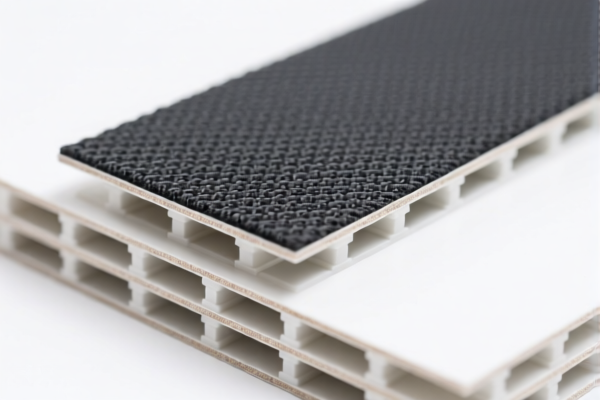
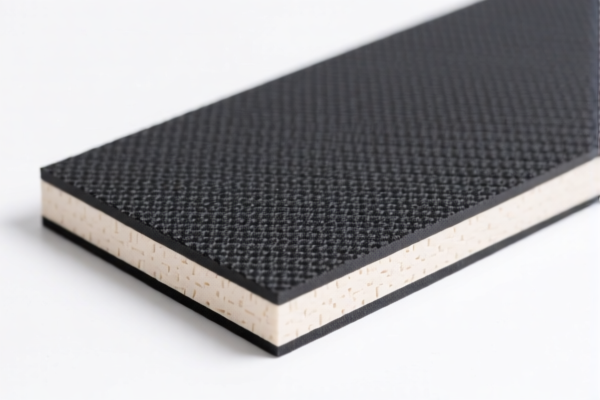
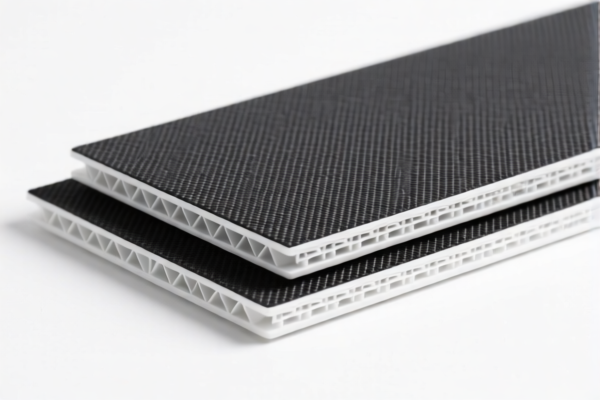
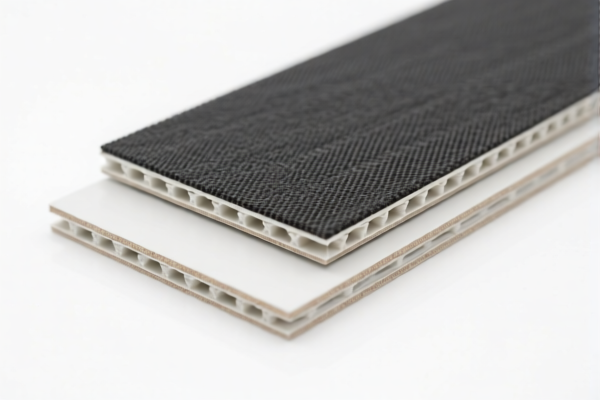
AI分析
🛡️ High Strength Textile Reinforced Plastic Board
🌐 HS Code Reference & Customs Clearance Guide | 2026 Latest Tariff Analysis | Professional Entry Strategy
📌 I. Product Definition & Classification: Is it Plastic, Textile, or Composite?
The High Strength Textile Reinforced Plastic Board is a composite material consisting of a dominant plastic matrix reinforced with high-strength textile fibers. In international trade, the classification hinges on whether the "plastic content" is dominant (Chap 39) or if it is classified as a "fiber-reinforced composite for non-electrical purposes" (Chap 68). Misclassification can lead to severe penalties or excessive duties.
⚠️ Key Distinction Point:
- If the plastic acts as the primary binding matrix and the textile is merely reinforcement → Chapter 39 (Plastics).
- If the board is viewed primarily as a "fiber-reinforced building/decorative material" without electrical function → Chapter 68 (Mineral Products/Composites).
📦 II. HS Code Classification Details (2026 Latest Tariff Authority Comparison)
| HS Code | Product Description | Application Scenario | Material Conflict? |
|---|---|---|---|
3921.90.25.10 |
High strength textile reinforced plastic board; plastic content is dominant, fits textile-plastic composite characteristics | Structural panels, industrial flooring | ✅ No conflict |
3926.90.56.00 |
High strength textile reinforced plastic board; contains textile fibers, no material conflict | Decorative boards, general industrial use | ✅ No conflict |
3921.90.40.10 |
High strength textile reinforced plastic board; textile reinforcement logic similar to paper reinforcement, no material conflict | General purpose plastic sheets with reinforcement | ✅ No conflict |
3926.90.57.00 |
High strength textile reinforced plastic board; contains textile fiber characteristics, fits plastic product category | Furniture parts, automotive interior trim | ✅ No conflict |
6815.19.00.00 |
Textile reinforced plastic decorative board; falls under fiber-reinforced composite articles for non-electrical uses | Building decorations, non-structural panels | ✅ No conflict |
🔍 Critical Reminder:
- Chapter 39 Codes (3921,3926) generally apply when the plastic is the essential character.
- Chapter 68 Code (6815) is used when the product is classified as a "mineral/stone-like" composite or specifically for decorative building materials where fiber reinforcement is the defining feature for non-electrical use.
- Do not split shipments: If the board is one cohesive unit, declare as a single item. Splitting "textile" and "plastic" components will trigger higher duty rates on individual parts.
💰 III. 2026 Latest Tariff Rate Breakdown (Including Additional Duties & Policy Surcharges)
✅ Applicable Country: United States (US)
✅ Origin: China (CN)
✅ Effective Time: From November 10, 2025 (and subsequent imports)
🎯 1. 3921.90.25.10 & 3926.90.57.00 —— High Strength Textile Reinforced Plastic (Dominant Plastic)
These two codes share the same tariff structure due to similar base rates.
| Item | Content |
|---|---|
| Base Tariff | 6.5% |
| Section 301 Additional Duty | +25.0% |
| Section 122 Duty | +10.0% |
| Total Tariff Rate | 41.5% |
| Tax Calculation | CIF Value × 41.5% |
| De Minimis Eligibility | ❌ Not Eligible (deny_de_minimis) |
| Legal Basis Path | Base: 6.5% → 301: +25% → Sec 122: +10% |
📌 Explanation:
- "Base Tariff 6.5%": The standard Most Favored Nation (MFN) rate for specific plastic articles.
- "Section 301: 25%": The additional tariff imposed under US Trade Act Section 301 against Chinese goods.
- "Section 122: 10%": Additional duty under Section 122 of the Trade Expansion Act (often applied to specific categories or retaliatory measures).
- Total 41.5%: This is a very high tariff rate. Cost calculation must include this full burden.
🎯 2. 3926.90.56.00 —— Other Plastic Articles (Textile Reinforced)
| Item | Content |
|---|---|
| Base Tariff | 5.1% |
| Section 301 Additional Duty | +25.0% |
| Section 122 Duty | +10.0% |
| Total Tariff Rate | 40.1% |
| Tax Calculation | CIF Value × 40.1% |
| De Minimis Eligibility | ❌ Not Eligible |
| Legal Basis Path | Base: 5.1% → 301: +25% → Sec 122: +10% |
📌 Note:
- Slightly lower base rate (5.1%) than the previous code, resulting in a 1.4% lower total duty.
- Suitable if the product is classified as "Other plastic articles" rather than specific sheets/boards.
🎯 3. 3921.90.40.10 —— Plastic Plates, Sheets, etc. (Reinforced)
| Item | Content |
|---|---|
| Base Tariff | 4.2% |
| Section 301 Additional Duty | +25.0% |
| Section 122 Duty | +10.0% |
| Total Tariff Rate | 39.2% |
| Tax Calculation | CIF Value × 39.2% |
| De Minimis Eligibility | ❌ Not Eligible |
| Legal Basis Path | Base: 4.2% → 301: +25% → Sec 122: +10% |
📌 Advantage:
- This code offers the lowest total tariff (39.2%) among the Chapter 39 options.
- Justification: Treats the textile reinforcement as functionally similar to "paper reinforcement" in plastic boards, allowing for a lower base rate.
🎯 4. 6815.19.00.00 —— Textile Reinforced Plastic Decorative Board (Fiber Composite)
| Item | Content |
|---|---|
| Base Tariff | 0.0% |
| Section 301 Additional Duty | +25.0% |
| Section 122 Duty | +10.0% |
| Total Tariff Rate | 35.0% |
| Tax Calculation | CIF Value × 35.0% |
| De Minimis Eligibility | ❌ Not Eligible |
| Legal Basis Path | Base: 0.0% → 301: +25% → Sec 122: +10% |
📌 Critical Warning:
- Lowest Total Tariff (35.0%).
- However, classification is risky. It must be strictly justified as a "non-electrical fiber-reinforced composite" (like stone or mineral products) rather than a "plastic sheet."
- Risk: If Customs determines it is primarily plastic, they may reassess to Chapter 39, leading to back taxes and penalties.
- Best For: Decorative boards where the aesthetic and composite nature is emphasized over pure plastic functionality.
🛠️ IV. Customs Clearance Practical Advice (Real-World Pitfall Avoidance)
✅ 1. Documentation Checklist (Non-Negotiable)
| Document | Required | Explanation |
|---|---|---|
| ✅ Product Specification Sheet | ✔️ | Must detail: Plastic type, textile fiber type (e.g., glass, carbon), reinforcement percentage, board thickness. |
| ✅ Structure Diagram | ✔️ | Show layer-by-layer composition to prove "Composite" vs. "Plastic Sheet." |
| ✅ Commercial Invoice | ✔️ | Clearly state: "High Strength Textile Reinforced Plastic Board." Do NOT use vague terms like "Plastic Sheet." |
| ✅ Certificate of Origin (CO) | ✔️ | Confirm China origin. Crucial for applying Section 301 & 122 surcharges. |
| ✅ Packing List | ✔️ | Show unit weight and dimensions. |
| ✅ Third-Party Test Report | ✔️ | Proof of "High Strength" and material composition (plastic vs. textile ratio). |
✅ 2. Declaration Strategy (Key Mantra)
🔥 "Composite Logic, Plastic Base, Avoid Splitting, Justify Decorative for 68!"
| Scenario | Correct Declaration | Incorrect Practice |
|---|---|---|
| General Industrial Panel | 3921.90.40.10 (Lowest Base 4.2%) |
Declaring as 6815 without proof → High Risk |
| Decorative Building Board | 6815.19.00.00 (Lowest Total 35%) |
Declaring as 3926 → Higher Duty (40.1%) |
| Mixed Shipment (Plastic + Textile rolls) | Declare separately | Combine into one HS Code → Classification Error |
| OEM Custom Boards | Provide Client Design Specs | Generic "Plastic Board" → Ambiguity |
✅ 3. Special Case Handling
| Situation | Handling Advice |
|---|---|
| High Plastic Content (>80%) | Strongly lean towards Chapter 39 (3921 or 3926). Customs will likely reject 6815. |
| High Textile/Fiber Content | Consider 6815.19.00.00. Argue "Fiber-Reinforced Composite" similar to concrete/stone composites. |
| Electrical Applications? | If used for insulation/electrical purposes, these codes may NOT apply. Check Chapter 85. These codes are for non-electrical uses. |
| Origin Transshipment | If shipped via Vietnam/Malaysia, ensure substantial transformation occurred. Otherwise, US origin rule may still apply, or tariffs remain. |
🌍 V. Global Market Clearance Comparison (2026 Latest)
| Country/Region | Recommended HS Code | Tariff (China Origin) | Certification Required | Notes |
|---|---|---|---|---|
| 🇺🇸 USA | 6815.19.00.00 |
35.0% (Total) | No specific certs | Highest risk, lowest rate if approved. |
| 🇺🇸 USA | 3921.90.40.10 |
39.2% (Total) | No specific certs | Safer classification, slightly higher cost. |
| 🇨🇳 China | 3921.90.25.10 |
~6.5% (Base) | CCC (if applicable) | No Section 301/122. |
| 🇪🇺 EU | 3921.90.25 |
~6.5% | CE/RoHS | No Section 301. |
| 🇬🇧 UK | 3921.90.25 |
~6.5% | UKCA | Post-Brexit rules apply. |
📌 Conclusion:
- USA is the most challenging market due to the 301 & 122 tariffs.
- Chapter 68 (6815) offers the best rate (35%) but requires strong technical justification that the product is a "fiber-reinforced composite" akin to stone/minerals, not just "plastic with cloth."
- Chapter 39 (3921/3926) is safer but costs 39.2% - 41.5%.
📌 VI. Common Errors & Pitfall Guide (Lessons Learned)
❌ Mistake 1: Declaring 6815.19.00.00 for a standard plastic sheet with fabric backing.
👉 Consequence: Customs may reject as "Plastic Article" and reclassify to 3926 or 3921, leading to back taxes + penalties.
❌ Mistake 2: Splitting "Textile" and "Plastic" into two different HS Codes in one shipment.
👉 Consequence: "Textile" parts might face higher duties or different quotas, complicating clearance.
❌ Mistake 3: Ignoring Section 122 Duty.
👉 Consequence: Under-declaration by 10%. CBSA/CBP will audit and demand payment with interest.
❌ Mistake 4: Vague description "Plastic Board."
👉 Consequence: High risk of misclassification. Always specify "Textile Reinforced."
✅ Correct Practice:
"High Strength Textile Reinforced Plastic Decorative Board, Non-Electrical Use, Plastic Matrix 70%, Glass Fiber Reinforcement 30%, Model XYZ."
🎯 VII. Conclusion: Professional Declaration, Cost Optimization!
🎯 Remember the Mantra:
🔹 "Chapter 68: Low Rate, High Risk. Chapter 39: Safe, Higher Cost."
🔹 "Section 301 is 25%, Section 122 is 10%. Don't forget either!"
🔹 "HS Code decides your destiny. A 1.4% difference matters!"
📌 Pro Tip:
If your product can be technically justified as a non-electrical fiber-reinforced composite (like a concrete slab but with plastic/textile), pursue
6815.19.00.00for the 35.0% total rate.
Otherwise, stick with3921.90.40.10for the safest Chapter 39 rate of 39.2%.
Request an Advance Ruling (IS Ruling) from US Customs if the classification is borderline.
📣 Immediate Action:
📞 Contact a professional customs broker + Provide material composition report + Apply for IS Ruling
🚀 Ensure your High Strength Textile Reinforced Plastic Board clears smoothly, avoids audits, and maximizes profit margins!
✨ Professional clearance starts with precise classification!
💼 Every cent of cost is worth calculating accurately!
用户评价
关于 HS 编码归类
协调制度(HS)是由世界海关组织(WCO)制定的国际贸易商品分类标准。全球 200 多个国家采用 HS 系统作为海关关税、贸易统计和进出口监管的基础。
每个 HS 编码遵循以下层级结构:
- 章(2 位)——商品大类(例如:第 84 章:机器和机械设备)
- 品目(4 位)——章内的更具体分类
- 子目(6 位)——国际通用细分,所有 WCO 成员国统一使用
- 本国细分(8-10 位)——各国自行扩展的细分编码,如美国 HTSUS 10 位编码
正确的 HS 编码归类对于顺利通关、准确缴纳关税和遵守贸易法规至关重要。错误归类可能导致海关延误、多缴关税或罚款。
从CN进口到US时,适用的关税税率可能包括:
- 最惠国(MFN)税率——适用于 WTO 成员国的标准关税税率
- 普通税率——适用于无贸易协定国家
- 贸易救济关税——附加关税,如 301 条款(反倾销)、232 条款(国家安全)或反补贴税
本页内容仅供参考。如需正式归类,请咨询当地海关或持牌报关代理。