High Strength Textile Reinforced Plastic Board
CN → US| HS Code | Tariff Rate | Origin | Destination | Doc |
|---|---|---|---|---|
| 3921902510 | 41.5% | CN | US | Official Doc |
| 3926905600 | 40.1% | CN | US | Official Doc |
| 3921904010 | 39.2% | CN | US | Official Doc |
| 3926905700 | 41.5% | CN | US | Official Doc |
| 6815190000 | 35.0% | CN | US | Official Doc |
Product Images
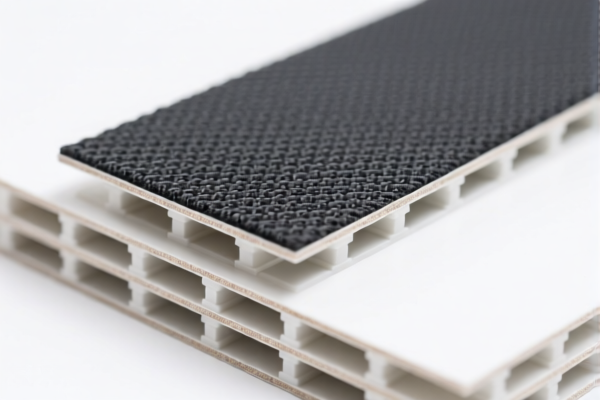
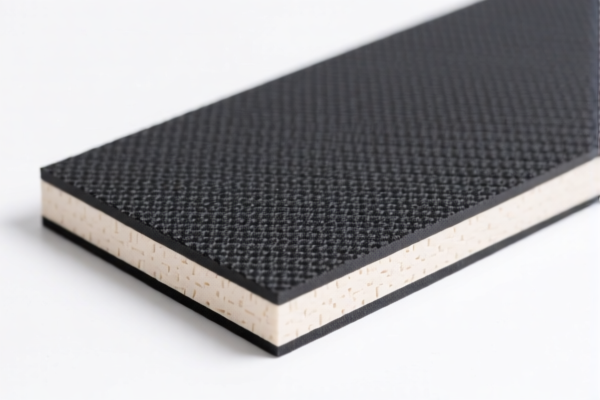
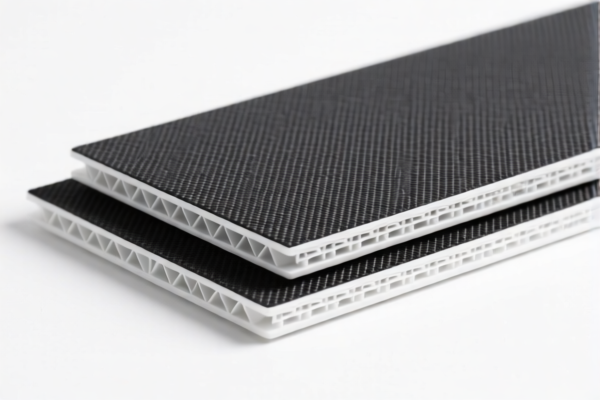
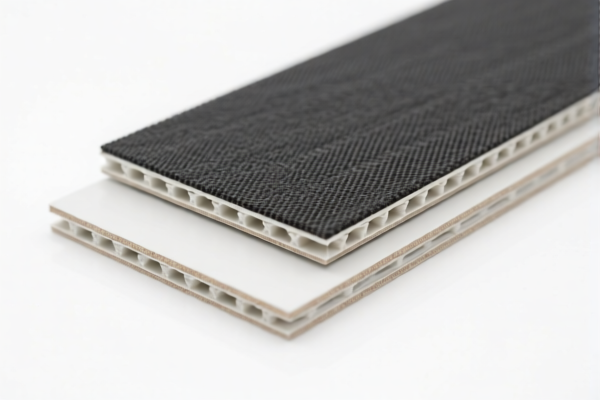
AI Analysis
🛡️ High Strength Textile Reinforced Plastic Board
🌐 HS Code Reference & Customs Clearance Guide | 2026 Latest Tariff Analysis | Professional Entry Strategy
📌 I. Product Definition & Classification: Is it Plastic, Textile, or Composite?
The High Strength Textile Reinforced Plastic Board is a composite material consisting of a dominant plastic matrix reinforced with high-strength textile fibers. In international trade, the classification hinges on whether the "plastic content" is dominant (Chap 39) or if it is classified as a "fiber-reinforced composite for non-electrical purposes" (Chap 68). Misclassification can lead to severe penalties or excessive duties.
⚠️ Key Distinction Point:
- If the plastic acts as the primary binding matrix and the textile is merely reinforcement → Chapter 39 (Plastics).
- If the board is viewed primarily as a "fiber-reinforced building/decorative material" without electrical function → Chapter 68 (Mineral Products/Composites).
📦 II. HS Code Classification Details (2026 Latest Tariff Authority Comparison)
| HS Code | Product Description | Application Scenario | Material Conflict? |
|---|---|---|---|
3921.90.25.10 |
High strength textile reinforced plastic board; plastic content is dominant, fits textile-plastic composite characteristics | Structural panels, industrial flooring | ✅ No conflict |
3926.90.56.00 |
High strength textile reinforced plastic board; contains textile fibers, no material conflict | Decorative boards, general industrial use | ✅ No conflict |
3921.90.40.10 |
High strength textile reinforced plastic board; textile reinforcement logic similar to paper reinforcement, no material conflict | General purpose plastic sheets with reinforcement | ✅ No conflict |
3926.90.57.00 |
High strength textile reinforced plastic board; contains textile fiber characteristics, fits plastic product category | Furniture parts, automotive interior trim | ✅ No conflict |
6815.19.00.00 |
Textile reinforced plastic decorative board; falls under fiber-reinforced composite articles for non-electrical uses | Building decorations, non-structural panels | ✅ No conflict |
🔍 Critical Reminder:
- Chapter 39 Codes (3921,3926) generally apply when the plastic is the essential character.
- Chapter 68 Code (6815) is used when the product is classified as a "mineral/stone-like" composite or specifically for decorative building materials where fiber reinforcement is the defining feature for non-electrical use.
- Do not split shipments: If the board is one cohesive unit, declare as a single item. Splitting "textile" and "plastic" components will trigger higher duty rates on individual parts.
💰 III. 2026 Latest Tariff Rate Breakdown (Including Additional Duties & Policy Surcharges)
✅ Applicable Country: United States (US)
✅ Origin: China (CN)
✅ Effective Time: From November 10, 2025 (and subsequent imports)
🎯 1. 3921.90.25.10 & 3926.90.57.00 —— High Strength Textile Reinforced Plastic (Dominant Plastic)
These two codes share the same tariff structure due to similar base rates.
| Item | Content |
|---|---|
| Base Tariff | 6.5% |
| Section 301 Additional Duty | +25.0% |
| Section 122 Duty | +10.0% |
| Total Tariff Rate | 41.5% |
| Tax Calculation | CIF Value × 41.5% |
| De Minimis Eligibility | ❌ Not Eligible (deny_de_minimis) |
| Legal Basis Path | Base: 6.5% → 301: +25% → Sec 122: +10% |
📌 Explanation:
- "Base Tariff 6.5%": The standard Most Favored Nation (MFN) rate for specific plastic articles.
- "Section 301: 25%": The additional tariff imposed under US Trade Act Section 301 against Chinese goods.
- "Section 122: 10%": Additional duty under Section 122 of the Trade Expansion Act (often applied to specific categories or retaliatory measures).
- Total 41.5%: This is a very high tariff rate. Cost calculation must include this full burden.
🎯 2. 3926.90.56.00 —— Other Plastic Articles (Textile Reinforced)
| Item | Content |
|---|---|
| Base Tariff | 5.1% |
| Section 301 Additional Duty | +25.0% |
| Section 122 Duty | +10.0% |
| Total Tariff Rate | 40.1% |
| Tax Calculation | CIF Value × 40.1% |
| De Minimis Eligibility | ❌ Not Eligible |
| Legal Basis Path | Base: 5.1% → 301: +25% → Sec 122: +10% |
📌 Note:
- Slightly lower base rate (5.1%) than the previous code, resulting in a 1.4% lower total duty.
- Suitable if the product is classified as "Other plastic articles" rather than specific sheets/boards.
🎯 3. 3921.90.40.10 —— Plastic Plates, Sheets, etc. (Reinforced)
| Item | Content |
|---|---|
| Base Tariff | 4.2% |
| Section 301 Additional Duty | +25.0% |
| Section 122 Duty | +10.0% |
| Total Tariff Rate | 39.2% |
| Tax Calculation | CIF Value × 39.2% |
| De Minimis Eligibility | ❌ Not Eligible |
| Legal Basis Path | Base: 4.2% → 301: +25% → Sec 122: +10% |
📌 Advantage:
- This code offers the lowest total tariff (39.2%) among the Chapter 39 options.
- Justification: Treats the textile reinforcement as functionally similar to "paper reinforcement" in plastic boards, allowing for a lower base rate.
🎯 4. 6815.19.00.00 —— Textile Reinforced Plastic Decorative Board (Fiber Composite)
| Item | Content |
|---|---|
| Base Tariff | 0.0% |
| Section 301 Additional Duty | +25.0% |
| Section 122 Duty | +10.0% |
| Total Tariff Rate | 35.0% |
| Tax Calculation | CIF Value × 35.0% |
| De Minimis Eligibility | ❌ Not Eligible |
| Legal Basis Path | Base: 0.0% → 301: +25% → Sec 122: +10% |
📌 Critical Warning:
- Lowest Total Tariff (35.0%).
- However, classification is risky. It must be strictly justified as a "non-electrical fiber-reinforced composite" (like stone or mineral products) rather than a "plastic sheet."
- Risk: If Customs determines it is primarily plastic, they may reassess to Chapter 39, leading to back taxes and penalties.
- Best For: Decorative boards where the aesthetic and composite nature is emphasized over pure plastic functionality.
🛠️ IV. Customs Clearance Practical Advice (Real-World Pitfall Avoidance)
✅ 1. Documentation Checklist (Non-Negotiable)
| Document | Required | Explanation |
|---|---|---|
| ✅ Product Specification Sheet | ✔️ | Must detail: Plastic type, textile fiber type (e.g., glass, carbon), reinforcement percentage, board thickness. |
| ✅ Structure Diagram | ✔️ | Show layer-by-layer composition to prove "Composite" vs. "Plastic Sheet." |
| ✅ Commercial Invoice | ✔️ | Clearly state: "High Strength Textile Reinforced Plastic Board." Do NOT use vague terms like "Plastic Sheet." |
| ✅ Certificate of Origin (CO) | ✔️ | Confirm China origin. Crucial for applying Section 301 & 122 surcharges. |
| ✅ Packing List | ✔️ | Show unit weight and dimensions. |
| ✅ Third-Party Test Report | ✔️ | Proof of "High Strength" and material composition (plastic vs. textile ratio). |
✅ 2. Declaration Strategy (Key Mantra)
🔥 "Composite Logic, Plastic Base, Avoid Splitting, Justify Decorative for 68!"
| Scenario | Correct Declaration | Incorrect Practice |
|---|---|---|
| General Industrial Panel | 3921.90.40.10 (Lowest Base 4.2%) |
Declaring as 6815 without proof → High Risk |
| Decorative Building Board | 6815.19.00.00 (Lowest Total 35%) |
Declaring as 3926 → Higher Duty (40.1%) |
| Mixed Shipment (Plastic + Textile rolls) | Declare separately | Combine into one HS Code → Classification Error |
| OEM Custom Boards | Provide Client Design Specs | Generic "Plastic Board" → Ambiguity |
✅ 3. Special Case Handling
| Situation | Handling Advice |
|---|---|
| High Plastic Content (>80%) | Strongly lean towards Chapter 39 (3921 or 3926). Customs will likely reject 6815. |
| High Textile/Fiber Content | Consider 6815.19.00.00. Argue "Fiber-Reinforced Composite" similar to concrete/stone composites. |
| Electrical Applications? | If used for insulation/electrical purposes, these codes may NOT apply. Check Chapter 85. These codes are for non-electrical uses. |
| Origin Transshipment | If shipped via Vietnam/Malaysia, ensure substantial transformation occurred. Otherwise, US origin rule may still apply, or tariffs remain. |
🌍 V. Global Market Clearance Comparison (2026 Latest)
| Country/Region | Recommended HS Code | Tariff (China Origin) | Certification Required | Notes |
|---|---|---|---|---|
| 🇺🇸 USA | 6815.19.00.00 |
35.0% (Total) | No specific certs | Highest risk, lowest rate if approved. |
| 🇺🇸 USA | 3921.90.40.10 |
39.2% (Total) | No specific certs | Safer classification, slightly higher cost. |
| 🇨🇳 China | 3921.90.25.10 |
~6.5% (Base) | CCC (if applicable) | No Section 301/122. |
| 🇪🇺 EU | 3921.90.25 |
~6.5% | CE/RoHS | No Section 301. |
| 🇬🇧 UK | 3921.90.25 |
~6.5% | UKCA | Post-Brexit rules apply. |
📌 Conclusion:
- USA is the most challenging market due to the 301 & 122 tariffs.
- Chapter 68 (6815) offers the best rate (35%) but requires strong technical justification that the product is a "fiber-reinforced composite" akin to stone/minerals, not just "plastic with cloth."
- Chapter 39 (3921/3926) is safer but costs 39.2% - 41.5%.
📌 VI. Common Errors & Pitfall Guide (Lessons Learned)
❌ Mistake 1: Declaring 6815.19.00.00 for a standard plastic sheet with fabric backing.
👉 Consequence: Customs may reject as "Plastic Article" and reclassify to 3926 or 3921, leading to back taxes + penalties.
❌ Mistake 2: Splitting "Textile" and "Plastic" into two different HS Codes in one shipment.
👉 Consequence: "Textile" parts might face higher duties or different quotas, complicating clearance.
❌ Mistake 3: Ignoring Section 122 Duty.
👉 Consequence: Under-declaration by 10%. CBSA/CBP will audit and demand payment with interest.
❌ Mistake 4: Vague description "Plastic Board."
👉 Consequence: High risk of misclassification. Always specify "Textile Reinforced."
✅ Correct Practice:
"High Strength Textile Reinforced Plastic Decorative Board, Non-Electrical Use, Plastic Matrix 70%, Glass Fiber Reinforcement 30%, Model XYZ."
🎯 VII. Conclusion: Professional Declaration, Cost Optimization!
🎯 Remember the Mantra:
🔹 "Chapter 68: Low Rate, High Risk. Chapter 39: Safe, Higher Cost."
🔹 "Section 301 is 25%, Section 122 is 10%. Don't forget either!"
🔹 "HS Code decides your destiny. A 1.4% difference matters!"
📌 Pro Tip:
If your product can be technically justified as a non-electrical fiber-reinforced composite (like a concrete slab but with plastic/textile), pursue
6815.19.00.00for the 35.0% total rate.
Otherwise, stick with3921.90.40.10for the safest Chapter 39 rate of 39.2%.
Request an Advance Ruling (IS Ruling) from US Customs if the classification is borderline.
📣 Immediate Action:
📞 Contact a professional customs broker + Provide material composition report + Apply for IS Ruling
🚀 Ensure your High Strength Textile Reinforced Plastic Board clears smoothly, avoids audits, and maximizes profit margins!
✨ Professional clearance starts with precise classification!
💼 Every cent of cost is worth calculating accurately!
Customer Reviews
About HS Code Classification
The Harmonized System (HS) is an internationally standardized nomenclature developed by the World Customs Organization (WCO) to classify traded products. Over 200 countries use the HS system as the basis for customs tariffs, trade statistics, and import/export regulations.
Each HS code follows a hierarchical structure:
- Chapter (2 digits) — Broad category of goods (e.g., Chapter 84: Machinery and Mechanical Appliances)
- Heading (4 digits) — More specific grouping within the chapter
- Subheading (6 digits) — Internationally standardized breakdown, used by all WCO member countries
- National subdivisions (8-10 digits) — Country-specific extensions for further classification, such as US HTSUS 10-digit codes
Correct HS code classification is essential for smooth customs clearance, accurate duty payment, and compliance with trade regulations. Misclassification can lead to customs delays, overpayment of duties, or penalties.
When importing from CN to US, the applicable tariff rates may include:
- Most-Favored-Nation (MFN) rate — The standard duty rate applied to WTO members
- General rate — Applied to countries without trade agreements
- Trade remedy duties — Additional tariffs such as Section 301 (anti-dumping), Section 232 (national security), or countervailing duties
The information provided on this page is for reference purposes only. For official classification, please consult with your local customs authority or a licensed customs broker.