High Strength V Belts
CN → US| HS编码 | 关税税率 | 原产国 | 目的国 | 文档 |
|---|---|---|---|---|
| 4010392000 | 37.8% | CN | US | 官方文档 |
| 5910001010 | 39.0% | CN | US | 官方文档 |
| 4010316000 | 37.8% | CN | US | 官方文档 |
商品图片
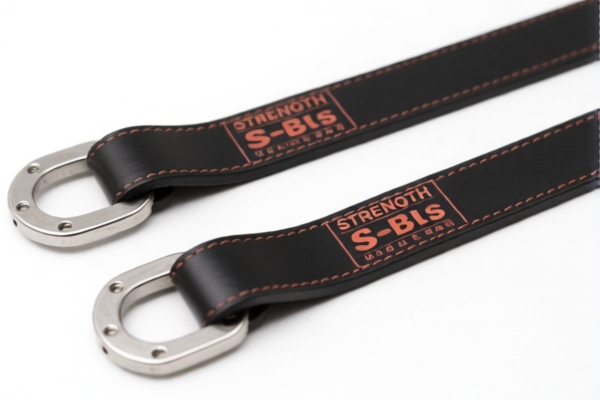
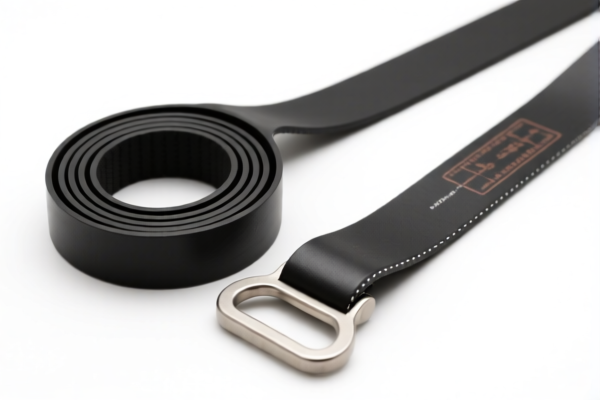
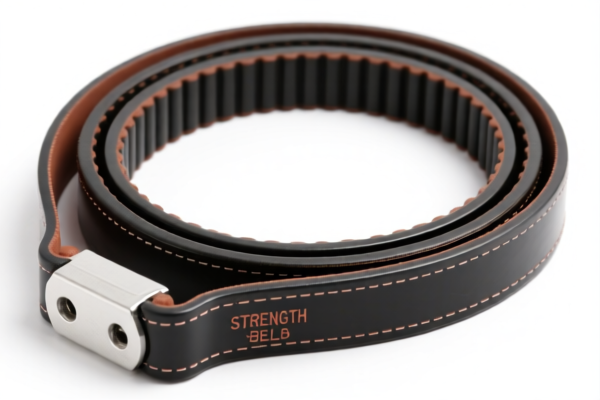
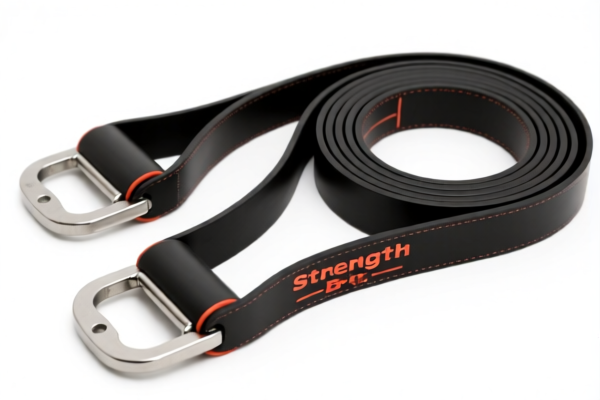
AI分析
🏭 High Strength V-Belts: The Heavy-Duty Power Transmission Heroes
🌐 HS Code Classification & Customs Clearance Guide | 2026 Latest Tariff Analysis | Professional通关 Strategies
📌 I. Product Definition & Classification: What Exactly Are "High Strength V-Belts"?
V-Belts are flexible mechanical power transmission components, typically made of rubber or reinforced materials, designed to transmit power between pulleys. When labeled "High Strength", these belts are engineered for heavy-duty applications, industrial machinery, and high-torque environments.
In international trade, the classification depends heavily on the material composition and reinforcement technology:
- Rubber-Based Belts: Made from vulcanized rubber with textile or steel cord reinforcement.
- Fabric/Reinforced Belts: Composed of artificial fibers (e.g., polyester, aramid) or other non-rubber materials, often with special high-strength cores.
⚠️ Critical Distinction Point:
- If the belt is primarily vulcanized rubber, it generally falls under Chapter 40.
- If the belt is primarily fabric/reinforced fibers with minimal rubber content, it may fall under Chapter 59.
- Misclassification can lead to significant tax discrepancies and customs delays.
📦 II. HS Code Classification Details (2026 Latest Tariff Reference)
Based on the provided data, here are the three possible HS Codes for "High Strength V-Belts," each with specific material implications:
| HS Code | Product Description | Material Composition | Application Scenario |
|---|---|---|---|
| 4010.39.20.00 | V-Belt (High Strength) – Classified as Vulcanized Rubber Trapezoidal Section Transmission Belt | Sulfurized Rubber | Heavy-duty industrial machinery, mining equipment, standard high-torque drives |
| 5910.00.10.10 | V-Belt (High Strength) – Classified as Artificial Fiber/Reinforced Fiber High-Strength Power Transmission Belt | Synthetic Fibers (e.g., Polyester, Aramid) | Specialized high-performance applications, lightweight yet high-torque systems, corrosion-resistant environments |
| 4010.31.60.00 | V-Belt (High Strength) – Classified as Unspecified Material (Inferred as Vulcanized Rubber) | Rubber (Inferred) | General industrial use when material details are not explicitly declared but assumed rubber-based |
🔍 Key Clarification:
- 4010 series applies to rubber belting products.
- 5910 series applies to textile/fabric belting products.
- The "High Strength" label does not change the chapter; it only describes performance. The material determines the HS Code.
💰 III. 2026 Latest Tariff Rate Breakdown (Including Additional Taxes)
✅ Applicable Country: United States (US)
✅ Origin: China (CN)
✅ Effective Date: Current rates apply for imports from China.
🎯 1. 4010.39.20.00 & 4010.31.60.00 — Rubber-Based V-Belts
| Item | Details |
|---|---|
| Base Tariff Rate | 2.8% (Ad Valorem) |
| Additional Tariff (Section 301) | +25.0% |
| Section 122 Tariff | +10.0% |
| Total Effective Tariff Rate | 37.8% |
| Tax Calculation Basis | CIF Value × 37.8% |
| De Minimis Exemption | ❌ Not Eligible (Deny De Minimis) |
| Legal Basis Path | Section 301: 9903.88.01 → Section 122: 9903.01.24 → USITC: 4010.39.20.00 / 4010.31.60.00 |
📌 Explanation:
- Base Rate (2.8%): Standard Most Favored Nation (MFN) rate for rubber belts.
- Section 301 Tariff (25%): Imposed by the US Trade Representative (USTR) on Chinese goods.
- Section 122 Tariff (10%): Additional national security tariff under Section 232 or related emergency powers.
- Total: 37.8%. This is a high-cost category for exporters.
🎯 2. 5910.00.10.10 — Fiber/Reinforced V-Belts
| Item | Details |
|---|---|
| Base Tariff Rate | 4.0% (Ad Valorem) |
| Additional Tariff (Section 301) | +25.0% |
| Section 122 Tariff | +10.0% |
| Total Effective Tariff Rate | 39.0% |
| Tax Calculation Basis | CIF Value × 39.0% |
| De Minimis Exemption | ❌ Not Eligible (Deny De Minimis) |
| Legal Basis Path | Section 301: 9903.88.01 → Section 122: 9903.01.24 → USITC: 5910.00.10.10 |
📌 Explanation:
- Base Rate (4.0%): Slightly higher than rubber belts due to different material classification.
- Total: 39.0%. Even higher than rubber-based belts.
- Note: Despite being "fiber," these are still subject to the same additional tariffs as rubber belts.
🛠️ IV. Customs Clearance Practical Advice (Real-World Pitfall Prevention)
✅ 1. Required Documentation Checklist
| Document | Required? | Notes |
|---|---|---|
| ✅ Product Specification Sheet | ✔️ | Must clearly state material (Rubber vs. Fiber), dimensions, and "High Strength" rating. |
| ✅ Material Composition Report | ✔️ | Critical for distinguishing between HS 4010 and 5910. Include % of rubber/fiber content. |
| ✅ Commercial Invoice | ✔️ | Clearly describe as "High Strength V-Belt, Material: [Rubber/Fiber]". |
| ✅ Packing List | ✔️ | Include net/gross weight, quantity, and package dimensions. |
| ✅ Certificate of Origin (CO) | ✔️ | Essential for verifying Chinese origin and applying correct tariffs. |
| ✅ Test Reports | ✔️ | Tensile strength, durability, and heat resistance reports to justify "High Strength" claim. |
✅ 2. Declaration Best Practices
🔥 Golden Rule: "Material Determines Code, Description Must Be Precise!"
| Scenario | Correct Declaration | Incorrect Declaration | Consequence |
|---|---|---|---|
| Rubber Belt | "V-Belt, Vulcanized Rubber, High Strength" | "High Strength Belt" | Misclassification → Penalty + Back Taxes |
| Fiber Belt | "V-Belt, Polyester Fiber Reinforced, High Strength" | "Rubber Belt" | HS Code Error → Delay + Inspection |
| Mixed Components | Clearly separate rubber vs. non-rubber parts | Mixed description | Ambiguity → Customs Holds Goods |
✅ 3. Special Handling Tips
| Situation | Recommendation |
|---|---|
| New Product Launch | Apply for Advance Ruling from US CBP to confirm HS Code before shipment. |
| OEM/ODM Orders | Provide end-user application details to justify material choice. |
| High-Value Shipments | Consider Bonded Warehouses or FTZ (Free Trade Zones) to defer duty payment. |
| Origin Diversification | If possible, source from non-China origins to avoid Section 301/122 tariffs (if eligible). |
🌍 V. Global Market Comparison (2026 Snapshot)
| Region | Recommended HS Code | Tariff (China Origin) | Key Requirements |
|---|---|---|---|
| 🇺🇸 USA | 4010.39.20.00 / 5910.00.10.10 |
37.8% - 39.0% | FCC/CE certs, strict labeling, no de minimis |
| 🇨🇳 China | 4010.39.20.00 / 5910.00.10.10 |
5% - 8% | CCC certification (if applicable) |
| 🇪🇺 EU | 4010.39 / 5910.00 |
3.7% - 4.5% | REACH, CE marking, no Section 301/122 |
| 🇯🇵 Japan | 4010.39 / 5910.00 |
3.0% - 4.0% | JIS standards, no additional tariffs |
📌 Conclusion:
- USA imposes the highest tariffs due to Section 301 and 122.
- EU, Japan, and other markets are more tariff-friendly.
- Cost optimization should focus on supply chain diversification or duty drawback programs.
📌 VI. Common Mistakes & Pitfalls (Learn from Others' Errors)
❌ Mistake 1: Using generic terms like "Drive Belt" without specifying material.
👉 Result: Customs cannot determine HS Code → 30-day delay.
❌ Mistake 2: Under-declaring value to avoid tariffs.
👉 Result: Seizure, fines, and blacklisting.
❌ Mistake 3: Ignoring Section 122 tariffs.
👉 Result: Unexpected 10% additional charge at customs.
✅ Correct Approach:
"High Strength V-Belt, Sectional Wedge Type, Material: Vulcanized Rubber with Aramid Reinforcement, Model: HS-VB-100, Certified to ISO 4184"
🎯 VII. Conclusion: Precision Classification Saves Money!
🎯 Remember the Key Takeaways:
🔹 Material is King: Rubber =
4010, Fiber =5910.
🔹 Tariffs are High: 37.8% - 39.0% total for China-origin goods.
🔹 Documentation is Critical: Clear specs prevent delays.
🔹 Plan Ahead: Use Advance Rulings and consider supply chain alternatives.
📌 Pro Tip:
If your products are not from China, you may qualify for lower tariffs or exemptions. Always verify origin rules and consider FTZ or bonded warehouse strategies to manage cash flow.
📣 Call to Action:
📞 Contact a licensed customs broker + Provide detailed material specs + Apply for HS Code Advance Ruling
🚀 Ensure smooth clearance, avoid penalties, and maximize profitability!
✨ Professional Clearance Starts with Accurate Classification!
💼 Every percent of tax saved is pure profit earned!
用户评价
关于 HS 编码归类
协调制度(HS)是由世界海关组织(WCO)制定的国际贸易商品分类标准。全球 200 多个国家采用 HS 系统作为海关关税、贸易统计和进出口监管的基础。
每个 HS 编码遵循以下层级结构:
- 章(2 位)——商品大类(例如:第 84 章:机器和机械设备)
- 品目(4 位)——章内的更具体分类
- 子目(6 位)——国际通用细分,所有 WCO 成员国统一使用
- 本国细分(8-10 位)——各国自行扩展的细分编码,如美国 HTSUS 10 位编码
正确的 HS 编码归类对于顺利通关、准确缴纳关税和遵守贸易法规至关重要。错误归类可能导致海关延误、多缴关税或罚款。
从CN进口到US时,适用的关税税率可能包括:
- 最惠国(MFN)税率——适用于 WTO 成员国的标准关税税率
- 普通税率——适用于无贸易协定国家
- 贸易救济关税——附加关税,如 301 条款(反倾销)、232 条款(国家安全)或反补贴税
本页内容仅供参考。如需正式归类,请咨询当地海关或持牌报关代理。