High Strength V Belts
CN → US| HS Code | Tariff Rate | Origin | Destination | Doc |
|---|---|---|---|---|
| 4010392000 | 37.8% | CN | US | Official Doc |
| 5910001010 | 39.0% | CN | US | Official Doc |
| 4010316000 | 37.8% | CN | US | Official Doc |
Product Images
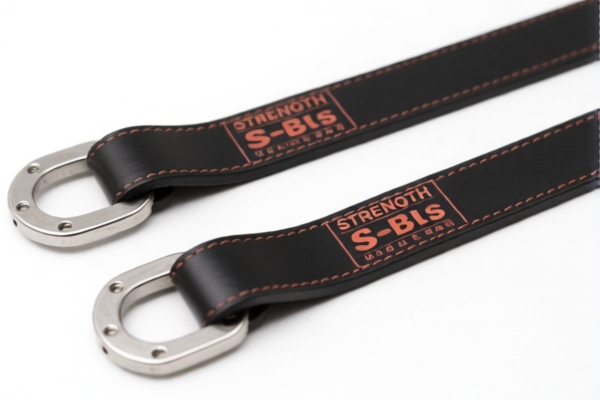
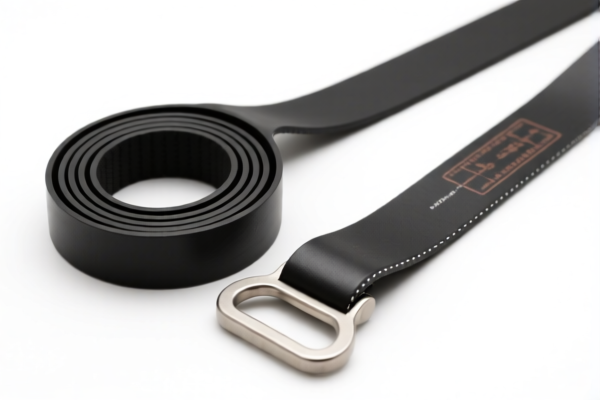
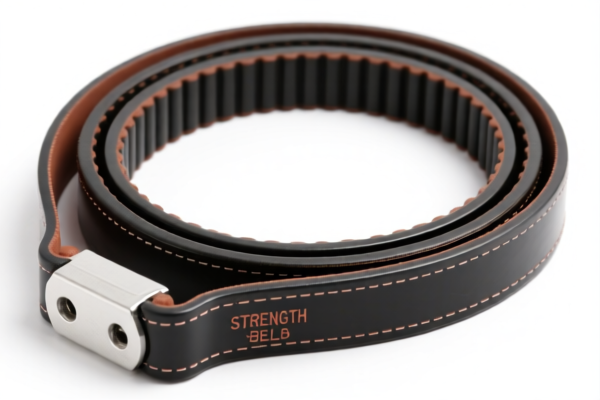
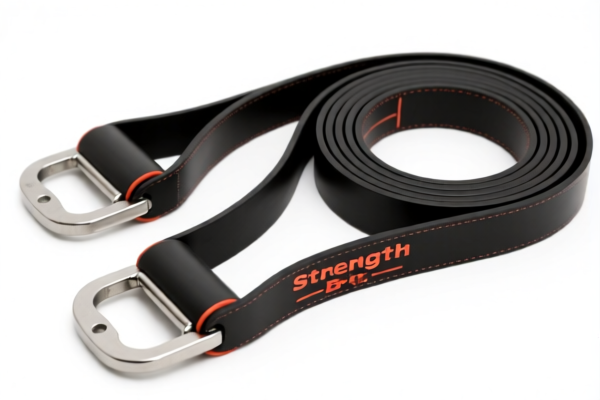
AI Analysis
🏭 High Strength V-Belts: The Heavy-Duty Power Transmission Heroes
🌐 HS Code Classification & Customs Clearance Guide | 2026 Latest Tariff Analysis | Professional通关 Strategies
📌 I. Product Definition & Classification: What Exactly Are "High Strength V-Belts"?
V-Belts are flexible mechanical power transmission components, typically made of rubber or reinforced materials, designed to transmit power between pulleys. When labeled "High Strength", these belts are engineered for heavy-duty applications, industrial machinery, and high-torque environments.
In international trade, the classification depends heavily on the material composition and reinforcement technology:
- Rubber-Based Belts: Made from vulcanized rubber with textile or steel cord reinforcement.
- Fabric/Reinforced Belts: Composed of artificial fibers (e.g., polyester, aramid) or other non-rubber materials, often with special high-strength cores.
⚠️ Critical Distinction Point:
- If the belt is primarily vulcanized rubber, it generally falls under Chapter 40.
- If the belt is primarily fabric/reinforced fibers with minimal rubber content, it may fall under Chapter 59.
- Misclassification can lead to significant tax discrepancies and customs delays.
📦 II. HS Code Classification Details (2026 Latest Tariff Reference)
Based on the provided data, here are the three possible HS Codes for "High Strength V-Belts," each with specific material implications:
| HS Code | Product Description | Material Composition | Application Scenario |
|---|---|---|---|
| 4010.39.20.00 | V-Belt (High Strength) – Classified as Vulcanized Rubber Trapezoidal Section Transmission Belt | Sulfurized Rubber | Heavy-duty industrial machinery, mining equipment, standard high-torque drives |
| 5910.00.10.10 | V-Belt (High Strength) – Classified as Artificial Fiber/Reinforced Fiber High-Strength Power Transmission Belt | Synthetic Fibers (e.g., Polyester, Aramid) | Specialized high-performance applications, lightweight yet high-torque systems, corrosion-resistant environments |
| 4010.31.60.00 | V-Belt (High Strength) – Classified as Unspecified Material (Inferred as Vulcanized Rubber) | Rubber (Inferred) | General industrial use when material details are not explicitly declared but assumed rubber-based |
🔍 Key Clarification:
- 4010 series applies to rubber belting products.
- 5910 series applies to textile/fabric belting products.
- The "High Strength" label does not change the chapter; it only describes performance. The material determines the HS Code.
💰 III. 2026 Latest Tariff Rate Breakdown (Including Additional Taxes)
✅ Applicable Country: United States (US)
✅ Origin: China (CN)
✅ Effective Date: Current rates apply for imports from China.
🎯 1. 4010.39.20.00 & 4010.31.60.00 — Rubber-Based V-Belts
| Item | Details |
|---|---|
| Base Tariff Rate | 2.8% (Ad Valorem) |
| Additional Tariff (Section 301) | +25.0% |
| Section 122 Tariff | +10.0% |
| Total Effective Tariff Rate | 37.8% |
| Tax Calculation Basis | CIF Value × 37.8% |
| De Minimis Exemption | ❌ Not Eligible (Deny De Minimis) |
| Legal Basis Path | Section 301: 9903.88.01 → Section 122: 9903.01.24 → USITC: 4010.39.20.00 / 4010.31.60.00 |
📌 Explanation:
- Base Rate (2.8%): Standard Most Favored Nation (MFN) rate for rubber belts.
- Section 301 Tariff (25%): Imposed by the US Trade Representative (USTR) on Chinese goods.
- Section 122 Tariff (10%): Additional national security tariff under Section 232 or related emergency powers.
- Total: 37.8%. This is a high-cost category for exporters.
🎯 2. 5910.00.10.10 — Fiber/Reinforced V-Belts
| Item | Details |
|---|---|
| Base Tariff Rate | 4.0% (Ad Valorem) |
| Additional Tariff (Section 301) | +25.0% |
| Section 122 Tariff | +10.0% |
| Total Effective Tariff Rate | 39.0% |
| Tax Calculation Basis | CIF Value × 39.0% |
| De Minimis Exemption | ❌ Not Eligible (Deny De Minimis) |
| Legal Basis Path | Section 301: 9903.88.01 → Section 122: 9903.01.24 → USITC: 5910.00.10.10 |
📌 Explanation:
- Base Rate (4.0%): Slightly higher than rubber belts due to different material classification.
- Total: 39.0%. Even higher than rubber-based belts.
- Note: Despite being "fiber," these are still subject to the same additional tariffs as rubber belts.
🛠️ IV. Customs Clearance Practical Advice (Real-World Pitfall Prevention)
✅ 1. Required Documentation Checklist
| Document | Required? | Notes |
|---|---|---|
| ✅ Product Specification Sheet | ✔️ | Must clearly state material (Rubber vs. Fiber), dimensions, and "High Strength" rating. |
| ✅ Material Composition Report | ✔️ | Critical for distinguishing between HS 4010 and 5910. Include % of rubber/fiber content. |
| ✅ Commercial Invoice | ✔️ | Clearly describe as "High Strength V-Belt, Material: [Rubber/Fiber]". |
| ✅ Packing List | ✔️ | Include net/gross weight, quantity, and package dimensions. |
| ✅ Certificate of Origin (CO) | ✔️ | Essential for verifying Chinese origin and applying correct tariffs. |
| ✅ Test Reports | ✔️ | Tensile strength, durability, and heat resistance reports to justify "High Strength" claim. |
✅ 2. Declaration Best Practices
🔥 Golden Rule: "Material Determines Code, Description Must Be Precise!"
| Scenario | Correct Declaration | Incorrect Declaration | Consequence |
|---|---|---|---|
| Rubber Belt | "V-Belt, Vulcanized Rubber, High Strength" | "High Strength Belt" | Misclassification → Penalty + Back Taxes |
| Fiber Belt | "V-Belt, Polyester Fiber Reinforced, High Strength" | "Rubber Belt" | HS Code Error → Delay + Inspection |
| Mixed Components | Clearly separate rubber vs. non-rubber parts | Mixed description | Ambiguity → Customs Holds Goods |
✅ 3. Special Handling Tips
| Situation | Recommendation |
|---|---|
| New Product Launch | Apply for Advance Ruling from US CBP to confirm HS Code before shipment. |
| OEM/ODM Orders | Provide end-user application details to justify material choice. |
| High-Value Shipments | Consider Bonded Warehouses or FTZ (Free Trade Zones) to defer duty payment. |
| Origin Diversification | If possible, source from non-China origins to avoid Section 301/122 tariffs (if eligible). |
🌍 V. Global Market Comparison (2026 Snapshot)
| Region | Recommended HS Code | Tariff (China Origin) | Key Requirements |
|---|---|---|---|
| 🇺🇸 USA | 4010.39.20.00 / 5910.00.10.10 |
37.8% - 39.0% | FCC/CE certs, strict labeling, no de minimis |
| 🇨🇳 China | 4010.39.20.00 / 5910.00.10.10 |
5% - 8% | CCC certification (if applicable) |
| 🇪🇺 EU | 4010.39 / 5910.00 |
3.7% - 4.5% | REACH, CE marking, no Section 301/122 |
| 🇯🇵 Japan | 4010.39 / 5910.00 |
3.0% - 4.0% | JIS standards, no additional tariffs |
📌 Conclusion:
- USA imposes the highest tariffs due to Section 301 and 122.
- EU, Japan, and other markets are more tariff-friendly.
- Cost optimization should focus on supply chain diversification or duty drawback programs.
📌 VI. Common Mistakes & Pitfalls (Learn from Others' Errors)
❌ Mistake 1: Using generic terms like "Drive Belt" without specifying material.
👉 Result: Customs cannot determine HS Code → 30-day delay.
❌ Mistake 2: Under-declaring value to avoid tariffs.
👉 Result: Seizure, fines, and blacklisting.
❌ Mistake 3: Ignoring Section 122 tariffs.
👉 Result: Unexpected 10% additional charge at customs.
✅ Correct Approach:
"High Strength V-Belt, Sectional Wedge Type, Material: Vulcanized Rubber with Aramid Reinforcement, Model: HS-VB-100, Certified to ISO 4184"
🎯 VII. Conclusion: Precision Classification Saves Money!
🎯 Remember the Key Takeaways:
🔹 Material is King: Rubber =
4010, Fiber =5910.
🔹 Tariffs are High: 37.8% - 39.0% total for China-origin goods.
🔹 Documentation is Critical: Clear specs prevent delays.
🔹 Plan Ahead: Use Advance Rulings and consider supply chain alternatives.
📌 Pro Tip:
If your products are not from China, you may qualify for lower tariffs or exemptions. Always verify origin rules and consider FTZ or bonded warehouse strategies to manage cash flow.
📣 Call to Action:
📞 Contact a licensed customs broker + Provide detailed material specs + Apply for HS Code Advance Ruling
🚀 Ensure smooth clearance, avoid penalties, and maximize profitability!
✨ Professional Clearance Starts with Accurate Classification!
💼 Every percent of tax saved is pure profit earned!
Customer Reviews
About HS Code Classification
The Harmonized System (HS) is an internationally standardized nomenclature developed by the World Customs Organization (WCO) to classify traded products. Over 200 countries use the HS system as the basis for customs tariffs, trade statistics, and import/export regulations.
Each HS code follows a hierarchical structure:
- Chapter (2 digits) — Broad category of goods (e.g., Chapter 84: Machinery and Mechanical Appliances)
- Heading (4 digits) — More specific grouping within the chapter
- Subheading (6 digits) — Internationally standardized breakdown, used by all WCO member countries
- National subdivisions (8-10 digits) — Country-specific extensions for further classification, such as US HTSUS 10-digit codes
Correct HS code classification is essential for smooth customs clearance, accurate duty payment, and compliance with trade regulations. Misclassification can lead to customs delays, overpayment of duties, or penalties.
When importing from CN to US, the applicable tariff rates may include:
- Most-Favored-Nation (MFN) rate — The standard duty rate applied to WTO members
- General rate — Applied to countries without trade agreements
- Trade remedy duties — Additional tariffs such as Section 301 (anti-dumping), Section 232 (national security), or countervailing duties
The information provided on this page is for reference purposes only. For official classification, please consult with your local customs authority or a licensed customs broker.