High density Polyester Staple Fiber Twill Woven Fabric
CN → US| HS编码 | 关税税率 | 原产国 | 目的国 | 文档 |
|---|---|---|---|---|
| 5515999040 | 43.5% | CN | US | 官方文档 |
| 5513130020 | 49.9% | CN | US | 官方文档 |
| 5516930020 | 43.5% | CN | US | 官方文档 |
| 5516920060 | 47.0% | CN | US | 官方文档 |
| 5515190040 | 47.0% | CN | US | 官方文档 |
商品图片
AI分析
🧵 High Density Polyester Staple Fiber Twill Woven Fabric
🌐 HS Code Reference & Customs Clearance Guide | 2026 Latest Tariff Analysis | Professional Clearance Strategy
📌 I. Product Definition & Classification: What Exactly Is "Twill Fabric"?
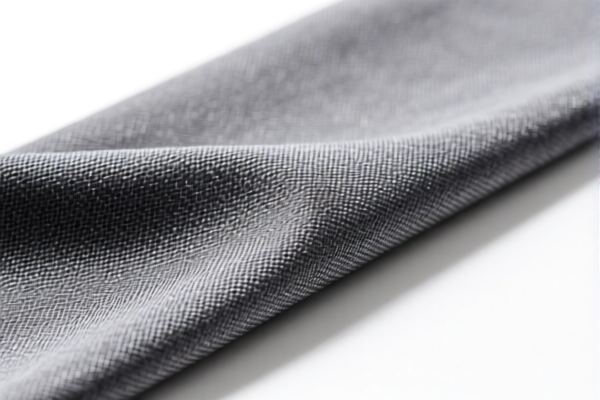
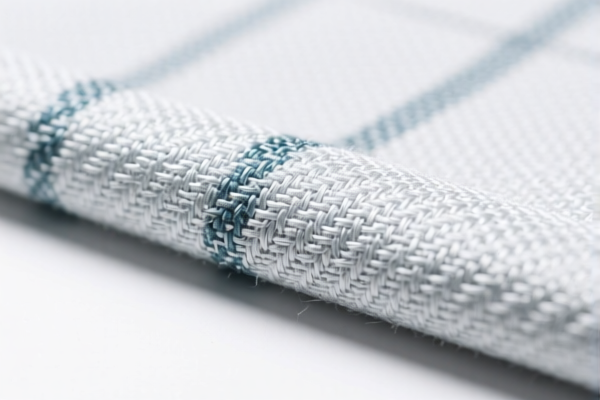
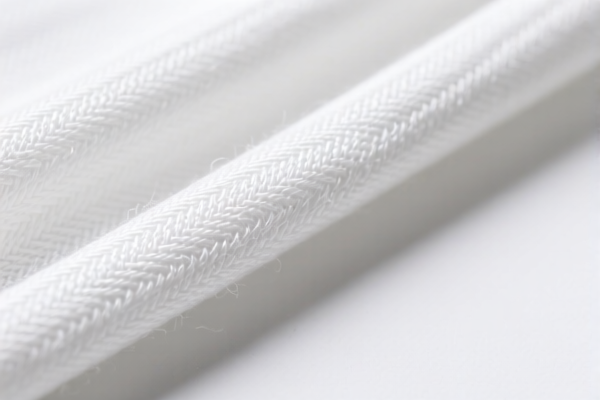
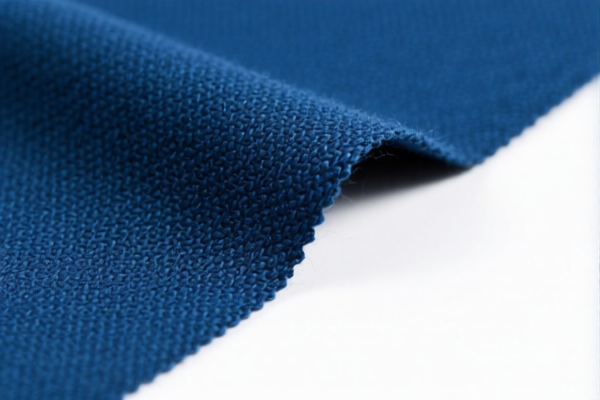
High Density Polyester Staple Fiber Twill Woven Fabric is a widely used textile material in apparel, home textiles, and industrial applications. It is characterized by its distinct diagonal rib pattern (twill weave) and high thread count, providing durability, softness, and a premium drape.
In international trade, classification hinges on two critical factors: 1. Material Composition: Is it made of synthetic staple fibers (like polyester)? 2. Weave Structure: Is it plain, twill, or satin? And is it plain woven or Jacquard?
⚠️ Key Distinction Point:
- If the fabric features complex, raised patterns woven directly into the cloth (Jacquard) → It may fall under 5515 or 5516 depending on composition.
- If it is a simple twill weave without Jacquard patterning → It falls under standard woven fabric headings.
- Crucially: The term "Jacquard" (提花) in the source data triggers specific HS codes even if the base weave is twill.
📦 II. HS Code Classification Details (2026 Latest Tariff Authority Reference)
| HS Code | Product Description | Applicable Scenario | Key Features |
|---|---|---|---|
5515.99.90.40 |
High proportion synthetic staple fiber twill Jacquard woven fabric | Fashion apparel, luxury bedding, decorative textiles | Jacquard weave, synthetic staple fiber, twill structure |
5513.13.00.20 |
High proportion synthetic staple fiber twill woven fabric (Polyester/Synthetic) | Standard apparel, linings, uniforms | Twill weave, synthetic staple fiber, No Jacquard |
5516.93.00.20 |
High proportion synthetic staple fiber twill Jacquard woven fabric | General textile use, mid-range apparel | Jacquard fabric, synthetic staple fiber |
5516.92.00.60 |
High proportion synthetic staple fiber twill Jacquard woven fabric (Color-woven) | High-end fashion, specialized textiles | Color-woven (Yarn-dyed) Twill/Satin, Jacquard |
5515.19.00.40 |
High proportion synthetic staple fiber twill woven fabric (Polyester-based) | Industrial uses, general textiles | Twill structure, Polyester/other synthetic staple fiber |
🔍 Important Reminder:
- Jacquard vs. Regular Twill: If the fabric has a raised, patterned surface created by the weave itself (Jacquard), it generally falls under 5515 or 5516. If it is a flat, standard diagonal twill, it may fall under 5513.
- Composition Matters: All listed codes involve synthetic staple fibers (usually polyester). If the fabric contains long filament fibers (not staple), these codes do not apply.
- China Origin Impact: All these codes are subject to significant additional tariffs when imported into the US from China.
💰 III. 2026 Latest Tariff Rate Breakdown (Including Additional Taxes & Policy Surcharges)
✅ Applicable Country: United States (US)
✅ Country of Origin: China (CN)
✅ Effective Date: From November 10, 2025 (and subsequent imports)
🎯 1. 5515.99.90.40 — High Proportion Synthetic Staple Fiber Twill Jacquard Woven Fabric
| Item | Details |
|---|---|
| Base Tariff | 8.5% |
| Section 301 Tariff | +25.0% |
| Section 122 Tariff | +10.0% |
| Total Tariff | 43.5% |
| Tax Calculation | CIF Value × 43.5% |
| De Minimis Exemption | ❌ Not Eligible (deny_de_minimis) |
| Legal Basis Path | USITC:5515.99.90.40 → 301:25% → 122:10% |
📌 Explanation:
- Base 8.5%: Standard Most Favored Nation (MFN) rate for synthetic staple fiber fabrics.
- Section 301 (25%): Trump-era trade war tariffs on Chinese textiles, retained under current policy.
- Section 122 (10%): Additional tariff on certain textile/apparel products from China.
- Total 43.5%: High-cost entry. No de minimis exemption means even small packages are fully taxed.
🎯 2. 5513.13.00.20 — High Proportion Synthetic Staple Fiber Twill Woven Fabric (No Jacquard)
| Item | Details |
|---|---|
| Base Tariff | 14.9% |
| Section 301 Tariff | +25.0% |
| Section 122 Tariff | +10.0% |
| Total Tariff | 49.9% |
| Tax Calculation | CIF Value × 49.9% |
| De Minimis Exemption | ❌ Not Eligible |
| Legal Basis Path | USITC:5513.13.00.20 → 301:25% → 122:10% |
📌 Note:
- This code applies to standard twill without Jacquard patterns.
- Higher Base Tariff (14.9%): Reflects the specific classification of plain woven twill fabrics under heading 5513.
- Total 49.9%: The highest tariff among the listed options. Avoid if possible.
🎯 3. 5516.93.00.20 — High Proportion Synthetic Staple Fiber Twill Jacquard Woven Fabric
| Item | Details |
|---|---|
| Base Tariff | 8.5% |
| Section 301 Tariff | +25.0% |
| Section 122 Tariff | +10.0% |
| Total Tariff | 43.5% |
| Tax Calculation | CIF Value × 43.5% |
| De Minimis Exemption | ❌ Not Eligible |
| Legal Basis Path | USITC:5516.93.00.20 → 301:25% → 122:10% |
📌 Explanation:
- Similar to5515.99.90.40in total tax burden.
- Differentiation often lies in the specific manufacturing process or fiber blend definition within the 5516 subheading.
🎯 4. 5516.92.00.60 — High Proportion Synthetic Staple Fiber Twill Jacquard (Color-Woven)
| Item | Details |
|---|---|
| Base Tariff | 12.0% |
| Section 301 Tariff | +25.0% |
| Section 122 Tariff | +10.0% |
| Total Tariff | 47.0% |
| Tax Calculation | CIF Value × 47.0% |
| De Minimis Exemption | ❌ Not Eligible |
| Legal Basis Path | USITC:5516.92.00.60 → 301:25% → 122:10% |
📌 Note:
- Color-woven (Yarn-dyed) fabrics often attract a slightly higher base tariff (12.0%) than piece-dyed fabrics.
- Total tax is 47.0%, still very high.
🎯 5. 5515.19.00.40 — High Proportion Synthetic Staple Fiber Twill Woven Fabric (Polyester-based)
| Item | Details |
|---|---|
| Base Tariff | 12.0% |
| Section 301 Tariff | +25.0% |
| Section 122 Tariff | +10.0% |
| Total Tariff | 47.0% |
| Tax Calculation | CIF Value × 47.0% |
| De Minimis Exemption | ❌ Not Eligible |
| Legal Basis Path | USITC:5515.19.00.40 → 301:25% → 122:10% |
📌 Explanation:
- Applies to polyester-based staple fiber fabrics not covered by other specific subheadings.
- Base tariff of 12.0% makes it comparable to5516.92.00.60.
🛠️ IV. Customs Clearance Practical Advice (Avoid Pitfalls Guide)
✅ 1. Required Documentation Checklist (Essential)
| Document | Mandatory? | Description |
|---|---|---|
| ✅ Product Specification Sheet | ✔️ | Must detail: Fiber content (% polyester/staple), weave type (till/jacquard), thread count, weight (gsm). |
| ✅ Fabric Swatch/Photo | ✔️ | Clear images showing the twill diagonal lines and Jacquard pattern (if any). |
| ✅ Test Report | ✔️ | Fiber composition analysis from accredited lab (e.g., QIMA, SGS). |
| ✅ Commercial Invoice | ✔️ | Must explicitly state: "High Density Polyester Staple Fiber Twill Woven Fabric" and HS Code. |
| ✅ Packing List | ✔️ | Detail roll dimensions, weight, and quantity. |
| ✅ Origin Certificate | ✔️ | If not from China, may apply for preferential rates. |
✅ 2. Declaration Tips (Key Mnemonic)
🔥 "Jacquard or Twill? Check Fiber! Base Rate Varies, Add-ons Are Constant!"
| Scenario | Correct Declaration | Common Mistake |
|---|---|---|
| Fabric has raised, patterned design | Jacquard → 5515.99.90.40 or 5516.93.00.20 |
Declaring as "Plain Woven" → Misclassification |
| Flat, diagonal twill, no pattern | Twill → 5513.13.00.20 |
Declaring as "Jacquard" → Higher base rate |
| Yarn-dyed (Color-woven) | Color-woven → 5516.92.00.60 |
Declaring as "Piece-dyed" → Wrong base rate |
| Small package (De Minimis) | Not Applicable | Assuming $800 exemption → Penalty! |
📌 Critical Warning:
- No De Minimis Exemption: All these HS codes are denied de minimis status for Chinese imports. Even a single roll under $800 will incur 43.5%–49.9% tax.
- Fiber Content Must Be Accurate: If the fabric contains >85% polyester staple fiber, it falls under these codes. If it has other fibers (cotton, wool), classification changes entirely.
✅ 3. Special Case Handling
| Situation | Handling Advice |
|---|---|
| OEM Custom Fabric | Provide customer design files and fiber test reports to justify HS Code. |
| Mixed Composition | If >50% polyester staple fiber, use these codes. If mixed with cotton, different codes apply. |
| Samples for Approval | Still subject to full tariff (43.5%+). Include tax cost in sample budget. |
| Transshipment via Third Country | High risk of scrutiny. Ensure origin rules are strictly met. |
🌍 V. Global Market Clearance Comparison (2026 Latest)
| Country/Region | Recommended HS Code | Tariff (China Origin) | Certification Required | Notes |
|---|---|---|---|---|
| 🇺🇸 USA | 5515.99.90.40 / 5513.13.00.20 |
43.5% – 49.9% | None specific, but lab test recommended | High Tax. No de minimis. |
| 🇨🇳 China | 5515.99.90.40 / 5513.13.00.20 |
8.5% – 14.9% | None | Base rate only. No Section 301/122. |
| 🇪🇺 EU | 5515.99.90 / 5513.13.00 |
8.5% – 12% | REACH, Oeko-Tex | Moderate tax. No US-style surcharges. |
| 🇦🇺 Australia | 5515.99.90 / 5513.13.00 |
5% | None | Low tariff. FTA benefits if applicable. |
| 🇯🇵 Japan | 5515.99.90 / 5513.13.00 |
8.5% | None | Moderate tax. JETRO guidelines apply. |
📌 Conclusion:
- USA is the most expensive market due to Section 301 and 122 tariffs.
- China, EU, and Japan have significantly lower base tariffs.
- Strategy: If targeting the US, consider value-add processing in a third country (e.g., Vietnam, Mexico) to potentially alter origin rules, but ensure substantial transformation.
📌 VI. Common Errors & Pitfalls (Blood & Tears Lessons)
❌ Error 1: Assuming small fabric samples are exempt from duty
👉 Consequence: 43.5%–49.9% tax applied, plus delays. No de minimis for these codes!
❌ Error 2: Mislabeling "Jacquard" as "Plain Weave"
👉 Consequence: Customs may reclassify, leading to higher base tariff (e.g., 14.9% vs 8.5%) + penalties.
❌ Error 3: Ignoring Fiber Composition Details
👉 Consequence: If fiber content is inaccurate, customs may dispute the HS Code, causing shipment hold.
❌ Error 4: Using vague descriptions like "Cotton Fabric" for Polyester
👉 Consequence: Immediate rejection or reclassification, leading to fines and delays.
✅ Correct Practice:
"High Density Polyester Staple Fiber Twill Woven Fabric, Jacquard Pattern, 100% Polyester Staple Fiber, 200 GSM, Yarn-Dyed, HS Code: 5515.99.90.40"
🎯 VII. Conclusion: Professional Declaration, Save Time & Money!
🎯 Remember This Mantra:
🔹 "Jacquard or Twill? Fiber Content is King!"
🔹 "US Tariff is ~45%, No Exemption for Small Packages!"
🔹 "Accurate Declaration Prevents 10x Penalty!"
📌 Pro Tip:
If your fabric is originally from Vietnam, Mexico, or Thailand, you may qualify for preferential tariffs or IEEPA exemptions.
Recommendation: Obtain an Advance Ruling from US Customs before shipping high-value fabric batches.
📣 Immediate Action:
📞 Contact a Professional Customs Broker + Provide Fabric Swatch + Apply for HS Code Advance Ruling
🚀 Let your fabric clear smoothly, efficiently, and profitably!
✨ Professional Clearance Starts with Accurate Classification!
💼 Every Dollar of Tax Saved is Profit Gained!
用户评价
关于 HS 编码归类
协调制度(HS)是由世界海关组织(WCO)制定的国际贸易商品分类标准。全球 200 多个国家采用 HS 系统作为海关关税、贸易统计和进出口监管的基础。
每个 HS 编码遵循以下层级结构:
- 章(2 位)——商品大类(例如:第 84 章:机器和机械设备)
- 品目(4 位)——章内的更具体分类
- 子目(6 位)——国际通用细分,所有 WCO 成员国统一使用
- 本国细分(8-10 位)——各国自行扩展的细分编码,如美国 HTSUS 10 位编码
正确的 HS 编码归类对于顺利通关、准确缴纳关税和遵守贸易法规至关重要。错误归类可能导致海关延误、多缴关税或罚款。
从CN进口到US时,适用的关税税率可能包括:
- 最惠国(MFN)税率——适用于 WTO 成员国的标准关税税率
- 普通税率——适用于无贸易协定国家
- 贸易救济关税——附加关税,如 301 条款(反倾销)、232 条款(国家安全)或反补贴税
本页内容仅供参考。如需正式归类,请咨询当地海关或持牌报关代理。