High density Polyester Staple Fiber Twill Woven Fabric
CN → US| HS Code | Tariff Rate | Origin | Destination | Doc |
|---|---|---|---|---|
| 5515999040 | 43.5% | CN | US | Official Doc |
| 5513130020 | 49.9% | CN | US | Official Doc |
| 5516930020 | 43.5% | CN | US | Official Doc |
| 5516920060 | 47.0% | CN | US | Official Doc |
| 5515190040 | 47.0% | CN | US | Official Doc |
Product Images
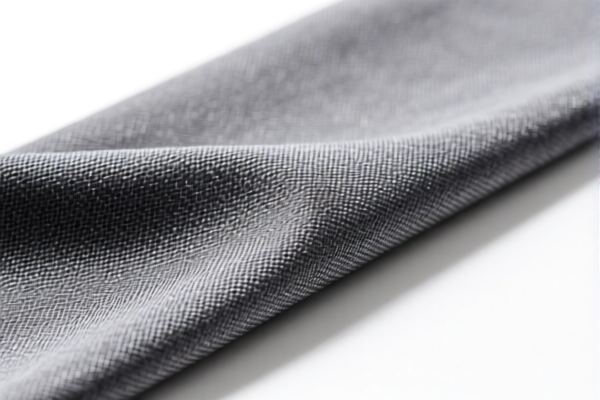
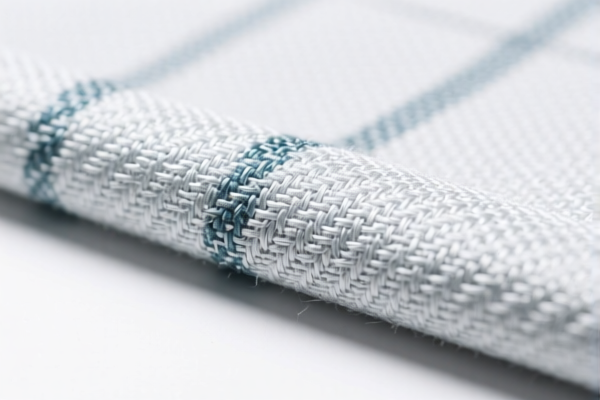
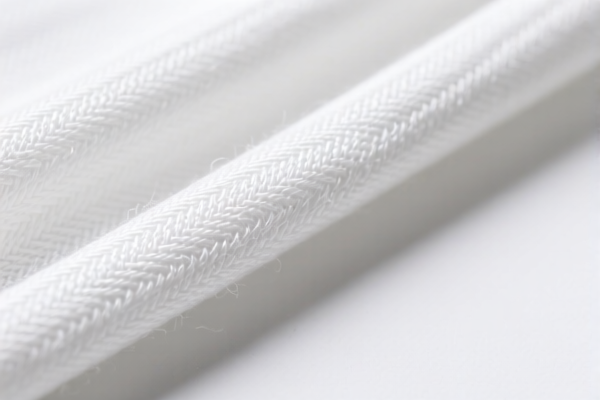
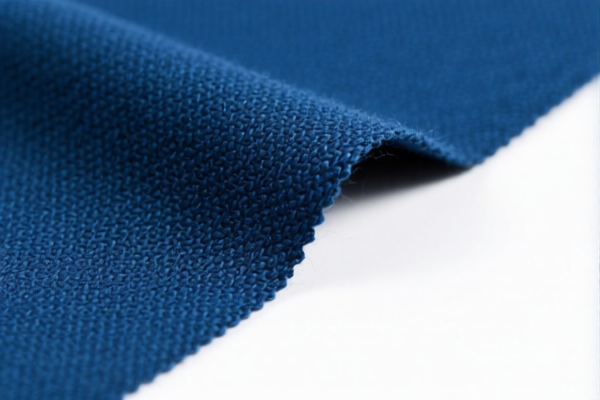
AI Analysis
🧵 High Density Polyester Staple Fiber Twill Woven Fabric
🌐 HS Code Reference & Customs Clearance Guide | 2026 Latest Tariff Analysis | Professional Clearance Strategy
📌 I. Product Definition & Classification: What Exactly Is "Twill Fabric"?
High Density Polyester Staple Fiber Twill Woven Fabric is a widely used textile material in apparel, home textiles, and industrial applications. It is characterized by its distinct diagonal rib pattern (twill weave) and high thread count, providing durability, softness, and a premium drape.
In international trade, classification hinges on two critical factors: 1. Material Composition: Is it made of synthetic staple fibers (like polyester)? 2. Weave Structure: Is it plain, twill, or satin? And is it plain woven or Jacquard?
⚠️ Key Distinction Point:
- If the fabric features complex, raised patterns woven directly into the cloth (Jacquard) → It may fall under 5515 or 5516 depending on composition.
- If it is a simple twill weave without Jacquard patterning → It falls under standard woven fabric headings.
- Crucially: The term "Jacquard" (提花) in the source data triggers specific HS codes even if the base weave is twill.
📦 II. HS Code Classification Details (2026 Latest Tariff Authority Reference)
| HS Code | Product Description | Applicable Scenario | Key Features |
|---|---|---|---|
5515.99.90.40 |
High proportion synthetic staple fiber twill Jacquard woven fabric | Fashion apparel, luxury bedding, decorative textiles | Jacquard weave, synthetic staple fiber, twill structure |
5513.13.00.20 |
High proportion synthetic staple fiber twill woven fabric (Polyester/Synthetic) | Standard apparel, linings, uniforms | Twill weave, synthetic staple fiber, No Jacquard |
5516.93.00.20 |
High proportion synthetic staple fiber twill Jacquard woven fabric | General textile use, mid-range apparel | Jacquard fabric, synthetic staple fiber |
5516.92.00.60 |
High proportion synthetic staple fiber twill Jacquard woven fabric (Color-woven) | High-end fashion, specialized textiles | Color-woven (Yarn-dyed) Twill/Satin, Jacquard |
5515.19.00.40 |
High proportion synthetic staple fiber twill woven fabric (Polyester-based) | Industrial uses, general textiles | Twill structure, Polyester/other synthetic staple fiber |
🔍 Important Reminder:
- Jacquard vs. Regular Twill: If the fabric has a raised, patterned surface created by the weave itself (Jacquard), it generally falls under 5515 or 5516. If it is a flat, standard diagonal twill, it may fall under 5513.
- Composition Matters: All listed codes involve synthetic staple fibers (usually polyester). If the fabric contains long filament fibers (not staple), these codes do not apply.
- China Origin Impact: All these codes are subject to significant additional tariffs when imported into the US from China.
💰 III. 2026 Latest Tariff Rate Breakdown (Including Additional Taxes & Policy Surcharges)
✅ Applicable Country: United States (US)
✅ Country of Origin: China (CN)
✅ Effective Date: From November 10, 2025 (and subsequent imports)
🎯 1. 5515.99.90.40 — High Proportion Synthetic Staple Fiber Twill Jacquard Woven Fabric
| Item | Details |
|---|---|
| Base Tariff | 8.5% |
| Section 301 Tariff | +25.0% |
| Section 122 Tariff | +10.0% |
| Total Tariff | 43.5% |
| Tax Calculation | CIF Value × 43.5% |
| De Minimis Exemption | ❌ Not Eligible (deny_de_minimis) |
| Legal Basis Path | USITC:5515.99.90.40 → 301:25% → 122:10% |
📌 Explanation:
- Base 8.5%: Standard Most Favored Nation (MFN) rate for synthetic staple fiber fabrics.
- Section 301 (25%): Trump-era trade war tariffs on Chinese textiles, retained under current policy.
- Section 122 (10%): Additional tariff on certain textile/apparel products from China.
- Total 43.5%: High-cost entry. No de minimis exemption means even small packages are fully taxed.
🎯 2. 5513.13.00.20 — High Proportion Synthetic Staple Fiber Twill Woven Fabric (No Jacquard)
| Item | Details |
|---|---|
| Base Tariff | 14.9% |
| Section 301 Tariff | +25.0% |
| Section 122 Tariff | +10.0% |
| Total Tariff | 49.9% |
| Tax Calculation | CIF Value × 49.9% |
| De Minimis Exemption | ❌ Not Eligible |
| Legal Basis Path | USITC:5513.13.00.20 → 301:25% → 122:10% |
📌 Note:
- This code applies to standard twill without Jacquard patterns.
- Higher Base Tariff (14.9%): Reflects the specific classification of plain woven twill fabrics under heading 5513.
- Total 49.9%: The highest tariff among the listed options. Avoid if possible.
🎯 3. 5516.93.00.20 — High Proportion Synthetic Staple Fiber Twill Jacquard Woven Fabric
| Item | Details |
|---|---|
| Base Tariff | 8.5% |
| Section 301 Tariff | +25.0% |
| Section 122 Tariff | +10.0% |
| Total Tariff | 43.5% |
| Tax Calculation | CIF Value × 43.5% |
| De Minimis Exemption | ❌ Not Eligible |
| Legal Basis Path | USITC:5516.93.00.20 → 301:25% → 122:10% |
📌 Explanation:
- Similar to5515.99.90.40in total tax burden.
- Differentiation often lies in the specific manufacturing process or fiber blend definition within the 5516 subheading.
🎯 4. 5516.92.00.60 — High Proportion Synthetic Staple Fiber Twill Jacquard (Color-Woven)
| Item | Details |
|---|---|
| Base Tariff | 12.0% |
| Section 301 Tariff | +25.0% |
| Section 122 Tariff | +10.0% |
| Total Tariff | 47.0% |
| Tax Calculation | CIF Value × 47.0% |
| De Minimis Exemption | ❌ Not Eligible |
| Legal Basis Path | USITC:5516.92.00.60 → 301:25% → 122:10% |
📌 Note:
- Color-woven (Yarn-dyed) fabrics often attract a slightly higher base tariff (12.0%) than piece-dyed fabrics.
- Total tax is 47.0%, still very high.
🎯 5. 5515.19.00.40 — High Proportion Synthetic Staple Fiber Twill Woven Fabric (Polyester-based)
| Item | Details |
|---|---|
| Base Tariff | 12.0% |
| Section 301 Tariff | +25.0% |
| Section 122 Tariff | +10.0% |
| Total Tariff | 47.0% |
| Tax Calculation | CIF Value × 47.0% |
| De Minimis Exemption | ❌ Not Eligible |
| Legal Basis Path | USITC:5515.19.00.40 → 301:25% → 122:10% |
📌 Explanation:
- Applies to polyester-based staple fiber fabrics not covered by other specific subheadings.
- Base tariff of 12.0% makes it comparable to5516.92.00.60.
🛠️ IV. Customs Clearance Practical Advice (Avoid Pitfalls Guide)
✅ 1. Required Documentation Checklist (Essential)
| Document | Mandatory? | Description |
|---|---|---|
| ✅ Product Specification Sheet | ✔️ | Must detail: Fiber content (% polyester/staple), weave type (till/jacquard), thread count, weight (gsm). |
| ✅ Fabric Swatch/Photo | ✔️ | Clear images showing the twill diagonal lines and Jacquard pattern (if any). |
| ✅ Test Report | ✔️ | Fiber composition analysis from accredited lab (e.g., QIMA, SGS). |
| ✅ Commercial Invoice | ✔️ | Must explicitly state: "High Density Polyester Staple Fiber Twill Woven Fabric" and HS Code. |
| ✅ Packing List | ✔️ | Detail roll dimensions, weight, and quantity. |
| ✅ Origin Certificate | ✔️ | If not from China, may apply for preferential rates. |
✅ 2. Declaration Tips (Key Mnemonic)
🔥 "Jacquard or Twill? Check Fiber! Base Rate Varies, Add-ons Are Constant!"
| Scenario | Correct Declaration | Common Mistake |
|---|---|---|
| Fabric has raised, patterned design | Jacquard → 5515.99.90.40 or 5516.93.00.20 |
Declaring as "Plain Woven" → Misclassification |
| Flat, diagonal twill, no pattern | Twill → 5513.13.00.20 |
Declaring as "Jacquard" → Higher base rate |
| Yarn-dyed (Color-woven) | Color-woven → 5516.92.00.60 |
Declaring as "Piece-dyed" → Wrong base rate |
| Small package (De Minimis) | Not Applicable | Assuming $800 exemption → Penalty! |
📌 Critical Warning:
- No De Minimis Exemption: All these HS codes are denied de minimis status for Chinese imports. Even a single roll under $800 will incur 43.5%–49.9% tax.
- Fiber Content Must Be Accurate: If the fabric contains >85% polyester staple fiber, it falls under these codes. If it has other fibers (cotton, wool), classification changes entirely.
✅ 3. Special Case Handling
| Situation | Handling Advice |
|---|---|
| OEM Custom Fabric | Provide customer design files and fiber test reports to justify HS Code. |
| Mixed Composition | If >50% polyester staple fiber, use these codes. If mixed with cotton, different codes apply. |
| Samples for Approval | Still subject to full tariff (43.5%+). Include tax cost in sample budget. |
| Transshipment via Third Country | High risk of scrutiny. Ensure origin rules are strictly met. |
🌍 V. Global Market Clearance Comparison (2026 Latest)
| Country/Region | Recommended HS Code | Tariff (China Origin) | Certification Required | Notes |
|---|---|---|---|---|
| 🇺🇸 USA | 5515.99.90.40 / 5513.13.00.20 |
43.5% – 49.9% | None specific, but lab test recommended | High Tax. No de minimis. |
| 🇨🇳 China | 5515.99.90.40 / 5513.13.00.20 |
8.5% – 14.9% | None | Base rate only. No Section 301/122. |
| 🇪🇺 EU | 5515.99.90 / 5513.13.00 |
8.5% – 12% | REACH, Oeko-Tex | Moderate tax. No US-style surcharges. |
| 🇦🇺 Australia | 5515.99.90 / 5513.13.00 |
5% | None | Low tariff. FTA benefits if applicable. |
| 🇯🇵 Japan | 5515.99.90 / 5513.13.00 |
8.5% | None | Moderate tax. JETRO guidelines apply. |
📌 Conclusion:
- USA is the most expensive market due to Section 301 and 122 tariffs.
- China, EU, and Japan have significantly lower base tariffs.
- Strategy: If targeting the US, consider value-add processing in a third country (e.g., Vietnam, Mexico) to potentially alter origin rules, but ensure substantial transformation.
📌 VI. Common Errors & Pitfalls (Blood & Tears Lessons)
❌ Error 1: Assuming small fabric samples are exempt from duty
👉 Consequence: 43.5%–49.9% tax applied, plus delays. No de minimis for these codes!
❌ Error 2: Mislabeling "Jacquard" as "Plain Weave"
👉 Consequence: Customs may reclassify, leading to higher base tariff (e.g., 14.9% vs 8.5%) + penalties.
❌ Error 3: Ignoring Fiber Composition Details
👉 Consequence: If fiber content is inaccurate, customs may dispute the HS Code, causing shipment hold.
❌ Error 4: Using vague descriptions like "Cotton Fabric" for Polyester
👉 Consequence: Immediate rejection or reclassification, leading to fines and delays.
✅ Correct Practice:
"High Density Polyester Staple Fiber Twill Woven Fabric, Jacquard Pattern, 100% Polyester Staple Fiber, 200 GSM, Yarn-Dyed, HS Code: 5515.99.90.40"
🎯 VII. Conclusion: Professional Declaration, Save Time & Money!
🎯 Remember This Mantra:
🔹 "Jacquard or Twill? Fiber Content is King!"
🔹 "US Tariff is ~45%, No Exemption for Small Packages!"
🔹 "Accurate Declaration Prevents 10x Penalty!"
📌 Pro Tip:
If your fabric is originally from Vietnam, Mexico, or Thailand, you may qualify for preferential tariffs or IEEPA exemptions.
Recommendation: Obtain an Advance Ruling from US Customs before shipping high-value fabric batches.
📣 Immediate Action:
📞 Contact a Professional Customs Broker + Provide Fabric Swatch + Apply for HS Code Advance Ruling
🚀 Let your fabric clear smoothly, efficiently, and profitably!
✨ Professional Clearance Starts with Accurate Classification!
💼 Every Dollar of Tax Saved is Profit Gained!
Customer Reviews
About HS Code Classification
The Harmonized System (HS) is an internationally standardized nomenclature developed by the World Customs Organization (WCO) to classify traded products. Over 200 countries use the HS system as the basis for customs tariffs, trade statistics, and import/export regulations.
Each HS code follows a hierarchical structure:
- Chapter (2 digits) — Broad category of goods (e.g., Chapter 84: Machinery and Mechanical Appliances)
- Heading (4 digits) — More specific grouping within the chapter
- Subheading (6 digits) — Internationally standardized breakdown, used by all WCO member countries
- National subdivisions (8-10 digits) — Country-specific extensions for further classification, such as US HTSUS 10-digit codes
Correct HS code classification is essential for smooth customs clearance, accurate duty payment, and compliance with trade regulations. Misclassification can lead to customs delays, overpayment of duties, or penalties.
When importing from CN to US, the applicable tariff rates may include:
- Most-Favored-Nation (MFN) rate — The standard duty rate applied to WTO members
- General rate — Applied to countries without trade agreements
- Trade remedy duties — Additional tariffs such as Section 301 (anti-dumping), Section 232 (national security), or countervailing duties
The information provided on this page is for reference purposes only. For official classification, please consult with your local customs authority or a licensed customs broker.