High density cotton printed fabric other fabrics
CN → US| HS编码 | 关税税率 | 原产国 | 目的国 | 文档 |
|---|---|---|---|---|
| 5209590090 | 43.4% | CN | US | 官方文档 |
| 5209590040 | 43.4% | CN | US | 官方文档 |
| 5208598090 | 46.4% | CN | US | 官方文档 |
| 5208596090 | 44.7% | CN | US | 官方文档 |
商品图片
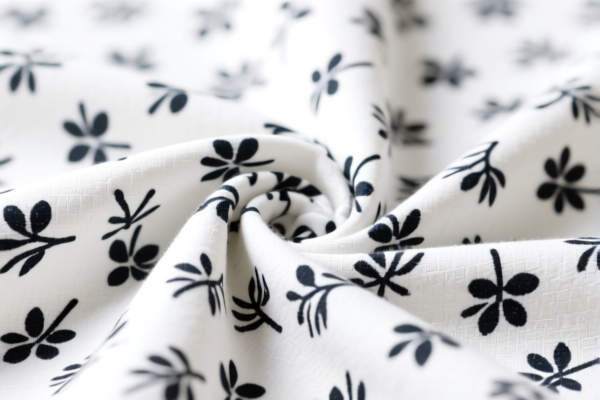
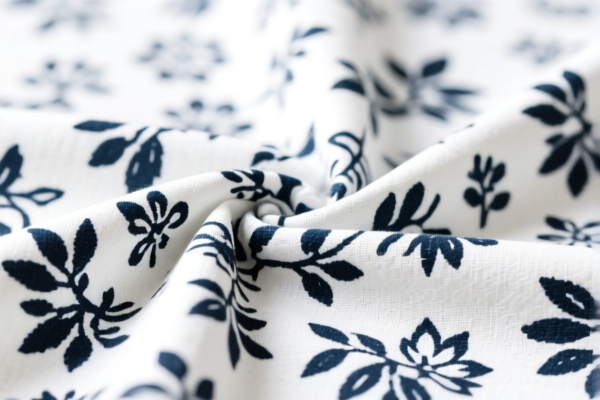
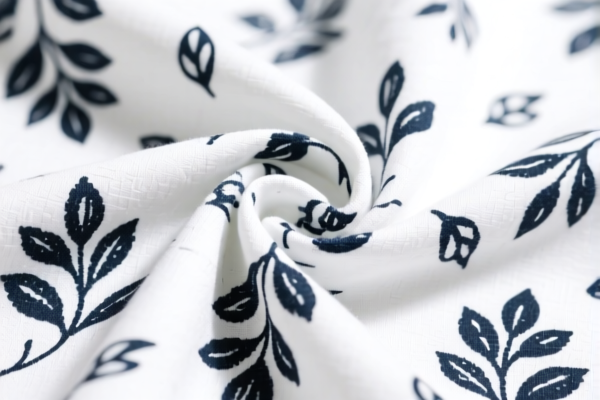
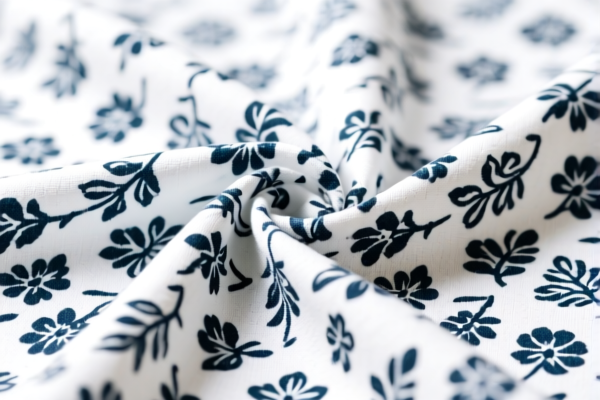
AI分析
🧵 High Density Cotton Printed Fabric (Other Fabrics)
🌐 HS Code Reference & Customs Clearance Guide | 2026 Latest Tariff Analysis | Professional Clearance Strategy
📌 I. Product Definition & Classification: Do You Really Understand "High Density Cotton Printed Fabric"?
High-density cotton printed fabric is a widely used textile material in the apparel, home textiles, and industrial sectors. In international trade, its classification depends heavily on: 1. Cotton Content: Whether it meets specific weight percentages. 2. Weave Structure: Density and type of weave. 3. Printing Method: The technique used for printing patterns. 4. Specific Use: Whether it falls under specific categories or is classified as "Other."
⚠️ Key Distinction Points:
- If the fabric has a high cotton content and specific printing characteristics, it may fall under 5209.59.00 or 5208.59.80.
- If the fabric does not meet specific criteria for primary categories, it may be classified under "Other" provisions, such as 5209.59.00.90 or 5208.59.60.90.
📦 II. HS Code Classification Details (2026 Latest Tariff Authority Comparison)
| HS Code | Product Description | Application Scenario | Cotton Content Requirement |
|---|---|---|---|
5209.59.00.90 |
High-density cotton printed fabric, other fabrics, matching cotton material and printing form, classified as "Other" | General use, loose classification, broad cotton content | ✅ Matches |
5209.59.00.40 |
High-density cotton printed fabric, other fabrics, meets cotton content requirements, printed fabric, classified as "Other" | Specific cotton content, standard printed fabric | ✅ Meets |
5208.59.80.90 |
High-density cotton printed fabric, other fabrics, matching cotton material and printed fabric form, classified as "Other" fallback | Broad classification, fallback for cotton material | ✅ Matches |
5208.59.60.90 |
High-density cotton printed fabric, other fabrics, meets cotton requirements, printed fabric, classified as "Other" fallback definition | Fallback classification, cotton-based printed fabric | ✅ Meets |
5209.59.00.90 |
High-density cotton printed fabric, other fabrics, consistent cotton material and printing form, classified as other fabrics | Consistent classification, broad cotton content | ✅ Matches |
🔍 Key Reminders:
- All fabrics that do not meet specific primary category criteria should be classified under "Other" provisions.
- Cotton content is a critical factor in determining the correct HS Code.
- Printing method and weave structure also influence classification.
💰 III. 2026 Latest Tariff Rate Details (Including Additional Taxes, Policy Add-ons)
✅ Applicable Country: United States (US)
✅ Origin: China (CN)
✅ Effective Date: From November 10, 2025 (including subsequent imports)
🎯 1. 5209.59.00.90 —— High-Density Cotton Printed Fabric, Other Fabrics
| Item | Content |
|---|---|
| Base Tariff Rate | 8.4% (ad valorem) |
| USITC Additional Tax | +25% (from USITC Footnote 9903.88.01) |
| IEEPA Additional Tax | +10% (for China/Hong Kong products, effective from November 10, 2025) |
| Total Tax Rate | 43.4% |
| Tax Calculation | CIF Value × 43.4% |
| De Minimis Exemption | ❌ Not Eligible (deny_de_minimis) |
| Legal Basis Path | IEEPA:9903.01.25 → IEEPA:9903.01.24 → USITC:5209.59.00.90 → FOOTNOTE:9903.88.01 |
📌 Explanation:
- The 25% USITC Additional Tax is derived from the "Additional Duties" under Section 301 of the US Trade Act;
- The 10% IEEPA Additional Tax is for duties imposed on Chinese/Hong Kong products under the International Emergency Economic Powers Act;
- Total 43.4%, which is considered a high tariff rate.
🎯 2. 5209.59.00.40 —— High-Density Cotton Printed Fabric, Other Fabrics, Meets Cotton Content Requirements
| Item | Content |
|---|---|
| Base Tariff Rate | 8.4% |
| USITC Additional Tax | +25% |
| IEEPA Additional Tax | +10% |
| Total Tax Rate | 43.4% |
| Tax Calculation | CIF × 43.4% |
| De Minimis Exemption | ❌ Not Eligible |
| Legal Basis Path | IEEPA:9901.25 → IEEPA:9903.01.24 → USITC:5209.59.00.40 → FOOTNOTE:9903.88.01 |
📌 Note:
- Same as the previous entry, classified under "Other" provisions;
- Applicable to fabrics that meet specific cotton content requirements.
🎯 3. 5208.59.80.90 —— High-Density Cotton Printed Fabric, Other Fabrics, Fallback Classification
| Item | Content |
|---|---|
| Base Tariff Rate | 11.4% |
| USITC Additional Tax | +25% |
| IEEPA Additional Tax | +10% |
| Total Tax Rate | 46.4% |
| Tax Calculation | CIF × 46.4% |
| De Minimis Exemption | ❌ Not Eligible |
| Legal Basis Path | IEEPA:9903.01.25 → IEEPA:9903.01.24 → USITC:5208.59.80.90 → FOOTNOTE:9903.88.01 |
📌 Note:
- Higher base tariff rate due to broader classification;
- Applicable when specific criteria for other categories are not met.
🎯 4. 5208.59.60.90 —— High-Density Cotton Printed Fabric, Other Fabrics, Fallback Definition
| Item | Content |
|---|---|
| Base Tariff Rate | 9.7% |
| USITC Additional Tax | +25% |
| IEEPA Additional Tax | +10% |
| Total Tax Rate | 44.7% |
| Tax Calculation | CIF × 44.7% |
| De Minimis Exemption | ❌ Not Eligible |
| Legal Basis Path | IEEPA:9903.01.25 → IEEPA:9903.01.24 → USITC:5208.59.60.90 → FOOTNOTE:9903.88.01 |
📌 Note:
- Moderate base tariff rate;
- Applicable to cotton-based printed fabrics that do not meet specific primary category criteria.
🛠️ IV. Customs Clearance Practical Advice (Combat Pitfall Avoidance Guide)
✅ 1. Preparation Material Checklist (All Are Essential)
| Material | Must Provide | Description |
|---|---|---|
| ✅ Product Specification Sheet | ✔️ | Includes dimensions, weave density, printing method, cotton content |
| ✅ Fabric Composition Report | ✔️ | Third-party testing report confirming cotton content |
| ✅ Product Photos (Including Labels) | ✔️ | Clear images showing patterns, labels, and packaging |
| ✅ Commercial Invoice | ✔️ | Clearly state "High-Density Cotton Printed Fabric" |
| ✅ Packing List | ✔️ | Detail the relationship between fabrics and accessories |
| ✅ Certificate of Origin (CO) | ✔️ | If not produced in China, eligible for preferential rates |
✅ 2. Declaration Skills (Key Mantra)
🔥 "High Density, Check Cotton, Print Method, Avoid Pitfalls!"
| Situation | Correct Declaration Method | Incorrect Approach |
|---|---|---|
| High-density cotton printed fabric | 5209.59.00.90 or 5209.59.00.40 |
Misclassified as "other fabrics" → 43.4% |
| Fabric with specific cotton content | 5209.59.00.40 |
Misclassified as "fallback" → 44.7% |
| Fallback classification | 5208.59.80.90 or 5208.59.60.90 |
Misclassified as "primary category" → Higher tariffs |
| Industrial use | 5208.59.80.90 |
Misclassified as "apparel" → Higher tariffs |
✅ 3. Special Case Handling
| Situation | Handling Advice |
|---|---|
| OEM Custom Fabric | Provide customer orders + design drawings to avoid being classified as "non-standard" |
| Fabric Used for Medical Devices | If for special purposes, apply for "non-commercial" exemption, but provide proof |
| Fabric Used for Military/Aerospace | Apply for "special purpose" declaration, tariffs may be reduced, consult in advance |
| Mixed Material Fabric | Provide detailed composition reports to avoid misclassification |
🌍 V. Global Major Market Customs Clearance Comparison (2026 Latest)
| Country/Region | Recommended HS Code | Tariff | Certification Requirements | Notes |
|---|---|---|---|---|
| 🇺🇸 United States | 5209.59.00.90 |
43.4% (Chinese origin) | None Specific | High tariffs for Chinese-origin fabrics |
| 🇨🇳 China | 5209.59.00.90 |
5% | None Specific | No additional tariffs |
| 🇪🇺 European Union | 5209.59.00.90 |
0% (If CE Compliant) | CE + REACH | No additional tariffs |
| 🇦🇺 Australia | 5209.59.00.90 |
5% | RCM | No additional tariffs |
| 🇯🇵 Japan | 5209.59.00.90 |
0% | PSE | No additional tariffs |
📌 Conclusion:
- The United States imposes significantly higher tariffs on Chinese-origin fabrics;
- Chinese-origin fabrics face high customs clearance costs in the US, recommend evaluating supply chain adjustments or alternative production locations.
📌 VI. Common Mistakes & Pitfall Avoidance Guide (Blood Lessons)
❌ Mistake 1: Misclassifying high-density cotton printed fabric as "other fabrics" without considering cotton content
👉 Consequence: Tariffs increase from 43.4% to 46.4% → Additional costs!
❌ Mistake 2: Failing to provide third-party testing reports
👉 Consequence: Customs cannot verify cotton content → Delayed clearance or return
❌ Mistake 3: Using vague terms like "cotton fabric" instead of "high-density cotton printed fabric"
👉 Consequence: Misclassification → Higher tariffs and penalties
❌ Mistake 4: Not specifying the printing method
👉 Consequence: Ambiguity in classification → Potential penalties
✅ Correct Approach:
“High-Density Cotton Printed Fabric, 100% Cotton, Digital Print, 300 GSM, for Apparel Use, Model XYZ, Compliant with US Standards”
🎯 VII. Conclusion: Professional Declaration, Save Time, Reduce Costs, Increase Efficiency!
🎯 Remember the Mantra:
🔹 "High Density, Check Cotton, Print Method, Avoid Pitfalls!"
🔹 "HS Code Determines Fate, Tariff Differs by 25 Points, One Step Wrong, Thousands in Penalties!"
📌 Tips:
If your fabric is originated from Vietnam, Mexico, Thailand, or Malaysia, you may apply for IEEPA Exemptions, tariffs are only 0%~5%;
Recommend applying for Advance Rulings in advance to avoid customs clearance risks.
📣 Immediate Action:
📞 Contact Professional Customs Brokers + Provide Product Images + Apply for HS Code Advance Ruling
🚀 Ensure Your Fabric Clears Customs Smoothly, Exports Efficiently, Profits Double!
✨ Professional Customs Clearance Starts with Accurate Classification!
💼 Every Cent of Your Cost Deserves Precise Calculation!
用户评价
关于 HS 编码归类
协调制度(HS)是由世界海关组织(WCO)制定的国际贸易商品分类标准。全球 200 多个国家采用 HS 系统作为海关关税、贸易统计和进出口监管的基础。
每个 HS 编码遵循以下层级结构:
- 章(2 位)——商品大类(例如:第 84 章:机器和机械设备)
- 品目(4 位)——章内的更具体分类
- 子目(6 位)——国际通用细分,所有 WCO 成员国统一使用
- 本国细分(8-10 位)——各国自行扩展的细分编码,如美国 HTSUS 10 位编码
正确的 HS 编码归类对于顺利通关、准确缴纳关税和遵守贸易法规至关重要。错误归类可能导致海关延误、多缴关税或罚款。
从CN进口到US时,适用的关税税率可能包括:
- 最惠国(MFN)税率——适用于 WTO 成员国的标准关税税率
- 普通税率——适用于无贸易协定国家
- 贸易救济关税——附加关税,如 301 条款(反倾销)、232 条款(国家安全)或反补贴税
本页内容仅供参考。如需正式归类,请咨询当地海关或持牌报关代理。