High density cotton printed fabric other fabrics
CN → US| HS Code | Tariff Rate | Origin | Destination | Doc |
|---|---|---|---|---|
| 5209590090 | 43.4% | CN | US | Official Doc |
| 5209590040 | 43.4% | CN | US | Official Doc |
| 5208598090 | 46.4% | CN | US | Official Doc |
| 5208596090 | 44.7% | CN | US | Official Doc |
Product Images
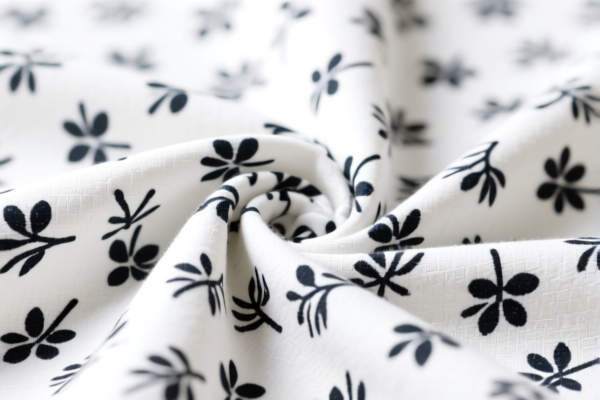
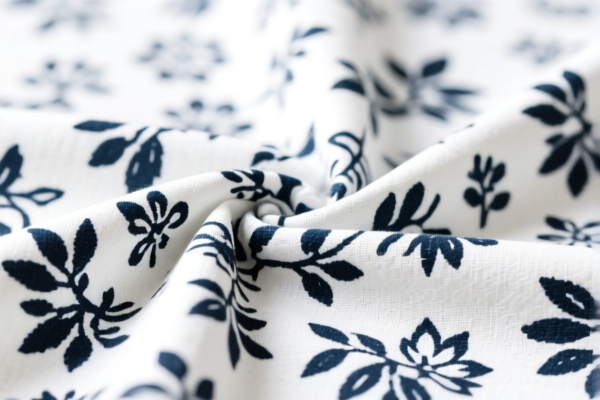
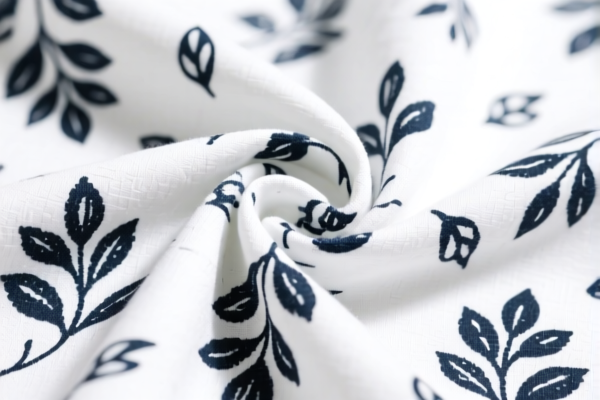
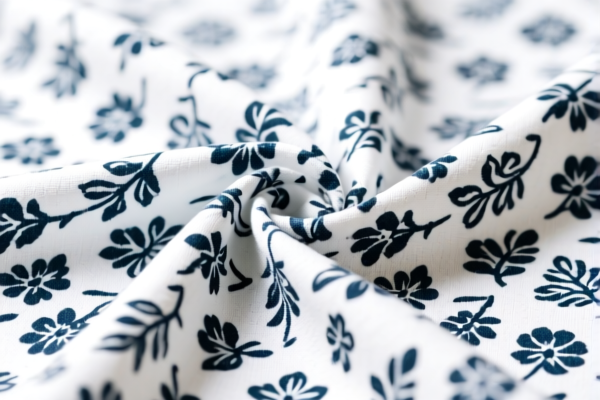
AI Analysis
🧵 High Density Cotton Printed Fabric (Other Fabrics)
🌐 HS Code Reference & Customs Clearance Guide | 2026 Latest Tariff Analysis | Professional Clearance Strategy
📌 I. Product Definition & Classification: Do You Really Understand "High Density Cotton Printed Fabric"?
High-density cotton printed fabric is a widely used textile material in the apparel, home textiles, and industrial sectors. In international trade, its classification depends heavily on: 1. Cotton Content: Whether it meets specific weight percentages. 2. Weave Structure: Density and type of weave. 3. Printing Method: The technique used for printing patterns. 4. Specific Use: Whether it falls under specific categories or is classified as "Other."
⚠️ Key Distinction Points:
- If the fabric has a high cotton content and specific printing characteristics, it may fall under 5209.59.00 or 5208.59.80.
- If the fabric does not meet specific criteria for primary categories, it may be classified under "Other" provisions, such as 5209.59.00.90 or 5208.59.60.90.
📦 II. HS Code Classification Details (2026 Latest Tariff Authority Comparison)
| HS Code | Product Description | Application Scenario | Cotton Content Requirement |
|---|---|---|---|
5209.59.00.90 |
High-density cotton printed fabric, other fabrics, matching cotton material and printing form, classified as "Other" | General use, loose classification, broad cotton content | ✅ Matches |
5209.59.00.40 |
High-density cotton printed fabric, other fabrics, meets cotton content requirements, printed fabric, classified as "Other" | Specific cotton content, standard printed fabric | ✅ Meets |
5208.59.80.90 |
High-density cotton printed fabric, other fabrics, matching cotton material and printed fabric form, classified as "Other" fallback | Broad classification, fallback for cotton material | ✅ Matches |
5208.59.60.90 |
High-density cotton printed fabric, other fabrics, meets cotton requirements, printed fabric, classified as "Other" fallback definition | Fallback classification, cotton-based printed fabric | ✅ Meets |
5209.59.00.90 |
High-density cotton printed fabric, other fabrics, consistent cotton material and printing form, classified as other fabrics | Consistent classification, broad cotton content | ✅ Matches |
🔍 Key Reminders:
- All fabrics that do not meet specific primary category criteria should be classified under "Other" provisions.
- Cotton content is a critical factor in determining the correct HS Code.
- Printing method and weave structure also influence classification.
💰 III. 2026 Latest Tariff Rate Details (Including Additional Taxes, Policy Add-ons)
✅ Applicable Country: United States (US)
✅ Origin: China (CN)
✅ Effective Date: From November 10, 2025 (including subsequent imports)
🎯 1. 5209.59.00.90 —— High-Density Cotton Printed Fabric, Other Fabrics
| Item | Content |
|---|---|
| Base Tariff Rate | 8.4% (ad valorem) |
| USITC Additional Tax | +25% (from USITC Footnote 9903.88.01) |
| IEEPA Additional Tax | +10% (for China/Hong Kong products, effective from November 10, 2025) |
| Total Tax Rate | 43.4% |
| Tax Calculation | CIF Value × 43.4% |
| De Minimis Exemption | ❌ Not Eligible (deny_de_minimis) |
| Legal Basis Path | IEEPA:9903.01.25 → IEEPA:9903.01.24 → USITC:5209.59.00.90 → FOOTNOTE:9903.88.01 |
📌 Explanation:
- The 25% USITC Additional Tax is derived from the "Additional Duties" under Section 301 of the US Trade Act;
- The 10% IEEPA Additional Tax is for duties imposed on Chinese/Hong Kong products under the International Emergency Economic Powers Act;
- Total 43.4%, which is considered a high tariff rate.
🎯 2. 5209.59.00.40 —— High-Density Cotton Printed Fabric, Other Fabrics, Meets Cotton Content Requirements
| Item | Content |
|---|---|
| Base Tariff Rate | 8.4% |
| USITC Additional Tax | +25% |
| IEEPA Additional Tax | +10% |
| Total Tax Rate | 43.4% |
| Tax Calculation | CIF × 43.4% |
| De Minimis Exemption | ❌ Not Eligible |
| Legal Basis Path | IEEPA:9901.25 → IEEPA:9903.01.24 → USITC:5209.59.00.40 → FOOTNOTE:9903.88.01 |
📌 Note:
- Same as the previous entry, classified under "Other" provisions;
- Applicable to fabrics that meet specific cotton content requirements.
🎯 3. 5208.59.80.90 —— High-Density Cotton Printed Fabric, Other Fabrics, Fallback Classification
| Item | Content |
|---|---|
| Base Tariff Rate | 11.4% |
| USITC Additional Tax | +25% |
| IEEPA Additional Tax | +10% |
| Total Tax Rate | 46.4% |
| Tax Calculation | CIF × 46.4% |
| De Minimis Exemption | ❌ Not Eligible |
| Legal Basis Path | IEEPA:9903.01.25 → IEEPA:9903.01.24 → USITC:5208.59.80.90 → FOOTNOTE:9903.88.01 |
📌 Note:
- Higher base tariff rate due to broader classification;
- Applicable when specific criteria for other categories are not met.
🎯 4. 5208.59.60.90 —— High-Density Cotton Printed Fabric, Other Fabrics, Fallback Definition
| Item | Content |
|---|---|
| Base Tariff Rate | 9.7% |
| USITC Additional Tax | +25% |
| IEEPA Additional Tax | +10% |
| Total Tax Rate | 44.7% |
| Tax Calculation | CIF × 44.7% |
| De Minimis Exemption | ❌ Not Eligible |
| Legal Basis Path | IEEPA:9903.01.25 → IEEPA:9903.01.24 → USITC:5208.59.60.90 → FOOTNOTE:9903.88.01 |
📌 Note:
- Moderate base tariff rate;
- Applicable to cotton-based printed fabrics that do not meet specific primary category criteria.
🛠️ IV. Customs Clearance Practical Advice (Combat Pitfall Avoidance Guide)
✅ 1. Preparation Material Checklist (All Are Essential)
| Material | Must Provide | Description |
|---|---|---|
| ✅ Product Specification Sheet | ✔️ | Includes dimensions, weave density, printing method, cotton content |
| ✅ Fabric Composition Report | ✔️ | Third-party testing report confirming cotton content |
| ✅ Product Photos (Including Labels) | ✔️ | Clear images showing patterns, labels, and packaging |
| ✅ Commercial Invoice | ✔️ | Clearly state "High-Density Cotton Printed Fabric" |
| ✅ Packing List | ✔️ | Detail the relationship between fabrics and accessories |
| ✅ Certificate of Origin (CO) | ✔️ | If not produced in China, eligible for preferential rates |
✅ 2. Declaration Skills (Key Mantra)
🔥 "High Density, Check Cotton, Print Method, Avoid Pitfalls!"
| Situation | Correct Declaration Method | Incorrect Approach |
|---|---|---|
| High-density cotton printed fabric | 5209.59.00.90 or 5209.59.00.40 |
Misclassified as "other fabrics" → 43.4% |
| Fabric with specific cotton content | 5209.59.00.40 |
Misclassified as "fallback" → 44.7% |
| Fallback classification | 5208.59.80.90 or 5208.59.60.90 |
Misclassified as "primary category" → Higher tariffs |
| Industrial use | 5208.59.80.90 |
Misclassified as "apparel" → Higher tariffs |
✅ 3. Special Case Handling
| Situation | Handling Advice |
|---|---|
| OEM Custom Fabric | Provide customer orders + design drawings to avoid being classified as "non-standard" |
| Fabric Used for Medical Devices | If for special purposes, apply for "non-commercial" exemption, but provide proof |
| Fabric Used for Military/Aerospace | Apply for "special purpose" declaration, tariffs may be reduced, consult in advance |
| Mixed Material Fabric | Provide detailed composition reports to avoid misclassification |
🌍 V. Global Major Market Customs Clearance Comparison (2026 Latest)
| Country/Region | Recommended HS Code | Tariff | Certification Requirements | Notes |
|---|---|---|---|---|
| 🇺🇸 United States | 5209.59.00.90 |
43.4% (Chinese origin) | None Specific | High tariffs for Chinese-origin fabrics |
| 🇨🇳 China | 5209.59.00.90 |
5% | None Specific | No additional tariffs |
| 🇪🇺 European Union | 5209.59.00.90 |
0% (If CE Compliant) | CE + REACH | No additional tariffs |
| 🇦🇺 Australia | 5209.59.00.90 |
5% | RCM | No additional tariffs |
| 🇯🇵 Japan | 5209.59.00.90 |
0% | PSE | No additional tariffs |
📌 Conclusion:
- The United States imposes significantly higher tariffs on Chinese-origin fabrics;
- Chinese-origin fabrics face high customs clearance costs in the US, recommend evaluating supply chain adjustments or alternative production locations.
📌 VI. Common Mistakes & Pitfall Avoidance Guide (Blood Lessons)
❌ Mistake 1: Misclassifying high-density cotton printed fabric as "other fabrics" without considering cotton content
👉 Consequence: Tariffs increase from 43.4% to 46.4% → Additional costs!
❌ Mistake 2: Failing to provide third-party testing reports
👉 Consequence: Customs cannot verify cotton content → Delayed clearance or return
❌ Mistake 3: Using vague terms like "cotton fabric" instead of "high-density cotton printed fabric"
👉 Consequence: Misclassification → Higher tariffs and penalties
❌ Mistake 4: Not specifying the printing method
👉 Consequence: Ambiguity in classification → Potential penalties
✅ Correct Approach:
“High-Density Cotton Printed Fabric, 100% Cotton, Digital Print, 300 GSM, for Apparel Use, Model XYZ, Compliant with US Standards”
🎯 VII. Conclusion: Professional Declaration, Save Time, Reduce Costs, Increase Efficiency!
🎯 Remember the Mantra:
🔹 "High Density, Check Cotton, Print Method, Avoid Pitfalls!"
🔹 "HS Code Determines Fate, Tariff Differs by 25 Points, One Step Wrong, Thousands in Penalties!"
📌 Tips:
If your fabric is originated from Vietnam, Mexico, Thailand, or Malaysia, you may apply for IEEPA Exemptions, tariffs are only 0%~5%;
Recommend applying for Advance Rulings in advance to avoid customs clearance risks.
📣 Immediate Action:
📞 Contact Professional Customs Brokers + Provide Product Images + Apply for HS Code Advance Ruling
🚀 Ensure Your Fabric Clears Customs Smoothly, Exports Efficiently, Profits Double!
✨ Professional Customs Clearance Starts with Accurate Classification!
💼 Every Cent of Your Cost Deserves Precise Calculation!
Customer Reviews
About HS Code Classification
The Harmonized System (HS) is an internationally standardized nomenclature developed by the World Customs Organization (WCO) to classify traded products. Over 200 countries use the HS system as the basis for customs tariffs, trade statistics, and import/export regulations.
Each HS code follows a hierarchical structure:
- Chapter (2 digits) — Broad category of goods (e.g., Chapter 84: Machinery and Mechanical Appliances)
- Heading (4 digits) — More specific grouping within the chapter
- Subheading (6 digits) — Internationally standardized breakdown, used by all WCO member countries
- National subdivisions (8-10 digits) — Country-specific extensions for further classification, such as US HTSUS 10-digit codes
Correct HS code classification is essential for smooth customs clearance, accurate duty payment, and compliance with trade regulations. Misclassification can lead to customs delays, overpayment of duties, or penalties.
When importing from CN to US, the applicable tariff rates may include:
- Most-Favored-Nation (MFN) rate — The standard duty rate applied to WTO members
- General rate — Applied to countries without trade agreements
- Trade remedy duties — Additional tariffs such as Section 301 (anti-dumping), Section 232 (national security), or countervailing duties
The information provided on this page is for reference purposes only. For official classification, please consult with your local customs authority or a licensed customs broker.