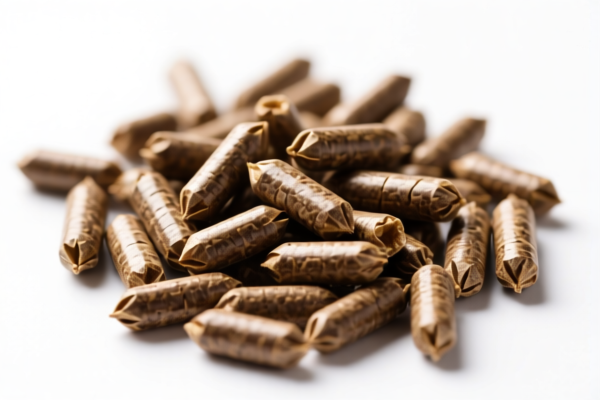
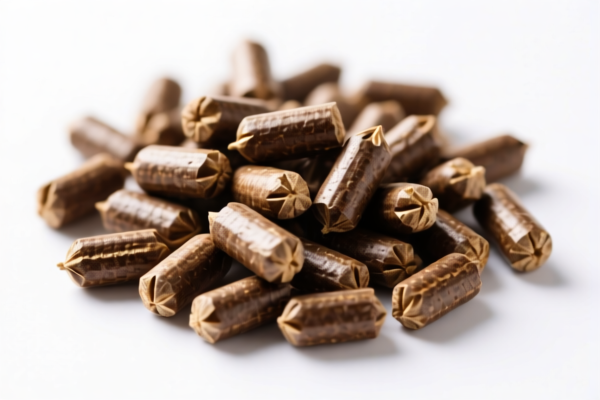
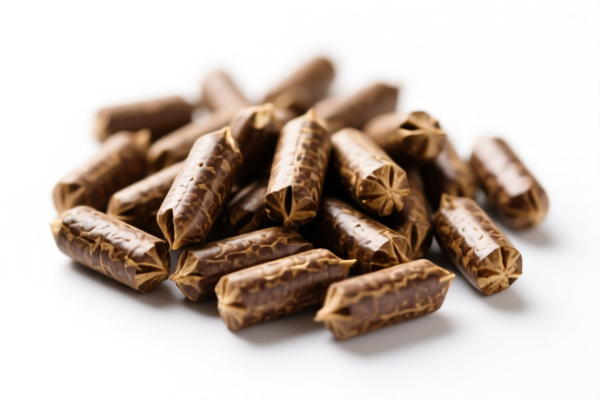
High quality wood pellet fuel
CN → US| HS编码 | 关税税率 | 原产国 | 目的国 | 文档 |
|---|---|---|---|---|
| 4401310000 | 35.0% | CN | US | 官方文档 |
| 4401394210 | 35.0% | CN | US | 官方文档 |
商品图片

AI分析
🪵 Wood Pellet Fuel (High Quality)
🌐 HS Code Reference & Customs Clearance Guide | 2026 Latest Tariff Analysis | Professional Logistics Strategy
📌 I. Product Definition & Classification: What is "High Quality Wood Pellet Fuel"?
Wood pellets are a compressed biomass fuel derived from sawdust, wood chips, or other wood waste materials. In international trade, they are primarily classified under Chapter 44 ("Wood and articles of wood; wood charcoal").
The key distinction in classification lies in the form and aggregation of the wood waste: * Standard Wood Pellets (4401.31): Agglomerated wood waste/sawdust formed into standardized cylindrical pellets. This is the most common form for residential and industrial heating. * Other Agglomerated Sawdust (4401.39): Includes sawdust agglomerated in forms other than standard pellets (e.g., briquettes, irregular logs, or non-standard shapes).
⚠️ Critical Distinction:
- If the product is in standard cylindrical pellets (typically 6-8mm diameter, 10-30mm length) →归入 4401.31.00.00
- If the product is sawdust agglomerated into briquettes, logs, or other non-pellet forms →归入 4401.39.42.10
📦 II. HS Code Classification Details (2026 Latest Tariff Authority Match)
| HS Code | Product Description | Applicable Scenario | Form |
|---|---|---|---|
4401.31.00.00 |
Wood pellets | Standard biomass fuel pellets for heating/cooking | ✅ Cylindrical Pellets |
4401.39.42.10 |
Other Sawdust | Sawdust agglomerated into briquettes or non-pellet forms | ❌ Briquettes/Logs |
🔍 Key Reminder:
- "High Quality" is a commercial term, not a customs classification criterion. Customs determines the HS code based on physical form (pellet vs. briquette) and material origin (wood waste/sawdust). - Both HS codes fall under the broader category: "Sawdust and wood waste and scrap, agglomerated in logs, briquettes, pellets or similar forms."
💰 III. 2026 Latest Tariff Rate Details (China to US)
✅ Applicable Country: United States (US)
✅ Origin: China (CN)
✅ Effective Date: 2025 onwards (Current Policy)
🎯 1. 4401.31.00.00 — Wood Pellets
| Item | Content |
|---|---|
| Base Duty Rate | 0.0% (ad valorem) |
| Additional Duty | +25.0% (Section 301 Tariff) |
| Total Tax | 25.0% |
| Tax Calculation | CIF Value × 25% |
| De Minimis Exemption | ❌ Not Eligible (Deny de minimis for Chinese wood products) |
| Legal Basis Path | Section 301: 4401.31.00.00 → Footnote: 9903.01.01 |
📌 Explanation:
- The base tariff for wood pellets is 0%, reflecting the US reliance on imported biomass fuel. - However, due to Section 301 Trade Act retaliation against China, an additional 25% is imposed. - Total Effective Duty: 25%. This is a significant cost factor for exporters.
🎯 2. 4401.39.42.10 — Other Sawdust (Agglomerated)
| Item | Content |
|---|---|
| Base Duty Rate | 0.0% (ad valorem) |
| Additional Duty | +25.0% (Section 301 Tariff) |
| Total Tax | 25.0% |
| Tax Calculation | CIF Value × 25% |
| De Minimis Exemption | ❌ Not Eligible |
| Legal Basis Path | Section 301: 4401.39.42.10 → Footnote: 9903.01.01 |
📌 Note:
- The tariff structure is identical to wood pellets. The 25% additional duty applies to all wood waste and agglomerated wood products from China under Section 301. - Whether it’s pellets or briquettes, the tax burden is the same.
🛠️ IV. Customs Clearance Practical Advice (Real-World Pitfall Avoidance)
✅ 1. Document Checklist (Must-Haves)
| Document | Required | Description |
|---|---|---|
| ✅ Commercial Invoice | ✔️ | Must clearly state: "Wood Pellets" or "Agglomerated Sawdust," HS Code, Country of Origin (China). |
| ✅ Packing List | ✔️ | Detail net weight, gross weight, and number of pallets/sacks. |
| ✅ Certificate of Origin (CO) | ✔️ | Essential for proving origin. No preferential tariff applies for China-US trade in this category. |
| ✅ Quality Certificate | ✔️ | Specify moisture content (<10%), ash content, and density (e.g., ENplus or PFI standards). "High Quality" claims must be backed by lab reports. |
| ✅ ISPM 15 Phytosanitary Certificate | ✔️ | CRITICAL: Wood products are subject to strict phytosanitary rules. Must show treatment (heat treatment or fumigation) to prevent pest spread. |
✅ 2. Declaration Tips (Key Mantras)
🔥 "Pest-Free, Moisture-Controlled, Origin-Declared!"
| Scenario | Correct Declaration | Wrong Practice |
|---|---|---|
| Standard Pellets | 4401.31.00.00 |
Misdeclare as "Chips" (4401.22) → Higher scrutiny |
| Briquettes | 4401.39.42.10 |
Misdeclare as "Pellets" → Potential penalty if shape differs |
| Mixed Shipment | Declare separately | Mix pellets and chips in one line item → Customs rejection |
| Origin | "Made in China" | Hide origin or use transshipment without disclosure → Smuggling risk |
✅ 3. Special Considerations
| Situation | Handling Advice |
|---|---|
| Moisture Content >10% | Customs may reject or reclassify as "waste" rather than fuel. Ensure strict quality control. |
| Additives/Binders | If >2% non-wood additives (e.g., clay, starch), declare explicitly. May affect phytosanitary clearance. |
| Bulk vs. Bagged | Bulk shipments require more detailed stowage plans. Bagged shipments must show palletization. |
| Phytosanitary Inspection | Expect random inspections at US ports. Delays are common. Pre-arrange with a customs broker. |
🌍 V. Global Market Comparison (2026 Latest)
| Country/Region | Recommended HS Code | Duty Rate (China Origin) | Certification Requirements | Notes |
|---|---|---|---|---|
| 🇺🇸 USA | 4401.31.00.00 |
25% (Section 301) | ISPM 15, ASTM D7573 | High duty, strict phytosanitary |
| 🇨🇳 China | 4401.31.00.00 |
0% (Export) | GB/T 30364 (Chinese Standard) | Major exporter, low export tax |
| 🇪🇺 EU | 4401.31.00 |
0% (General) | ENplus, FSC/PEFC | Carbon-neutral claims popular |
| 🇬🇧 UK | 4401.31.00 |
0% | ENplus | Post-Brexit rules apply |
| 🇨🇦 Canada | 4401.31.00.00 |
0% (FTA) | None | NAFT/USMCA free trade applies |
📌 Conclusion:
- USA is the only major market imposing a 25% tariff on Chinese wood pellets due to trade tensions. - EU and UK maintain 0% tariffs, making them more attractive for Chinese exporters. - Canada offers duty-free access under USMCA, but competitive sourcing from US/Local is strong.
📌 VI. Common Errors & Pitfalls (Lessons Learned)
❌ Error 1: Misclassifying "Wood Chips" (4401.22) as "Pellets" (4401.31)
👉 Consequence: Different duty rates and phytosanitary requirements. Chips are less processed and may face different inspection protocols.
❌ Error 2: Ignoring ISPM 15 Requirements
👉 Consequence: Immediate rejection or destruction of cargo at US ports. Wood products must be heat-treated or fumigated.
❌ Error 3: Declaring "High Quality" without Technical Specs
👉 Consequence: Customs may request additional documentation, causing delays. "High Quality" is not a customs term.
❌ Error 4: Underdeclaring Moisture Content
👉 Consequence: If moisture >10%, the product may be deemed unsuitable for fuel, leading to reclassification or penalties.
✅ Correct Practice:
"Wood Pellets, 6mm Diameter, Moisture <10%, Ash <1%, Heat Value >17.5 MJ/kg, Treated per ISPM 15, HS Code: 4401.31.00.00"
🎯 VII. Conclusion: Professional Declaration, Cost Efficiency
🎯 Remember the Mantra:
🔹 "Pest-Free, Dry, and Declared Right!"
🔹 "25% Duty for China-US, 0% for EU/UK, Plan Your Route!"
📌 Pro Tip:
- For US-bound shipments, factor in the 25% additional duty in your pricing strategy. Consider diversifying sourcing from Vietnam, Thailand, or Canada (if origin rules allow) to mitigate tariff risks.
- Always insist on ISPM 15 certification from your supplier. Non-compliance leads to cargo rejection.
- Use Advance Ruling requests with US Customs (CBP) if your product form is ambiguous (e.g., broken pellets).
📣 Immediate Action:
📞 Engage a licensed customs broker specializing in biomass fuels.
📄 Ensure your supplier provides ISPM 15 treatment certificates and lab test reports (moisture, ash, density).
🚀 Optimize your supply chain to mitigate the 25% Section 301 tariff.
✨ Professional Clearance Starts with Accurate Classification!
💼 Your Profit Margin Depends on Precise Tariff Management!
用户评价
关于 HS 编码归类
协调制度(HS)是由世界海关组织(WCO)制定的国际贸易商品分类标准。全球 200 多个国家采用 HS 系统作为海关关税、贸易统计和进出口监管的基础。
每个 HS 编码遵循以下层级结构:
- 章(2 位)——商品大类(例如:第 84 章:机器和机械设备)
- 品目(4 位)——章内的更具体分类
- 子目(6 位)——国际通用细分,所有 WCO 成员国统一使用
- 本国细分(8-10 位)——各国自行扩展的细分编码,如美国 HTSUS 10 位编码
正确的 HS 编码归类对于顺利通关、准确缴纳关税和遵守贸易法规至关重要。错误归类可能导致海关延误、多缴关税或罚款。
从CN进口到US时,适用的关税税率可能包括:
- 最惠国(MFN)税率——适用于 WTO 成员国的标准关税税率
- 普通税率——适用于无贸易协定国家
- 贸易救济关税——附加关税,如 301 条款(反倾销)、232 条款(国家安全)或反补贴税
本页内容仅供参考。如需正式归类,请咨询当地海关或持牌报关代理。