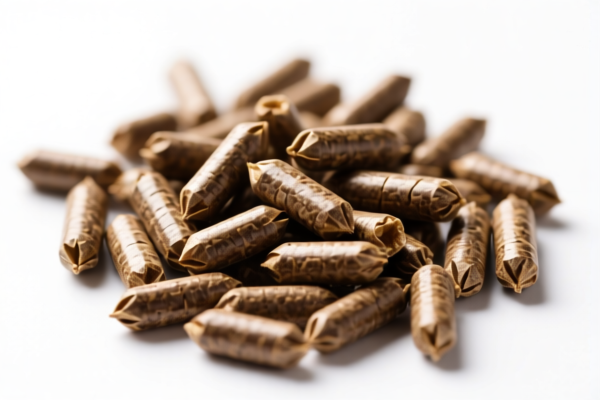
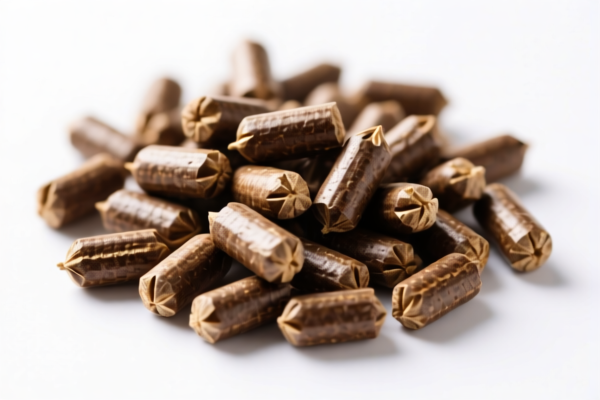
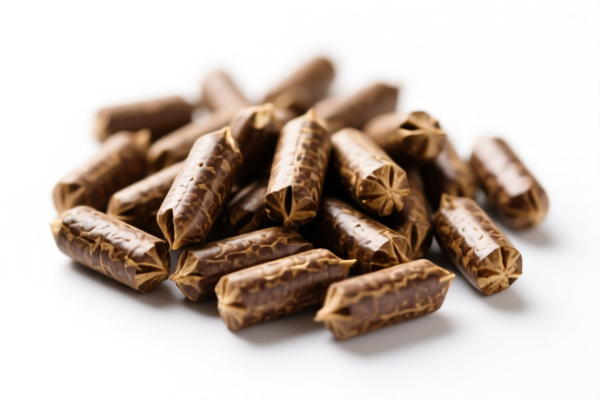
High quality wood pellet fuel
CN → US| HS Code | Tariff Rate | Origin | Destination | Doc |
|---|---|---|---|---|
| 4401310000 | 35.0% | CN | US | Official Doc |
| 4401394210 | 35.0% | CN | US | Official Doc |
Product Images

AI Analysis
🪵 Wood Pellet Fuel (High Quality)
🌐 HS Code Reference & Customs Clearance Guide | 2026 Latest Tariff Analysis | Professional Logistics Strategy
📌 I. Product Definition & Classification: What is "High Quality Wood Pellet Fuel"?
Wood pellets are a compressed biomass fuel derived from sawdust, wood chips, or other wood waste materials. In international trade, they are primarily classified under Chapter 44 ("Wood and articles of wood; wood charcoal").
The key distinction in classification lies in the form and aggregation of the wood waste: * Standard Wood Pellets (4401.31): Agglomerated wood waste/sawdust formed into standardized cylindrical pellets. This is the most common form for residential and industrial heating. * Other Agglomerated Sawdust (4401.39): Includes sawdust agglomerated in forms other than standard pellets (e.g., briquettes, irregular logs, or non-standard shapes).
⚠️ Critical Distinction:
- If the product is in standard cylindrical pellets (typically 6-8mm diameter, 10-30mm length) →归入 4401.31.00.00
- If the product is sawdust agglomerated into briquettes, logs, or other non-pellet forms →归入 4401.39.42.10
📦 II. HS Code Classification Details (2026 Latest Tariff Authority Match)
| HS Code | Product Description | Applicable Scenario | Form |
|---|---|---|---|
4401.31.00.00 |
Wood pellets | Standard biomass fuel pellets for heating/cooking | ✅ Cylindrical Pellets |
4401.39.42.10 |
Other Sawdust | Sawdust agglomerated into briquettes or non-pellet forms | ❌ Briquettes/Logs |
🔍 Key Reminder:
- "High Quality" is a commercial term, not a customs classification criterion. Customs determines the HS code based on physical form (pellet vs. briquette) and material origin (wood waste/sawdust). - Both HS codes fall under the broader category: "Sawdust and wood waste and scrap, agglomerated in logs, briquettes, pellets or similar forms."
💰 III. 2026 Latest Tariff Rate Details (China to US)
✅ Applicable Country: United States (US)
✅ Origin: China (CN)
✅ Effective Date: 2025 onwards (Current Policy)
🎯 1. 4401.31.00.00 — Wood Pellets
| Item | Content |
|---|---|
| Base Duty Rate | 0.0% (ad valorem) |
| Additional Duty | +25.0% (Section 301 Tariff) |
| Total Tax | 25.0% |
| Tax Calculation | CIF Value × 25% |
| De Minimis Exemption | ❌ Not Eligible (Deny de minimis for Chinese wood products) |
| Legal Basis Path | Section 301: 4401.31.00.00 → Footnote: 9903.01.01 |
📌 Explanation:
- The base tariff for wood pellets is 0%, reflecting the US reliance on imported biomass fuel. - However, due to Section 301 Trade Act retaliation against China, an additional 25% is imposed. - Total Effective Duty: 25%. This is a significant cost factor for exporters.
🎯 2. 4401.39.42.10 — Other Sawdust (Agglomerated)
| Item | Content |
|---|---|
| Base Duty Rate | 0.0% (ad valorem) |
| Additional Duty | +25.0% (Section 301 Tariff) |
| Total Tax | 25.0% |
| Tax Calculation | CIF Value × 25% |
| De Minimis Exemption | ❌ Not Eligible |
| Legal Basis Path | Section 301: 4401.39.42.10 → Footnote: 9903.01.01 |
📌 Note:
- The tariff structure is identical to wood pellets. The 25% additional duty applies to all wood waste and agglomerated wood products from China under Section 301. - Whether it’s pellets or briquettes, the tax burden is the same.
🛠️ IV. Customs Clearance Practical Advice (Real-World Pitfall Avoidance)
✅ 1. Document Checklist (Must-Haves)
| Document | Required | Description |
|---|---|---|
| ✅ Commercial Invoice | ✔️ | Must clearly state: "Wood Pellets" or "Agglomerated Sawdust," HS Code, Country of Origin (China). |
| ✅ Packing List | ✔️ | Detail net weight, gross weight, and number of pallets/sacks. |
| ✅ Certificate of Origin (CO) | ✔️ | Essential for proving origin. No preferential tariff applies for China-US trade in this category. |
| ✅ Quality Certificate | ✔️ | Specify moisture content (<10%), ash content, and density (e.g., ENplus or PFI standards). "High Quality" claims must be backed by lab reports. |
| ✅ ISPM 15 Phytosanitary Certificate | ✔️ | CRITICAL: Wood products are subject to strict phytosanitary rules. Must show treatment (heat treatment or fumigation) to prevent pest spread. |
✅ 2. Declaration Tips (Key Mantras)
🔥 "Pest-Free, Moisture-Controlled, Origin-Declared!"
| Scenario | Correct Declaration | Wrong Practice |
|---|---|---|
| Standard Pellets | 4401.31.00.00 |
Misdeclare as "Chips" (4401.22) → Higher scrutiny |
| Briquettes | 4401.39.42.10 |
Misdeclare as "Pellets" → Potential penalty if shape differs |
| Mixed Shipment | Declare separately | Mix pellets and chips in one line item → Customs rejection |
| Origin | "Made in China" | Hide origin or use transshipment without disclosure → Smuggling risk |
✅ 3. Special Considerations
| Situation | Handling Advice |
|---|---|
| Moisture Content >10% | Customs may reject or reclassify as "waste" rather than fuel. Ensure strict quality control. |
| Additives/Binders | If >2% non-wood additives (e.g., clay, starch), declare explicitly. May affect phytosanitary clearance. |
| Bulk vs. Bagged | Bulk shipments require more detailed stowage plans. Bagged shipments must show palletization. |
| Phytosanitary Inspection | Expect random inspections at US ports. Delays are common. Pre-arrange with a customs broker. |
🌍 V. Global Market Comparison (2026 Latest)
| Country/Region | Recommended HS Code | Duty Rate (China Origin) | Certification Requirements | Notes |
|---|---|---|---|---|
| 🇺🇸 USA | 4401.31.00.00 |
25% (Section 301) | ISPM 15, ASTM D7573 | High duty, strict phytosanitary |
| 🇨🇳 China | 4401.31.00.00 |
0% (Export) | GB/T 30364 (Chinese Standard) | Major exporter, low export tax |
| 🇪🇺 EU | 4401.31.00 |
0% (General) | ENplus, FSC/PEFC | Carbon-neutral claims popular |
| 🇬🇧 UK | 4401.31.00 |
0% | ENplus | Post-Brexit rules apply |
| 🇨🇦 Canada | 4401.31.00.00 |
0% (FTA) | None | NAFT/USMCA free trade applies |
📌 Conclusion:
- USA is the only major market imposing a 25% tariff on Chinese wood pellets due to trade tensions. - EU and UK maintain 0% tariffs, making them more attractive for Chinese exporters. - Canada offers duty-free access under USMCA, but competitive sourcing from US/Local is strong.
📌 VI. Common Errors & Pitfalls (Lessons Learned)
❌ Error 1: Misclassifying "Wood Chips" (4401.22) as "Pellets" (4401.31)
👉 Consequence: Different duty rates and phytosanitary requirements. Chips are less processed and may face different inspection protocols.
❌ Error 2: Ignoring ISPM 15 Requirements
👉 Consequence: Immediate rejection or destruction of cargo at US ports. Wood products must be heat-treated or fumigated.
❌ Error 3: Declaring "High Quality" without Technical Specs
👉 Consequence: Customs may request additional documentation, causing delays. "High Quality" is not a customs term.
❌ Error 4: Underdeclaring Moisture Content
👉 Consequence: If moisture >10%, the product may be deemed unsuitable for fuel, leading to reclassification or penalties.
✅ Correct Practice:
"Wood Pellets, 6mm Diameter, Moisture <10%, Ash <1%, Heat Value >17.5 MJ/kg, Treated per ISPM 15, HS Code: 4401.31.00.00"
🎯 VII. Conclusion: Professional Declaration, Cost Efficiency
🎯 Remember the Mantra:
🔹 "Pest-Free, Dry, and Declared Right!"
🔹 "25% Duty for China-US, 0% for EU/UK, Plan Your Route!"
📌 Pro Tip:
- For US-bound shipments, factor in the 25% additional duty in your pricing strategy. Consider diversifying sourcing from Vietnam, Thailand, or Canada (if origin rules allow) to mitigate tariff risks.
- Always insist on ISPM 15 certification from your supplier. Non-compliance leads to cargo rejection.
- Use Advance Ruling requests with US Customs (CBP) if your product form is ambiguous (e.g., broken pellets).
📣 Immediate Action:
📞 Engage a licensed customs broker specializing in biomass fuels.
📄 Ensure your supplier provides ISPM 15 treatment certificates and lab test reports (moisture, ash, density).
🚀 Optimize your supply chain to mitigate the 25% Section 301 tariff.
✨ Professional Clearance Starts with Accurate Classification!
💼 Your Profit Margin Depends on Precise Tariff Management!
Customer Reviews
About HS Code Classification
The Harmonized System (HS) is an internationally standardized nomenclature developed by the World Customs Organization (WCO) to classify traded products. Over 200 countries use the HS system as the basis for customs tariffs, trade statistics, and import/export regulations.
Each HS code follows a hierarchical structure:
- Chapter (2 digits) — Broad category of goods (e.g., Chapter 84: Machinery and Mechanical Appliances)
- Heading (4 digits) — More specific grouping within the chapter
- Subheading (6 digits) — Internationally standardized breakdown, used by all WCO member countries
- National subdivisions (8-10 digits) — Country-specific extensions for further classification, such as US HTSUS 10-digit codes
Correct HS code classification is essential for smooth customs clearance, accurate duty payment, and compliance with trade regulations. Misclassification can lead to customs delays, overpayment of duties, or penalties.
When importing from CN to US, the applicable tariff rates may include:
- Most-Favored-Nation (MFN) rate — The standard duty rate applied to WTO members
- General rate — Applied to countries without trade agreements
- Trade remedy duties — Additional tariffs such as Section 301 (anti-dumping), Section 232 (national security), or countervailing duties
The information provided on this page is for reference purposes only. For official classification, please consult with your local customs authority or a licensed customs broker.