High temperature resistant adhesive
CN → US商品图片
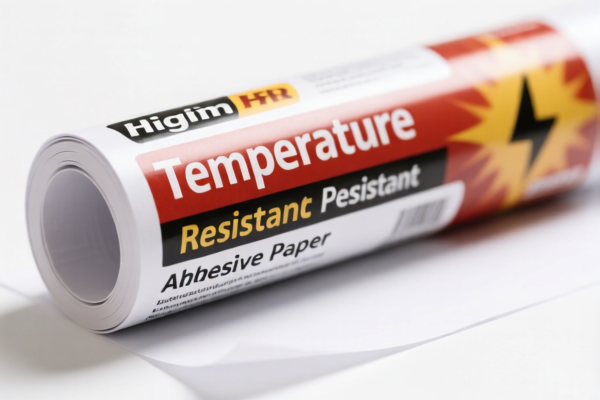
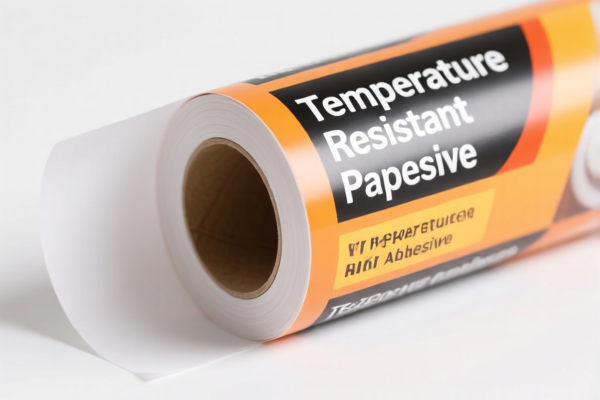
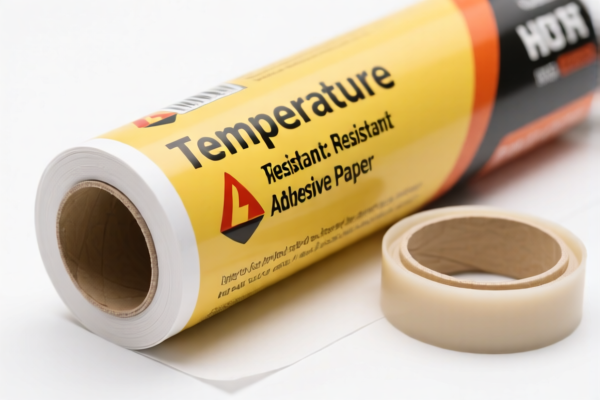
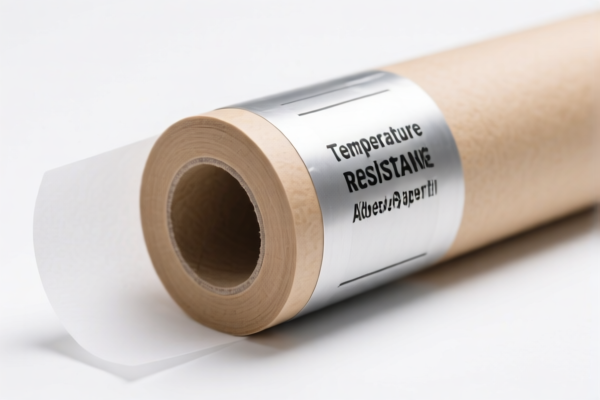
AI分析
🔥 High-Temperature Resistant Adhesive (Industrial Heat-Resistant Glue)
🌐 HS Code Reference & Customs Clearance Guide | 2026 Latest Tariff Analysis | Professional Logistics Strategy
📌 Part 1: Product Definition and Classification: Do You Really Understand "High-Temperature Adhesive"?
High-temperature resistant adhesives are specialized bonding agents capable of maintaining structural integrity and adhesion strength under extreme thermal conditions (typically exceeding 150°C to 1000°C+). In international trade, they are not a single unified category but are classified based on their chemical base, state (liquid/solid/paste), and specific application.
Two Main Categories: 1. Prepared Adhesives (Liquids/Pastes/Pastes): Ready-to-use products in tubes, bottles, or cartridges. (Most common for industrial/manufacturing). 2. Prepared Bonding Materials (Solids/Films/Chips): Solid tapes, films, or pre-formed pads used in electronics or aerospace.
⚠️ Critical Distinction Point: - If the product is a ready-to-use mixture (mixed resin, catalyst, or solvent-based) intended for direct application → Classified under Chapter 35 (Albuminoidal substances) or Chapter 39/48 depending on base material, primarily 3506. - If the product is a basic raw chemical not yet "prepared" for specific adhesive use → May fall under Chapter 29 (Organic Chemicals) or Chapter 38 (Miscellaneous Chemical Products). - If it is a solid adhesive tape/film without a backing or with a specific textile backing → Can vary between Chapter 39 (Plastics), Chapter 59 (Impregnated Textiles), or Chapter 48 (Paper/Cardboard).
📦 Part 2: Detailed HS Code Classification (2026 Latest Tariff Authority Comparison)
| HS Code | Product Description | Application Scenario | Chemical Base | State |
|---|---|---|---|---|
3506.91.00.00 |
Prepared adhesives, ready for use, based on rubber or plastics, suitable for binding paper, leather, etc. | General industrial high-temp glues (e.g., epoxy, silicone pastes) | Rubber/Plastic-based | Liquid/Paste |
3506.99.00.00 |
Other prepared adhesives and other products (including concentrates), suitable for use as adhesives | Specialty high-temp adhesives (ceramic-based, inorganic, metal-bonding) | Inorganic/Metal/Ceramic | Paste/Slurry |
3824.99.92.00 |
Other products (prepared binding agents for foundry molds, etc.) | Adhesives specifically for mold-making or niche industrial processes | Various | Liquid/Paste |
3909.50.00.00 |
Polyurethanes, in primary forms (if sold as raw material for adhesive manufacturing) | Raw PU resin for mixing into high-temp adhesive formulations | Polyurethane | Solid/Granule |
3824.60.00.00 |
Prepared binders for foundry molds and cores; chemical products (n.e.s.) | Niche industrial binders | Various | Powder/Liquid |
🔍 Key Reminder: - Most "High-Temperature Adhesives" sold in tubes/bottles fall under
3506.91.00(if rubber/plastic-based, e.g., Silicone RTV) or3506.99.00(if inorganic or other). - Silicone Adhesives are overwhelmingly classified under3506.91.00.00because silicone is considered a "plastic" derivative in HS coding context for prepared adhesives. - Do NOT classify solid adhesive tapes (like Kapton tape) under 3506; they belong to Chapter 39 or 59. This guide focuses on liquid/paste adhesives.
💰 Part 3: 2026 Latest Tariff Rate Details (Including Surtaxes, Policy Surcharges)
✅ Applicable Country: United States (US) ✅ Country of Origin: China (CN) ✅ Effective Date: From November 10, 2025 (and subsequent imports)
🎯 1. 3506.91.00.00 —— Prepared Adhesives (Rubber/Plastic-based, e.g., Silicone High-Temp Glue)
| Item | Content |
|---|---|
| Base Tariff Rate | 5.3% (ad valorem) |
| USITC Surtax (Section 301) | +25% (from USITC Footnote 9903.01.24) |
| IEEPA Surtax | +10% (against China/HK products, effective Nov 10, 2025) |
| Total Effective Rate | ~40.3% |
| Tax Calculation | CIF Value × 40.3% |
| De Minimis Exemption | ❌ Not Eligible (deny_de_minimis) |
| Legal Basis Path | IEEPA:9903.01.25 → IEEPA:9903.01.24 → USITC:3506.91.00.00 → FOOTNOTE:9903.88.01 |
📌 Explanation: - The base rate is 5.3%. - The 25% Section 301 tariff applies to most chemical products from China. - The 10% IEEPA surcharge is a new additional levy effective late 2025. - Total ~40.3% is a very high cost. Must be factored into landed cost calculations immediately.
🎯 2. 3506.99.00.00 —— Other Prepared Adhesives (e.g., Inorganic, Ceramic, Metal-Bonding)
| Item | Content |
|---|---|
| Base Tariff Rate | 5.6% (ad valorem) |
| USITC Surtax (Section 301) | +25% |
| IEEPA Surtax | +10% |
| Total Effective Rate | ~40.6% |
| Tax Calculation | CIF Value × 40.6% |
| De Minimis Exemption | ❌ Not Eligible (deny_de_minimis) |
| Legal Basis Path | IEEPA:9903.01.25 → IEEPA:9903.01.24 → USITC:3506.99.00.00 → FOOTNOTE:9903.88.01 |
📌 Note: - Even if the adhesive is "inorganic" (like ceramic glue), if it is "prepared" (mixed for use), it stays in Chapter 35. - The tariff burden is nearly identical to silicone adhesives.
🛠️ Part 4: Customs Clearance Practical Advice (Battle-Tested Pitfall Avoidance Guide)
✅ 1. Required Documentation Checklist (Missing Any = Delay/Refusal)
| Document | Mandatory | Explanation |
|---|---|---|
| ✅ Product Data Sheet (TDS/MSDS) | ✔️ | Must detail chemical composition, maximum service temperature, and active ingredients. |
| ✅ Formula/Composition Breakdown | ✔️ | Critical for HS Code determination (Rubber vs. Inorganic vs. Plastic base). |
| ✅ Photos of Packaging | ✔️ | Clear view of labels, net weight, batch numbers, and hazard symbols. |
| ✅ Third-Party Test Report | ✔️ | Proof of high-temperature resistance (e.g., ASTM C191, ISO 11359). |
| ✅ Commercial Invoice | ✔️ | Clearly state "Prepared Adhesive for High-Temperature Industrial Use". Do not just write "Glue". |
| ✅ Certificate of Origin (CO) | ✔️ | If shipped from Vietnam/Mexico, can potentially avoid US surtaxes (see below). |
| ✅ Bill of Lading/Air Waybill | ✔️ | Ensure proper weight and dimensions. |
✅ 2. Declaration Tips (Key Mnemonics)
🔥 "Base Material Defines Code, Prepare for Surtax, Don't Guess HS!"
| Situation | Correct Declaration | Wrong Action |
|---|---|---|
| Silicone RTV High-Temp Glue | 3506.91.00.00 (Silicone = Rubber/Plastic base) |
Misclassify as Chemical Raw Material → Audit Risk |
| Inorganic Ceramic Glue | 3506.99.00.00 |
Misclassify as 3824 → Possible Penalty if deemed "Prepared" |
| Raw Resin (Not Mixed) | 3907 or 2910 (Not Adhesive) |
Misclassify as 3506 → Incorrect Duty Rate |
| Adhesive Tape (Solid) | 3919 or 5906 (Not 3506) |
Misclassify as Liquid Adhesive → Delayed Release |
✅ 3. Special Scenarios Handling
| Scenario | Handling Advice |
|---|---|
| OEM Private Label | Provide OEM contract + Supplier letter confirming chemical composition. |
| Flammable/HAZMAT | High-temp adhesives often contain solvents. Must declare UN Number (e.g., UN1114, UN1993). Requires IMDG/ADR compliance. |
| Small Quantities (Samples) | Still subject to tariffs if >$800. No de minimis for China-origin goods under current rules. |
| Mixed Containers | If adhesive is mixed with non-adhesive items, customs may separate and tax each item. Declare separately. |
🌍 Part 5: Global Major Market Clearance Comparison (2026 Latest)
| Country/Region | Recommended HS Code | Tariff (China Origin) | Certification Requirements | Notes |
|---|---|---|---|---|
| 🇺🇸 USA | 3506.91.00.00 |
~40.3% | TSCA (EPA), SDS Required | High tariff burden; consider transshipment or origin change. |
| 🇨🇳 China | 3506.91.00.00 |
5-6% | CCC (if applicable), SDS | No surtaxes. Low cost. |
| 🇪🇺 EU | 3506.91 |
6.5% | REACH Registration, CLP Labeling | REACH compliance is critical; registration cost is high for new substances. |
| 🇦🇺 Australia | 3506.91 |
5% | AICIS (Industrial Chemicals Act) | Must report under AICIS if importing new chemicals. |
| 🇯🇵 Japan | 3506.91 |
6-7% | PRTR Act (Pollutant Release) | Notification required for certain volatile organic compounds (VOCs). |
📌 Conclusion: - USA has the highest effective duty (~40%) due to Section 301 + IEEPA. - EU requires strict REACH compliance, which can be a barrier for small exporters. - China-origin goods face similar high duties in the US and EU compared to pre-2018 levels, but EU doesn't have the extra IEEPA surcharge.
📌 Part 6: Common Errors & Pitfall Avoidance Guide (Lessons Learned)
❌ Error 1: Declaring "High-Temp Glue" simply as "Chemical Product"
👉 Consequence: Customs cannot determine HS Code → Detention & Inspection → Delays of 2-4 weeks.
❌ Error 2: Misclassifying Silicone Adhesive as "Plastic Sheet" (3920)
👉 Consequence: Underpayment of duty → Back taxes + Penalties when audited.
❌ Error 3: Ignoring HAZMAT/Solvent Content
👉 Consequence: Air freight rejected due to lack of proper UN packaging/labeling → Shipping delays & fines.
❌ Error 4: Assuming De Minimis Applies
👉 Consequence: Small samples from China sent via DHL/FedEx are still taxed if value >$800. No exemption for China origin under current US policy.
✅ Correct Practice:
"Prepared Silicone Adhesive for High-Temperature Industrial Use, Heat Resistant up to 300°C, Silicone-Based, Not for Medical Use, UN1993 (Flammable Liquid, N.O.S.), SDS Attached"
🎯 Part 7: Conclusion: Professional Classification, Save Costs, Smooth Clearance!
🎯 Remember the Mnemonics:
🔹 "Silicone = 3506.91, Inorganic = 3506.99"
🔹 "Prepared = Adhesive, Raw = Chemical"
🔹 "China Origin = ~40% Duty to US, Check Origin for Loopholes"
🔹 "REACH for EU, SDS for US, Always Label HAZMAT"
📌 Pro Tip:
If your high-temperature adhesive is sourced from Vietnam, Thailand, or Mexico, you may avoid the 25% Section 301 tariff and potentially the IEEPA surcharge, reducing your total duty to 5-10%. Consider supply chain diversification or minor processing abroad to qualify for Rules of Origin.
📣 Immediate Action:
📞 Consult a Licensed Customs Broker + Provide TDS/MSDS + Apply for Advance Ruling (optional but recommended for high-volume imports). 🚀 Ensure your adhesive clears customs smoothly, legally, and cost-effectively!
✨ Professional Clearance Starts with Precise Classification!
💼 Your Every Penny of Duty Cost Deserves Exact Calculation!
用户评价
关于 HS 编码归类
协调制度(HS)是由世界海关组织(WCO)制定的国际贸易商品分类标准。全球 200 多个国家采用 HS 系统作为海关关税、贸易统计和进出口监管的基础。
每个 HS 编码遵循以下层级结构:
- 章(2 位)——商品大类(例如:第 84 章:机器和机械设备)
- 品目(4 位)——章内的更具体分类
- 子目(6 位)——国际通用细分,所有 WCO 成员国统一使用
- 本国细分(8-10 位)——各国自行扩展的细分编码,如美国 HTSUS 10 位编码
正确的 HS 编码归类对于顺利通关、准确缴纳关税和遵守贸易法规至关重要。错误归类可能导致海关延误、多缴关税或罚款。
从CN进口到US时,适用的关税税率可能包括:
- 最惠国(MFN)税率——适用于 WTO 成员国的标准关税税率
- 普通税率——适用于无贸易协定国家
- 贸易救济关税——附加关税,如 301 条款(反倾销)、232 条款(国家安全)或反补贴税
本页内容仅供参考。如需正式归类,请咨询当地海关或持牌报关代理。