High temperature resistant adhesive
CN → USProduct Images
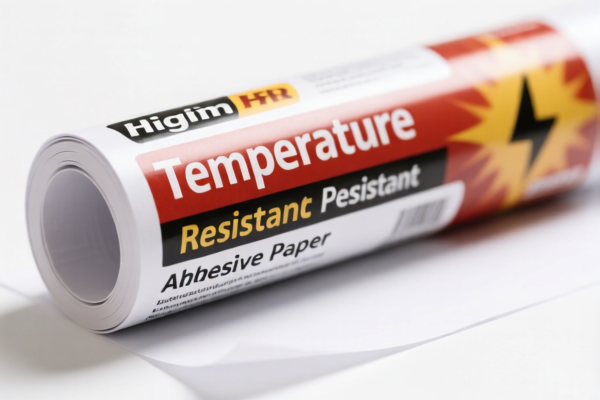
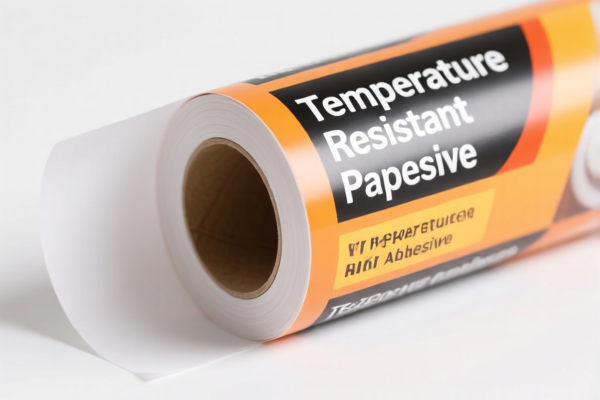
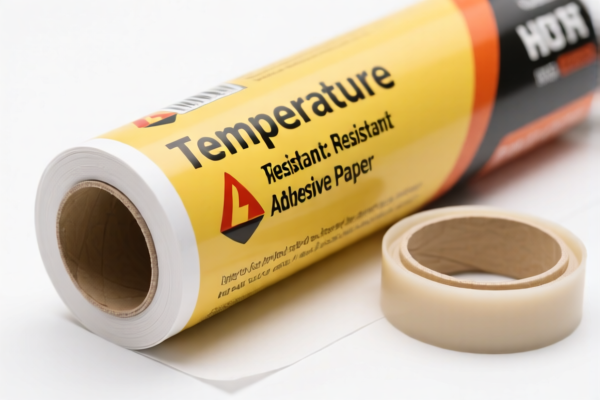
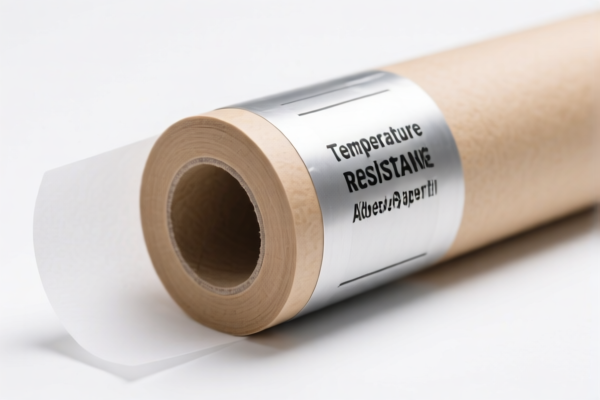
AI Analysis
🔥 High-Temperature Resistant Adhesive (Industrial Heat-Resistant Glue)
🌐 HS Code Reference & Customs Clearance Guide | 2026 Latest Tariff Analysis | Professional Logistics Strategy
📌 Part 1: Product Definition and Classification: Do You Really Understand "High-Temperature Adhesive"?
High-temperature resistant adhesives are specialized bonding agents capable of maintaining structural integrity and adhesion strength under extreme thermal conditions (typically exceeding 150°C to 1000°C+). In international trade, they are not a single unified category but are classified based on their chemical base, state (liquid/solid/paste), and specific application.
Two Main Categories: 1. Prepared Adhesives (Liquids/Pastes/Pastes): Ready-to-use products in tubes, bottles, or cartridges. (Most common for industrial/manufacturing). 2. Prepared Bonding Materials (Solids/Films/Chips): Solid tapes, films, or pre-formed pads used in electronics or aerospace.
⚠️ Critical Distinction Point: - If the product is a ready-to-use mixture (mixed resin, catalyst, or solvent-based) intended for direct application → Classified under Chapter 35 (Albuminoidal substances) or Chapter 39/48 depending on base material, primarily 3506. - If the product is a basic raw chemical not yet "prepared" for specific adhesive use → May fall under Chapter 29 (Organic Chemicals) or Chapter 38 (Miscellaneous Chemical Products). - If it is a solid adhesive tape/film without a backing or with a specific textile backing → Can vary between Chapter 39 (Plastics), Chapter 59 (Impregnated Textiles), or Chapter 48 (Paper/Cardboard).
📦 Part 2: Detailed HS Code Classification (2026 Latest Tariff Authority Comparison)
| HS Code | Product Description | Application Scenario | Chemical Base | State |
|---|---|---|---|---|
3506.91.00.00 |
Prepared adhesives, ready for use, based on rubber or plastics, suitable for binding paper, leather, etc. | General industrial high-temp glues (e.g., epoxy, silicone pastes) | Rubber/Plastic-based | Liquid/Paste |
3506.99.00.00 |
Other prepared adhesives and other products (including concentrates), suitable for use as adhesives | Specialty high-temp adhesives (ceramic-based, inorganic, metal-bonding) | Inorganic/Metal/Ceramic | Paste/Slurry |
3824.99.92.00 |
Other products (prepared binding agents for foundry molds, etc.) | Adhesives specifically for mold-making or niche industrial processes | Various | Liquid/Paste |
3909.50.00.00 |
Polyurethanes, in primary forms (if sold as raw material for adhesive manufacturing) | Raw PU resin for mixing into high-temp adhesive formulations | Polyurethane | Solid/Granule |
3824.60.00.00 |
Prepared binders for foundry molds and cores; chemical products (n.e.s.) | Niche industrial binders | Various | Powder/Liquid |
🔍 Key Reminder: - Most "High-Temperature Adhesives" sold in tubes/bottles fall under
3506.91.00(if rubber/plastic-based, e.g., Silicone RTV) or3506.99.00(if inorganic or other). - Silicone Adhesives are overwhelmingly classified under3506.91.00.00because silicone is considered a "plastic" derivative in HS coding context for prepared adhesives. - Do NOT classify solid adhesive tapes (like Kapton tape) under 3506; they belong to Chapter 39 or 59. This guide focuses on liquid/paste adhesives.
💰 Part 3: 2026 Latest Tariff Rate Details (Including Surtaxes, Policy Surcharges)
✅ Applicable Country: United States (US) ✅ Country of Origin: China (CN) ✅ Effective Date: From November 10, 2025 (and subsequent imports)
🎯 1. 3506.91.00.00 —— Prepared Adhesives (Rubber/Plastic-based, e.g., Silicone High-Temp Glue)
| Item | Content |
|---|---|
| Base Tariff Rate | 5.3% (ad valorem) |
| USITC Surtax (Section 301) | +25% (from USITC Footnote 9903.01.24) |
| IEEPA Surtax | +10% (against China/HK products, effective Nov 10, 2025) |
| Total Effective Rate | ~40.3% |
| Tax Calculation | CIF Value × 40.3% |
| De Minimis Exemption | ❌ Not Eligible (deny_de_minimis) |
| Legal Basis Path | IEEPA:9903.01.25 → IEEPA:9903.01.24 → USITC:3506.91.00.00 → FOOTNOTE:9903.88.01 |
📌 Explanation: - The base rate is 5.3%. - The 25% Section 301 tariff applies to most chemical products from China. - The 10% IEEPA surcharge is a new additional levy effective late 2025. - Total ~40.3% is a very high cost. Must be factored into landed cost calculations immediately.
🎯 2. 3506.99.00.00 —— Other Prepared Adhesives (e.g., Inorganic, Ceramic, Metal-Bonding)
| Item | Content |
|---|---|
| Base Tariff Rate | 5.6% (ad valorem) |
| USITC Surtax (Section 301) | +25% |
| IEEPA Surtax | +10% |
| Total Effective Rate | ~40.6% |
| Tax Calculation | CIF Value × 40.6% |
| De Minimis Exemption | ❌ Not Eligible (deny_de_minimis) |
| Legal Basis Path | IEEPA:9903.01.25 → IEEPA:9903.01.24 → USITC:3506.99.00.00 → FOOTNOTE:9903.88.01 |
📌 Note: - Even if the adhesive is "inorganic" (like ceramic glue), if it is "prepared" (mixed for use), it stays in Chapter 35. - The tariff burden is nearly identical to silicone adhesives.
🛠️ Part 4: Customs Clearance Practical Advice (Battle-Tested Pitfall Avoidance Guide)
✅ 1. Required Documentation Checklist (Missing Any = Delay/Refusal)
| Document | Mandatory | Explanation |
|---|---|---|
| ✅ Product Data Sheet (TDS/MSDS) | ✔️ | Must detail chemical composition, maximum service temperature, and active ingredients. |
| ✅ Formula/Composition Breakdown | ✔️ | Critical for HS Code determination (Rubber vs. Inorganic vs. Plastic base). |
| ✅ Photos of Packaging | ✔️ | Clear view of labels, net weight, batch numbers, and hazard symbols. |
| ✅ Third-Party Test Report | ✔️ | Proof of high-temperature resistance (e.g., ASTM C191, ISO 11359). |
| ✅ Commercial Invoice | ✔️ | Clearly state "Prepared Adhesive for High-Temperature Industrial Use". Do not just write "Glue". |
| ✅ Certificate of Origin (CO) | ✔️ | If shipped from Vietnam/Mexico, can potentially avoid US surtaxes (see below). |
| ✅ Bill of Lading/Air Waybill | ✔️ | Ensure proper weight and dimensions. |
✅ 2. Declaration Tips (Key Mnemonics)
🔥 "Base Material Defines Code, Prepare for Surtax, Don't Guess HS!"
| Situation | Correct Declaration | Wrong Action |
|---|---|---|
| Silicone RTV High-Temp Glue | 3506.91.00.00 (Silicone = Rubber/Plastic base) |
Misclassify as Chemical Raw Material → Audit Risk |
| Inorganic Ceramic Glue | 3506.99.00.00 |
Misclassify as 3824 → Possible Penalty if deemed "Prepared" |
| Raw Resin (Not Mixed) | 3907 or 2910 (Not Adhesive) |
Misclassify as 3506 → Incorrect Duty Rate |
| Adhesive Tape (Solid) | 3919 or 5906 (Not 3506) |
Misclassify as Liquid Adhesive → Delayed Release |
✅ 3. Special Scenarios Handling
| Scenario | Handling Advice |
|---|---|
| OEM Private Label | Provide OEM contract + Supplier letter confirming chemical composition. |
| Flammable/HAZMAT | High-temp adhesives often contain solvents. Must declare UN Number (e.g., UN1114, UN1993). Requires IMDG/ADR compliance. |
| Small Quantities (Samples) | Still subject to tariffs if >$800. No de minimis for China-origin goods under current rules. |
| Mixed Containers | If adhesive is mixed with non-adhesive items, customs may separate and tax each item. Declare separately. |
🌍 Part 5: Global Major Market Clearance Comparison (2026 Latest)
| Country/Region | Recommended HS Code | Tariff (China Origin) | Certification Requirements | Notes |
|---|---|---|---|---|
| 🇺🇸 USA | 3506.91.00.00 |
~40.3% | TSCA (EPA), SDS Required | High tariff burden; consider transshipment or origin change. |
| 🇨🇳 China | 3506.91.00.00 |
5-6% | CCC (if applicable), SDS | No surtaxes. Low cost. |
| 🇪🇺 EU | 3506.91 |
6.5% | REACH Registration, CLP Labeling | REACH compliance is critical; registration cost is high for new substances. |
| 🇦🇺 Australia | 3506.91 |
5% | AICIS (Industrial Chemicals Act) | Must report under AICIS if importing new chemicals. |
| 🇯🇵 Japan | 3506.91 |
6-7% | PRTR Act (Pollutant Release) | Notification required for certain volatile organic compounds (VOCs). |
📌 Conclusion: - USA has the highest effective duty (~40%) due to Section 301 + IEEPA. - EU requires strict REACH compliance, which can be a barrier for small exporters. - China-origin goods face similar high duties in the US and EU compared to pre-2018 levels, but EU doesn't have the extra IEEPA surcharge.
📌 Part 6: Common Errors & Pitfall Avoidance Guide (Lessons Learned)
❌ Error 1: Declaring "High-Temp Glue" simply as "Chemical Product"
👉 Consequence: Customs cannot determine HS Code → Detention & Inspection → Delays of 2-4 weeks.
❌ Error 2: Misclassifying Silicone Adhesive as "Plastic Sheet" (3920)
👉 Consequence: Underpayment of duty → Back taxes + Penalties when audited.
❌ Error 3: Ignoring HAZMAT/Solvent Content
👉 Consequence: Air freight rejected due to lack of proper UN packaging/labeling → Shipping delays & fines.
❌ Error 4: Assuming De Minimis Applies
👉 Consequence: Small samples from China sent via DHL/FedEx are still taxed if value >$800. No exemption for China origin under current US policy.
✅ Correct Practice:
"Prepared Silicone Adhesive for High-Temperature Industrial Use, Heat Resistant up to 300°C, Silicone-Based, Not for Medical Use, UN1993 (Flammable Liquid, N.O.S.), SDS Attached"
🎯 Part 7: Conclusion: Professional Classification, Save Costs, Smooth Clearance!
🎯 Remember the Mnemonics:
🔹 "Silicone = 3506.91, Inorganic = 3506.99"
🔹 "Prepared = Adhesive, Raw = Chemical"
🔹 "China Origin = ~40% Duty to US, Check Origin for Loopholes"
🔹 "REACH for EU, SDS for US, Always Label HAZMAT"
📌 Pro Tip:
If your high-temperature adhesive is sourced from Vietnam, Thailand, or Mexico, you may avoid the 25% Section 301 tariff and potentially the IEEPA surcharge, reducing your total duty to 5-10%. Consider supply chain diversification or minor processing abroad to qualify for Rules of Origin.
📣 Immediate Action:
📞 Consult a Licensed Customs Broker + Provide TDS/MSDS + Apply for Advance Ruling (optional but recommended for high-volume imports). 🚀 Ensure your adhesive clears customs smoothly, legally, and cost-effectively!
✨ Professional Clearance Starts with Precise Classification!
💼 Your Every Penny of Duty Cost Deserves Exact Calculation!
Customer Reviews
About HS Code Classification
The Harmonized System (HS) is an internationally standardized nomenclature developed by the World Customs Organization (WCO) to classify traded products. Over 200 countries use the HS system as the basis for customs tariffs, trade statistics, and import/export regulations.
Each HS code follows a hierarchical structure:
- Chapter (2 digits) — Broad category of goods (e.g., Chapter 84: Machinery and Mechanical Appliances)
- Heading (4 digits) — More specific grouping within the chapter
- Subheading (6 digits) — Internationally standardized breakdown, used by all WCO member countries
- National subdivisions (8-10 digits) — Country-specific extensions for further classification, such as US HTSUS 10-digit codes
Correct HS code classification is essential for smooth customs clearance, accurate duty payment, and compliance with trade regulations. Misclassification can lead to customs delays, overpayment of duties, or penalties.
When importing from CN to US, the applicable tariff rates may include:
- Most-Favored-Nation (MFN) rate — The standard duty rate applied to WTO members
- General rate — Applied to countries without trade agreements
- Trade remedy duties — Additional tariffs such as Section 301 (anti-dumping), Section 232 (national security), or countervailing duties
The information provided on this page is for reference purposes only. For official classification, please consult with your local customs authority or a licensed customs broker.