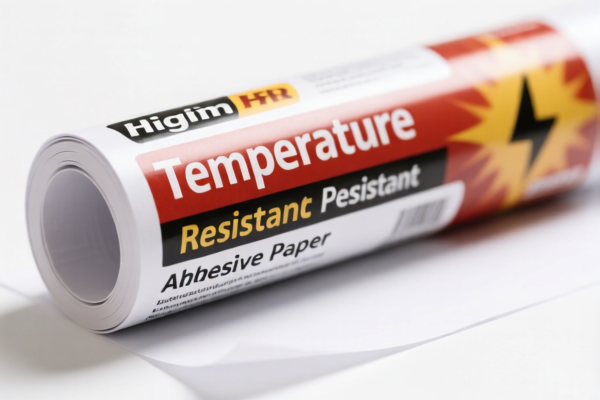
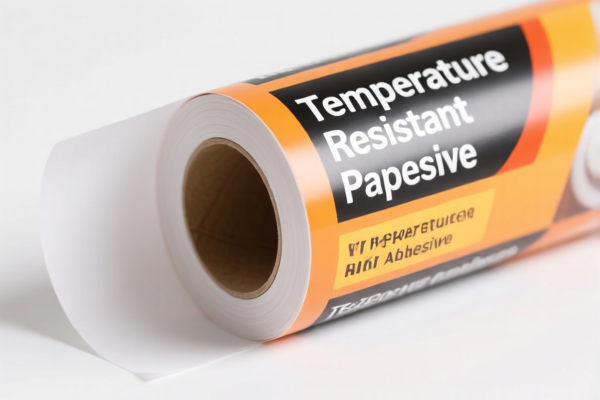
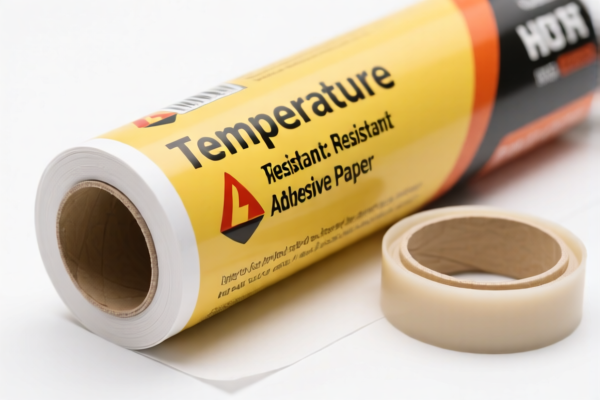
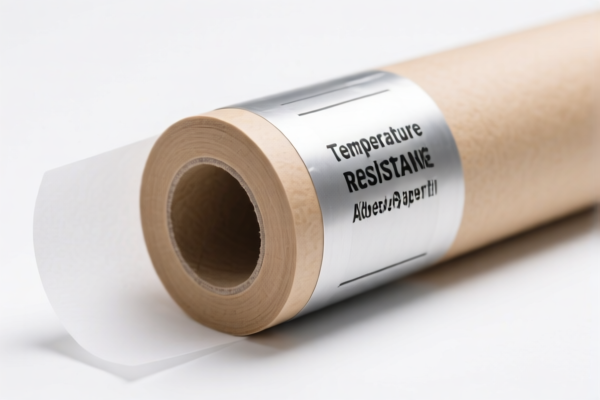
High temperature resistant paper label
CN → US| HS编码 | 关税税率 | 原产国 | 目的国 | 文档 |
|---|---|---|---|---|
| 4821904000 | 35.0% | CN | US | 官方文档 |
| 3921904010 | 39.2% | CN | US | 官方文档 |
| 4821902000 | 35.0% | CN | US | 官方文档 |
| 3919905060 | 40.8% | CN | US | 官方文档 |
| 3919102055 | 40.8% | CN | US | 官方文档 |
商品图片
AI分析
🌡️ High-Temperature Resistant Paper Label
🌐 HS Code Classification & Customs Clearance Guide | 2026 Latest Tariff Analysis | Expert Strategy for Global Trade
📌 One Product, Five Possible HS Codes — Know Which One Applies to Your Shipment!
📦 1. Product Definition & Classification: What Is a "High-Temperature Resistant Paper Label"?
A high-temperature resistant paper label is a specialized adhesive label designed to maintain integrity under extreme heat (typically above 100°C), commonly used in industrial, automotive, electronics, and medical applications.
Despite being called “paper,” its classification depends heavily on material composition, coating type, substrate structure, and form factor.
⚠️ Critical Insight:
- If it's pure paper with heat-resistant coating → Likely 4821.90.40.00 or 4821.90.20.00
- If it's paper reinforced with plastic film or board → May fall under 3921.90.40.10
- If it's plastic-based with paper-like appearance → Could be 3919.90.50.60 or 3919.10.20.55🔍 Key Determinant:
Is the base material primarily paper or plastic?
This single question decides your HS code — and your total tariff!
🧩 2. HS Code Breakdown (2026 Updated Tariff Table)
| HS Code | Product Description | Material Clue | Form Factor | Tax Rate |
|---|---|---|---|---|
4821.90.40.00 |
High-temperature resistant paper label, plain or printed, for general labeling | Paper substrate with heat-resistant coating | Flat, self-adhesive label | 35.0% |
3921.90.40.10 |
Paper-reinforced board or sheet with plastic film, used for labeling | Paper + plastic composite (e.g., paper core with film layer) | Rigid or semi-rigid sheet | 39.2% |
4821.90.20.00 |
Self-adhesive paper labels with special coatings (e.g., thermal, chemical-resistant) | Coated paper, self-adhesive, heat-resistant | Thin, flexible, flat | 35.0% |
3919.90.50.60 |
Flat, self-adhesive plastic labels, used for industrial or high-temp applications | Plastic base (e.g., PET, PP), flat, adhesive-backed | Thin, flexible, non-paper | 40.8% |
3919.10.20.55 |
Other plastic films, flat, used for labels (non-woven, non-foamed) | Plastic film, not paper-based, flexible | Thin, flat, self-adhesive | 40.8% |
📌 Important Note:
- Paper-based labels (even if heat-resistant) are not automatically plastic → must not be misclassified as plastic. - Composite materials (paper + plastic film) are not pure paper → must be assessed for dominant material.
💰 3. 2026 Latest Tariff Breakdown (US Market Only)
✅ Applicable Country: United States (US)
✅ Origin: China (CN)
✅ Effective Date: November 10, 2025 (inclusive)
✅ Tariff Regime: Section 301 + IEEPA + Footnote 9903.88.01
🎯 1. 4821.90.40.00 — Heat-Resistant Paper Label (Pure Paper with Coating)
| Item | Detail |
|---|---|
| Base Duty | 0.0% (ad valorem) |
| Section 301 (USITC) Additional Duty | +25.0% |
| IEEPA (International Emergency Economic Powers Act) Additional Duty | +10.0% |
| Total Effective Duty | 35.0% |
| Tax Calculation | CIF Value × 35.0% |
| De Minimis Threshold | ❌ Not applicable (denied under 9903.88.01) |
| Legal Basis Path | IEEPA:9903.01.25 → IEEPA:9903.01.24 → USITC:4821.90.40.00 → FOOTNOTE:9903.88.01 |
📌 Explanation:
- This code applies when the primary substrate is paper, even if coated for heat resistance. - The 25% USITC tariff is from Section 301 (China trade actions). - The 10% IEEPA tariff is a national emergency measure targeting Chinese goods. - Total: 35% — moderate compared to plastic-based equivalents.
🎯 2. 3921.90.40.10 — Paper-Reinforced Plastic Board Sheet (Composite Material)
| Item | Detail |
|---|---|
| Base Duty | 4.2% |
| Section 301 (USITC) Additional Duty | +25.0% |
| IEEPA Additional Duty | +10.0% |
| Total Effective Duty | 39.2% |
| Tax Calculation | CIF Value × 39.2% |
| De Minimis Threshold | ❌ Not applicable |
| Legal Basis Path | IEEPA:9903.01.25 → IEEPA:9903.01.24 → USITC:3921.90.40.10 → FOOTNOTE:9903.88.01 |
📌 Explanation:
- This applies when paper is combined with plastic film or board (e.g., paper core with PET layer). - Base duty is 4.2% because it's a composite material. - Despite the higher base rate, total tax is 39.2% — higher than pure paper. - Do not classify as pure paper — risk of audit and penalty.
🎯 3. 4821.90.20.00 — Self-Adhesive Paper Label with Special Coating
| Item | Detail |
|---|---|
| Base Duty | 0.0% |
| Section 301 (USITC) Additional Duty | +25.0% |
| IEEPA Additional Duty | +10.0% |
| Total Effective Duty | 35.0% |
| Tax Calculation | CIF Value × 35.0% |
| De Minimis Threshold | ❌ Not applicable |
| Legal Basis Path | IEEPA:9903.01.25 → IEEPA:9903.01.24 → USITC:4821.90.20.00 → FOOTNOTE:9903.88.01 |
📌 Explanation:
- Applies to self-adhesive paper labels with special coatings (e.g., thermal, chemical, heat-resistant). - Same total tax as 4821.90.40.00 — 35%. - Must prove it's paper-based and not plastic — otherwise, misclassification risk.
🎯 4. 3919.90.50.60 — Flat Self-Adhesive Plastic Label (Plastic Base)
| Item | Detail |
|---|---|
| Base Duty | 5.8% |
| Section 301 (USITC) Additional Duty | +25.0% |
| IEEPA Additional Duty | +10.0% |
| Total Effective Duty | 40.8% |
| Tax Calculation | CIF Value × 40.8% |
| De Minimis Threshold | ❌ Not applicable |
| Legal Basis Path | IEEPA:9903.01.25 → IEEPA:9903.01.24 → USITC:3919.90.50.60 → FOOTNOTE:9903.88.01 |
📌 Explanation:
- Applies when the base is plastic, even if it looks like paper. - Base duty is 5.8% due to plastic origin. - Total: 40.8% — highest among all options. - Avoid this code if your product is paper-based — it will cost you 5.8% more in duties.
🎯 5. 3919.10.20.55 — Other Plastic Films (Flat, Self-Adhesive)
| Item | Detail |
|---|---|
| Base Duty | 5.8% |
| Section 301 (USITC) Additional Duty | +25.0% |
| IEEPA Additional Duty | +10.0% |
| Total Effective Duty | 40.8% |
| Tax Calculation | CIF Value × 40.8% |
| De Minimis Threshold | ❌ Not applicable |
| Legal Basis Path | IEEPA:9903.01.25 → IEEPA:9903.01.24 → USITC:3919.10.20.55 → FOOTNOTE:9903.88.01 |
📌 Explanation:
- Applies to plastic films used for labeling, especially non-woven, non-foamed types. - Same total tax as 3919.90.50.60 — 40.8%. - Do not use this code for paper-based labels — it's a common mistake that leads to overpayment and audit risk.
🛠️ 4. Customs Clearance Best Practices (Pro Tips to Avoid Penalties)
✅ 1. Documentation Checklist (Must-Have)
| Document | Required? | Why It Matters |
|---|---|---|
| ✅ Product Technical Data Sheet | ✔️ | Proves material composition (paper vs. plastic) |
| ✅ Material Safety Data Sheet (MSDS) | ✔️ | Confirms heat resistance and substrate |
| ✅ Product Photos (with close-ups) | ✔️ | Shows surface texture, thickness, adhesive layer |
| ✅ Certificate of Origin (CO) | ✔️ | For potential preferential treatment (e.g., Vietnam, Mexico) |
| ✅ Commercial Invoice | ✔️ | Must include accurate product name, description, and HS code |
| ✅ Lab Test Report (Heat Resistance) | ✔️ | Supports claim of "high-temperature resistance" |
| ✅ Declaration of Substrate Material | ✔️ | Critical for customs to verify paper vs. plastic |
✅ 2.申报技巧 (Declaration Tips) – "The 3 C's of Accurate HS Code"
🔥 "Check, Confirm, Classify!"
| Scenario | Correct HS Code | Wrong Code to Avoid |
|---|---|---|
| Pure paper label with heat-resistant coating | 4821.90.40.00 or 4821.90.20.00 |
3919.90.50.60 (plastic) |
| Paper with plastic film layer | 3921.90.40.10 |
4821.90.40.00 (understates composite nature) |
| Plastic label that looks like paper | 3919.90.50.60 or 3919.10.20.55 |
4821.90.40.00 (misclassification) |
| Self-adhesive label with thermal coating | 4821.90.20.00 |
3919.10.20.55 (overpaying) |
📌 Pro Tip:
Use "Substrate Material: Paper (with heat-resistant coating)" in the invoice description — not "plastic label" or "film label".
✅ 3. Special Cases & Risk Mitigation
| Situation | Recommended Action |
|---|---|
| Label is paper but has plastic film backing | Use 3921.90.40.10 — composite |
| Label is paper but coated with silicone or ceramic | Use 4821.90.40.00 — paper-based |
| Label is thin, flexible, and looks like plastic | Test material — if plastic, use 3919.90.50.60 |
| Label is from Vietnam/Mexico/Thailand | Apply for IEEPA exemption — 0% tariff |
| Label is used in medical/automotive | Provide application proof — may qualify for exemption or lower duty |
🌍 5. Global Market Tariff Comparison (2026)
| Country/Region | Recommended HS Code | Tariff | Certification | Notes |
|---|---|---|---|---|
| 🇺🇸 United States | Depends on material | 35.0%–40.8% | FDA, RoHS, REACH | No de minimis |
| 🇨🇳 China | 4821.90.40.00 |
5% | CCC | No extra tariffs |
| 🇪🇺 European Union | 4821.90.40.00 |
0% (if CE) | CE, RoHS | No 301/IEEPA |
| 🇦🇺 Australia | 4821.90.40.00 |
5% | RCM | No extra duties |
| 🇯🇵 Japan | 4821.90.40.00 |
0% | PSE | No extra duties |
📌 Key Takeaway:
- Only the US imposes 35%–40.8% tariffs on Chinese-origin high-temp labels. - Vietnam/Mexico/Thailand origin can avoid IEEPA/301 tariffs — 0%. - Switching origin can save up to 40% in duties.
🚨 6. Common Mistakes & How to Avoid Them
❌ Mistake 1: Calling a plastic label "paper label" in invoice
👉 Result: Misclassification → 40.8% duty instead of 35% → overpayment & audit risk
❌ Mistake 2: Not testing substrate material
👉 Result: If plastic, you pay 5.8% extra base duty — wasted money
❌ Mistake 3: Using generic name like "Heat-Resistant Label"
👉 Result: Customs can’t verify material → delayed clearance or rejection
❌ Mistake 4: Failing to declare coating type
👉 Result: If coated for heat resistance, must use 4821.90.40.00 or 4821.90.20.00 — not 3919
✅ Correct Declaration Example:
"High-Temperature Resistant Self-Adhesive Label, Paper Substrate with Silicone Coating, 100°C Rated, 4821.90.40.00"
🎯 7. Final Verdict: Choose Wisely, Pay Less, Ship Faster!
🔹 Paper-based? → Use
4821.90.40.00or4821.90.20.00→ 35.0%
🔹 Paper + plastic film? → Use3921.90.40.10→ 39.2%
🔹 Plastic-based? → Use3919.90.50.60or3919.10.20.55→ 40.8%📌 Golden Rule:
"If it’s paper, it’s paper. If it’s plastic, it’s plastic. Don’t guess — test, document, declare."
📌 8. Action Plan: Get Your Label Through Customs Smoothly
✅ Step 1: Test substrate (paper vs. plastic)
✅ Step 2: Get lab report & technical sheet
✅ Step 3: Choose correct HS code based on material
✅ Step 4: Prepare full documentation
✅ Step 5: Apply for Advance Ruling (Pre-Approval) if uncertain
✅ Step 6: Consider origin change (Vietnam/Mexico) to avoid 301/IEEPA
📣 Ready to Ship?
📞 Contact a licensed customs broker + submit product samples for testing
🚀 Avoid costly delays, overpayment, and penalties — get it right the first time!
✨ Professional Customs, Precise Classification, Profitable Trade!
💼 Your label’s success starts with the right HS code.
用户评价
关于 HS 编码归类
协调制度(HS)是由世界海关组织(WCO)制定的国际贸易商品分类标准。全球 200 多个国家采用 HS 系统作为海关关税、贸易统计和进出口监管的基础。
每个 HS 编码遵循以下层级结构:
- 章(2 位)——商品大类(例如:第 84 章:机器和机械设备)
- 品目(4 位)——章内的更具体分类
- 子目(6 位)——国际通用细分,所有 WCO 成员国统一使用
- 本国细分(8-10 位)——各国自行扩展的细分编码,如美国 HTSUS 10 位编码
正确的 HS 编码归类对于顺利通关、准确缴纳关税和遵守贸易法规至关重要。错误归类可能导致海关延误、多缴关税或罚款。
从CN进口到US时,适用的关税税率可能包括:
- 最惠国(MFN)税率——适用于 WTO 成员国的标准关税税率
- 普通税率——适用于无贸易协定国家
- 贸易救济关税——附加关税,如 301 条款(反倾销)、232 条款(国家安全)或反补贴税
本页内容仅供参考。如需正式归类,请咨询当地海关或持牌报关代理。