High temperature resistant paper label
CN → US| HS Code | Tariff Rate | Origin | Destination | Doc |
|---|---|---|---|---|
| 4821904000 | 35.0% | CN | US | Official Doc |
| 3921904010 | 39.2% | CN | US | Official Doc |
| 4821902000 | 35.0% | CN | US | Official Doc |
| 3919905060 | 40.8% | CN | US | Official Doc |
| 3919102055 | 40.8% | CN | US | Official Doc |
Product Images
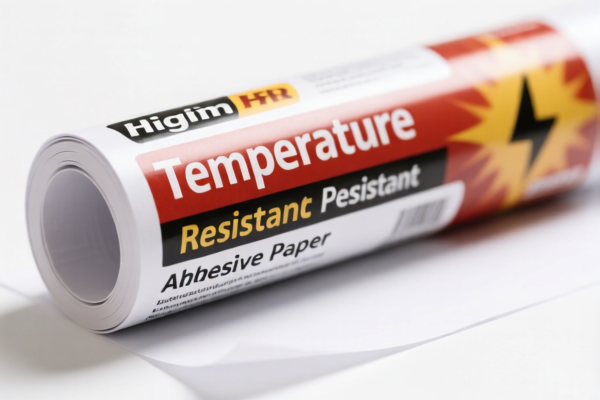
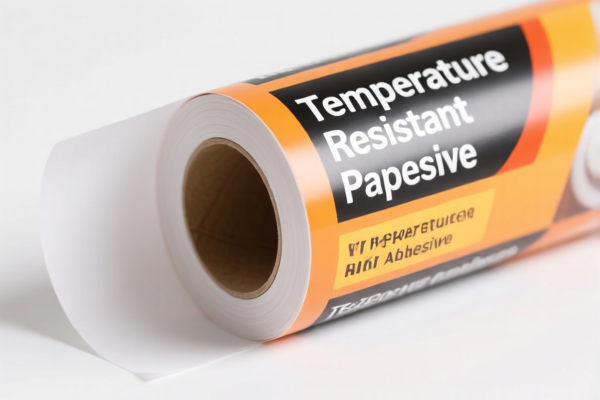
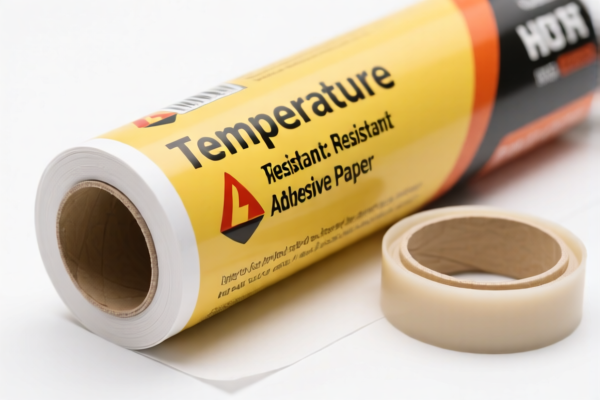
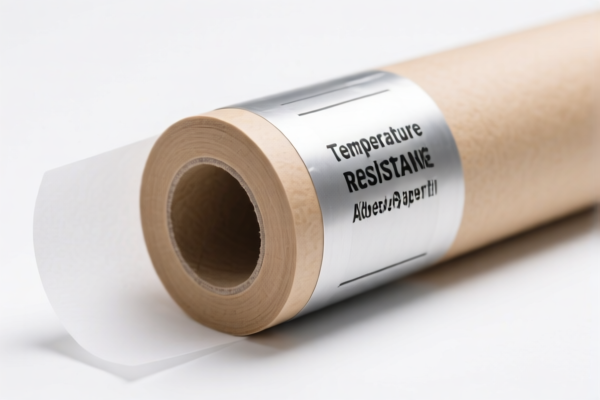
AI Analysis
🌡️ High-Temperature Resistant Paper Label
🌐 HS Code Classification & Customs Clearance Guide | 2026 Latest Tariff Analysis | Expert Strategy for Global Trade
📌 One Product, Five Possible HS Codes — Know Which One Applies to Your Shipment!
📦 1. Product Definition & Classification: What Is a "High-Temperature Resistant Paper Label"?
A high-temperature resistant paper label is a specialized adhesive label designed to maintain integrity under extreme heat (typically above 100°C), commonly used in industrial, automotive, electronics, and medical applications.
Despite being called “paper,” its classification depends heavily on material composition, coating type, substrate structure, and form factor.
⚠️ Critical Insight:
- If it's pure paper with heat-resistant coating → Likely 4821.90.40.00 or 4821.90.20.00
- If it's paper reinforced with plastic film or board → May fall under 3921.90.40.10
- If it's plastic-based with paper-like appearance → Could be 3919.90.50.60 or 3919.10.20.55🔍 Key Determinant:
Is the base material primarily paper or plastic?
This single question decides your HS code — and your total tariff!
🧩 2. HS Code Breakdown (2026 Updated Tariff Table)
| HS Code | Product Description | Material Clue | Form Factor | Tax Rate |
|---|---|---|---|---|
4821.90.40.00 |
High-temperature resistant paper label, plain or printed, for general labeling | Paper substrate with heat-resistant coating | Flat, self-adhesive label | 35.0% |
3921.90.40.10 |
Paper-reinforced board or sheet with plastic film, used for labeling | Paper + plastic composite (e.g., paper core with film layer) | Rigid or semi-rigid sheet | 39.2% |
4821.90.20.00 |
Self-adhesive paper labels with special coatings (e.g., thermal, chemical-resistant) | Coated paper, self-adhesive, heat-resistant | Thin, flexible, flat | 35.0% |
3919.90.50.60 |
Flat, self-adhesive plastic labels, used for industrial or high-temp applications | Plastic base (e.g., PET, PP), flat, adhesive-backed | Thin, flexible, non-paper | 40.8% |
3919.10.20.55 |
Other plastic films, flat, used for labels (non-woven, non-foamed) | Plastic film, not paper-based, flexible | Thin, flat, self-adhesive | 40.8% |
📌 Important Note:
- Paper-based labels (even if heat-resistant) are not automatically plastic → must not be misclassified as plastic. - Composite materials (paper + plastic film) are not pure paper → must be assessed for dominant material.
💰 3. 2026 Latest Tariff Breakdown (US Market Only)
✅ Applicable Country: United States (US)
✅ Origin: China (CN)
✅ Effective Date: November 10, 2025 (inclusive)
✅ Tariff Regime: Section 301 + IEEPA + Footnote 9903.88.01
🎯 1. 4821.90.40.00 — Heat-Resistant Paper Label (Pure Paper with Coating)
| Item | Detail |
|---|---|
| Base Duty | 0.0% (ad valorem) |
| Section 301 (USITC) Additional Duty | +25.0% |
| IEEPA (International Emergency Economic Powers Act) Additional Duty | +10.0% |
| Total Effective Duty | 35.0% |
| Tax Calculation | CIF Value × 35.0% |
| De Minimis Threshold | ❌ Not applicable (denied under 9903.88.01) |
| Legal Basis Path | IEEPA:9903.01.25 → IEEPA:9903.01.24 → USITC:4821.90.40.00 → FOOTNOTE:9903.88.01 |
📌 Explanation:
- This code applies when the primary substrate is paper, even if coated for heat resistance. - The 25% USITC tariff is from Section 301 (China trade actions). - The 10% IEEPA tariff is a national emergency measure targeting Chinese goods. - Total: 35% — moderate compared to plastic-based equivalents.
🎯 2. 3921.90.40.10 — Paper-Reinforced Plastic Board Sheet (Composite Material)
| Item | Detail |
|---|---|
| Base Duty | 4.2% |
| Section 301 (USITC) Additional Duty | +25.0% |
| IEEPA Additional Duty | +10.0% |
| Total Effective Duty | 39.2% |
| Tax Calculation | CIF Value × 39.2% |
| De Minimis Threshold | ❌ Not applicable |
| Legal Basis Path | IEEPA:9903.01.25 → IEEPA:9903.01.24 → USITC:3921.90.40.10 → FOOTNOTE:9903.88.01 |
📌 Explanation:
- This applies when paper is combined with plastic film or board (e.g., paper core with PET layer). - Base duty is 4.2% because it's a composite material. - Despite the higher base rate, total tax is 39.2% — higher than pure paper. - Do not classify as pure paper — risk of audit and penalty.
🎯 3. 4821.90.20.00 — Self-Adhesive Paper Label with Special Coating
| Item | Detail |
|---|---|
| Base Duty | 0.0% |
| Section 301 (USITC) Additional Duty | +25.0% |
| IEEPA Additional Duty | +10.0% |
| Total Effective Duty | 35.0% |
| Tax Calculation | CIF Value × 35.0% |
| De Minimis Threshold | ❌ Not applicable |
| Legal Basis Path | IEEPA:9903.01.25 → IEEPA:9903.01.24 → USITC:4821.90.20.00 → FOOTNOTE:9903.88.01 |
📌 Explanation:
- Applies to self-adhesive paper labels with special coatings (e.g., thermal, chemical, heat-resistant). - Same total tax as 4821.90.40.00 — 35%. - Must prove it's paper-based and not plastic — otherwise, misclassification risk.
🎯 4. 3919.90.50.60 — Flat Self-Adhesive Plastic Label (Plastic Base)
| Item | Detail |
|---|---|
| Base Duty | 5.8% |
| Section 301 (USITC) Additional Duty | +25.0% |
| IEEPA Additional Duty | +10.0% |
| Total Effective Duty | 40.8% |
| Tax Calculation | CIF Value × 40.8% |
| De Minimis Threshold | ❌ Not applicable |
| Legal Basis Path | IEEPA:9903.01.25 → IEEPA:9903.01.24 → USITC:3919.90.50.60 → FOOTNOTE:9903.88.01 |
📌 Explanation:
- Applies when the base is plastic, even if it looks like paper. - Base duty is 5.8% due to plastic origin. - Total: 40.8% — highest among all options. - Avoid this code if your product is paper-based — it will cost you 5.8% more in duties.
🎯 5. 3919.10.20.55 — Other Plastic Films (Flat, Self-Adhesive)
| Item | Detail |
|---|---|
| Base Duty | 5.8% |
| Section 301 (USITC) Additional Duty | +25.0% |
| IEEPA Additional Duty | +10.0% |
| Total Effective Duty | 40.8% |
| Tax Calculation | CIF Value × 40.8% |
| De Minimis Threshold | ❌ Not applicable |
| Legal Basis Path | IEEPA:9903.01.25 → IEEPA:9903.01.24 → USITC:3919.10.20.55 → FOOTNOTE:9903.88.01 |
📌 Explanation:
- Applies to plastic films used for labeling, especially non-woven, non-foamed types. - Same total tax as 3919.90.50.60 — 40.8%. - Do not use this code for paper-based labels — it's a common mistake that leads to overpayment and audit risk.
🛠️ 4. Customs Clearance Best Practices (Pro Tips to Avoid Penalties)
✅ 1. Documentation Checklist (Must-Have)
| Document | Required? | Why It Matters |
|---|---|---|
| ✅ Product Technical Data Sheet | ✔️ | Proves material composition (paper vs. plastic) |
| ✅ Material Safety Data Sheet (MSDS) | ✔️ | Confirms heat resistance and substrate |
| ✅ Product Photos (with close-ups) | ✔️ | Shows surface texture, thickness, adhesive layer |
| ✅ Certificate of Origin (CO) | ✔️ | For potential preferential treatment (e.g., Vietnam, Mexico) |
| ✅ Commercial Invoice | ✔️ | Must include accurate product name, description, and HS code |
| ✅ Lab Test Report (Heat Resistance) | ✔️ | Supports claim of "high-temperature resistance" |
| ✅ Declaration of Substrate Material | ✔️ | Critical for customs to verify paper vs. plastic |
✅ 2.申报技巧 (Declaration Tips) – "The 3 C's of Accurate HS Code"
🔥 "Check, Confirm, Classify!"
| Scenario | Correct HS Code | Wrong Code to Avoid |
|---|---|---|
| Pure paper label with heat-resistant coating | 4821.90.40.00 or 4821.90.20.00 |
3919.90.50.60 (plastic) |
| Paper with plastic film layer | 3921.90.40.10 |
4821.90.40.00 (understates composite nature) |
| Plastic label that looks like paper | 3919.90.50.60 or 3919.10.20.55 |
4821.90.40.00 (misclassification) |
| Self-adhesive label with thermal coating | 4821.90.20.00 |
3919.10.20.55 (overpaying) |
📌 Pro Tip:
Use "Substrate Material: Paper (with heat-resistant coating)" in the invoice description — not "plastic label" or "film label".
✅ 3. Special Cases & Risk Mitigation
| Situation | Recommended Action |
|---|---|
| Label is paper but has plastic film backing | Use 3921.90.40.10 — composite |
| Label is paper but coated with silicone or ceramic | Use 4821.90.40.00 — paper-based |
| Label is thin, flexible, and looks like plastic | Test material — if plastic, use 3919.90.50.60 |
| Label is from Vietnam/Mexico/Thailand | Apply for IEEPA exemption — 0% tariff |
| Label is used in medical/automotive | Provide application proof — may qualify for exemption or lower duty |
🌍 5. Global Market Tariff Comparison (2026)
| Country/Region | Recommended HS Code | Tariff | Certification | Notes |
|---|---|---|---|---|
| 🇺🇸 United States | Depends on material | 35.0%–40.8% | FDA, RoHS, REACH | No de minimis |
| 🇨🇳 China | 4821.90.40.00 |
5% | CCC | No extra tariffs |
| 🇪🇺 European Union | 4821.90.40.00 |
0% (if CE) | CE, RoHS | No 301/IEEPA |
| 🇦🇺 Australia | 4821.90.40.00 |
5% | RCM | No extra duties |
| 🇯🇵 Japan | 4821.90.40.00 |
0% | PSE | No extra duties |
📌 Key Takeaway:
- Only the US imposes 35%–40.8% tariffs on Chinese-origin high-temp labels. - Vietnam/Mexico/Thailand origin can avoid IEEPA/301 tariffs — 0%. - Switching origin can save up to 40% in duties.
🚨 6. Common Mistakes & How to Avoid Them
❌ Mistake 1: Calling a plastic label "paper label" in invoice
👉 Result: Misclassification → 40.8% duty instead of 35% → overpayment & audit risk
❌ Mistake 2: Not testing substrate material
👉 Result: If plastic, you pay 5.8% extra base duty — wasted money
❌ Mistake 3: Using generic name like "Heat-Resistant Label"
👉 Result: Customs can’t verify material → delayed clearance or rejection
❌ Mistake 4: Failing to declare coating type
👉 Result: If coated for heat resistance, must use 4821.90.40.00 or 4821.90.20.00 — not 3919
✅ Correct Declaration Example:
"High-Temperature Resistant Self-Adhesive Label, Paper Substrate with Silicone Coating, 100°C Rated, 4821.90.40.00"
🎯 7. Final Verdict: Choose Wisely, Pay Less, Ship Faster!
🔹 Paper-based? → Use
4821.90.40.00or4821.90.20.00→ 35.0%
🔹 Paper + plastic film? → Use3921.90.40.10→ 39.2%
🔹 Plastic-based? → Use3919.90.50.60or3919.10.20.55→ 40.8%📌 Golden Rule:
"If it’s paper, it’s paper. If it’s plastic, it’s plastic. Don’t guess — test, document, declare."
📌 8. Action Plan: Get Your Label Through Customs Smoothly
✅ Step 1: Test substrate (paper vs. plastic)
✅ Step 2: Get lab report & technical sheet
✅ Step 3: Choose correct HS code based on material
✅ Step 4: Prepare full documentation
✅ Step 5: Apply for Advance Ruling (Pre-Approval) if uncertain
✅ Step 6: Consider origin change (Vietnam/Mexico) to avoid 301/IEEPA
📣 Ready to Ship?
📞 Contact a licensed customs broker + submit product samples for testing
🚀 Avoid costly delays, overpayment, and penalties — get it right the first time!
✨ Professional Customs, Precise Classification, Profitable Trade!
💼 Your label’s success starts with the right HS code.
Customer Reviews
About HS Code Classification
The Harmonized System (HS) is an internationally standardized nomenclature developed by the World Customs Organization (WCO) to classify traded products. Over 200 countries use the HS system as the basis for customs tariffs, trade statistics, and import/export regulations.
Each HS code follows a hierarchical structure:
- Chapter (2 digits) — Broad category of goods (e.g., Chapter 84: Machinery and Mechanical Appliances)
- Heading (4 digits) — More specific grouping within the chapter
- Subheading (6 digits) — Internationally standardized breakdown, used by all WCO member countries
- National subdivisions (8-10 digits) — Country-specific extensions for further classification, such as US HTSUS 10-digit codes
Correct HS code classification is essential for smooth customs clearance, accurate duty payment, and compliance with trade regulations. Misclassification can lead to customs delays, overpayment of duties, or penalties.
When importing from CN to US, the applicable tariff rates may include:
- Most-Favored-Nation (MFN) rate — The standard duty rate applied to WTO members
- General rate — Applied to countries without trade agreements
- Trade remedy duties — Additional tariffs such as Section 301 (anti-dumping), Section 232 (national security), or countervailing duties
The information provided on this page is for reference purposes only. For official classification, please consult with your local customs authority or a licensed customs broker.